In today’s fast-paced world, issues related to mental health, including anxiety and depression—are more common than ever. But what if the key to better emotional balance didn’t just lie in your brain, but in your gut?
Thanks to growing research on the gut-brain axis, scientists have discovered that your gut health, specifically the trillions of microbes living in your gut microbiome can directly influence how you think, feel, and cope with stress. These tiny organisms, or gut bacteria, communicate with your brain via the vagus nerve, your immune system, and a host of neurotransmitters like serotonin and dopamine.
Among the most promising tools to support this complex network are probiotic supplements. When used strategically, certain probiotic strains, sometimes called psychobiotics, can help regulate mood, reduce anxiety, and support mental clarity. In this article, we’ll explore the 10 best probiotics for anxiety and depression, backed by studies and known to positively impact the body’s stress response.
Understanding the Gut-Brain Axis and Mental Health
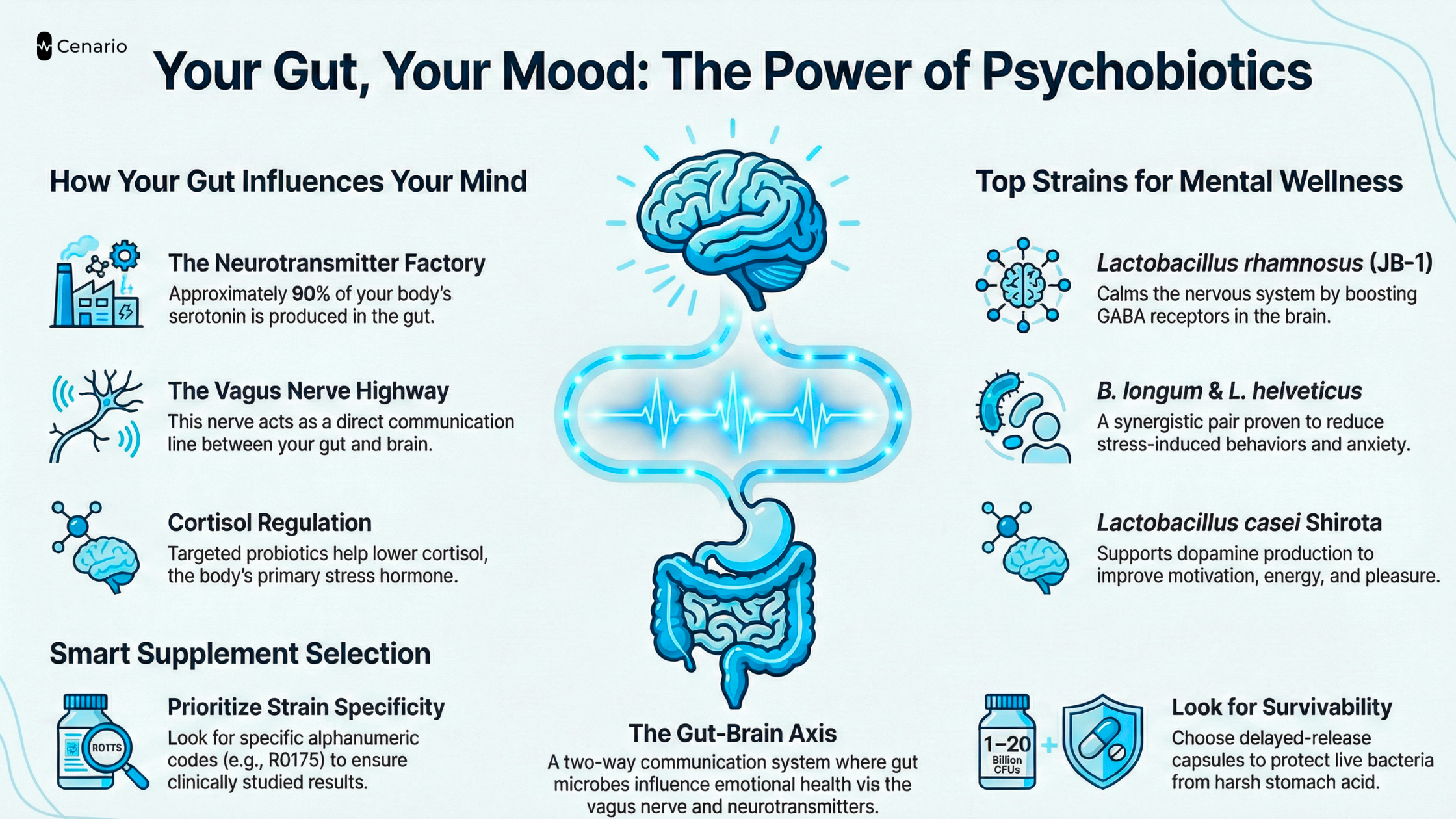
The gut-brain axis is a two-way communication system between your brain and your digestive system. This system includes signals from the nervous system, hormones, and the immune system, all working together. A major part of this connection is the vagus nerve, which acts like a communication highway, sending messages back and forth between your brain and gut.
How Your Gut Affects Your Brain
Inside your gut lives a large community of tiny organisms mostly bacteria known as the gut microbiome. These gut bacteria do more than help you digest food. They also play a big role in your mental health. Here’s how:
- They produce neurotransmitters like serotonin, in fact, about 90% of serotonin is made in your gut. This chemical helps control mood, sleep, and emotions.
- They help regulate your immune system and reduce inflammation, which is linked to depression and anxiety.
- They create short-chain fatty acids, which help support brain function and protect against stress.
- They send signals through the gut-brain axis that affect your thoughts, emotions, and behavior.
When your gut health is thrown off, something known as dysbiosis, it can disrupt these systems. This may lead to symptoms like anxiety, low mood, trouble focusing, or even more serious mental health issues.
Can Probiotics Really Help With Depression and Anxiety?
Yes, studies show that certain probiotic strains, often called psychobiotics, can support your mental health by improving the way your gut and brain work together.
These probiotics help by:
- Restoring a healthy balance of gut bacteria
- Reducing harmful inflammation
- Improving communication between the brain and gut
- Supporting the natural production of neurotransmitters like serotonin and GABA
- Helping regulate the body’s stress response, including lowering cortisol, the main stress hormone
Backed by Science
Many of these benefits have been proven in double-blind, placebo-controlled clinical trials, the gold standard of scientific research. These studies show that taking the right probiotic formulation can:
- Improve mood and emotional stability
- Reduce symptoms of anxiety and depression
- Help people feel calmer and more focused
Top 10 Probiotics for Mental Health, Anxiety, and Depression
Probiotics aren’t just for digestion anymore. A growing body of research suggests that specific probiotic strains can positively impact mental health by improving communication along the gut-brain axis. The following ten strains have been scientifically studied for their ability to reduce stress, support emotional balance, and even alleviate symptoms of anxiety and depression.
1. Lactobacillus rhamnosus (JB-1)
One of the most well-researched psychobiotics, Lactobacillus rhamnosus JB-1 has shown powerful effects on mental well-being. This strain interacts with the vagus nerve, the main communication line between the gut and brain, and affects GABA receptors, which are responsible for calming the nervous system.
Key Benefits:
- Reduces anxiety-like behavior and promotes calmness
- Helps regulate mood and emotional balance
- Improves communication along the gut-brain axis
Research Highlights:
- In animal studies, this strain significantly reduced stress-induced behaviors
- Boosts the expression of GABA receptors in the brain
- Increases diversity in the gut microbiome, which supports emotional stability
2. Bifidobacterium longum 1714 & Bifidobacterium longum R0175
These two strains are widely recognized for their ability to support the brain under stress. They are especially effective when used with formulation Lactobacillus helveticus R0052, creating a synergistic effect for mental health improvement.
Key Benefits:
- Lowers cortisol levels (your body’s main stress hormone)
- Improves focus, memory, and emotional control
- Promotes a balanced and resilient mood
Research Highlights:
- Double-blind, placebo-controlled studies have shown improved cognitive function in stressful situations
- These strains help regulate the immune system and reduce inflammation—two key contributors to mood disorders
- Helps maintain a balanced gut microbiome, crucial for long-term mental health
3. Probiotic Formulation: Lactobacillus helveticus R0052 and Bifidobacterium longum R0175
This powerful probiotic formulation has been the subject of multiple clinical trials focused on depression, anxiety, and emotional health. It combines two strains that work together to support both gut health and brain function.
Key Benefits:
- Eases symptoms of anxiety and depression
- Improves sleep, reduces irritability, and supports emotional resilience
- Strengthens the connection between gut and brain
Studies Show:
- The R0052 and Bifidobacterium longum combination helps regulate the body’s stress response
- Improves overall quality of life in individuals with high stress or poor mood
- Enhances the function of the gut-brain axis
4. Lactobacillus plantarum 299v
This probiotic strain is known for its strong anti-inflammatory effects and its ability to support serotonin production, which plays a major role in mood regulation. It also strengthens the gut lining, which helps protect against “leaky gut,” a condition linked to poor mental health.
Key Benefits:
- Reduces gut inflammation tied to anxiety and depression
- Improves nutrient absorption and digestion
- Supports emotional well-being through gut-brain signaling
Research Highlights:
- Proven helpful for individuals with IBS-related anxiety
- Enhances cognitive flexibility, attention, and mood in clinical studies
5. Bifidobacterium infantis 35624
Originally researched for its benefits in treating irritable bowel syndrome (IBS), this strain has also shown promise in supporting mental health. It works by calming the digestive tract and reducing inflammation, which is often linked to depression and anxiety.
Key Benefits:
- Eases gut discomfort that often worsens mental stress
- Restores balance in the gut microbiome
- Supports mood and emotional control through reduced inflammation
6. Lactobacillus casei Shirota
This strain is commonly found in fermented dairy drinks like Yakult and is well-known for its ability to support dopamine production, a neurotransmitter that affects pleasure, motivation, and mental energy.
Key Benefits:
- Helps improve symptoms of mild to moderate depression
- Boosts mental clarity, energy, and motivation
- Reduces anxiety and stabilizes mood under pressure
Studies Show:
- Participants taking L. casei Shirota reported better mood and reduced psychological stress
- It improves both gut health and emotional well-being
7. Bifidobacterium breve A1
This neuroprotective strain is gaining attention for its ability to protect the brain from inflammation and oxidative stress. Early research suggests it could also be helpful for aging-related cognitive decline and mood regulation.
Key Benefits:
- Protects the brain from oxidative damage and inflammation
- Enhances learning, memory, and emotional control
- Helps reduce feelings of sadness, low energy, and mood swings
8. Saccharomyces boulardii
Though technically a probiotic yeast rather than a bacterium, S. boulardii has powerful mental health benefits. It supports the gut lining, protects against harmful microbes, and helps maintain a healthy immune system.
Key Benefits:
- Prevents “bad bacteria” from harming the gut-brain axis
- Helps reduce anxiety, especially after illness or antibiotics
- Strengthens immunity and supports a balanced gut environment
9. Lactobacillus acidophilus NCFM
One of the most widely used probiotic strains, Lactobacillus acidophilus helps boost serotonin levels in the gut while also protecting the digestive lining. It’s particularly useful for individuals experiencing both digestive and mood symptoms.
Key Benefits:
- Promotes better sleep and emotional calm
- Helps the body respond to stress more effectively
- Supports a strong immune system and healthy digestion
Studies Show:
- Linked to improved mood and lower levels of depression
- Boosts overall emotional well-being when taken consistently
10. Streptococcus thermophilus
Commonly found in yogurt and fermented dairy products, S. thermophilus helps the body produce B vitamins, especially folate, which plays a key role in brain health and neurotransmitter function.
Key Benefits:
- Supports healthy brain chemistry by aiding B vitamin production
- Enhances nutrient absorption and digestive health
- Promotes long-term emotional and cognitive stability
How to Choose the Right Probiotic Supplement for Mental Health
Not all probiotics are the same. To get the most benefit for your mental health, consider the following:
Strain Specificity
Choose supplements that list the specific strain, like Lactobacillus helveticus R0052 or Bifidobacterium longum R0175, not just the species.
Colony Forming Units (CFUs)
Aim for products with 1–20 billion CFUs per serving. This refers to the number of live microorganisms in each dose.
Survivability
Look for delayed-release capsules or microencapsulation to protect the probiotics from stomach acid.
Prebiotic Combo
Many top-rated products include prebiotics, which are fibers that feed and sustain the gut bacteria.
Scientific Evidence
Only choose brands backed by double-blind, placebo-controlled studies for reliability and safety.
Lifestyle Tips to Enhance Probiotic Effectiveness
Adding probiotic supplements to your routine is powerful, but combining them with healthy lifestyle choices boosts their benefits.
- Eat fermented foods: Yogurt, sauerkraut, kefir, kimchi
- Stay active: Regular exercise improves gut microbiome balance
- Sleep well: Quality rest helps reduce stress and inflammation
- Manage stress: Meditation, journaling, or walking help calm the vagus nerve
- Avoid sugar and processed foods: These harm beneficial gut bacteria
Final Thoughts: A Balanced Gut for a Balanced Mind
The connection between the gut-brain axis and mental health is undeniable. By using targeted probiotic strains like Lactobacillus rhamnosus, Lactobacillus helveticus R0052, and Bifidobacterium longum R0175, you can nourish your gut microbiome and support emotional resilience.
While probiotic supplements aren’t a replacement for therapy or medication, they are a safe and effective addition to your mental wellness routine. Always consult with your healthcare provider before starting a new supplement, especially if you are managing depression, anxiety, or other conditions.
As always, talk to your healthcare provider before starting any new supplement—especially if you’re managing conditions like anxiety or depression.
Not Sure Where to Start?
Take the Cenario Quiz to Get Personalized Supplement Recommendations Based on Your Unique Needs.
Frequently Asked Questions
1. What are psychobiotics and how do they affect mental health?
Psychobiotics are specific strains of probiotics that have been shown to positively influence the gut-brain axis and improve mental health. They work by enhancing the production of mood-regulating neurotransmitters like serotonin and GABA, reducing inflammation, and stimulating the vagus nerve, which connects the gut to the brain. Clinical studies show that certain strains, such as Lactobacillus rhamnosus JB-1 and Bifidobacterium longum R0175, may help reduce symptoms of depression and anxiety.
2. How long does it take for probiotic supplements to improve mood or reduce anxiety?
Results can vary depending on the specific strain, the dosage (measured in colony forming units or CFUs), and the individual’s baseline gut health. However, studies show that consistent use of targeted probiotic supplements may begin to show mood-related benefits within 3 to 6 weeks. It’s important to take them daily and support them with a healthy lifestyle for best results.
3. Can probiotics replace antidepressants or anxiety medications?
No. While probiotic strains like formulation Lactobacillus helveticus R0052 and Bifidobacterium longum R0175 can support mental health, they are not a substitute for prescribed medications. However, they may serve as a complementary therapy when used alongside traditional treatments. Always consult a healthcare provider before making any changes to your treatment plan.
4. Are there side effects of taking probiotics for mental health?
Most people tolerate probiotic supplements well, but some may experience mild side effects such as gas, bloating, or changes in bowel habits during the first few days of use. These symptoms usually subside as the gut microbiome adjusts. Choosing high-quality, scientifically studied probiotic formulations with the right specific strain can minimize side effects and enhance effectiveness.