
Traveling by air can be an exciting adventure, but for many, it comes with a significant amount of anxiety. Flight anxiety, also known as aviophobia, is a common issue that affects a large number of travelers. This anxiety can manifest in various ways, including increased heart rate, sweating, and even panic attacks. Understanding these symptoms is the first step in managing them effectively, and knowing that you’re not alone can be comforting. Many people experience similar feelings and are actively seeking ways to alleviate their discomfort.
Exploring Over-the-Counter Medication Options
One of the accessible solutions for managing flight anxiety is the use of over-the-counter (OTC) medications. These medications are appealing to travelers because they do not require a prescription, making them easily available at local pharmacies or even airport shops. The convenience and accessibility of OTC medications make them a popular choice for those looking to ease their symptoms before and during a flight. However, it’s important to note that while these medications can provide relief, they are not specifically designed to treat anxiety disorders.
The Importance of Safety and Efficacy
When considering OTC solutions for flight anxiety, safety and efficacy should be top priorities. Not all medications are suitable for everyone, and what works for one person may not work for another. It’s crucial to understand the potential side effects and interactions that these medications may have with other substances. This awareness can help ensure that the chosen solution is both safe and effective for your specific needs. In the following sections, we will delve deeper into the various OTC options available and provide guidance on how to use them responsibly.
Common OTC Options for Flight Anxiety
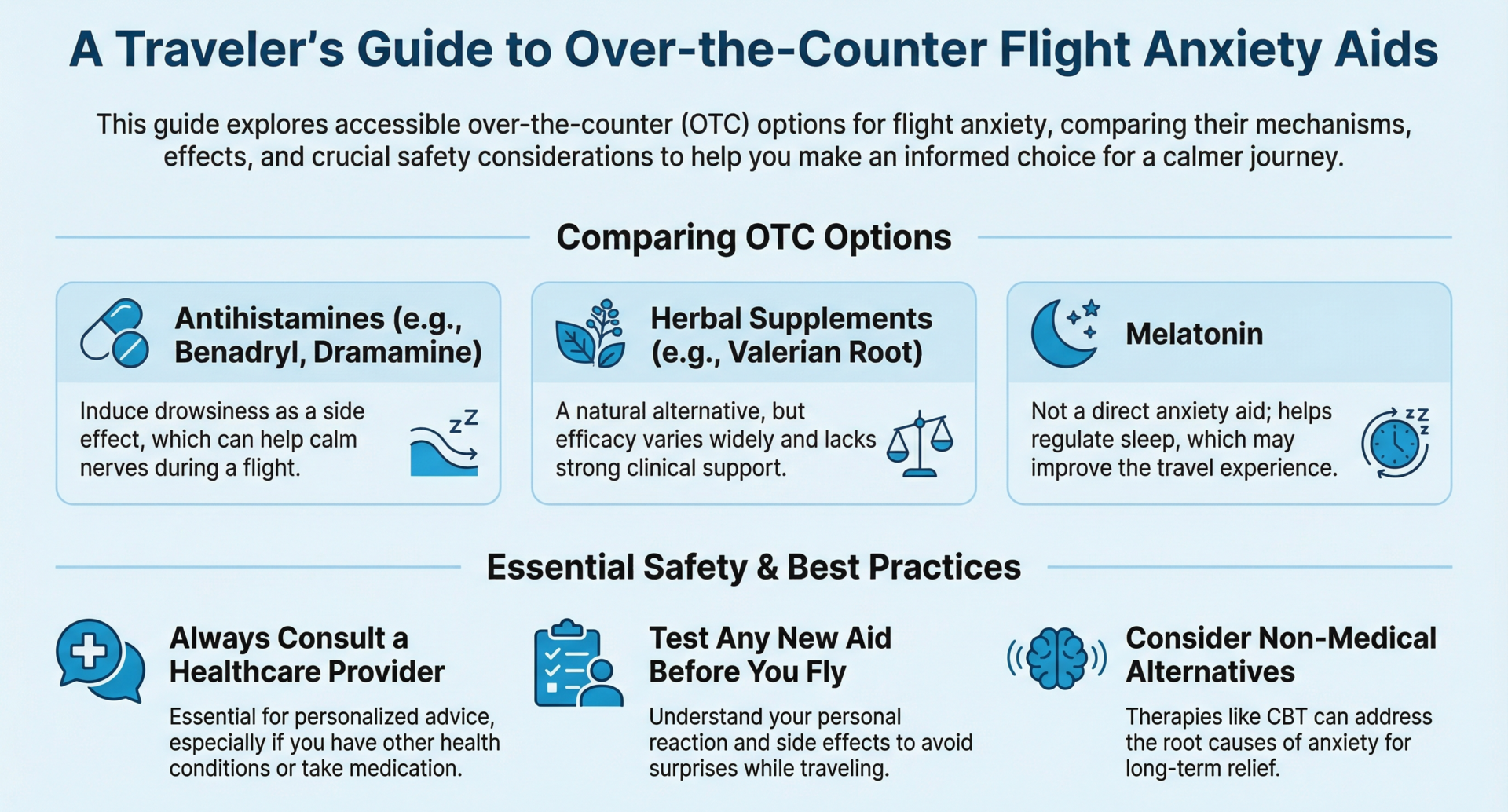
When it comes to managing flight anxiety with over-the-counter solutions, two popular categories stand out: antihistamines and herbal supplements. These options are often chosen for their accessibility and potential calming effects, but it’s important to understand how they work and their limitations.
.png)
Antihistamines
Sedating antihistamines, such as diphenhydramine (commonly known as Benadryl) and dimenhydrinate (found in Dramamine), are frequently used by travelers seeking to calm their nerves. Originally designed to treat allergies, these medications have a side effect of causing drowsiness, which some find helpful in reducing anxiety symptoms. However, it’s crucial to remember that these are not specifically designed for anxiety relief and should be used with caution.
Herbal Supplements
Herbal remedies like valerian root and passionflower have been traditionally used for their relaxing properties. While they offer a natural alternative to synthetic medications, their efficacy in treating flight anxiety varies widely among individuals. Unlike antihistamines, herbal supplements lack robust clinical trials to support their use for anxiety, making it essential to approach them with an informed perspective.
Safety and Efficacy Considerations
Side Effects of Antihistamines
While antihistamines can be effective in providing temporary relief from anxiety symptoms, they come with potential side effects. These can include drowsiness, grogginess, dizziness, and dry mouth. To ensure safe use, it’s advisable to test these medications before your flight to gauge how they affect you personally. This helps prevent unexpected reactions that might complicate your travel experience.
Herbal Supplements
Herbal supplements are often perceived as gentler alternatives to traditional medications. However, their effects can be unpredictable, and they may interact with other medications you are taking. Consulting with a healthcare provider before using herbal remedies is recommended, especially if you have pre-existing health conditions or are taking other medications.
Melatonin as an Indirect Option
Melatonin is another over-the-counter option that some travelers consider, although it does not directly target anxiety. Instead, melatonin is a hormone that helps regulate sleep patterns, which can be beneficial for those looking to adjust to new time zones or improve sleep quality during flights. While it might not alleviate anxiety directly, improved sleep can contribute to a calmer travel experience.
In summary, while over-the-counter options like antihistamines and herbal supplements can provide some relief from flight anxiety, they are not without their limitations. It’s essential to approach these solutions with an understanding of their potential side effects and to consider trying them out before your trip. Always consult with a healthcare provider if you have concerns about using these medications, especially if you have underlying health conditions or are taking other drugs. By doing so, you can ensure that your chosen method of anxiety management is both safe and effective for your specific needs.
Comparative Insights from Top SERP Articles
When considering over the counter flight anxiety medication, it’s important to understand how these options compare to prescription medications and other non-medical approaches. Top-ranking articles often highlight the differences in potency and application between OTC and prescription solutions. For instance, while OTC options like sedating antihistamines and herbal supplements are readily accessible, they are generally less potent than prescription medications such as benzodiazepines. However, prescription options come with their own set of risks, including potential dependency and legal restrictions when traveling.
Many articles also suggest a broader approach to managing flight anxiety, integrating non-medical alternatives such as cognitive-behavioral therapy (CBT) alongside medication. CBT and other psychological therapies can help address the root causes of anxiety, offering long-term solutions beyond the temporary relief provided by medications.
Legal and Clinical Considerations
Traveling with medications, particularly controlled substances, involves certain legal and insurance risks. It’s essential to be aware of the regulations concerning the transport of medications across borders. Prescription medications, especially those with sedative properties, may be subject to strict regulations and could impact your travel insurance coverage if not declared properly.
From a clinical perspective, consulting a healthcare provider before using any medication for flight anxiety is strongly advised. A professional can provide guidance tailored to your individual health needs, ensuring that any chosen solution is safe and effective. This is particularly crucial if you have underlying health conditions or are taking other medications that might interact with OTC solutions.
Conclusion
In conclusion, while over the counter flight anxiety medication can offer some relief, it’s important to approach these options with caution. The key is to understand the limitations and potential side effects of OTC solutions like antihistamines and herbal supplements. Testing these medications before your flight can help determine their suitability for your needs. Additionally, considering non-medical approaches such as CBT can provide comprehensive anxiety management.
Ultimately, the best approach to managing flight anxiety is one that is informed and personalized. By consulting with a healthcare professional and exploring all available options, you can create a strategy that ensures a more comfortable and stress-free flying experience.
Still unsure what to take?
Answer a few questions and get a personalized supplement recommendation instantly. Take Cenario quiz now!
Quiz
Frequently Asked Questions
What are the best OTC medications for flight anxiety?
Popular over the counter flight anxiety medications include sedating antihistamines like diphenhydramine and herbal supplements such as valerian root. However, individual responses can vary, so it’s important to test them before travel.
Are there any risks associated with using OTC medications for anxiety?
Yes, there are potential side effects such as drowsiness, grogginess, and dry mouth. It’s crucial to follow dosage instructions and consult with a healthcare provider to ensure safe use.
Can melatonin help with flight anxiety?
Melatonin primarily aids in sleep regulation rather than directly addressing anxiety. It can be beneficial for adjusting to new time zones but may not alleviate anxiety symptoms directly.
Should I try OTC medications before my flight?
Yes, testing any over the counter flight anxiety medication before your flight is advisable to assess your personal tolerance and effectiveness, ensuring a smoother travel experience.