
Anxiety is a common mental health issue that affects millions of people worldwide, impacting their daily lives and overall well-being. While conventional treatments such as therapy and medication are widely used, there is a growing interest in exploring natural remedies to complement these approaches. Vitamins and supplements are increasingly being recognized for their potential to support mental health, offering a more holistic way to manage anxiety symptoms.
Understanding Anxiety and Its Impact
Anxiety disorders encompass a range of conditions characterized by excessive worry, fear, or nervousness. These disorders are among the most prevalent mental health issues, affecting individuals of all ages. The impact of anxiety can be profound, affecting personal relationships, work performance, and overall quality of life. As awareness of mental health grows, so does the interest in finding effective, natural solutions that can work alongside traditional treatments.
The Role of Vitamins in Mental Health
Vitamins and supplements have emerged as potential aids in managing anxiety, thanks to their role in supporting brain function and overall health. The idea is not to replace conventional treatments but to enhance them by addressing nutritional deficiencies that may contribute to anxiety symptoms. There is a particular focus on vitamins that play a role in neurotransmitter production and stress regulation, such as B vitamins, vitamin D, and magnesium. This interest is driven by a combination of anecdotal evidence and emerging scientific research that suggests these nutrients can have a positive impact on mental well-being.
Setting the Stage: What to Expect in This Post
This blog post will delve into the best vitamins and supplements that have been shown to help ease anxiety naturally. We will focus on evidence-backed options, providing a blend of clinical insight and practical advice. The goal is to offer a comprehensive understanding of how these vitamins work, their potential benefits, and how they can be integrated into a broader strategy for managing anxiety. Whether you’re looking for ways to complement your current treatment plan or exploring natural options for the first time, this guide will provide valuable insights into the role of vitamins in supporting mental health.
Built around your needs, not generic stacks
Answer a few questions and let Cenario guide you toward a personalized starting point.
Vitamin B Complex: A Foundation for Nervous System Support
Among the various vitamins associated with anxiety relief, the B complex stands out due to its essential role in supporting the nervous system. Specifically, vitamins B6 and B12 are crucial in the production of neurotransmitters like GABA and serotonin, which help regulate mood and anxiety levels.
B6 and B12: Key Players
Vitamin B6, also known as pyridoxine, has been highlighted in some clinical trials for its potential to reduce anxiety, particularly when administered in higher doses. This vitamin aids in the synthesis of neurotransmitters that are vital for calming brain activity. Similarly, vitamin B12 is essential for maintaining a healthy nervous system and has been linked to mood regulation.
Mixed Evidence
Despite promising findings, the evidence for B-vitamin supplementation in anxiety management is mixed. While some studies show benefits, others call for more robust research to establish definitive conclusions. Therefore, it’s important to approach B vitamins as a potential complement to other treatments rather than a standalone solution.
Vitamin D: The Sunshine Vitamin
Link Between Deficiency and Anxiety
Vitamin D, often referred to as the sunshine vitamin, has been repeatedly linked to mood and anxiety disorders. Studies suggest that a deficiency in vitamin D can exacerbate anxiety symptoms, making it crucial to maintain adequate levels for mental well-being. This connection underscores the importance of testing for vitamin D deficiency, particularly in individuals experiencing heightened anxiety.
Supplementation and Sunlight
To address deficiencies, vitamin D supplements can be beneficial, especially for those with limited sun exposure. Additionally, spending time outdoors in sunlight can naturally boost vitamin D levels, contributing to overall mental health.
Magnesium: The Stress-Regulator
Mechanisms of Action
Magnesium plays a vital role in regulating stress hormones and supporting muscle relaxation. It is often found that individuals with anxiety have lower magnesium levels, suggesting that supplementation could aid in alleviating symptoms. Magnesium’s calming effects are partly due to its ability to modulate neurotransmitter activity and reduce cortisol, the stress hormone.
Combining with Vitamin B6
Clinical observations have noted enhanced anxiety-reducing effects when magnesium is combined with vitamin B6. This combination may offer a synergistic approach to managing stress and anxiety, making it a popular choice for those seeking natural remedies.
Omega-3 Fatty Acids: Brain and Mood Support
EPA and DHA Benefits
Omega-3 fatty acids, particularly EPA and DHA, are known for their brain-supporting properties. They help reduce inflammation and support cognitive function, with some clinical trials demonstrating their potential in reducing anxiety symptoms. While research is still developing, omega-3s are considered beneficial for mood regulation and mental health.
Ongoing Research
The current state of research on omega-3 fatty acids and anxiety is promising, though not yet conclusive. These nutrients may be especially useful for individuals experiencing cognitive overload or mood disturbances, highlighting the need for further studies to solidify their role in anxiety management.
Other Notable Nutrients and Botanicals
L-Theanine, Ashwagandha, and More
In addition to vitamins, certain botanicals like L-theanine, ashwagandha, valerian root, chamomile, and melatonin are frequently recommended for their calming and mood-stabilizing properties. These supplements can provide additional support for anxiety relief, though their efficacy varies among individuals.
Caution and Supervision
While these botanicals offer potential benefits, it’s essential to use them under professional guidance. Long-term or high-dose interventions should be approached with caution to avoid adverse effects. Consulting with a healthcare professional can ensure that these supplements are used safely and effectively as part of a comprehensive anxiety management plan.
Integrating Vitamins with Lifestyle Changes
While vitamins can play a supportive role in managing anxiety, they are most effective when integrated into a broader lifestyle approach. Diet and stress management are critical components of this strategy. A balanced diet rich in essential nutrients supports overall mental health, while stress management techniques such as mindfulness, exercise, and adequate sleep can significantly enhance the benefits of vitamin supplementation.
Therapy and Conventional Treatments
It’s important to view vitamins as complementary to, rather than replacements for, traditional treatments such as therapy and medication. These conventional methods have a robust evidence base for treating anxiety disorders, and vitamins can enhance their effectiveness by addressing any underlying nutritional deficiencies. Consulting with healthcare professionals ensures a holistic approach, combining the best of both worlds to optimize mental well-being.
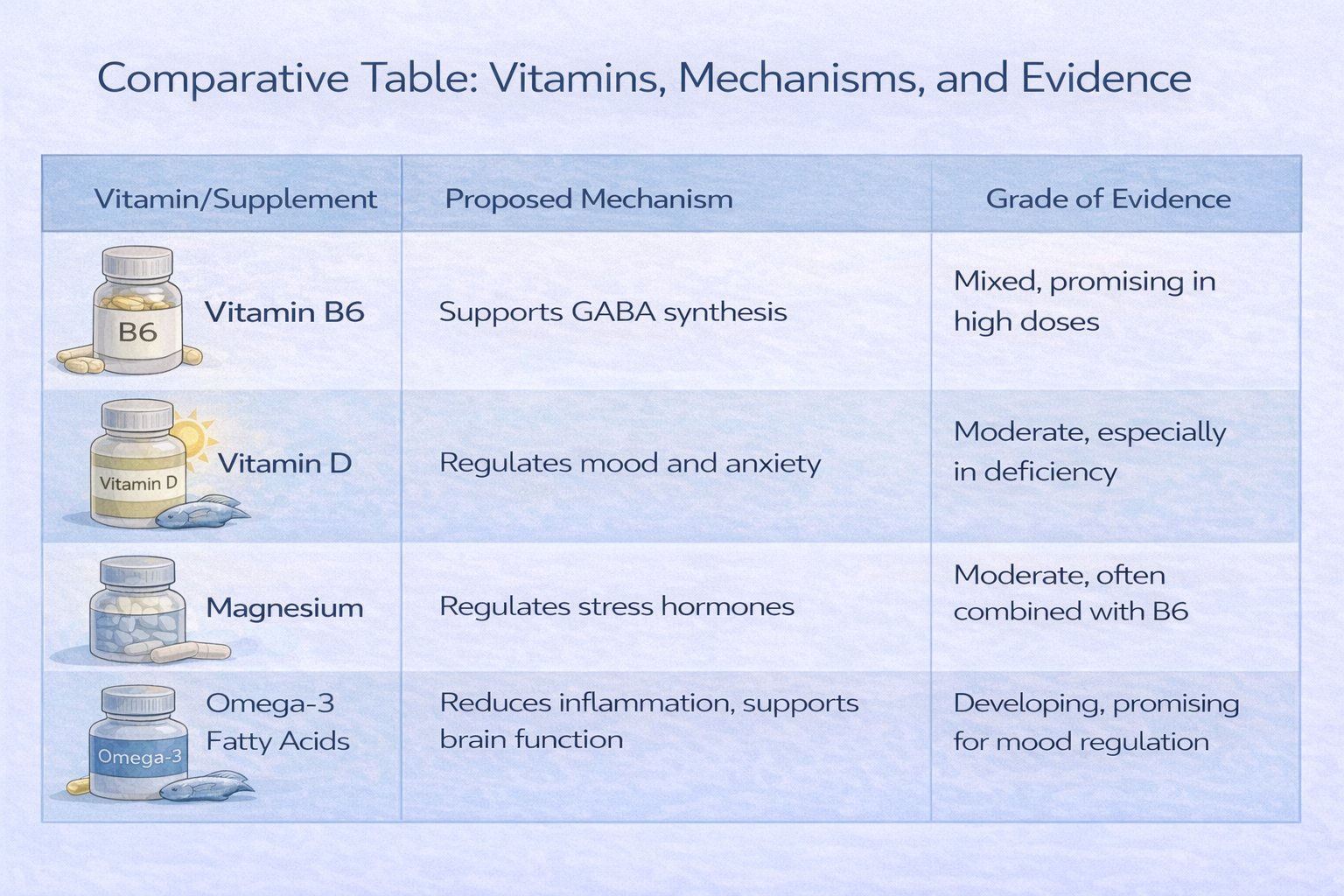
Comparative Table: Vitamins, Mechanisms, and Evidence
| Vitamin/Supplement | Proposed Mechanism | Grade of Evidence |
|---|---|---|
| Vitamin B6 | Supports GABA synthesis | Mixed, promising in high doses |
| Vitamin D | Regulates mood and anxiety | Moderate, especially in deficiency |
| Magnesium | Regulates stress hormones | Moderate, often combined with B6 |
| Omega-3 Fatty Acids | Reduces inflammation, supports brain function | Developing, promising for mood regulation |
Find what fits you
Take the Cenario quiz for a personalized approach to emotional well-being.
Frequently Asked Questions
What are the safest vitamins for anxiety?
The safest vitamins for anxiety typically include vitamin B complex, vitamin D, and magnesium. These have well-established safety profiles when taken within recommended dosages. It’s crucial to follow dosage guidelines and consult with a healthcare provider to avoid any potential interactions or side effects.
Can multivitamins replace individual supplements?
While multivitamins can provide a broad spectrum of nutrients, they may not offer the targeted dosages needed for specific conditions like anxiety. Individual supplements often provide higher concentrations of key vitamins like B6, B12, or magnesium, which can be more effective for addressing specific deficiencies related to anxiety.
How long before seeing effects from supplements?
The time it takes to notice effects from supplements can vary. Some individuals may experience improvements in a few weeks, while others may take longer. Consistency is key, and it’s important to maintain a healthy lifestyle alongside supplementation for optimal results.
Are there any risks or side effects?
Most vitamins for anxiety are safe when taken as directed, but there can be risks if taken in excessive amounts. Potential side effects might include digestive upset or interactions with medications. Consulting with a healthcare provider can help mitigate these risks and ensure safe use.
Should I consult a healthcare professional before starting?
Yes, consulting a healthcare professional is highly recommended before starting any new supplement regimen. They can provide personalized advice and ensure that the supplements are appropriate for your specific needs and health conditions.
.