
Anxiety and panic attacks are increasingly common in today’s fast-paced world, affecting millions of individuals across the globe. As more people seek natural alternatives to manage these conditions, vitamins have emerged as a promising solution. The interest in using vitamins for anxiety and panic attacks is growing, as they offer a potential pathway to relief without the side effects often associated with pharmaceutical treatments.
Understanding the Impact of Vitamins on Mental Health
Vitamins play a crucial role in maintaining overall brain health and supporting neurotransmitter function, which are vital for regulating mood and reducing anxiety. Neurotransmitters are chemicals in the brain that transmit signals between nerve cells, and their balance is essential for mental well-being. Certain vitamins are known to support the production and function of these neurotransmitters, potentially easing symptoms of anxiety and panic attacks.
For instance, vitamins such as B6, D, and magnesium have been studied for their effects on mental health. These vitamins can influence the production of serotonin and dopamine, two neurotransmitters that are closely linked to mood regulation. By ensuring adequate intake of these vitamins, individuals may experience improvements in their mental health and a reduction in anxiety symptoms.
The Purpose of This Exploration
The aim of this blog post is to delve into how specific vitamins can help alleviate symptoms of anxiety and panic attacks. We will explore the scientific research that supports these claims, providing a comprehensive understanding of how these natural remedies can be integrated into daily life. By examining the role of vitamins in anxiety relief, we hope to offer practical guidance for those seeking alternative solutions.
Stay tuned as we dive deeper into the specific vitamins that can aid in managing anxiety and panic attacks, backed by scientific evidence and expert recommendations. Understanding the potential benefits of these vitamins can empower individuals to make informed decisions about their mental health and explore natural pathways to wellness.
Understanding the Role of Vitamins in Anxiety Relief
Vitamin B6: Boosting GABA Levels
Vitamin B6 is crucial for synthesizing neurotransmitters that help manage anxiety levels. One of its key roles is in increasing gamma-aminobutyric acid (GABA), a neurotransmitter known for its calming effects on the brain. Research from the University of Reading highlights the efficacy of vitamin B6 in reducing anxiety symptoms by enhancing GABA production. To naturally incorporate this vitamin into your diet, consider foods like poultry, fish, and whole grains, which are rich in B6.
Vitamin D: Regulating Mood and Brain Health
Vitamin D is often referred to as the “sunshine vitamin” due to its production in the skin upon exposure to sunlight. There is a notable inverse relationship between vitamin D levels and anxiety risk, as shown in NHANES data analysis. This vitamin plays a vital role in mood regulation and overall brain health, making it an essential nutrient for those experiencing anxiety. To boost your vitamin D levels, spend time in sunlight, consume fatty fish, or include fortified foods in your diet.
Magnesium: A Historical Remedy for Anxiety
Magnesium has been used for centuries as a natural remedy for anxiety, thanks to its role in nerve function and stress reduction. This mineral helps regulate neurotransmitters that influence mood, making it a valuable component of anxiety management. Foods rich in magnesium include nuts, seeds, and leafy greens, which can be easily integrated into a balanced diet to support mental health.
Practical Guidance and Supplementation
Dosage Recommendations
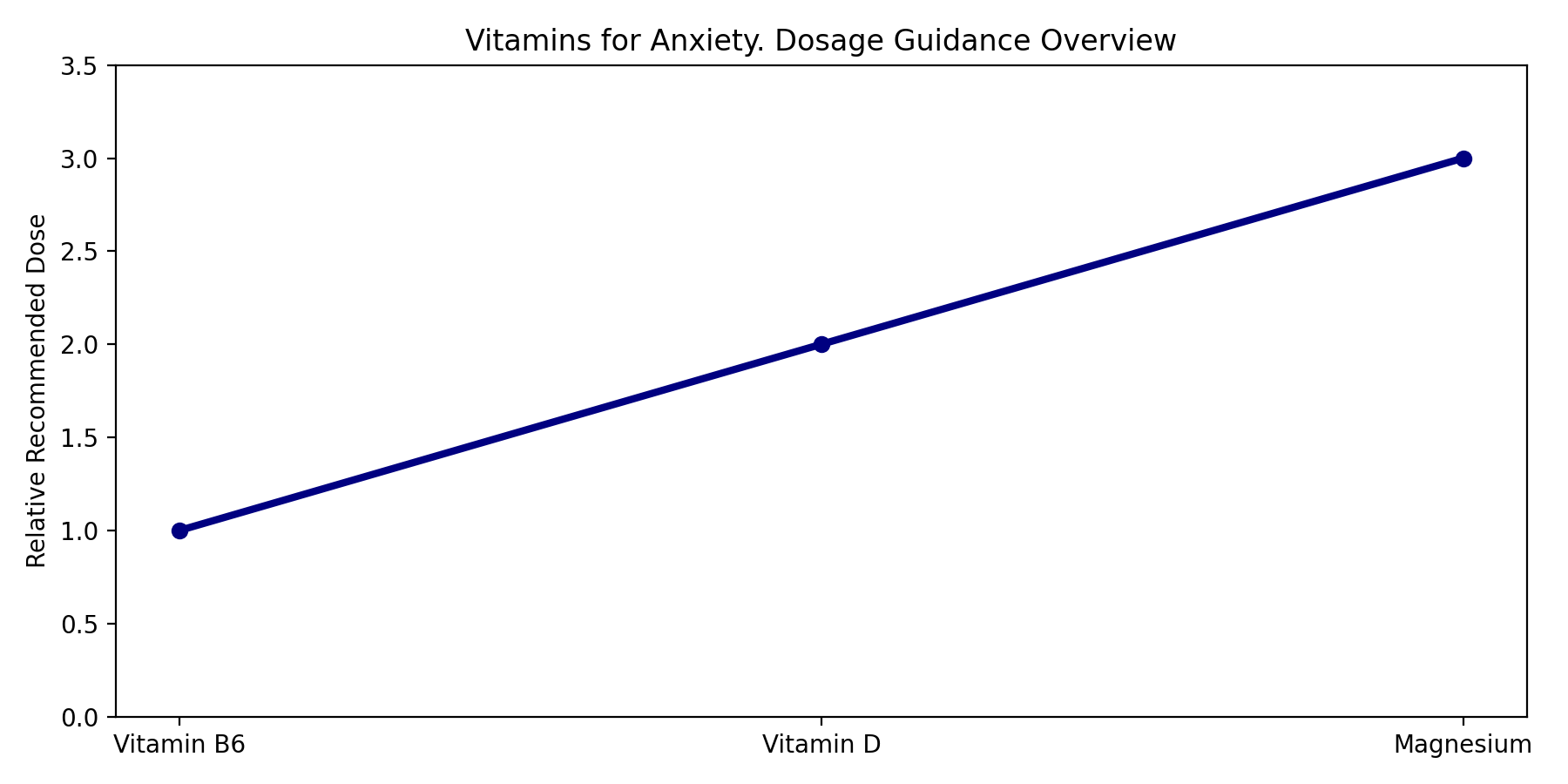
When considering vitamins for anxiety relief, it’s important to follow recommended dosages to avoid potential side effects. Here are general guidelines:
- Vitamin B6: 1.3 to 2.0 mg per day
- Vitamin D: 600 to 800 IU per day
- Magnesium: 310 to 420 mg per day
These dosages can vary based on individual needs, so it’s crucial to consult a healthcare professional before starting any supplementation.
Supplement Interactions
Vitamins can interact with common anxiety medications like SSRIs and benzodiazepines. It’s essential to discuss any supplementation with a healthcare provider to avoid adverse effects. Combining vitamins with prescribed treatments should be done under professional guidance to ensure safety and efficacy.
By understanding the roles of vitamins B6, D, and magnesium in anxiety relief, individuals can make informed decisions about incorporating these nutrients into their daily routine. Whether through diet or supplements, these vitamins offer a natural approach to managing anxiety and panic attacks, complementing traditional treatments.
Holistic Approaches and Vitamin Synergy
Incorporating vitamins into your regimen for anxiety and panic attacks can be even more effective when combined with other holistic approaches. By understanding the synergy between different vitamins, such as magnesium and vitamin B6, you can enhance their anxiety-reducing effects. These vitamins work together to support neurotransmitter function and promote a sense of calm, making them a powerful duo in anxiety management.
Beyond supplementation, embracing a holistic lifestyle that includes a balanced diet, regular exercise, and mindfulness practices can further support mental health. Diets rich in whole foods, particularly those containing essential vitamins and minerals, can help maintain optimal brain function. Exercise, known for its mood-boosting effects, complements the benefits of vitamins by reducing stress and enhancing overall well-being. Mindfulness practices, such as meditation and deep breathing, can also play a crucial role in managing anxiety symptoms.
Individual Variation and Personalized Approaches
It’s important to recognize that the effectiveness of vitamins for anxiety relief can vary from person to person. Factors such as genetic predispositions, existing nutrient deficiencies, and current medications can all influence how well supplements work for you. This is why a personalized approach to supplementation is recommended.
Consulting with a healthcare professional can help tailor a vitamin regimen that suits your specific needs and circumstances. They can guide you in identifying any deficiencies and recommend appropriate dosages, ensuring that your supplementation is both safe and effective. This individualized approach can maximize the potential benefits of vitamins for anxiety and panic attacks.
Looking for the best option is pointless if it is not right for you.
Take the Cenario Quiz and get a personalized, science-backed recommendation in under 3 minutes.
Frequently Asked Questions
How much vitamin B6 do I need for anxiety?
For anxiety relief, the general recommendation for vitamin B6 is 1.3 to 2.0 mg per day. However, it’s important to consult a healthcare professional to determine the appropriate dosage for your specific needs.
Can vitamins replace anxiety medication?
Vitamins should not be seen as replacements for anxiety medication. Instead, they can complement traditional treatments by supporting overall mental health and potentially reducing symptoms. Always discuss with your healthcare provider before making changes to your treatment plan.
What are the best vitamins for panic attacks?
The best vitamins for panic attacks include vitamin B6, vitamin D, and magnesium. These nutrients support neurotransmitter function and mood regulation, which can help alleviate symptoms of panic attacks.
How long do anxiety vitamins take to work?
The time it takes for vitamins to impact anxiety can vary based on individual factors, such as existing deficiencies and overall health. Consistent use over several weeks is often necessary to notice significant improvements.
Are there any side effects of taking vitamins for anxiety?
While vitamins are generally safe, taking them in excessive amounts can lead to side effects. It’s crucial to follow recommended dosages and seek professional guidance to avoid adverse effects.
.