
Nighttime anxiety is a common struggle that affects many individuals, leading to restless nights and impacting overall well-being. As the day winds down, the mind can become a flurry of worries and stress, making it difficult to achieve a peaceful night’s sleep. This ongoing challenge has sparked a growing interest in natural remedies, with herbal teas emerging as a popular and soothing solution for calming anxiety at night.
The Appeal of Herbal Teas
Herbal teas offer a non-invasive, accessible, and comforting way to manage anxiety. Unlike medications, they come with minimal side effects and can easily be incorporated into a nightly routine. Their appeal lies not only in their calming properties but also in the ritualistic aspect of brewing and sipping a warm cup of tea, which can be inherently relaxing. Additionally, herbal teas have a long-standing history in traditional medicine, where they have been used for centuries to promote relaxation and improve sleep quality. In recent years, these time-honored remedies have seen a resurgence in modern wellness practices, as more people seek out holistic approaches to health and well-being.
Exploring Herbal Teas for Nighttime Anxiety
This blog focuses on exploring how specific herbal teas can help calm anxiety at night. By delving into the scientific insights and offering practical tips, we aim to provide a comprehensive guide to using herbal teas as a natural remedy for nighttime anxiety. From chamomile to lavender, each tea offers unique benefits that can contribute to a more restful sleep. Join us as we uncover the calming effects of these herbal infusions and discover how they can become a part of your nightly routine.
Herbal Remedies for Nighttime Anxiety
Chamomile Tea
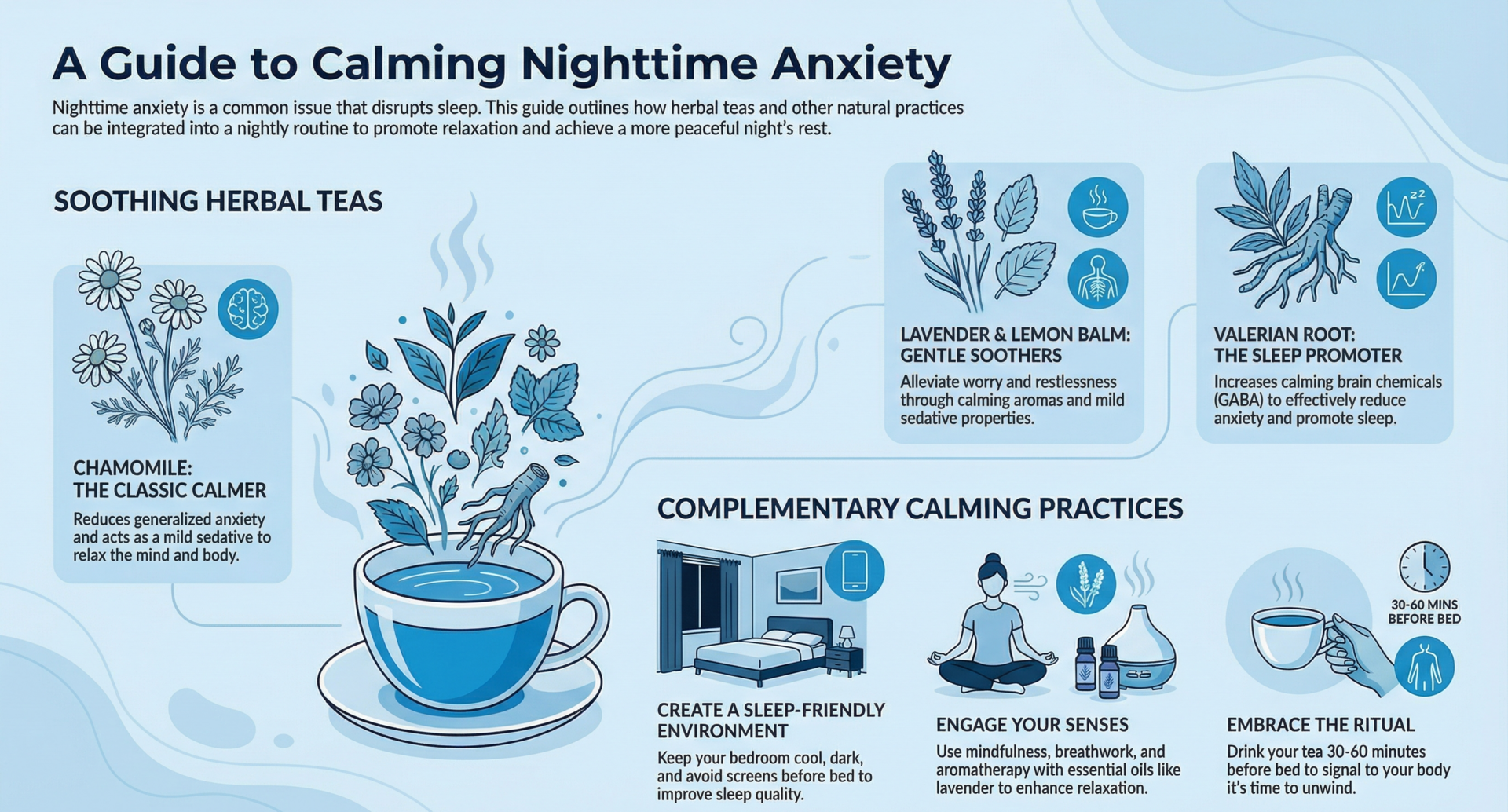
Chamomile tea is renowned for its calming effects and has been used historically to reduce anxiety and enhance sleep quality. Clinical trials have shown that chamomile can significantly reduce generalized anxiety, making it a popular choice for those seeking a natural remedy. The tea’s mild sedative properties help relax the mind and body, paving the way for a peaceful night’s sleep.
Lavender and Lemon Balm Teas
Lavender is widely recognized for its soothing aroma and calming properties, often used in various forms such as teas and essential oils. Drinking lavender tea can help alleviate anxiety, allowing for a more restful sleep without adverse effects. Similarly, lemon balm acts as a mild sedative, reducing worry and excitability. Its gentle nature makes it an excellent choice for those who experience nighttime restlessness.
Valerian Root and Passionflower Teas
Valerian root is another herbal remedy that aids in relaxation by increasing GABA levels, a calming brain chemical. This makes it effective in promoting sleep and reducing anxiety. Passionflower, though evidence varies, is also used to support relaxation and stress resilience. Incorporating these teas into your bedtime routine can contribute to a more tranquil sleep environment.
Sleep Hygiene and Mindfulness Practices
Creating a Sleep-Friendly Environment
To maximize the benefits of herbal teas, it’s essential to create a conducive sleep environment. Avoid screens, caffeine, and large meals before bed to prevent sleep disturbances. Maintaining regular sleep and wake times, along with keeping the bedroom cool and dark, can significantly improve sleep quality.
Mindfulness Techniques
Incorporating mindfulness practices such as breathwork and meditation can further enhance relaxation. These techniques activate physiological relaxation, helping to calm the mind before sleep. Using a comforting mantra can also soothe mental chatter, making it easier to drift into slumber.
Physical Activity
Regular physical activity plays a crucial role in regulating the nervous system and reducing anxiety. Engaging in exercise during the day can help alleviate stress, making it easier to unwind at night.
Aromatherapy and Supplements
Aromatherapy with Essential Oils
Essential oils, such as lavender and bergamot, are known for their relaxing properties and can be used to enhance sleep quality. However, it’s important to choose high-quality oils due to limited regulation on purity. Aromatherapy can be an effective complement to herbal teas, creating a holistic approach to nighttime anxiety relief.
Supplements
Magnesium and melatonin supplements are popular choices for managing sleep disturbances and anxiety. While generally safe, it’s advisable to consult with a healthcare professional before adding supplements to your routine. CBD is also emerging as an option for reducing anxiety, though further research is needed to confirm its efficacy.
Herbal Teas as a Nighttime Ritual
The Ritual of Tea Drinking
Incorporating herbal teas into your nightly routine can provide warmth and comfort, serving as a soothing ritual. Consider experimenting with different tea blends to find what works best for you. Preparation tips, such as steeping the tea for the right amount of time, can enhance the overall experience and effectiveness.

By integrating these natural remedies and practices into your routine, you can create a calming environment that promotes restful sleep and reduces nighttime anxiety. Explore the possibilities with herbal teas and discover the peace they can bring to your nights.
Aromatherapy and Supplements
Aromatherapy with Essential Oils
Aromatherapy can be a powerful tool in calming anxiety at night. Essential oils like lavender and bergamot are renowned for their ability to promote relaxation and improve sleep quality. These oils can be diffused in the bedroom, added to a warm bath, or applied topically to pulse points. However, due to limited regulation on the purity of essential oils, it’s crucial to choose high-quality products to ensure safety and effectiveness. Incorporating aromatherapy into your nightly routine can complement the calming effects of herbal teas, creating a holistic approach to managing nighttime anxiety.
Supplements for Anxiety and Sleep
In addition to aromatherapy, certain supplements can help manage anxiety and improve sleep. Magnesium is known for its calming properties, helping to relax muscles and ease tension. Melatonin, a hormone that regulates sleep-wake cycles, can be particularly beneficial for those struggling with sleep disturbances. While these supplements are generally safe, it’s advisable to consult with a healthcare professional before adding them to your routine. CBD is also gaining popularity as a potential aid for reducing anxiety, though more research is needed to fully understand its effects and optimal use.
Herbal Teas as a Nighttime Ritual
The Ritual of Tea Drinking
Incorporating herbal teas into your nightly routine can transform bedtime into a soothing ritual. The warmth and comfort of a steaming cup of tea can help signal to your body that it’s time to wind down. Consider experimenting with different tea blends to find the combination that best suits your needs. For instance, a blend of chamomile and lavender can enhance relaxation, while valerian root and lemon balm may offer stronger sedative effects. To maximize the benefits, steep the tea for the recommended time to ensure the full release of its calming properties.
By embracing these natural remedies and practices, you can create a calming environment that promotes restful sleep and reduces nighttime anxiety. Herbal teas, combined with aromatherapy and mindfulness techniques, offer a holistic approach to achieving peaceful nights. Explore the possibilities with herbal teas and discover the tranquility they can bring to your evenings.
Frequently Asked Questions
What are the best herbal teas for anxiety at night?
Some of the best herbal teas for calming anxiety at night include chamomile, lavender, lemon balm, and valerian root teas. These teas are known for their soothing properties and can help promote relaxation and improve sleep quality.
Can I combine different herbal teas for better results?
Yes, combining different herbal teas can enhance their calming effects. For example, blending chamomile with lavender or lemon balm can provide a more comprehensive relaxation experience. However, it’s important to be mindful of any potential interactions and start with small amounts to gauge your body’s response.
Are there any side effects of drinking herbal teas for anxiety?
While herbal teas are generally safe, some individuals may experience mild side effects such as digestive upset or allergic reactions. If you notice any adverse effects, it’s best to discontinue use and consult with a healthcare provider, especially if you have underlying health conditions or are taking medications.
How long before bed should I drink herbal tea for anxiety?
For optimal effects, it’s recommended to drink herbal tea 30-60 minutes before bedtime. This allows enough time for the calming compounds to take effect, helping you relax and prepare for a restful night’s sleep.