
Imagine the anxiety that bubbles up when your partner does not respond to a text for hours. You replay every message, refresh the conversation, and imagine worst case scenarios. That reaction might feel like impatience, but for many people it is a pattern tied to anxious attachment in relationships. Recognizing that pattern is the first step toward changing how you respond and how you choose partners.
What is anxious attachment?
Anxious attachment in relationships is a form of insecure attachment rooted in a deep fear of abandonment and a strong need for closeness and reassurance. People with this attachment pattern often worry that their partner does not care as much as they do. They may seek frequent validation, interpret neutral behavior as rejection, or feel driven to fix relationship uncertainty quickly.
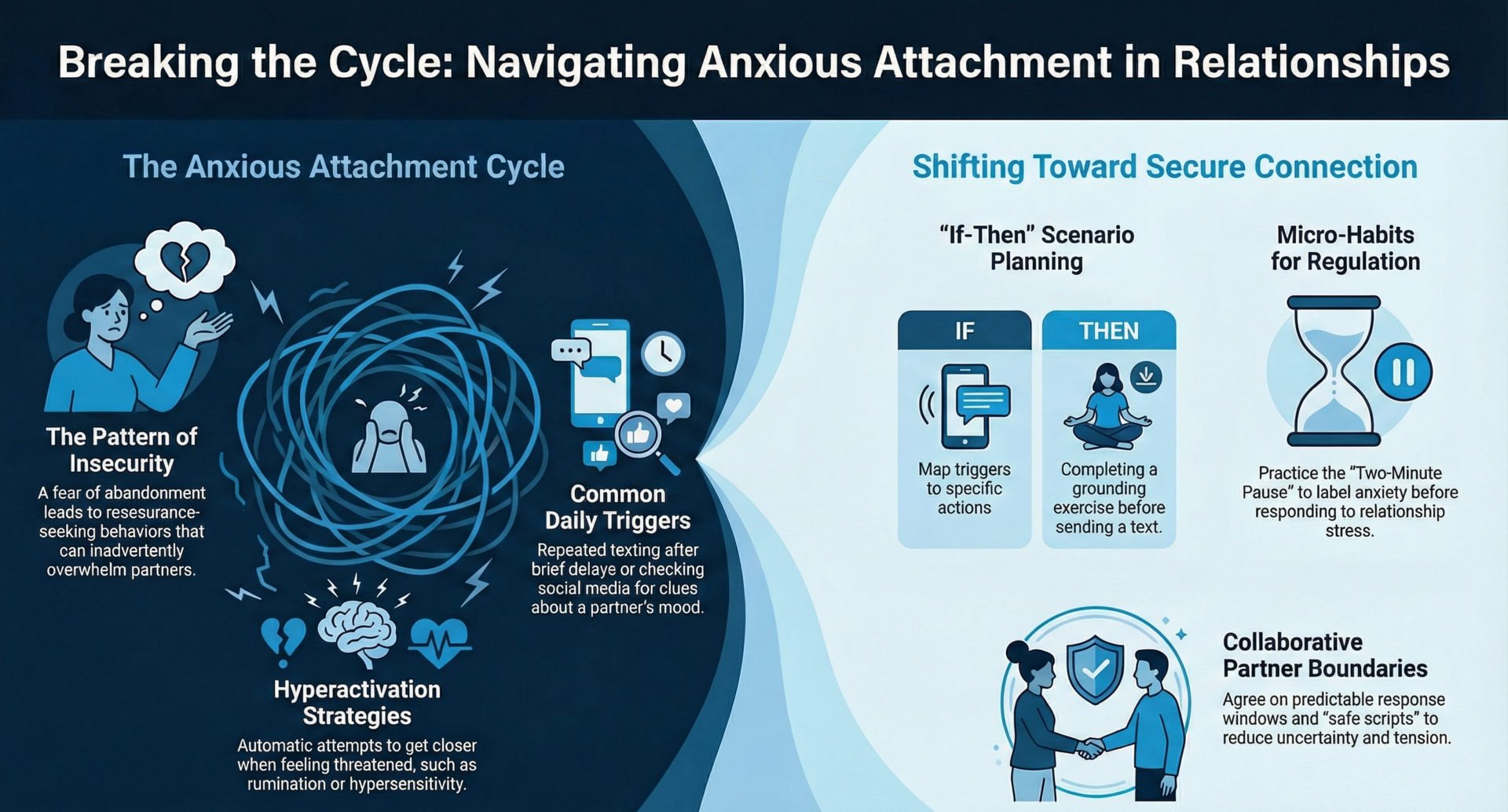
This attachment style is sometimes called anxious-preoccupied attachment. It sits opposite secure attachment on the attachment spectrum and differs from avoidant styles, which push for distance rather than closeness. In romantic relationships, anxious attachment often creates a cycle: perceived distance triggers anxiety, anxiety prompts reassurance-seeking behaviors, those behaviors can overwhelm a partner, and the resulting tension confirms the original fears.
How it shows up early on
Early signs can be subtle. A delayed reply to a message may lead to repeated texts. Calm moments may feel suspicious instead of safe. These reactions are less about logic and more about automatic emotional responses tied to past experiences. While we will cover specific signs and causes later in this series, it helps to know that anxious attachment in relationships is common and treatable.
Why understanding it matters
Knowing that you have anxious attachment in relationships matters for two reasons. First, it reduces self-blame. When you see anxiety as a pattern rather than a moral failing, you can approach change with curiosity instead of shame. Second, awareness opens up options for healthier responses. You can learn to pause before reacting, to communicate needs in a clear way, and to plan for triggers without spiraling.
If you want a quick check-in, try an attachment style quiz to see where you land and what to focus on next. For helpful definitions and terms as you learn, our dictionary and an attachment style quiz are practical starting points. In the next section we will go deeper into signs, causes, and the everyday patterns that shape anxious attachment, and then show simple planning tools to change how you respond.
You can also explore more guides here:
Anxiety
Understanding anxious attachment in relationships
Now that you recognize the pattern, it helps to look at how anxious attachment in relationships operates beneath the surface. This section breaks down the core traits, everyday behaviors, likely developmental paths, and the typical effects on both partners. The goal is to make the pattern visible so you can respond with intention rather than with automatic fear.
Core traits and underlying dynamics
People with this attachment pattern tend to use what therapists call hyperactivation strategies. Those are automatic attempts to get closer when they feel threatened. Common features include:
- Heightened sensitivity to perceived rejection and sudden mood changes.
- Low self worth tied to relationship feedback.
- Intense rumination about partner actions and motives.
- Difficulty calming down after conflict or uncertainty.
Biologically, anxious attachment in relationships often maps to stronger threat responses. That can look like racing heart, intrusive worry, disrupted sleep, or spikes in cortisol when a relationship feels unstable.
Signs and behaviors in daily life
These behaviors help readers spot the pattern without judgment. Examples are small and specific so they feel familiar.
- Repeated texting or calling after a brief delay in response.
- Checking a partner’s social media for clues about mood or location.
- Preemptive apologies to avoid perceived conflict.
- Agreeing to plans or financial requests to secure closeness, even when it creates stress.
- Testing a partner’s care by creating minor crises or withholding information to see a reaction.
Micro-examples: you send three messages in an hour and then refresh the chat. Or you accept extra shifts at work so you can be near your partner, then resent them for taking time away. These actions are attempts to reduce uncertainty but can backfire.

How anxious attachment develops
Attachment patterns form early, but they also reshape across the life span. Typical developmental contributors include:
- Inconsistent caregiving that mixed warmth with unpredictability.
- Emotional unavailability from primary figures in childhood.
- Attachment injuries such as sudden loss, divorce, or betrayal.
- Modeling of anxious relationship behavior by caregivers.
Later stressors can reactivate old patterns. A new breakup, a sick family member, or workplace pressure may make an anxious attachment style more reactive. Understanding the origin reduces self-blame and points toward targeted change.
Impact on partners and relationship patterns
Anxious attachment in relationships rarely exists in isolation. It shapes a cycle that often includes:
- Pull-push dynamics where closeness is followed by perceived withdrawal and then intensified reassurance seeking.
- Frequent miscommunication driven by assumptions rather than direct checks.
- Emotional exhaustion for both partners when one feels responsible for the other’s security.
For partners, this can feel overwhelming or smothering. For the anxiously attached person, the cycle reinforces the original fear. Over time these dynamics can erode trust, increase conflict frequency, and push both people toward reactive decisions about finances, living arrangements, or commitment.
Where to go next
Recognizing these traits makes it easier to choose practical steps. If you want tools for self-reflection and planning, try our attachment style quiz and review key terms in the dictionary. When you are ready to act, scenario templates and tracking tools can help transform anxious reactions into deliberate responses.
From awareness to action
Awareness of anxious attachment in relationships is crucial, but real change happens when you plan and practice new responses. This section gives concrete scenario templates, short scripts, micro-habits, and tracking ideas you can use alone or with a partner to reduce reactive behavior and build safety.
Practical scenario planning
Scenario planning turns automatic fear into predictable steps. Pick one common trigger, map it out, and write an if then plan. Example template:
- If my partner does not reply within three hours, then pause and complete a 10-minute grounding exercise, then send one calm check-in message.
- If my partner needs space, then schedule a check-in time later that day and do a self-care activity in the meantime.
These plans reduce impulsive actions that often follow anxious attachment in relationships. Use the template to create five triggers you face most frequently.
Micro-habits and short scripts
Micro-habits are small, repeatable actions that reshape how you respond. Try these:
- Two-minute pause: breathe, note the feeling, label it as anxiety, then wait before texting.
- One-line script: “I notice I am anxious; can we talk at 7 so I do not worry?”
- Safe alternative: replace repeated messaging with a quick journal entry about what you are afraid of.
Short scripts help you communicate needs without escalating. Practicing these scripts reduces the pull to over-check and people-please behaviors tied to anxious attachment in relationships.
Tracking progress and signs of change
Measure small wins so progress feels real. Use a weekly log to note situations, responses, and outcomes. Key tracker items:
- Number of times you waited before sending a follow-up message.
- Instances you used a grounding or self-soothe exercise.
- Times you scheduled a check-in instead of demanding immediate reassurance.
Track emotional shifts too. Signs you are becoming more secure include fewer panic-driven texts, more self-compassion, and clearer boundary setting. Try our progress tracker to log trends and reflect.
Guidance for partners
Partners play a vital role in change. With clear limits and collaborative planning, you can support each other without enabling dependence. A short joint template:
- State needs: partner A says what calms them when anxious.
- Agree signals: partner B offers a predictable response window and a calming phrase.
- Set boundaries: decide when extra reassurance is helpful and when space is needed for both people.
Use a shared document or try a joint planning session with our scenario templates to practice these steps and build mutual trust.
Applying planning to big life decisions
Anxious attachment in relationships can push urgent decisions about money, moving in, or marriage. Use decision scenarios to forecast likely emotional reactions and outcomes. Example prompts:
- What reaction might I have if a partner delays a financial commitment?
- How will we handle disagreements about living arrangements without escalating?
Structured planning reduces panic-driven choices and helps you make deliberate long-term moves. For foundational clarity, revisit your values with an attachment style quiz and key definitions in our dictionary.
Final thoughts and next steps
Small, consistent practices change patterns tied to anxious attachment in relationships. Start with one trigger, build a simple if then plan, and track progress. Invite your partner into the process with clear scripts and boundaries. Over time, scenario planning helps anxiety lose its power and creates space for secure connection.
Ready to try structured planning that fits your life? Begin with one scenario template today and log your next three responses in a progress tracker to see how steady practice creates safer, healthier love.
You don’t have to figure this out alone. Take the quiz and get personalized guidance today
Frequently asked questions
How long does it take to change anxious attachment in relationships?
Change varies by person, but many people notice small improvements in weeks with consistent practice and clearer communication. Lasting shifts often take months and benefit from tracking, scenario planning, or professional support for anxious attachment in relationships.
Can partners unintentionally reinforce anxious attachment in relationships?
Yes. Inconsistent reassurance or unpredictable availability can reinforce anxiety. Partners can help by agreeing on predictable responses, using calm scripts, and co-creating boundaries that reduce triggering cycles tied to anxious attachment in relationships.
Are there quick tools to reduce anxious attachment in relationships during a conflict?
Yes. Short tools include a two-minute grounding exercise, a one-line pause script, and pre-agreed check-in times. These tools interrupt reactive cycles and lower immediate anxiety so you can respond more intentionally to anxious attachment in relationships.