

There comes a time in almost everyone’s journey when they feel stuck in life. The days begin to blur together. Motivation fades. Even small decisions, like what to eat for dinner or whether to answer a text, start to feel heavy. If you’re feeling stuck, you might be questioning your purpose, doubting your abilities, or simply overwhelmed by the mental weight of your thoughts and feelings.
The good news? Feeling stuck doesn’t mean you’re broken, it means you’re ready for change.
Whether you’re trapped in a job that no longer fulfills you, stuck in a stagnant relationship, or just spinning in circles within your own mind, this emotional “pause” can actually become a powerful starting point for growth. The key lies in understanding what’s behind the stuckness, and learning how to gently guide yourself forward while protecting your mental health.
Why You’re Feeling Stuck in Life
Based on what I’ve learned through research, personal development, and the stories of others, that frustrating feeling of stagnation usually stems from one or more of these root causes:
1. Unclear Goals or Purpose
When you don’t know where you’re headed, it’s hard to feel motivated. You might be working hard, staying busy, but unsure if any of it truly matters. A lack of direction creates an emotional fog that can make everything feel meaningless.
Example: You wake up, go to work, come home, and repeat, but deep down, you’re unsure why you’re doing any of it.
2. Unprocessed Emotions
Sometimes your thoughts and feelings are so overwhelming or so deeply buried, you can’t move forward because your emotional system is still trying to process pain, grief, disappointment, or confusion.
Example: You’re stuck thinking about a breakup, a job loss, or a missed opportunity, and haven’t fully dealt with the emotions attached to it.
3. Fear of Change or Failure
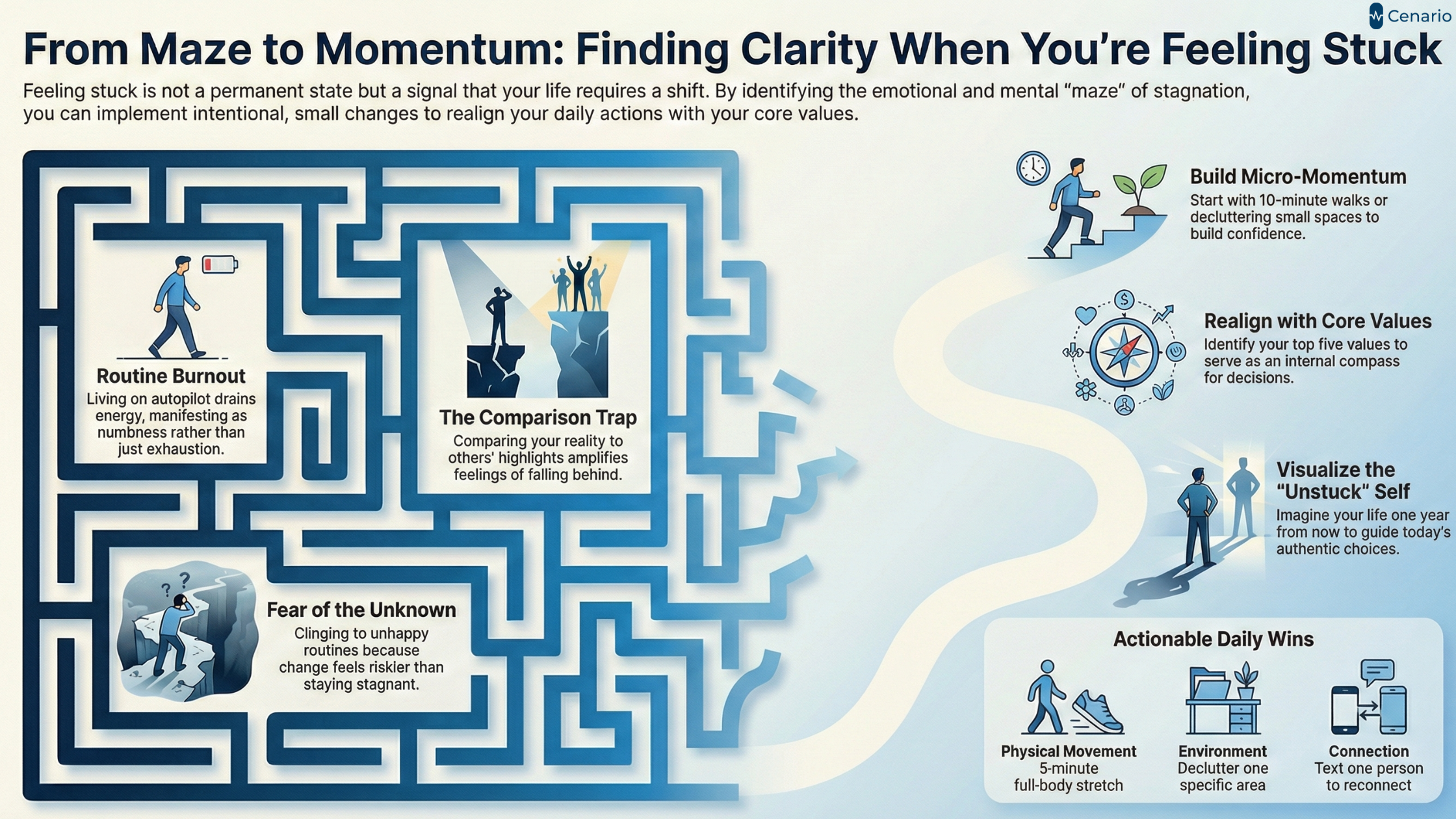
Change, even positive change, comes with risk. What if you leave your job and it gets worse? What if you pursue your passion and fail? This fear keeps people clinging to routines, even when those routines lead to unhappiness.
Example: You stay in a job or relationship that doesn’t serve you anymore, simply because it feels safer than the unknown.
4. Routine Burnout
Living life on autopilot can drain your energy, especially when you’re not being mentally or emotionally stimulated. Burnout doesn’t always look like extreme exhaustion, it can also show up as boredom, irritation, or numbness.
Example: You’re constantly busy but never feel fulfilled.
5. The Comparison Trap
Social media and society often promote the idea that everyone else has it all figured out. When you compare your behind-the-scenes reality to someone else’s highlight reel, it’s easy to feel like you’re falling behind, amplifying your sense of being stuck.
Example: You scroll through Instagram and feel anxious seeing friends traveling, getting promotions, or hitting milestones you haven’t reached yet.
These pressures, internal and external can weigh heavily on your mental health, leading to stress, anxiety, self-doubt, and even depressive symptoms.
Signs That You’re Feeling Stuck
It’s easy to dismiss these feelings as “just a phase,” but recognizing the symptoms early allows you to take proactive steps. Here are some clear indicators that you may be genuinely feeling stuck in life:
- You feel like you’re just going through the motions, disconnected from joy or meaning.
- You experience frequent boredom or irritability, even when life seems “fine.”
- Your thoughts and feelings are constantly negative or repetitive.
- You avoid making decisions due to fear or lack of confidence.
- You feel mentally or emotionally exhausted, despite getting rest.
How to Move Forward When You’re Feeling Stuck
Getting unstuck doesn’t require a huge life overhaul. Often, it starts with small, intentional steps that bring awareness, clarity, and momentum. Here’s a breakdown of actionable strategies to help you reclaim your path.
1. Acknowledge and Accept the Feeling
It’s tempting to avoid or downplay uncomfortable emotions. But denial only prolongs the cycle.
Tip: Instead of saying, “I’m fine,” try saying, “I’m feeling stuck right now, and that’s okay.” Accepting your emotions without judgment opens the door for change.
2. Reflect on Your Thoughts and Feelings
Create space to explore what’s going on beneath the surface. Journaling, therapy, or mindfulness practices can help you unpack mental clutter.
Try this prompt:
- What specific area of my life feels stuck?
- What emotions come up when I think about it?
- When did this feeling begin?
Clarity comes when you allow your thoughts and feelings to be seen and heard.
3. Reconnect with Your Core Values
Values are the internal compass that guide your decisions. If your life doesn’t reflect your values, you’ll naturally feel disconnected and dissatisfied.
Exercise: Write down your top 5 values (e.g., freedom, creativity, security, authenticity, connection). Then ask:
- Which of these am I honoring daily?
- Which ones am I neglecting?
Realigning your actions with your values can reignite purpose and direction.
4. Start Small and Build Momentum
Many people stay stuck because the solution feels too big or unclear. But progress doesn’t require perfection—it requires motion.
Small steps that matter:
- Go for a 10-minute walk each morning.
- Declutter one part of your space.
- Text someone you’ve been meaning to reconnect with.
- Spend 15 minutes researching a new skill or career path.
Every small win builds confidence and creates momentum.
5. Prioritize Your Mental Health
Your mental health is your foundation. If it’s shaky, everything else feels harder. Make space for rest, joy, connection, and self-care, not just productivity.
Supportive actions:
- Get consistent, quality sleep.
- Eat foods that nourish your brain and body.
- Limit screen time and social comparison.
- Talk to a therapist or coach to explore deeper patterns.
Taking care of your mental well-being isn’t a luxury, it’s essential.
6. Visualize the Life You Want
Sometimes we get stuck because we’ve forgotten what we’re aiming for. Visualization is a powerful tool to reconnect with your deeper desires.
Exercise: Close your eyes and imagine your life one year from now, unstuck and fulfilled. Ask:
- What am I doing each day?
- Who am I with?
- How do I feel emotionally, mentally, physically?
Let that vision guide your choices and habits. It doesn’t have to be perfect, just authentic to you.
Final Thoughts
Feeling stuck isn’t a dead end, it’s a message. It’s your mind and body telling you something needs to shift. And that shift doesn’t have to be huge or immediate, it just has to be intentional.
You can rewrite your next chapter with clarity, courage, and self-compassion. Life may not change overnight, but the moment you decide to change even in the smallest way, everything starts to move.
Take the Quiz to Get Your Personalized Supplement Recommendation
Support your journey with science-backed supplements tailored to help reduce stress, improve focus, and rebalance your mental health.
Start feeling better, from the inside out.
Frequently Asked Questions
1. Is it normal to feel stuck in life even when everything seems fine?
Yes. Many people feel stuck even when they have stable jobs, relationships, or routines. This is often a sign of misalignment with your deeper values or unprocessed emotions.
2. How long does the feeling of being stuck usually last?
It varies. For some, it’s a few weeks; for others, it may last months or years. The key is recognizing it and actively taking steps to understand and address the root causes.
3. Can feeling stuck affect my mental health?
Absolutely. Prolonged stagnation can lead to stress, anxiety, depression, and low self-worth. That’s why addressing your thoughts and feelings, seeking support, and taking action is vital for your mental health.