

Empathy is one of the most vital human skills, yet in our fast-paced, digital-first world, it’s often underdeveloped or misunderstood. If you’ve ever wondered how to be more empathetic, you’re not alone, and the good news is, empathy isn’t something you’re either born with or without. It’s a skill you can strengthen through awareness, intentional practice, and emotional intelligence.
In this comprehensive guide, we’ll explore exactly what empathy is, why it’s essential, how to recognize a lack of empathy, and actionable ways to develop your capacity to understand others better. We’ll also introduce key techniques like active listening and the importance of paying attention to verbal and non-verbal cues.
What Is Empathy, Really?
Empathy is the ability to put yourself in someone else’s shoes, to feel what they feel, and to understand their perspective , not from your viewpoint, but from theirs.
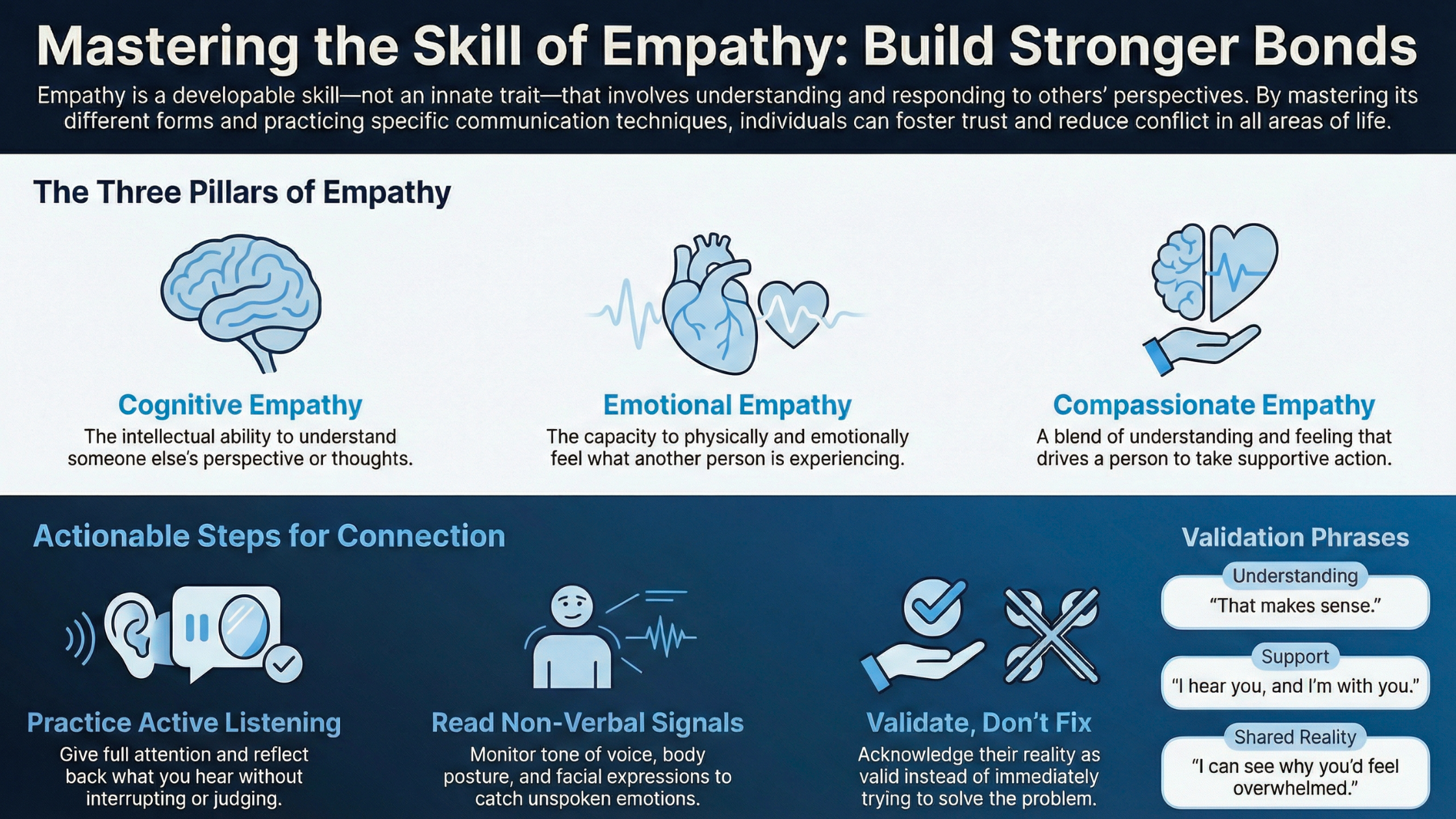
There are three main types of empathy:
- Cognitive Empathy – The intellectual ability to understand someone else’s thoughts or point of view. This is the capacity to understand without necessarily feeling the emotions.
- Emotional Empathy – The ability to physically feel what another person is feeling. This is the emotional resonance that makes you wince when you see someone in pain.
- Compassionate Empathy – A blend of both cognitive and emotional empathy, plus the motivation to help. It’s what drives supportive action.
True empathy incorporates all three: understanding, feeling, and responding in a way that shows genuine care.
Why Is Empathy Important?
You may not always realize it, but empathy impacts every area of your life:
- In Relationships – It builds trust, deepens bonds, and prevents miscommunication.
- At Work – Empathetic leaders inspire loyalty, boost morale, and foster collaboration.
- In Conflict – It helps de-escalate arguments and promotes mutual respect.
- For Mental Health – It enhances emotional awareness and reduces isolation.
On the flip side, a lack of empathy often results in:
- Poor communication
- Emotional disconnect
- Judgment or blame
- Shallow or strained relationships
When people don’t feel understood or emotionally safe, they tend to shut down or become defensive. Practicing empathy opens the door to deeper, more authentic interactions.
How to Be More Empathetic: A Step-by-Step Approach
Here’s a practical, detailed guide on how to develop empathy and apply it in real-life situations.
1. Practice Active Listening
The foundation of empathy is active listening, not just hearing words, but understanding emotions, context, and needs.
Active listening includes:
- Giving your full attention (no multitasking!)
- Making eye contact
- Nodding or using encouraging cues
- Not interrupting
- Reflecting back what you’ve heard
Example:
Instead of replying, “I’ve had worse,” try:
“That sounds incredibly difficult. I can see why you’d feel overwhelmed.”
This shows the person you’re listening with intention and empathy, not judgment.
2. Pay Attention to Nonverbal Signals
Words only tell part of the story. Emotions often leak through tone of voice, body posture, facial expressions, and even silence.
To be more empathetic, you must pay attention to what someone isn’t saying:
- Are their shoulders tense?
- Are they avoiding eye contact?
- Do they seem distracted, angry, or sad despite saying they’re “fine”?
Empathy begins with self-awareness, caring for others is most effective when you also take care of your own emotional well-being.
3. Strengthen Your Capacity to Understand Others
Empathy requires more than just emotional reaction — it demands mental flexibility. You must expand your capacity to understand different perspectives, cultures, emotions, and experiences.
To do this:
- Read fiction and memoirs from diverse voices
- Have conversations with people outside your social circle
- Reflect on how your life experiences shape your views — and how others’ may differ
Understanding doesn’t mean agreeing. It means saying, “I see where you’re coming from, even if it’s different from me.”
4. Suspend Judgment and Assumptions
Our brains are wired to make snap judgments — but empathy begins where judgment ends. Avoid defaulting to blame, shame, or criticism.
Instead of thinking, “Why are they being so dramatic?”, ask yourself,
“What might have led them to feel this way?”
Let curiosity replace criticism.
5. Acknowledge and Validate Emotions
One of the most powerful things you can say to someone in pain is:
“That makes sense.”
Validation doesn’t mean you approve or agree, it means you acknowledge someone’s reality as valid. This is a core part of being empathetic.
Other validating phrases include:
- “I can’t imagine how hard that must be.”
- “That would upset me too.”
- “I hear you, and I’m with you.”
6. Respond with Care, Not Control
Many people confuse empathy with problem-solving. But most of the time, people don’t want fixes, they want connection.
Avoid saying: “Here’s what you should do.”
Instead, consider saying: “I’m here to support you, would you like to talk it through, or would it be more helpful if I just listened for now?”
Empathy isn’t about being right, it’s about being present.
What Causes a Lack of Empathy?
You may notice that some people struggle to express or feel empathy. This can result from:
- Emotional burnout or stress
- Upbringing that discouraged emotional expression
- Cultural or gender norms around vulnerability
- Traumas or mental health issues (like narcissism or sociopathy)
- Lack of self-awareness
If you recognize a lack of empathy in yourself, that’s the first step. Empathy can be learned and practiced over time.
How to Be More Empathetic Without Getting Emotionally Drained
Empathy doesn’t mean you have to absorb everyone’s pain. That’s emotional enmeshment — not empathy.
To stay emotionally balanced:
- Set boundaries when needed
- Take breaks from emotionally intense conversations
- Practice mindfulness and emotional regulation
- Be okay with saying, “I care, but I need time to process before responding.”
Empathy and self-care are closely connected, you cannot support others effectively if you’re emotionally depleted yourself.
Final Thoughts: Empathy Is a Daily Choice
Learning how to be more empathetic is not a one-time decision — it’s a continuous practice of slowing down, listening deeper, and choosing compassion over control. Every time you pause to truly pay attention, every time you validate someone’s emotions, you make the world a more humane and connected place.
Start small. One conversation at a time. One question. One moment of silence where you choose presence over performance.
Ready to support your emotional wellness from within?
Take the Cenario Quiz to get your personalized supplement recommendation and start building emotional balance from the inside out.
Frequently Asked Questions
1. Can empathy be developed, even if I don’t consider myself an emotional person?
Yes. While some individuals may naturally connect more deeply with emotions, empathy is a skill that can be cultivated over time. Begin with intentional practices such as active listening, exposing yourself to diverse perspectives, and engaging in emotional reflection. With consistency, your emotional awareness and empathetic capacity will grow.
2. What is the difference between empathy and sympathy?
Sympathy is the act of acknowledging someone’s hardship from a distance, it often sounds like, “I feel bad for you.”
Empathy, on the other hand, involves emotionally connecting and understanding someone’s experience, for example, “I can imagine how that must feel, and I’m here with you.”
Empathy fosters closeness and emotional safety, while sympathy may unintentionally create emotional distance or convey pity.
3. How can I teach empathy to my children or team members?
Empathy is best taught through consistent modeling. Demonstrate how to pay attention, ask open-ended questions, and respond with understanding rather than judgment. Use real-life moments as teaching opportunities to explore emotions and different perspectives. Acknowledge and praise empathetic behavior when it’s demonstrated, reinforcing its value in daily interactions.
Frequently Asked Questions
1. Can empathy be developed, even if I don’t consider myself an emotional person?
Yes. While some individuals may naturally connect more deeply with emotions, empathy is a skill that can be cultivated over time. Begin with intentional practices such as active listening, exposing yourself to diverse perspectives, and engaging in emotional reflection. With consistency, your emotional awareness and empathetic capacity will grow.
2. What is the difference between empathy and sympathy?
Sympathy is the act of acknowledging someone’s hardship from a distance, it often sounds like, “I feel bad for you.”
Empathy, on the other hand, involves emotionally connecting and understanding someone’s experience, for example, “I can imagine how that must feel, and I’m here with you.”
Empathy fosters closeness and emotional safety, while sympathy may unintentionally create emotional distance or convey pity.
3. How can I teach empathy to my children or team members?
Empathy is best taught through consistent modeling. Demonstrate how to pay attention, ask open-ended questions, and respond with understanding rather than judgment. Use real-life moments as teaching opportunities to explore emotions and different perspectives. Acknowledge and praise empathetic behavior when it’s demonstrated, reinforcing its value in daily interactions.