

Emotional pain is a deeply personal yet universally shared part of the human experience. Whether it’s triggered by loss, trauma, rejection, chronic stress, or a difficult family member, emotional pain can touch every area of your life, including your mental health.
While painful emotions may feel overwhelming, you don’t have to suppress or ignore them. There are healthy, proven strategies that can help you cope with emotional distress, support recovery, and even foster personal growth. Many of these tools are rooted in cognitive behavioral therapy, which offers practical ways to work through negative thoughts and emotional suffering with clarity and care.
If you’re navigating depression alongside emotional pain, you may also find this in-depth guide on understanding and managing depression helpful for deeper insight and support.
Understanding Emotional Pain
Emotional pain refers to the psychological distress caused when your sense of security, identity, or connection is threatened. You may experience:
- Grief or sadness
- Anxiety or fear
- Resentment or anger
- Shame or guilt
- Emotional numbness or disconnection
When left unprocessed, these negative emotions can influence your thoughts, relationships, and even physical health. You may notice poor sleep, irritability, body tension, or a tendency to withdraw.
Acknowledging and addressing these feelings is the first step to healing. Remember, feeling emotional pain doesn’t make you weak, it makes you human.
Why Avoiding Emotional Pain Makes Things Worse
Avoiding emotional pain often seems easier in the short term. People may distract themselves by overworking, binge-watching TV, overeating, or misusing substances.
However, emotions don’t disappear when ignored, they build up and leak into other areas of life. Suppressing painful emotions can amplify negative thoughts, increase anxiety, and lead to emotional burnout.
Healing doesn’t mean erasing the pain. It means learning to manage emotional discomfort in a healthy, sustainable way.
1. Allow Yourself to Feel Without Judgment
Let go of internal messages like:
- “I shouldn’t feel this way.”
- “Other people have it worse.”
- “I just need to be stronger.”
Instead, try telling yourself:
- “It’s okay to feel this.”
- “My emotions are valid.”
- “This is hard, and that’s normal.”
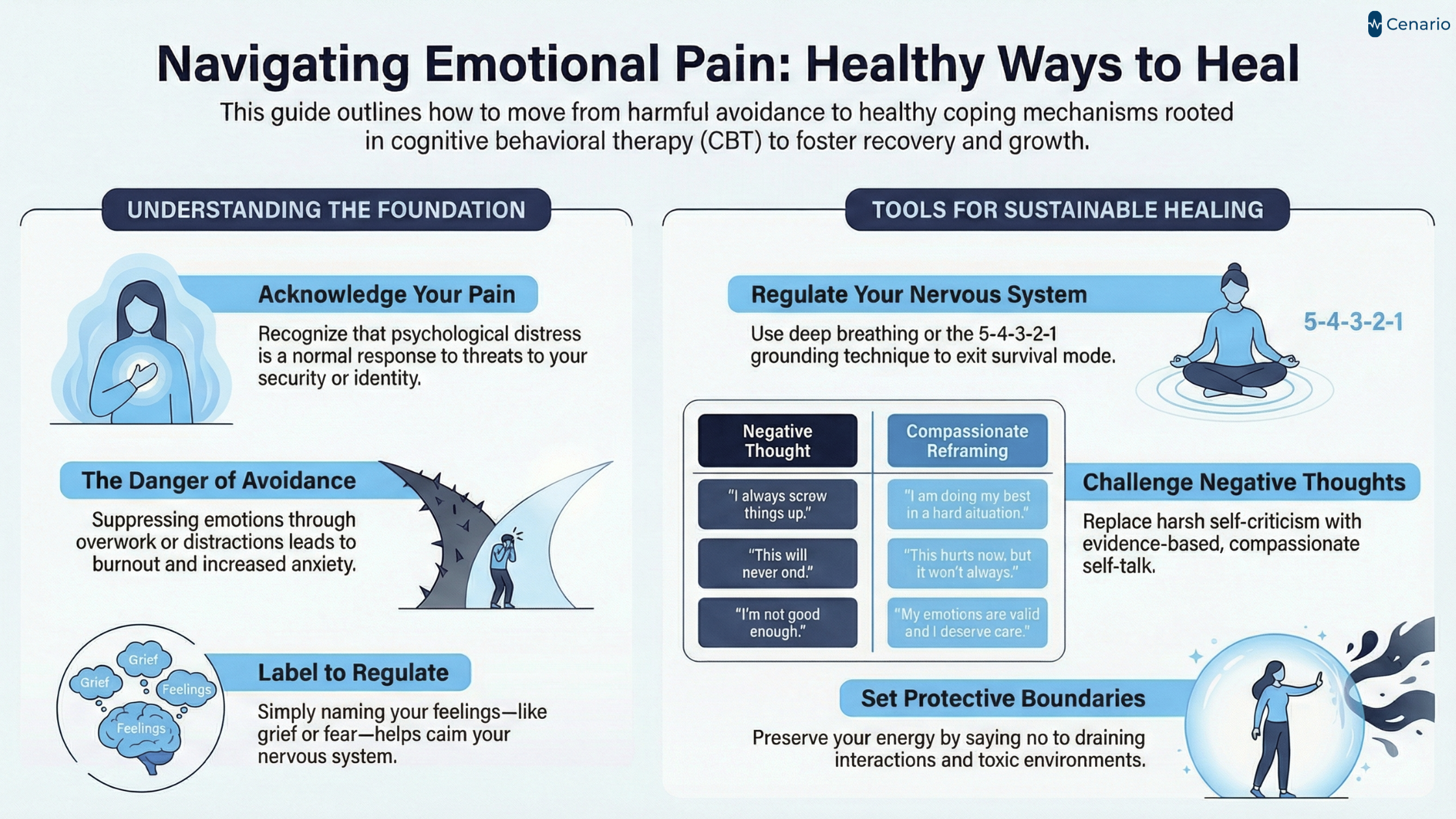
Labeling your feelings (grief, frustration, fear) is a powerful strategy supported by cognitive behavioral therapy research. It helps regulate your nervous system and reduces emotional overwhelm.
2. Use Healthy Outlets to Express Emotions
To cope with emotional discomfort, expression is key. Suppression often backfires.
Helpful outlets include:
- Journaling: Write honestly about what you feel and why.
- Talking to a trusted family member or friend: Share without fear of judgment.
- Creative expression: Art, music, or movement can release feelings words can’t.
- Crying: Crying is a natural way to regulate the nervous system.
Expressing negative emotions doesn’t make them stronger, it makes them manageable.
3. Regulate Your Nervous System
When emotions run high, your body enters survival mode. Before you can think clearly, you must calm your physical system.
Try these strategies:
- Deep breathing: Inhale for 4 seconds, exhale for 6–8 seconds.
- Grounding exercises: Use the 5-4-3-2-1 technique to anchor yourself in the present.
- Cold therapy: Splash your face with cold water or hold something cold.
- Gentle movement: Walk, stretch, or try yoga to release tension.
These methods help create space between your emotions and your reactions, an essential skill to manage emotional stress.
4. Challenge Negative Thoughts
Painful emotions often lead to harsh thoughts:
- “I always screw things up.”
- “I’m not good enough.”
- “This will never end.”
Use cognitive behavioral therapy tools to question these beliefs:
- What’s the evidence for and against this thought?
- Am I assuming the worst-case scenario?
- What would I say to a loved one feeling this way?
Shift to more compassionate self-talk:
- “This hurts now, but it won’t always.”
- “I’m doing my best in a hard situation.”
5. Prioritize Physical Well-being
Mental and physical health are deeply connected. When your body is depleted, negative emotions feel more intense.
Support your emotional health by focusing on:
- Sleep: Create a consistent routine, even if you can’t get 8 hours.
- Nutrition: Balanced meals help stabilize your mood.
- Hydration: Even mild dehydration can worsen fatigue and irritability.
- Movement: Gentle exercise can lift your mood and calm your nervous system.
6. Set Boundaries That Support Healing
When you’re emotionally vulnerable, overexposure to stress, conflict, or toxic relationships can worsen your pain.
Boundaries are essential for recovery. These might include:
- Saying no to invitations that drain you
- Pausing conversations with a critical family member
- Taking breaks from social media
- Scheduling alone time to rest and reflect
Boundaries protect your energy and preserve your capacity to heal.
7. Practice Self-Compassion
When pain surfaces, self-judgment often follows. Try turning inward with kindness, rather than criticism.
Self-compassion looks like:
- Asking, “What do I need right now?”
- Speaking to yourself gently
- Letting go of guilt around rest
- Accepting that healing isn’t linear
You don’t need to earn care, you deserve it simply because you’re struggling.
8. Seek Help When You Need It
If your emotional pain feels chronic or overwhelming, reach out. There’s no shame in seeking support. In fact, it’s one of the strongest things you can do.
Options include:
- Therapy or counseling
- Support groups (in person or online)
- Talking with a trusted friend or family member
- Crisis hotlines for immediate help
You don’t have to carry the pain alone.
Final Thoughts:
Working through emotional pain is a process, not a one-time fix. Healing is made up of small, intentional acts, choosing to rest, to feel, to express, and to reach out.
You’re not broken you’re simply responding to something that mattered deeply. With support, patience, and healthy tools, it’s possible not just to manage emotional struggles but to emerge stronger, clearer, and more grounded.
Take the Next Step Toward Healing
Looking for additional support that aligns with your emotional and physical needs?
Take our quick quiz to receive personalized supplement recommendations designed to help regulate mood, support brain health, and ease painful emotions naturally.
Start your wellness journey today, because healing works best when it’s tailored to you.
Frequently Asked Questions
1. How can I tell if emotional pain is becoming a mental health issue?
If your emotional pain is interfering with daily life, relationships, work, or sleep, or if it persists for weeks without relief, it could be a sign of a deeper mental health concern like depression or anxiety. Seeking support from a therapist can help with diagnosis and healing.
2. Can cognitive behavioral therapy really help with emotional pain?
Yes. Cognitive behavioral therapy (CBT) is one of the most effective, evidence-based approaches for managing negative thoughts and emotional distress. CBT teaches tools to reframe thinking patterns and develop healthier emotional responses.
3. What should I do if a family member is the source of my emotional pain?
Navigating pain caused by a family member is complex. Setting boundaries, seeking outside support (like therapy), and practicing self-compassion are essential. You can care about someone and still choose to protect your emotional health.