

Loving someone with depression can feel confusing, heavy, and emotionally draining—especially when you want to help but don’t know how. Depression is not just sadness or a bad mood; it’s a serious mental health condition that affects how a person thinks, feels, behaves, and connects with others. When your partner is struggling, your support matters more than you may realize—but how you offer that support makes all the difference.
This guide will help you understand what your partner may be experiencing and how to show up with compassion, patience, and emotional safety, without losing yourself in the process.
Understanding Depression in a Relationship
Depression can change the dynamics of even the strongest relationships. A partner who once felt present, affectionate, or energetic may now seem withdrawn, irritable, exhausted, or emotionally distant. This isn’t because they don’t care, it’s because depression impacts motivation, emotional regulation, and brain chemistry.
It’s important to remember:
- Depression is a mental health problem, not a character flaw.
- Your partner’s behavior is not a reflection of your worth or effort.
- You cannot “fix” depression with love alone, but your support can help them feel less alone during difficult times.
What Compassionate Support Really Looks Like
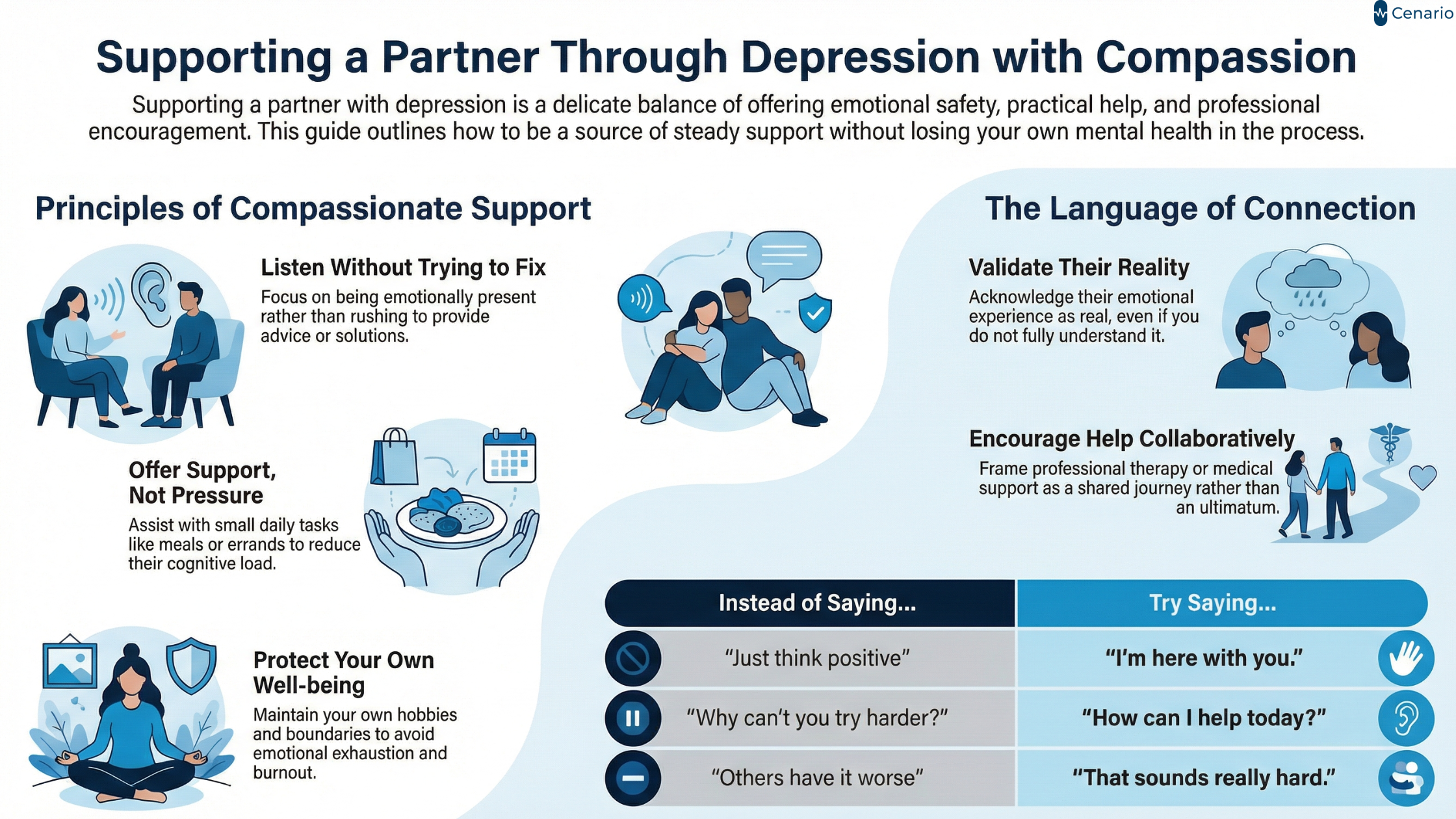
1. Listen Without Trying to Fix
One of the most meaningful things you can do is simply listen. Many people with depression already feel misunderstood or like a burden. When you rush to give advice or solutions, it can unintentionally make them feel dismissed.
Instead of saying:
- “Just think positive”
- “Others have it worse”
- “You need to snap out of it”
Try saying:
- “I’m here with you.”
- “That sounds really hard.”
- “You don’t have to go through this alone.”
Feeling heard can be more powerful than any advice.
2. Validate Their Feelings (Even When You Don’t Understand)
You don’t have to fully understand what your partner is feeling to validate it. Validation means acknowledging their emotional experience as real and meaningful.
Helpful phrases include:
- “It makes sense that you feel overwhelmed.”
- “I can see how much this is affecting you.”
- “Your feelings are valid, even if I don’t have all the answers.”
Validation builds emotional safety, which is crucial when someone feels depressed.
3. Offer Support, Not Pressure
Depression often drains energy and motivation. Tasks that seem simple—getting out of bed, replying to messages, making decisions—can feel overwhelming.
Instead of pushing, try gentle support:
- Ask, “How can I help today?” rather than assuming.
- Offer specific help like cooking a meal, handling errands, or sitting quietly together.
- Respect their pace, even when progress feels slow.
Small, consistent acts of care matter more than big gestures.
4. Encourage Professional Help – Gently
While your support is important, depression often requires help from a healthcare professional. Therapy, counseling, or medical support can make a significant difference, especially for clinical depression.
If your partner is hesitant:
- Avoid ultimatums or force.
- Share your concern from a place of care: “I love you, and I’m worried about you.”
- Offer to help research options or go with them to appointments if they want support.
Encouragement works best when it feels collaborative, not controlling.
5. Take Care of Yourself Too
Supporting a partner with depression can be emotionally exhausting. It’s important to remember that your needs matter as well.
Healthy boundaries are not selfish—they are necessary. Make space for:
- Your own emotions and support system
- Rest, hobbies, and moments of joy
- Honest conversations about how you’re feeling
You can’t pour from an empty cup, and caring for yourself allows you to show up more compassionately.
What Not to Say to a Depressed Partner
Even well-intentioned words can hurt if they minimize the experience. Avoid phrases like:
- “You’re overreacting.”
- “Just be grateful.”
- “Everyone feels like this sometimes.”
- “Why can’t you just try harder?”
These statements can increase shame and make a person feel more isolated.
Supporting Someone During Difficult Times
If your partner is going through a particularly hard phase:
- Be patient with setbacks.
- Celebrate small wins (getting out of bed, taking a shower, opening up).
- Stay consistent, showing up regularly builds trust and safety.
Sometimes, just knowing one person cares deeply can help someone who feels depressed and make it better feel possible.
Final Thoughts
Depression is a serious mental health problem, but compassion, patience, and understanding can make a real difference in a relationship. You don’t need perfect words or solutions. It’s important to remember that being present, listening without judgment, and offering steady support can help your partner feel less alone during difficult times.
Healing is not linear, and progress can be slow,but love expressed through empathy and consistency is powerful.
Take the Next Step Together
If you or your partner are exploring additional ways to support mental well-being, take our quiz to get personalized supplement recommendations designed to support mood balance, stress regulation, and emotional resilience.
Take the quiz and discover personalized support options today.
You don’t have to navigate this journey alone, support, understanding, and the right tools can make a meaningful difference.
Frequently Asked Questions (FAQ)
1. How can I support my partner with depression without overwhelming them?
Supporting a partner with depression starts with recognizing the signs of depression, such as withdrawal, low energy, irritability, or loss of interest in things they once enjoyed. Compassionate support means listening without judgment, validating their emotions, and offering help rather than pressure. Instead of trying to fix the problem, focus on being emotionally present and consistent. Remember that healing often involves support not only from a partner but also from friends and family, creating a wider circle of care.
2. Is it normal to feel exhausted or frustrated when my partner is depressed?
Yes, it is completely normal. Supporting someone with a mental health condition can be emotionally demanding, especially when the depression lasts for a long time. Feeling drained does not mean you lack love or empathy, it means you’re human. Many partners, friends, or even a family member experience emotional fatigue while trying to help. Taking care of your own mental health and seeking support when needed allows you to continue offering compassionate care without burning out.
3. When should I encourage my partner to seek a mental health professional?
If your partner shows persistent signs of depression that interfere with daily life, such as hopelessness, sleep changes, appetite loss, or difficulty functioning, it may be time to encourage support from a mental health professional. A proper depression diagnosis can help identify the most effective treatment options, including therapy or medical support. Approach the conversation gently, express concern rather than urgency, and offer to help with finding resources or attending appointments together if they feel anxious.