

Human emotions are incredibly complex, and one way to better understand them is by looking at personality types. For centuries, people have grouped personalities into four main temperaments: sanguine, choleric, phlegmatic, and melancholic. Each temperament has unique emotional and behavioral traits.
Among these four, the melancholic personality stands out as the most reflective, emotionally intense, and deeply sensitive. People with this temperament tend to feel things more deeply, think more carefully, and carry a quiet emotional strength that may not always be visible on the surface.
In this post, we’ll break down what it means to be melancholic, explain the emotional traits of this personality type, and offer insights into how melancholic individuals experience the world.
What Does “Melancholic” Mean?
The word melancholic comes from ancient Greek medicine. At the time, doctors believed that the human body had four fluids (called “humors”), blood, yellow bile, black bile, and phlegm. When someone had too much black bile, they were thought to be melancholic: quiet, serious, and sometimes sad.
While modern science no longer follows this idea, the concept of the melancholic temperament has stayed with us as part of personality theory.
Key Traits of a Melancholic Person
In today’s terms, a melancholic person is typically:
- Thoughtful – they spend a lot of time thinking things through.
- Introverted – they feel more comfortable alone or in small groups.
- Sensitive – they respond deeply to emotional experiences.
- Analytical – they carefully examine situations and feelings.
- Perfectionistic – they set high standards for themselves and others.
- Emotionally deep – they experience emotions on a deeper level than most.
Melancholic individuals usually process the world around them with great care and intensity. They don’t rush into things. Instead, they reflect, observe, and feel before they act.
Core Emotional Characteristics of a Melancholic Personality
Understanding a melancholic person means recognizing how they experience emotions. Let’s look at the emotional traits that define this temperament:
1. Emotional Sensitivity
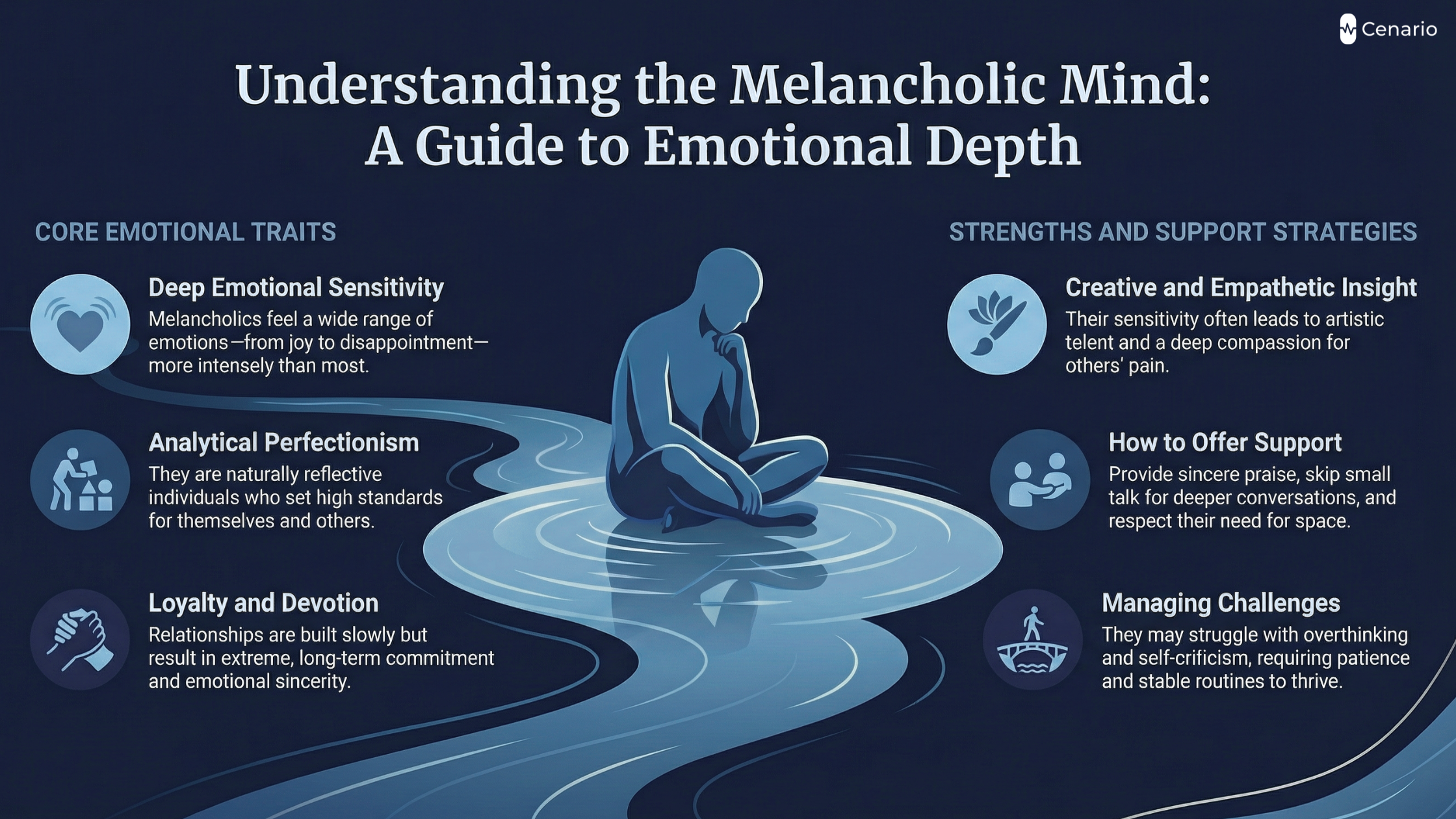
Melancholic people are very sensitive. They feel a wide range of emotions, joy, sadness, love, disappointment—more deeply than most. This emotional sensitivity helps them connect with others and feel empathy.
However, because they feel emotions so deeply, they can sometimes become emotionally overwhelmed, especially in loud or chaotic environments.
2. Tendency Toward Sadness or Pessimism
One common trait of the melancholic temperament is a tendency to feel sadness more easily than others. They might dwell on the past, replay mistakes in their minds, or fear that something bad could happen in the future.
This does not mean they are always unhappy. In fact, many melancholic people find great joy in art, relationships, and meaningful moments. They just experience the full emotional range, including sadness, more vividly.
3. Thoughtfulness and Reflection
Melancholic people are naturally reflective. They like to think deeply about their choices, actions, and feelings. This makes them self-aware and often very wise, even from a young age.
But their habit of overthinking can sometimes lead to anxiety or indecision. They may second-guess themselves or take too long to make decisions because they’re trying to be perfect.
4. Loyalty and Devotion
Emotionally, melancholic individuals are extremely loyal. They don’t build relationships quickly, but when they do, they take them seriously. Whether it’s a friendship, romantic relationship, or family connection, they give their full emotional commitment.
Because of this deep loyalty, they can feel hurt more deeply if someone betrays or disappoints them.
5. Perfectionism and Idealism
Melancholics often have strong personal values and high standards. They imagine how things should be, how people should act, how life should go—and they work hard to live up to those ideals.
This can be a strength, pushing them to strive for excellence. But it can also lead to disappointment when real life doesn’t match their expectations.
The Strengths and Challenges of Being Melancholic
Like all personality types, the melancholic temperament has both strengths and challenges. Understanding both helps you appreciate the full picture of this personality.
Strengths:
- Emotional insight – They understand emotions, both their own and others’.
- Empathy and compassion – They care deeply and are sensitive to others’ pain.
- Loyalty – They are trustworthy and dependable in relationships.
- Analytical thinking – They notice details and think things through carefully.
- Creativity – Their sensitivity often leads to artistic or creative talents.
Challenges:
- Sadness or depression – They may struggle with mood swings or emotional lows.
- Overthinking – They can get stuck in their thoughts and worries.
- Self-criticism – They are often hard on themselves and rarely feel “good enough.”
- Resistance to change – They prefer routines and may feel anxious with sudden changes.
- Difficulty letting go – Past mistakes or hurts may stay with them longer than they should.
How to Support a Melancholic Person
If someone in your life is melancholic—whether a friend, family member, or partner—there are a few simple things you can do to support them:
- Be patient – Give them time to process their thoughts and emotions.
- Offer sincere praise – They often don’t give themselves enough credit.
- Be gentle with criticism – Even small comments can affect them deeply.
- Have meaningful conversations – Skip small talk and go deeper.
- Respect their need for space – Quiet time is essential for them to recharge.
Supporting a melancholic person means respecting their depth and recognizing that their emotional intensity is not weakness, it’s strength.
Melancholic individuals approach relationships with seriousness, sincerity, and emotional depth. Whether in friendship or romance, they are not the type to rush into connections. Instead, they take time to understand the other person, build trust, and ensure that the relationship is meaningful.
Friendships
Melancholics make incredibly loyal and trustworthy friends. Once they form a connection with someone, they are committed for the long term.
- Trustworthy and dependable: They are the kind of friend who will stand by you during difficult times, offering genuine support and emotional presence.
- Love deep conversations: Surface-level talk doesn’t interest them much. They prefer meaningful discussions about life, emotions, values, and experiences.
- Smaller social circles: Because they value quality over quantity, melancholic individuals tend to have a few close friends rather than a large group of acquaintances. They invest deeply in the relationships that matter to them.
Romantic Relationships
When it comes to love, melancholics are deeply committed and emotionally sincere. They don’t engage in casual dating unless there’s potential for something serious.
- They take love seriously: A melancholic won’t say “I love you” lightly. They need to feel emotionally safe and understood before opening up.
- Seek emotional connection: Beyond physical attraction, they want a partner who shares their values, dreams, and emotional intensity.
- Often shy or cautious at first: They might seem distant or reserved in the beginning. But once they feel safe, they reveal a caring, nurturing, and affectionate side that runs very deep.
Relationship Tip:
Melancholics thrive in relationships that are emotionally secure, honest, and stable. However, if they feel taken for granted, criticized harshly, or misunderstood, they may withdraw and become emotionally distant. Patience, empathy, and reassurance go a long way in helping them feel valued and safe.
Melancholic Personality in Daily Life and Career
Melancholic individuals bring a thoughtful, careful, and often perfectionistic approach to their daily routines and professional lives. They are driven by purpose, ideals, and a desire to do things with precision and meaning.
In Daily Life
Melancholics tend to create structure in their day-to-day lives to feel secure and in control. Chaos or unpredictability can overwhelm them, so they naturally seek calm, ordered environments.
- Prefer routines: They find comfort in routines and planning. Sudden changes or surprises may cause them stress.
- Careful decision-makers: They like to weigh the pros and cons of every choice. Though this can make decision-making slow, it often leads to thoughtful, well-informed outcomes.
- Mentally organized: Even if they aren’t always neat in appearance, their thoughts, ideas, and priorities are usually very well-organized.
In School and Career
Melancholics excel in environments where concentration, precision, and depth are valued. They are often drawn to fields that allow them to analyze, create, or help others in meaningful ways.
- Career strengths: They are hardworking, responsible, and produce high-quality results. However, they may spend too much time trying to perfect their work.
- Ideal career paths:
- Writing and journalism: Their reflective nature and attention to language make them great storytellers.
- Psychology or counseling: Their emotional depth and empathy allow them to understand and support others.
- Art and design: They often express their emotions through creative outlets and are highly attuned to beauty and detail.
- Teaching: Their patience and desire to help others grow can make them inspiring educators.
- Science and research: Their love for structure, analysis, and discovery can shine in technical or investigative roles.
Work & Study Tip:
Melancholic individuals should be mindful not to set impossible standards for themselves. Encouraging regular breaks, self-compassion, and the acceptance of mistakes can help them stay emotionally balanced and avoid burnout. It’s important to remember that “done” is often better than “perfect.”
Final Thoughts
The melancholic personality is rich, emotional, and deeply thoughtful. While they may not always be the loudest or most outgoing people, their inner world is full of meaning, reflection, and care.
They bring a quiet strength to relationships, a desire for truth and beauty, and a strong commitment to their values. By understanding and appreciating their emotional traits, we can create deeper connections and healthier relationships with melancholic individuals.
Whether you are melancholic yourself or know someone who is, embracing this personality type means celebrating the depth, honesty, and quiet beauty that come with it.
Take our quick quiz to get a personalized supplement recommendation designed to support your emotional balance, energy, and mental clarity based on your unique temperament.
Take the Quiz Now and discover what your body and mind truly need!
Frequently Asked Questions
1. Can a person have more than one temperament type, or is melancholic always dominant?
Yes, most people are a blend of temperament types. While someone might identify as primarily melancholic, they may also show traits from the other temperaments, sanguine, choleric, or phlegmatic. For example, a person can be melancholic-phlegmatic, which combines emotional depth with calmness and loyalty. Understanding your temperament blend can give a more complete picture of your personality and emotional style.
2. Is being melancholic the same as being depressed?
Not at all. Although melancholic individuals feel emotions deeply and may experience sadness more often than other temperaments, being melancholic is not the same as clinical depression. Depression is a mental health condition that may require medical treatment, while the melancholic temperament is a natural personality type. In fact, many melancholics experience deep joy, love, and creativity, they just express and process emotions more intensely.
3. What are the best ways for melancholic people to manage stress or anxiety?
Because melancholics are often perfectionists and deep thinkers, they may overthink or worry too much. Some helpful stress-management strategies include:
- Journaling to release thoughts and emotions
- Spending time in nature or quiet spaces
- Practicing mindfulness or meditation
- Creating a daily routine for structure
- Talking to a trusted friend or counselor
Learning to set realistic expectations and take breaks from overthinking is key for emotional well-being.
4. Are melancholics good leaders or better suited for behind-the-scenes roles?
Melancholic individuals can be excellent leaders, especially in roles that require integrity, vision, empathy, and attention to detail. They may not be the most outgoing or assertive, but their thoughtful approach often leads to well-planned, ethical, and effective leadership. That said, many melancholics also thrive in behind-the-scenes roles where they can focus deeply, solve complex problems, or create meaningful work without being in the spotlight.