
Depression is a serious mental health condition that affects millions of people worldwide. It impacts how a person feels, thinks, and functions in daily life. The symptoms may range from persistent sadness and fatigue to a loss of interest in activities once enjoyed. Fortunately, treating depression is possible, especially with a well-structured treatment plan that includes clear and achievable goals.
In this comprehensive guide, we’ll explore what to expect from depression treatment plans, how to set and evaluate goals, and what effective treatment looks like in both the short and long term. Whether you’re a patient, caregiver, or simply seeking to understand more, this post will give you valuable insight into navigating the recovery process.
Why Are Treatment Goals Important in Treating Depression?
Setting treatment goals is a cornerstone of effective depression treatment. Depression can diminish motivation and make it difficult to recognize progress. By setting goals and objectives, individuals and mental health professionals can monitor improvements, stay engaged in therapy, and maintain focus on recovery.
Treatment goals help:
- Reduce the severity of depressive symptoms
- Restore daily functioning and motivation
- Challenge and reframe negative thoughts
- Encourage consistency in therapy or medication
- Improve overall quality of life gradually
- Identify and address obstacles during the recovery process
These goals are tailored to meet individual needs, ensuring a more personalized and effective approach to managing depression.
Understanding the Core Symptoms of Depression
Before discussing goals, it’s helpful to understand the common symptoms of depression that treatment aims to address. These may include:
- Persistent sadness or hopelessness
- Fatigue and low energy
- Loss of interest in activities or hobbies
- Feelings of guilt, worthlessness, or helplessness
- Sleep disturbances (insomnia or oversleeping)
- Difficulty concentrating or making decisions
- Changes in appetite or weight
- Thoughts of death or suicide
Addressing these symptoms with specific and measurable goals is a critical part of any successful treatment plan.
Short-Term vs. Long-Term Goals for Depression
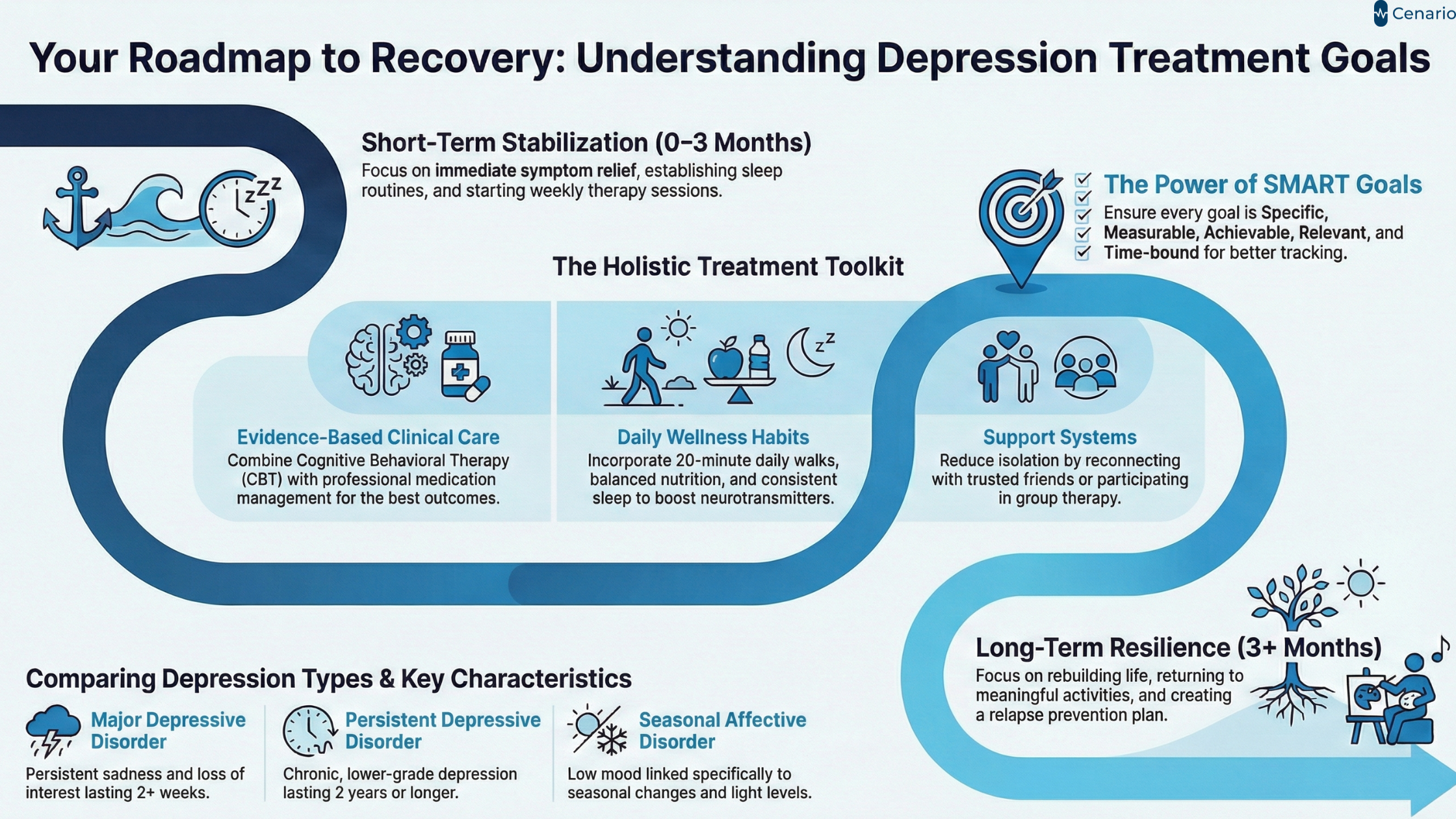
Goals for depression are typically divided into two phases: short-term goals that manage immediate symptoms and long-term goals that support lasting recovery and resilience.
Short-Term Goals (0–3 Months)
The focus of short-term goals is symptom relief and stabilization of daily functioning. This phase often includes:
- Attending regular therapy sessions (such as weekly cognitive behavioral therapy or CBT)
- Starting antidepressant medication if prescribed and tracking side effects
- Establishing a healthy sleep schedule and eating routine
- Participating in mild physical activity, such as a daily 20-minute walk
- Reaching out to one supportive person each week
- Journaling to identify and challenge negative thoughts
These early goals are small, actionable, and designed to create momentum without overwhelming the individual.
Long-Term Goals (3 Months and Beyond)
Long-term treatment goals focus on rebuilding life and maintaining emotional wellness. These goals support:
- Improving overall mood, energy, and life satisfaction
- Developing and applying healthy coping strategies
- Returning to work, school, or meaningful daily activities
- Reconnecting with community and support groups
- Exploring underlying emotional or psychological issues
- Creating a relapse prevention plan with a therapist
- Building a more structured daily routine
- Reducing or eliminating reliance on medication, if appropriate
These goals for depression are broader and help sustain improvements after initial symptom relief.
Key Components of a Comprehensive Depression Treatment Plan
A holistic treatment plan for depression typically includes a combination of therapies, lifestyle modifications, and support systems. Here’s what a well-rounded plan may involve:
1. Psychotherapy
The most common and evidence-based form is cognitive behavioral therapy (CBT). It helps individuals identify and change distorted thinking patterns, manage negative thoughts, and develop better coping mechanisms.
Other types of therapy might include interpersonal therapy (IPT), dialectical behavior therapy (DBT), or psychodynamic therapy, depending on the individual’s needs.
2. Medication Management
Antidepressants such as SSRIs or SNRIs may be prescribed to manage chemical imbalances in the brain. Medication can be a key part of effective depression treatment, especially in moderate to severe cases.
Regular progress evaluation is essential to determine whether the medication is effective or needs to be adjusted.
3. Lifestyle Adjustments
Positive lifestyle habits are critical. These may include:
- Regular physical activity, which can boost mood-enhancing neurotransmitters
- Balanced nutrition and proper hydration
- Sleep hygiene techniques to improve rest
- Reducing alcohol, caffeine, or drug use
Many depression treatment plans incorporate these changes as part of long-term goals to enhance overall quality of life.
4. Support Systems
Building strong support networks is crucial. This might include:
- Reconnecting with trusted friends or family
- Participating in group therapy or support groups
- Involving family members in treatment through family counseling
Support systems help reduce isolation and encourage sustained recovery.
5. Monitoring and Progress Evaluation
A critical part of any treatment plan is ongoing progress evaluation. This involves:
- Regular check-ins with a mental health professional
- Adjusting goals as needed
- Tracking improvements in sleep, mood, concentration, and energy
- Addressing setbacks in a constructive way
Tracking progress helps both patient and provider stay aligned on the path to recovery.
How to Set Effective Goals for Depression Treatment
Using the SMART framework can make setting goals and objectives more effective:
- Specific: Clear and direct (e.g., “Walk 20 minutes each day”)
- Measurable: Track progress (“Logged 5 days of walking this week”)
- Achievable: Start with attainable steps
- Relevant: Focused on what matters to the individual
- Time-bound: Set a timeframe for completion
This approach helps break down complex recovery into manageable actions.
What to Expect Emotionally During Depression Treatment
Treatment isn’t linear. It’s normal to experience:
- Emotional highs and lows during therapy
- Frustration over slow progress
- Reluctance to engage with certain treatment steps
- Moments of clarity and hope as symptoms lessen
Stay patient and compassionate with yourself. Every small improvement is a sign of progress, even if it’s not immediately obvious.
Understanding the Different Types of Depression
Depression is not a single, uniform condition, it presents in various forms, each with unique symptoms, causes, and treatment plans. Understanding the different types of depression can help you or a loved one find the most suitable approach to treating depression.
Here are the most common types:
- Major Depressive Disorder (MDD): Characterized by persistent depressive symptoms such as extreme sadness, fatigue, and loss of interest in activities lasting for at least two weeks. This is the most widely diagnosed form and usually requires a combination of therapy and medication.
- Persistent Depressive Disorder (Dysthymia): A chronic, lower-grade depression that lasts two years or longer. Individuals may function daily but feel consistently low, making this condition easy to overlook.
- Seasonal Affective Disorder (SAD): Linked to seasonal changes, especially during the fall and winter months when sunlight is limited. Symptoms include low mood, irritability, and sleep changes.
- Postpartum Depression: A serious form of depression affecting mothers after childbirth, marked by emotional instability, negative thoughts, and difficulty bonding with the baby.
Each type may require a slightly different treatment plan, which could include cognitive behavioral therapy, medications, light therapy (for SAD), or hormonal support (for postpartum depression). Proper diagnosis by a mental health professional is crucial for effective depression treatment.
Natural Supplements for Depression: What Works and What Doesn’t
While professional care is key in treating depression, certain natural supplements may support emotional wellness and improve overall mental health, especially when used as part of a holistic approach.
Here are some of the most studied supplements:
- Omega-3 Fatty Acids: Found in fish oil, omega-3s are known to support brain health and reduce inflammation. Some studies show modest benefits for reducing depressive symptoms when combined with standard treatments.
- St. John’s Wort: A widely used herbal remedy for mild to moderate depression. However, it can interact with medications like antidepressants, so it should only be used under medical supervision.
- Magnesium: Often deficient in people with depression. Magnesium supplements may help regulate mood, reduce anxiety, and improve sleep quality.
- Vitamin D: Low levels are associated with negative thoughts and low mood, especially during winter months. Supplementation may be helpful, particularly for individuals with seasonal affective disorder.
Important: Supplements should never replace therapy or medication but can be an effective complement. For personalized recommendations, it’s best to speak with a healthcare provider, or better yet:
Take our quiz to get personalized supplement recommendations based on your mood, symptoms, and lifestyle.
Daily Habits That Support Depression Recovery
Recovery from depression is not just about therapy and medication. Incorporating evidence-based daily habits into your routine can reinforce your treatment goals, increase resilience, and help improve overallquality of life.
Here are key daily practices to consider:
- Mindfulness and Meditation: Just 10–15 minutes a day of mindfulness or guided meditation can reduce stress and help regulate your emotions. Apps like Headspace or Calm are excellent for beginners.
- Physical Activity: Even light exercise, such as a daily 20-minute walk, has been shown to reduce depressive symptoms. Movement stimulates endorphins and supports better sleep and energy levels.
- Journaling: Writing about your thoughts and feelings helps you process emotions, identify negative thought patterns, and track progress evaluat ion over time. Try gratitude journaling to refocus attention on positives.
- Consistent Sleep Routine: Poor sleep worsens depression. Aim for 7–9 hours of restful sleep each night. Avoid screens an hour before bed and keep a consistent sleep-wake schedule.
- Healthy Nutrition: Limit processed foods and sugar. Focus on a balanced diet rich in whole grains, leafy greens, lean proteins, and healthy fats, all of which support mental health.
Implementing even a few of these habits consistently can amplify the effects of your depression treatment plan and enhance daily functioning.
Conclusion: Building a Path Toward Healing
Treating depression is not a one-size-fits-all journey. A personalized treatment plan with clearly defined treatment goals can make a world of difference in managing depressive symptoms, challenging negative thoughts, and restoring daily functioning.
By combining cognitive behavioral therapy, medication (if necessary), lifestyle improvements, and support groups, individuals can improve overall mental health and enjoy a higher quality of life. Remember, recovery takes time, but with the right strategies and support, it is absolutely achievable.
If you or someone you know is struggling, don’t wait to seek help. Talk to a licensed mental health professional and start building your personal roadmap to recovery.
Take the First Step Today
Want to explore natural ways to support your mental health?
Take our quick quiz to get personalized supplement recommendations designed to complement your depression treatment plan and support emotional balance.
Frequently Asked Questions
1. What are the most effective treatment options for depression?
The most effective depression treatment plans often include a combination of cognitive behavioral therapy (CBT), antidepressant medication, lifestyle changes such as regular physical activity, and participation in support groups. Each individual responds differently, so it’s essential to create a personalized treatment plan in consultation with a mental health professional.
2. How do I set realistic treatment goals for depression?
Start by identifying specific challenges you’re facing, such as sleep issues, loss of interest in activities, or low energy. Use the SMART goal method: Specific, Measurable, Achievable, Relevant, and Time-bound. For example, a short-term goal might be, “Walk 15 minutes each day for one week.” Your mental health provider can help you adjust and monitor your treatment goals as you progress.
3. How long does it take to see results from depression treatment?
Results vary depending on the severity of depressive symptoms, the type of treatment, and individual factors. Some people notice improvement within 2–4 weeks of starting medication or therapy, while for others, it may take several months. Regular progress evaluation with your therapist or doctor ensures your treatment plan remains effective and adaptable.
4. Can supplements help with treating depression?
Certain supplements, like omega-3 fatty acids, vitamin D, magnesium, and B-complex vitamins, may help support mental health as part of a broader treatment strategy. However, they are not a replacement for therapy or medication. For the best results, take our quiz to get personalized supplement recommendations tailored to your unique needs and symptoms.