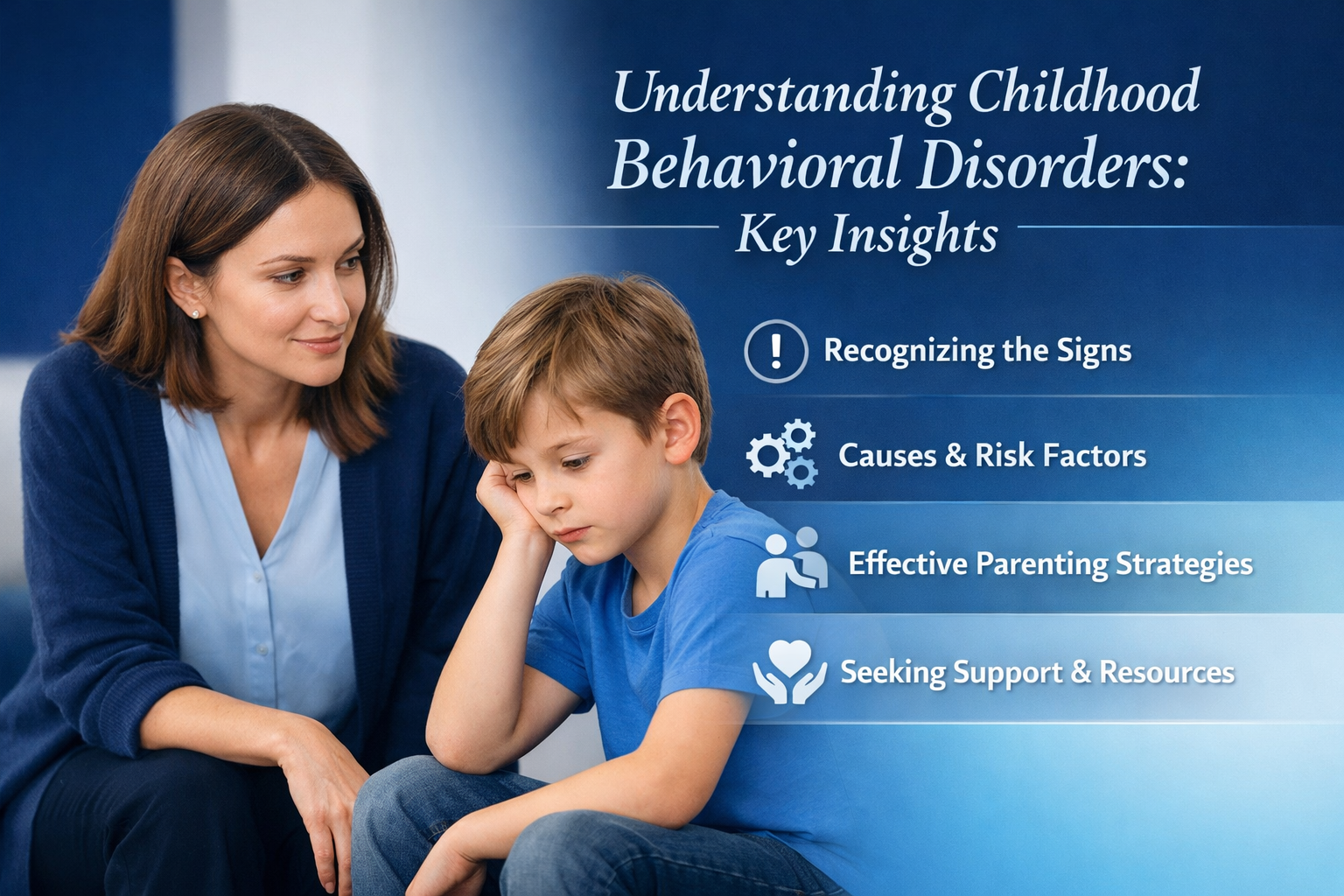

Childhood behavioral disorders include patterns of behavior that consistently interfere with learning, family life, and peer relationships. These are not occasional lapses in judgment or typical developmental testing of limits. The behaviors are persistent, cause distress, and reduce a child’s ability to function at school and at home. Common diagnoses include attention-deficit hyperactivity disorder, oppositional defiant disorder, and conduct disorder, although symptoms, intensity, and impact differ from child to child.
Why Early Identification Matters
Early identification can meaningfully change outcomes. When behavioral disorders are recognized sooner, children gain faster access to structured support such as behavioral therapy, parent coaching, and school accommodations. Early intervention improves self-regulation, social skills, and academic engagement. It also reduces strain on families and teachers by replacing guesswork with a clear plan. Delayed recognition often allows problems to compound, making change harder later.
Signs To Watch For
Not every argument or burst of energy indicates a disorder. Focus on patterns that are frequent, long lasting, and disruptive across more than one setting. Key warning signs include:
- Ongoing inattention, impulsivity, or hyperactivity that interferes with learning
- Repeated temper outbursts, defiance, or intentional rule breaking
- Aggressive behavior or lack of concern for others’ safety or feelings
- Little improvement despite consistent, reasonable discipline at home and school
- Difficulty forming or maintaining friendships because of disruptive behavior
When these patterns persist and impair daily functioning, a structured evaluation is warranted. Early clarity allows families to move from frustration to effective support and gives children the best chance to build skills that last.
A Team-Based Approach Works Best
Effective care for childhood behavioral disorders almost always requires a coordinated, team-based approach. No single adult sees the full picture. Parents, teachers, pediatricians, and mental health professionals each observe different settings and stressors. When these perspectives are combined, patterns become clearer and treatment is more precise.
A proper assessment typically includes interviews, direct observation, and standardized rating scales completed by adults who know the child well. From there, the team builds a plan that may combine parent training, child-focused therapy, and school supports. The goal is not just symptom reduction, but better functioning across home, school, and peer relationships.
Practical Next Steps For Parents
If you are concerned about ongoing behavioral issues, start with concrete actions:
- Track behaviors for several weeks, noting frequency, triggers, and impact on daily life
- Talk with your child’s pediatrician or school counselor about specific concerns
- Request a comprehensive evaluation if behaviors persist, escalate, or spread across settings
- Ask for a written care plan with clear roles, goals, and follow-up dates
Simple tools like behavior logs and meeting checklists make it easier to coordinate care across home, school, and clinical settings. Many families use structured tracking sheets to stay organized and reduce miscommunication.
Types And Diagnosis In Depth
Understanding how clinicians distinguish between common behavioral disorders helps families and schools ask better questions and avoid one-size-fits-all responses. Accurate diagnosis matters because treatments differ meaningfully.
Attention-Deficit Hyperactivity Disorder
ADHD involves persistent inattention, impulsivity, and or hyperactivity that interfere with learning and daily functioning. It often coexists with learning disorders, anxiety, or sleep problems. ADHD is neurodevelopmental, not a result of poor parenting. Effective care focuses on structured routines, behavioral strategies, school accommodations, and, when appropriate, medication with regular monitoring.
Oppositional Defiant Disorder
Oppositional defiant disorder is defined by ongoing anger, argumentativeness, and defiance toward authority figures. It commonly overlaps with ADHD and mood difficulties. Treatment emphasizes parent management training, consistent expectations, and predictable consequences rather than punishment escalation.
Conduct Disorder
Conduct disorder involves more severe and persistent behaviors such as aggression toward people or animals, serious rule violations, and property destruction. Without early intervention, it increases the risk of academic failure and legal involvement. Evidence-based care typically combines family therapy, school-based interventions, and community supports.
Diagnosis And Assessment: What To Expect
A thorough evaluation gathers information from multiple sources and settings. This reduces bias and helps rule out other explanations.
Multi-Informant Data And Observation
- Parent and teacher rating scales to compare behavior across environments
- Direct observation in clinic or school to identify triggers and strengths
- Review of school records to uncover learning difficulties that may drive behavior
Common Assessment Tools
- Vanderbilt or Conners scales for attention and behavior
- Child Behavior Checklist for broad emotional and behavioral screening
- SNAP-IV for ADHD symptom severity
- Structured diagnostic interviews in specialist settings
Medical review is also essential. Sleep disorders, vision or hearing problems, and some medical conditions can mimic or worsen behavioral symptoms.
Red Flags That Warrant Prompt Evaluation
Seek a timely assessment when you notice:
- Behaviors lasting longer than six months and present at home and school
- Severe aggression that causes injury or repeated school suspension
- Declining academic performance tied to behavior or social withdrawal
- Threats of self-harm or signs of significant anxiety or depression
These patterns signal the need for structured, professional support rather than continued trial-and-error discipline.
How To Prepare For An Evaluation
Preparation improves accuracy and speeds next steps. Bring:
- A brief timeline of concerns with concrete examples and triggers
- Recent school reports, work samples, or disciplinary notes
- Completed rating scales from parents and teachers when available
- Information on sleep, medications, and relevant medical history
Next Steps After Assessment
After diagnosis, the care team should outline a targeted plan with measurable goals and a clear monitoring schedule. Strong plans specify what happens at home and at school, how progress is tracked, and when the team will reassess.
Families benefit from simple measurement tools such as weekly behavior logs and short teacher check-ins focused on predefined goals. Clear structure replaces uncertainty and gives children the best chance to build lasting skills.
For families seeking coordinated, evidence-based guidance, Cenario supports structured assessment and follow-up planning designed to reduce confusion and improve outcomes.
Tools To Help Families Stay Organized
Managing behavioral disorders in children is easier when information is structured and shared consistently. Cenario provides practical tools such as a behavioral screening quiz, plain-language topic summaries in the health dictionary, and planning templates designed to coordinate care across home, school, and clinical teams. These resources help families reduce confusion, track progress, and keep everyone aligned.
Treatment And Practical Care Planning
Once a diagnosis is established, families and clinicians work together to build a care plan focused on the child’s most pressing needs. Effective treatment blends therapy, family and school strategies, and sometimes medication. The goals are to reduce disruptive behaviors, strengthen self-regulation skills, and improve learning and relationships.
Below are evidence-based options and a practical way to organize care.
Behavioral And Parent-Based Therapies
For many children, parent-focused approaches are first-line treatment. Parent management training and behavioral parent training teach caregivers how to create consistent routines, set clear expectations, and use reinforcement strategies that shape behavior over time.
Common Approaches
- Parent management training or behavioral parent training to improve consistency and reduce escalation at home
- Cognitive behavioral therapy for older children to build emotional regulation and problem-solving skills
- Social skills training and anger management for children who struggle with peer relationships
These approaches are most effective when strategies are applied across settings and progress is tracked in simple, repeatable ways.
Family And School Involvement
Behavioral disorders improve faster when home, school, and clinicians work from the same plan. Family therapy can improve communication and reduce conflict. At school, structured supports such as an Individualized Education Program or a 504 plan can provide accommodations that reduce stress and support learning.
Practical Steps For School Collaboration
- Meet with teachers and school counselors to share goals and expectations
- Bring a brief behavior summary and one or two measurable targets, such as reducing classroom disruptions
- Agree on a simple reporting method, such as weekly notes or brief daily check-ins
Using shared templates and trackers helps standardize communication and prevents important details from being lost.
Medication: Role, Benefits, And Limits
Medication can be helpful for certain conditions, particularly ADHD, where stimulants and nonstimulant options can reduce core symptoms. Medication is rarely sufficient on its own. It works best as part of a broader plan that includes therapy and school supports. Families should review expected benefits, possible side effects, and monitoring plans carefully with the prescribing clinician.
Creating A 90-Day Care Pathway
A short, structured timeline helps turn recommendations into action and makes progress measurable.
Days 1–14
- Begin behavior tracking to establish a baseline
- Gather teacher input
- Schedule follow-up with the pediatrician or specialist
Weeks 3–6
- Start parent training sessions
- Set two clear, measurable home goals
- Initiate school accommodations and confirm reporting format
Weeks 7–12
- Begin child-focused therapy if recommended
- Review progress at week 8 using tracked data
- Adjust strategies and consider medication evaluation if impairment remains significant
Week 12 Review
- Reassess goals and update the care plan
- Set follow-up intervals every 1–3 months based on need
Typical monitoring tools include weekly behavior logs, brief teacher progress notes, and symptom ratings at baseline and again at 12 weeks. These data points guide decisions about continuing, intensifying, or modifying treatment.
Consistent planning and measurement reduce uncertainty and improve outcomes. Start small, track what matters, and build collaboration across home, school, and clinical care.
Want a clearer starting point?
Take the Cenario quiz to see which areas of mood, stress, sleep, and focus may need support.
Frequently Asked Questions
Can Behavioral Disorders In Children Be Treated Without Medication?
Yes. Many children improve significantly with parent-based therapies and behavioral interventions alone. Medication may be added when symptoms are severe or when therapy alone does not sufficiently reduce impairment.
How Long Does Treatment Usually Take?
Treatment length varies by diagnosis and severity. Parent-based programs often last 8–12 weeks, while child-focused therapy may continue for several months. Regular monitoring helps determine whether progress is on track.
How Can I Communicate Effectively With My Child’s School?
Bring concise documentation, a short behavior summary, and one or two measurable goals. Agree on a simple reporting method such as weekly notes or brief daily checklists so progress is visible and actionable.