
Sleep plays a powerful role in a child’s physical growth, emotional regulation, learning ability, and overall mental health. Yet many families quietly struggle with child insomnia, a condition where a child has difficulty falling asleep, staying asleep, or getting restful sleep despite having enough opportunity to rest. While occasional sleep problems are normal during development, persistent insomnia can affect mood, behavior, academic performance, and even long-term well-being.
This detailed guide explains what child insomnia is, why it happens, how to recognize the signs, and what parents can do to support healthier sleep habits. If you’d like to read more or dive deeper into sleep-related topics, explore additional expert articles here in our Knowledge Hub for practical insights and guidance.
What Is Child Insomnia?
Child insomnia refers to ongoing difficulty with sleep that interferes with a child’s daily functioning. Unlike adults, children may not always say they feel “insomniac.” Instead, sleep problems often appear as behavioral challenges, emotional sensitivity, or daytime fatigue.
There are two main patterns:
1. Sleep-Onset Insomnia
The child struggles to fall asleep at bedtime. They may stall, ask for repeated reassurance, or feel restless and alert.
2. Sleep-Maintenance Insomnia
The child wakes frequently during the night and has difficulty returning to sleep without help.
Insomnia in children is rarely just about “not being tired.” It usually reflects a mix of biological rhythms, emotional factors, environmental influences, and learned habits.
Why Sleep Matters for Child Development
Quality sleep supports critical processes in a growing brain. During deep sleep stages, the body releases growth hormone, strengthens memory pathways, and regulates stress systems.
When insomnia becomes chronic, children may experience:
- Reduced concentration and memory
- Increased irritability or emotional outbursts
- Lower academic performance
- Difficulty regulating anxiety or frustration
- Weakened immune response
Sleep is not simply rest; it is an active biological reset that helps children develop resilience.
Signs and Symptoms of Child Insomnia
Recognizing insomnia early allows parents to intervene before patterns become deeply ingrained.
Nighttime Signs
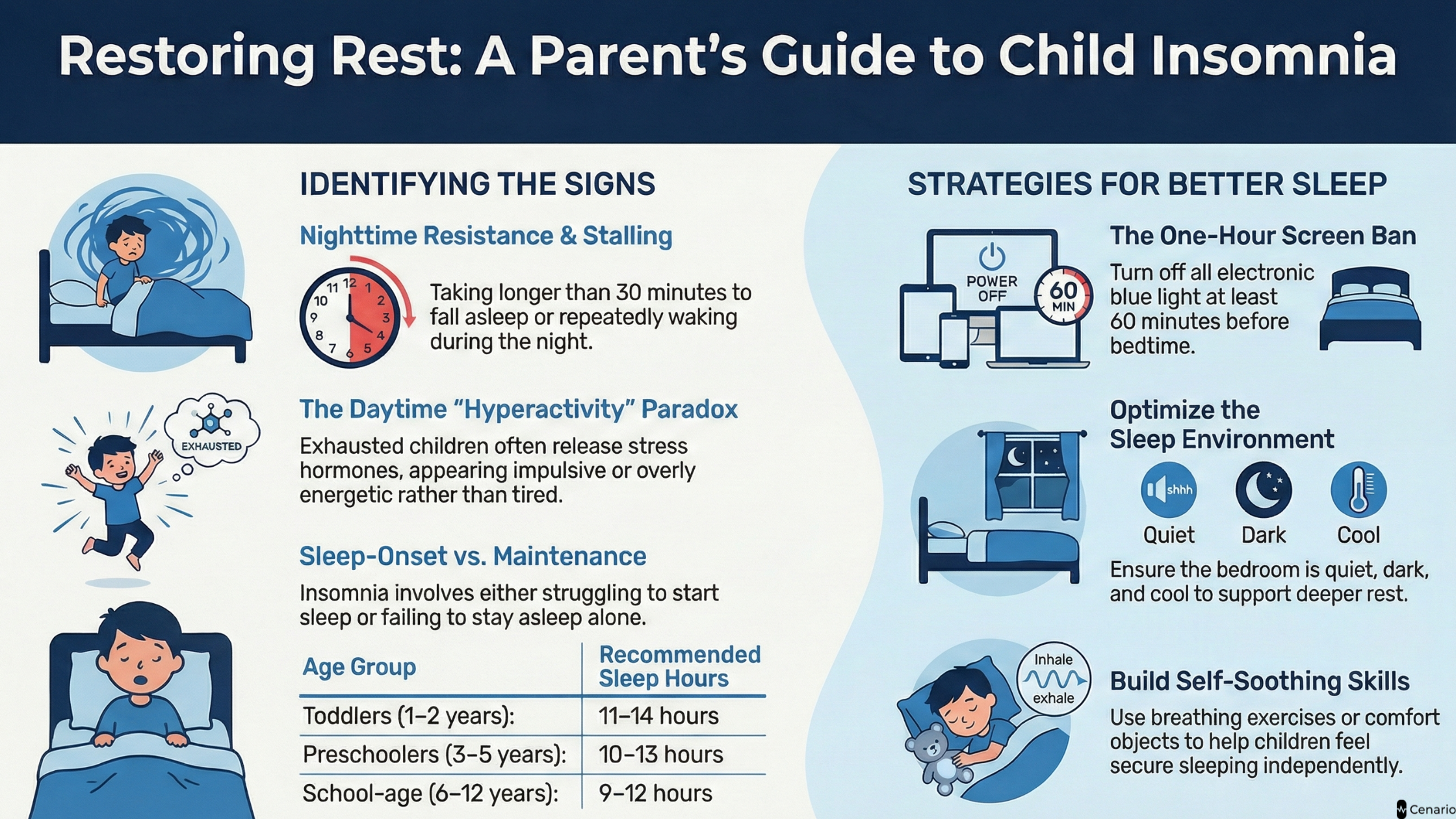
- Taking longer than 30 minutes to fall asleep regularly
- Frequent bedtime resistance or anxiety
- Repeated night awakenings
- Dependence on parents to fall asleep again
- Restlessness or excessive talking at night
Daytime Signs
- Morning fatigue despite enough time in bed
- Mood swings or irritability
- Difficulty focusing in school
- Hyperactivity or impulsive behavior
- Increased sensitivity to stress
Some children may appear overly energetic during the day even when exhausted. This can happen because the body releases stress hormones to compensate for lack of sleep.
Common Triggers and Causes of Child Insomnia
Understanding the root cause is essential because insomnia rarely has a single explanation.
1. Emotional and Psychological Factors
Children process stress differently than adults. Changes such as starting school, family transitions, academic pressure, or social challenges can lead to nighttime worry. Anxiety often increases mental alertness, making it harder to relax before bed.
2. Poor Sleep Associations
If a child relies on specific conditions, such as falling asleep with a parent, watching videos, or being rocked, they may struggle to self-soothe during natural nighttime awakenings.
3. Screen Exposure and Blue Light
Electronic devices emit blue light that suppresses melatonin, the hormone that signals the body to sleep. Evening screen time can shift a child’s internal clock, causing delayed sleep onset.
4. Irregular Schedules
Late bedtimes, inconsistent wake times, or frequent naps can disrupt circadian rhythms. Children thrive on predictable routines that help regulate their biological clock.
5. Medical or Neurodevelopmental Factors
Conditions such as ADHD, anxiety disorders, asthma, allergies, or sensory sensitivities can contribute to insomnia. In some cases, sleep disorders like restless legs syndrome or sleep apnea may also be involved.
Age-Specific Sleep Needs
Sleep requirements vary depending on developmental stage:
- Toddlers (1–2 years): 11–14 hours daily
- Preschoolers (3–5 years): 10–13 hours
- School-age children (6–12 years): 9–12 hours
- Teens (13–18 years): 8–10 hours
If a child consistently sleeps less than recommended and shows daytime impairment, insomnia may be present.
The Role of Anxiety and Overstimulation
Many children with insomnia experience a state of “hyperarousal.” Their nervous system remains activated even when they are physically tired. This can be caused by:
- Academic pressure
- Emotional overstimulation
- Lack of downtime
- Fear of being alone at night
Helping children regulate their nervous system before bedtime is often more effective than forcing earlier sleep.
Practical Sleep Tips for Managing Child Insomnia
Establish a Predictable Bedtime Routine
Children feel safer when routines are consistent. A calming sequence bath, pajamas, storytime, lights off ,signals the brain that sleep is approaching.
Create a Sleep-Friendly Environment
A quiet, dark, and cool room supports deeper rest. Blackout curtains, soft lighting, and minimizing noise can reduce nighttime awakenings.
Reduce Screens Before Bed
Aim to turn off devices at least one hour before bedtime. Encourage calming alternatives such as reading, drawing, or gentle stretching.
Teach Self-Soothing Skills
Instead of staying until a child fully falls asleep, gradually encourage independent sleep. Techniques like breathing exercises, comfort objects, or soft music can help children feel secure.
Encourage Daytime Movement
Physical activity during the day improves sleep pressure at night. Outdoor play also helps regulate circadian rhythms through natural sunlight exposure.
Use Positive Sleep Language
Avoid framing bedtime as punishment. Instead, present sleep as a tool that helps the brain grow stronger and emotions feel easier to manage.
When to Seek Professional Help
Occasional sleep disruptions are normal, especially during developmental transitions. However, consider consulting a pediatrician or child psychologist if:
- Insomnia lasts longer than several weeks
- The child shows extreme daytime fatigue or behavioral changes
- Loud snoring, breathing pauses, or unusual movements occur at night
- Anxiety or mood symptoms worsen
Early guidance can prevent sleep issues from becoming chronic patterns.
The Role of Nutrition and Natural Support
Healthy nutrition supports stable energy and hormone balance. Magnesium-rich foods, balanced meals, and limiting sugar before bedtime may promote relaxation. Some families explore natural approaches such as calming herbal teas or supplements, but these should always be discussed with a healthcare professional before giving them to children.
Lifestyle changes remain the foundation of better sleep. Supplements should complement, not replace, healthy routines.
Supporting Emotional Safety at Night
Children often need reassurance that bedtime is safe and predictable. Small practices can make a big difference:
- Gentle affirmations or gratitude rituals
- Nightlights for children who fear darkness
- Comfort items that promote independence
- Calm conversations about worries earlier in the day
Teaching children that sleep is a peaceful transition rather than a stressful separation helps build long-term confidence.
Final Thoughts
Child insomnia is more than just a bedtime struggle, it reflects the complex connection between a child’s brain, emotions, and environment. By understanding the signs, identifying triggers, and creating supportive routines, parents can help children develop healthier sleep patterns that strengthen both mental and physical well-being.
Improving sleep takes patience and consistency. Small daily adjustments often lead to lasting change. With the right support, children can learn to relax their minds, feel secure at night, and wake up ready to grow, learn, and thrive.
If you’re a parent or caregiver looking to support your own sleep and mental wellness, you can take the Cenario quiz to get personalized supplement recommendations designed to support your well-being, please note that supplement guidance is intended for adults only and should not replace professional medical advice for children.
Frequently Asked Questions
1. What causes insomnia in children?
Child insomnia can be triggered by several factors, including anxiety, irregular sleep schedules, excessive screen time before bed, overstimulation, or poor sleep habits. Medical conditions such as ADHD, allergies, or sleep disorders may also contribute. Identifying the root cause helps parents create more effective sleep strategies.
2. How do I know if my child has insomnia or just normal sleep problems?
Occasional bedtime resistance is normal during development. However, insomnia may be present if your child regularly takes more than 30 minutes to fall asleep, wakes frequently at night, or shows daytime fatigue, irritability, or trouble focusing. Persistent sleep difficulties lasting several weeks should be discussed with a healthcare professional.
3. What are natural ways to help a child sleep better?
Healthy bedtime routines, limiting screens before sleep, creating a calm sleep environment, and encouraging daytime physical activity can improve sleep naturally. Relaxation techniques like reading, gentle breathing exercises, or calming nighttime rituals may help children feel secure and ready for rest.