

Why a Healthy Sleep Schedule Matters
Having a healthy sleep schedule is one of the most important parts of living well. It affects how we think, feel, and function every day. When we go to bed and wake up at the same time consistently, our bodies run smoothly. We think more clearly, feel better emotionally, and have more energy.
But when our sleep schedule is all over the place, we can experience fatigue, trouble focusing, and even higher stress levels. That’s why learning how to fix your sleep schedule is a powerful step toward feeling better both mentally and physically.
The Role of Your Body Clock (Circadian Rhythm)
Your body runs on an internal clock called the circadian rhythm. This natural cycle tells you when to feel sleepy and when to wake up. It repeats every 24 hours and is influenced by things like light exposure and daily routines. When your circadian rhythm is out of sync, because of late nights, shift work, or weekend sleep-ins, you may struggle with falling asleep or waking up on time.
Fixing your sleep pattern starts with understanding how to reset this clock and support it with good habits.
What Disrupts Your Sleep Schedule?
Many things can throw off your sleep routine, including:
- Screen time before bed: The blue light from phones and computers reduces melatonin, the hormone that helps you feel sleepy.
- Irregular work hours or travel across time zones.
- Caffeine or alcohol late in the day.
- Eating heavy meals too close to bedtime.
- Napping for more than 30 minutes, especially late in the afternoon.
These factors all affect how easily you fall asleep and stay asleep. Let’s explore how to fix these habits and restore a healthy sleeping pattern.
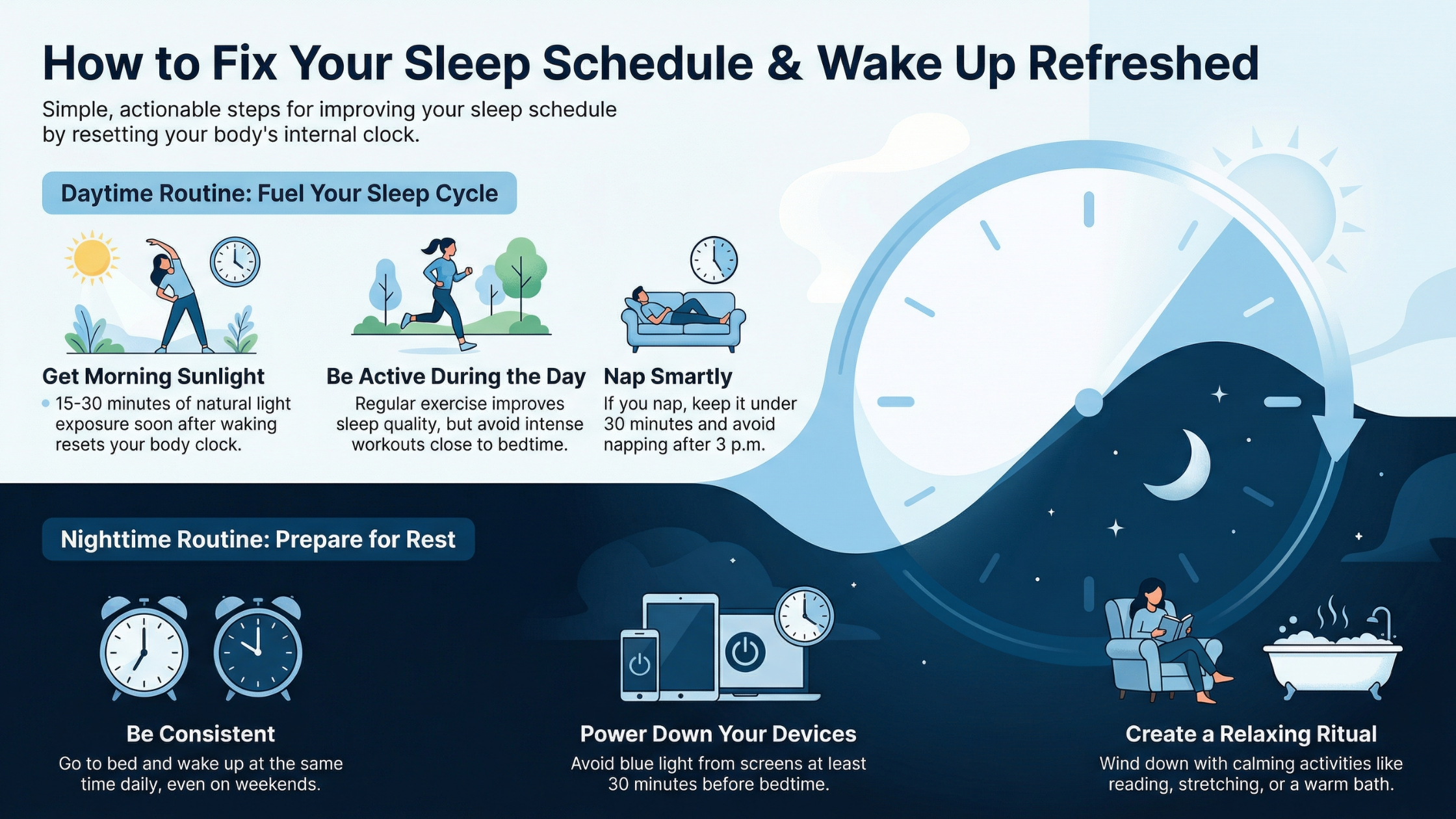
How to Fix Your Sleep Schedule (Step-by-Step)
1. Adjust Bedtime and Wake-Up Time Gradually
Don’t try to change your wake up time or bedtime overnight. Instead, move your schedule by 15 to 30 minutes every few days. This slow shift helps your circadian rhythm adjust naturally and reduces the chance of tossing and turning at night.
Pick a time you need to wake up daily (even on weekends) and build your bedtime around getting 7–9 hours of sleep.
2. Stay Consistent with Your Sleep Routine
Going to bed and waking up at the same time every day is key to sleep hygiene. Your body loves routine. A steady schedule trains your brain to know when it’s time to sleep and when to be alert.
Avoid sleeping in on weekends, it can confuse your body clock and undo progress you’ve made during the week.
3. Create a Relaxing Pre-Sleep Routine
Wind down before bed with calming activities. About an hour before sleep, try:
- Reading a physical book
- Stretching or light yoga
- Journaling
- Taking a warm bath
- Meditation or deep breathing
This bedtime routine tells your body it’s time to slow down, helping you fall asleep faster and easier.
4. Reduce Light Exposure at Night
Avoid screens (phones, tablets, TVs) at least 30 minutes before bed. The blue light they emit can trick your brain into thinking it’s still daytime.
Instead, dim your lights and use warm lighting to encourage melatonin production. This simple change helps you feel sleepy at the right time.
5. Boost Morning Light Exposure
Get outside or sit by a bright window in the morning. Natural light exposure early in the day resets your circadian rhythm, helping you feel more alert during the day and tired at night.
Even 15–30 minutes of sunlight can make a big difference.
6. Be Active During the Day
Physical activity supports healthy sleeping patterns. Aim for at least 30 minutes of exercise most days. Try walking, cycling, or even dancing.
Just avoid intense workouts right before bed, as they can make it harder to fall asleep.
7. Limit Naps and Time Them Right
Short naps can help recharge your energy, but if you nap too long or too late, it can mess with your night sleep. Keep naps under 30 minutes, and avoid napping after 3 p.m.
8. Watch What You Eat and Drink at Night
To support better sleep:
- Avoid caffeine after mid-afternoon.
- Skip alcohol close to bedtime, it may make you sleepy at first but disrupts deeper hours of sleep.
- Don’t eat large meals late in the evening.
Opt for a light snack if you’re a bit hungry before bed.
9. Consider Sleep Medicine or Supplements (With Care)
Some people find melatonin supplements helpful for resetting their sleep schedule, especially after travel, jet lag, or shift work. Melatonin sends signals to your brain that it’s time to feel sleepy, making it easier to fall asleep and stay asleep.
However, not all supplements work the same for everyone. Your body, habits, and sleep challenges are unique, and so should your solution be.
Imagine you’ve tried everything: consistent bedtimes, cutting screen time, even light exposure in the morning yet you still struggle with falling asleep or waking up groggy. Before guessing which sleep medicine or supplement might help, wouldn’t it be better to know what your body actually needs?

Take the Cenario Sleep Quiz
Get personalized supplement recommendations based on your sleep patterns, stress levels, and daily routine. Cenario’s expert-designed quiz takes just 2 minutes and helps you find science-backed support for healthy sleeping, no more one-size-fits-all advice.
Take the Cenario Sleep Quiz Now and discover what your body needs to finally wake up feeling refreshed.
Frequently Asked Questions
How long does it take to fix a sleep schedule?
It usually takes about 1 to 2 weeks to fix your sleep schedule with consistent effort. Gradually adjusting your bedtime and wake up time by 15 to 30 minutes every few days helps your body naturally reset its circadian rhythm.
Can melatonin help reset my sleep routine?
Yes, melatonin supplements can help reset your sleep routine, especially if your sleep is disrupted by jet lag or shift work. However, it’s best to consult a healthcare provider before using any sleep medicine to make sure it’s safe and effective for your needs.
Why do I feel sleepy during the day even with enough sleep?
Feeling sleepy during the day may be due to poor sleep quality, inconsistent sleep hygiene, or not getting enough natural light exposure in the morning. Also, consuming caffeine, alcohol, or heavy meals before bed can affect your hours of sleep and how rested you feel.
What is the best bedtime routine for healthy sleeping?
A good sleep routine includes winding down 30–60 minutes before bed with calming activities like reading, stretching, or meditation. Avoid screens during this time to reduce blue light exposure, and keep your bedroom cool, dark, and quiet to support healthy sleeping.