Getting uninterrupted sleep is one of the most important parts of staying healthy. However, many people wake up several times during the night and struggle to fall back asleep. This can leave you feeling tired, irritable, and unfocused the next day. Over time, poor sleep can affect your mood, memory, and overall health. Learning how to stay asleep all night is essential for improving both your physical and mental well-being.
If you’d like to dive deeper into improving your sleep habits, explore more sleep-related articles and helpful resources at our Knowledge Hub, where you’ll find expert tips, practical guides, and the latest insights on better rest and overall wellness.
Why Continuous Sleep Matters
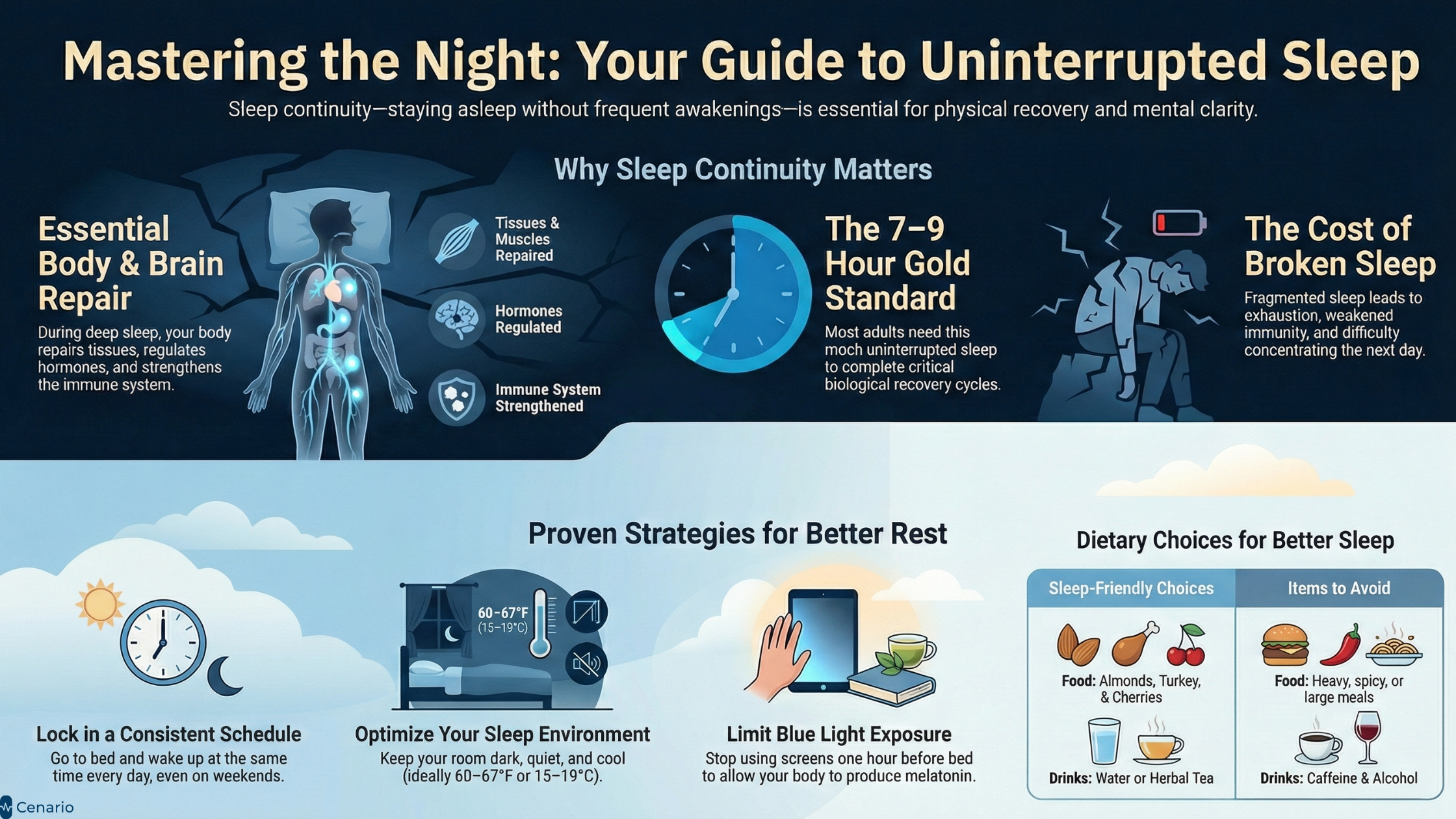
Sleep continuity means sleeping through the night without frequent awakenings. When your sleep is uninterrupted, your body and brain can complete important processes that keep you healthy.
During deep sleep:
- Your brain strengthens memories.
- Your mood becomes more balanced.
- Your body repairs tissues.
- Hormones are regulated.
- Your immune system is strengthened.
When sleep is broken or fragmented, these processes are interrupted. As a result, you may feel exhausted even after spending enough hours in bed. Over time, poor sleep can lead to problems such as anxiety, depression, weakened immunity, and difficulty concentrating.
Common Causes of Waking Up at Night
There are several reasons why people struggle to stay asleep. These causes usually fall into three main categories: lifestyle, environment, and mental health.
1. Lifestyle Factors
Your daily habits play a big role in sleep quality.
- Irregular sleep schedules (such as shift work or staying up late on weekends) can confuse your internal body clock.
- Caffeine and alcohol, especially in the evening, can disrupt deep sleep.
- Heavy meals before bed can cause discomfort and heartburn.
- Late-night exercise may increase adrenaline, making it harder to relax.
2. Environmental Factors
Your bedroom environment should support sleep.
- Bright lights
- Loud noises
- Uncomfortable temperatures
- An unsupportive mattress or pillow
All of these can cause you to wake up during the night.
Experts recommend:
- A cool room (60–67°F or 15–19°C)
- Darkness (use blackout curtains if needed)
- Minimal noise (white noise machines can help)
3. Psychological Factors
Stress and anxiety are major causes of nighttime awakenings. If your mind is racing, your body cannot fully relax. Worrying about work, school, or personal issues can keep your brain active even when you are physically tired.
Over time, this stress can create a cycle where you become anxious about sleep itself, making the problem worse.
Not sure what your sleep needs are?
Take our quick sleep quiz to receive personalized recommendations tailored to your lifestyle and sleep challenges. It’s a simple way to discover the right support for deeper, more restful sleep.
Proven Strategies to Help You Stay Asleep
The good news is that there are proven, research-based methods that can greatly improve your ability to sleep through the night. The key is consistency and creating habits that support your body’s natural sleep cycle.
1. Keep a Consistent Sleep Schedule
Your body operates on an internal clock called the circadian rhythm. This clock controls when you feel awake and when you feel sleepy. When you go to bed and wake up at different times each day, you confuse this internal system.
Try to:
- Go to bed at the same time every night
- Wake up at the same time every morning
- Keep this schedule even on weekends
When your body gets used to a routine, falling asleep becomes easier, and you’re less likely to wake up during the night.
2. Create a Relaxing Bedtime Routine
Your brain needs time to transition from “day mode” to “sleep mode.” If you go straight from scrolling on your phone or working to lying in bed, your mind may still feel alert.
A calming bedtime routine signals to your brain that it’s time to rest. Helpful activities include:
- Reading something light or enjoyable
- Gentle stretching to release muscle tension
- Deep breathing exercises to slow your heart rate
- Meditation to calm racing thoughts
- Listening to soft, relaxing music
Doing the same relaxing activities every night helps train your brain to associate them with sleep.
3. Exercise Regularly
Physical activity improves sleep quality by helping your body use energy efficiently and reducing stress. People who exercise regularly often experience deeper and more restful sleep.
However, timing matters. Exercising too close to bedtime can:
- Increase your heart rate
- Raise adrenaline levels
- Make it harder to relax
Try to finish workouts at least 2–3 hours before going to bed. Morning or afternoon exercise is ideal.
4. Limit Screen Time Before Bed
Phones, tablets, computers, and TVs emit blue light, which reduces the production of melatonin, the hormone that tells your body it’s time to sleep.
When melatonin levels are low, you may:
- Struggle to fall asleep
- Wake up more frequently
- Feel less rested in the morning
To improve sleep:
- Stop using screens at least one hour before bed
- Use blue light filters or “night mode” settings
- Replace screen time with relaxing activities
Small changes here can make a big difference.
5. Improve Your Diet for Better Sleep
What you eat and drink directly affects how well you sleep.
Foods that may support sleep include:
- Almonds (rich in magnesium, which relaxes muscles)
- Turkey (contains tryptophan, which helps produce melatonin)
- Cherries (a natural source of melatonin)
Avoid before bed:
- Caffeine (coffee, tea, soda, energy drinks)
- Alcohol (it may make you sleepy at first but disrupts deep sleep)
- Heavy or spicy meals (can cause discomfort or heartburn)
If you’re slightly hungry before bed, a small, light snack is okay, but avoid overeating.
6. Manage Stress and Anxiety
Stress is one of the biggest reasons people wake up at night. Even if your body is tired, your mind may stay active.
To calm your mind:
- Write down your thoughts or to-do list before bed
- Practice mindfulness or meditation
- Try progressive muscle relaxation (tensing and relaxing muscles slowly)
- Speak with a counselor if stress feels overwhelming
For ongoing sleep problems, Cognitive Behavioral Therapy for Insomnia (CBT-I) is highly effective. It helps change the thoughts and habits that interfere with sleep and offers long-term solutions.
Technology and Sleep
Sleep tracking apps and devices can help you understand your sleep patterns. They show when you wake up and how much deep sleep you get. This information can help you adjust your habits.
However, don’t become overly focused on tracking. Stressing about sleep data can sometimes make sleep worse.
Final Thoughts
Staying asleep all night is not just about getting enough hours in bed, it’s about getting quality, uninterrupted rest. By improving your habits, managing stress, and creating a sleep-friendly environment, you can significantly improve your sleep continuity.
Better sleep leads to better focus, stronger mental health, improved physical health, and more energy throughout the day. Small changes can make a big difference, helping you wake up refreshed and ready to succeed.
Ready to take the next step? Take our quick sleep quiz to receive a personalized supplement recommendation designed specifically for your sleep needs and lifestyle. Discover the right support to help you fall asleep faster, stay asleep longer, and wake up feeling your best.
Frequently Asked Questions
1. Why do I wake up in the middle of the night and can’t fall back asleep?
Waking up during the night is common, but difficulty falling back asleep is often caused by stress, anxiety, an inconsistent sleep schedule, caffeine, or environmental disturbances like noise or light. Managing stress and maintaining a regular bedtime routine can help reduce nighttime awakenings.
2. How many hours of uninterrupted sleep do I really need?
Most adults need 7–9 hours of sleep per night. However, quality matters just as much as quantity. Uninterrupted sleep allows your body to complete full sleep cycles, which are essential for physical recovery and mental clarity.
3. Can supplements help me stay asleep longer?
Some supplements, such as melatonin, magnesium, and herbal blends like valerian root, may support better sleep. However, results vary from person to person. It’s best to choose supplements based on your specific sleep challenges and consult a healthcare professional if needed.
4. When should I see a doctor about sleep problems?
If you regularly wake up during the night, feel exhausted despite sleeping enough hours, or experience symptoms like loud snoring or gasping for air, you should consult a healthcare provider. These may be signs of conditions such as insomnia or sleep apnea that require professional treatment.