
Why You Need a Sleep Hygiene Checklist
In today’s non-stop world, getting a good night’s sleep can feel almost impossible. From late-night screen time to hectic work schedules, many things can throw off your sleep. But here’s the good news: sleep hygiene, a set of simple, healthy sleep habits can help you fall asleep faster, stay asleep longer, and wake up feeling refreshed.
If you’re tired of feeling tired, this sleep hygiene checklist is exactly what you need.
Why You Need a Sleep Hygiene Checklist
Modern life is busy and stressful. With constant distractions from social media, work emails, and everyday noise, keeping a regular bedtime routine is tougher than ever. That’s why a checklist is helpful, it simplifies things. Instead of guessing what might help you sleep better, you’ll have clear steps to follow.
A sleep hygiene checklist is more than just a to-do list. It’s a practical guide to help you sleep deeply and wake up ready to take on the day. It also supports better mental and physical health in the long run.
Transform Your Sleep Quality
Are you constantly tossing and turning at night? Do you wake up feeling like you barely slept? Imagine waking up energized, clear-headed, and ready to face anything. With a few small changes to your routine, that dream can become your reality.
Let’s explore the core habits of healthy sleep that can help you build the best bedtime routine.
Core Components of Sleep Hygiene
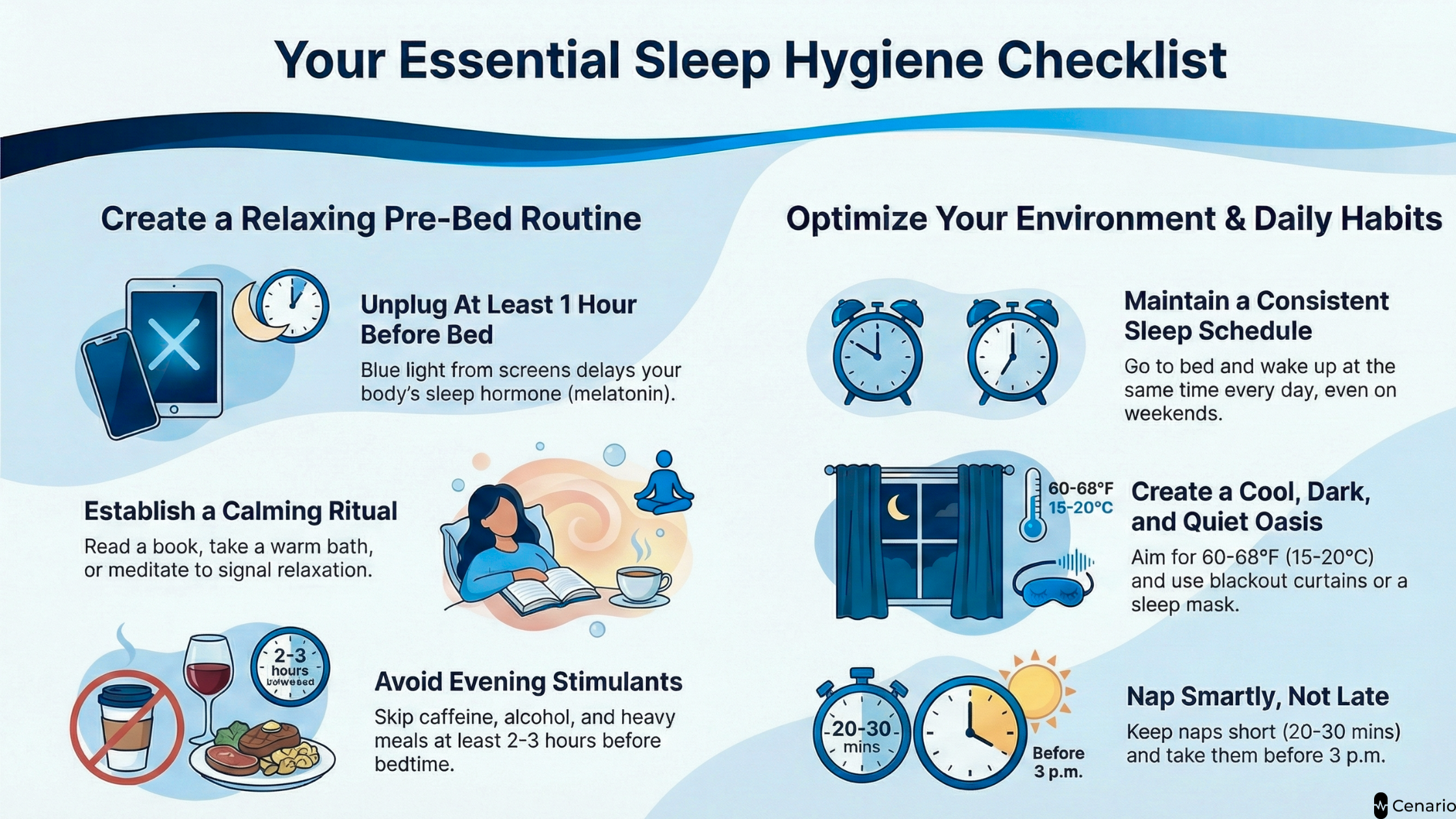
Getting high-quality sleep doesn’t happen by accident it’s the result of intentional daily habits. Here are the core components of a strong sleep hygiene routine that will help you fall asleep faster, sleep deeper, and wake up feeling refreshed.
1. Stick to a Consistent Sleep Schedule
Your body has a natural “clock” called the circadian rhythm. To keep it working well:
- Go to bed and wake up at the same time every day, even on weekends.
- Avoid sleeping in too late or staying up past your normal bedtime.
A consistent schedule helps your body know when it’s time to wind down and when it’s time to wake up, making it easier to get restful, high-quality sleep.
2. Create the Ideal Sleep Environment
Your surroundings have a big impact on your sleep. A calm, quiet, and cool bedroom sets the stage for deep rest.
- Keep it cool: Aim for a bedroom temperature between 60–68°F (15–20°C). Cooler temperatures help your body relax and enter deeper sleep stages.
- Block light and noise: Use blackout curtains to prevent light from interrupting sleep. Sleep masks and earplugs can help too, especially if you live in a noisy or bright area.
- Declutter your space: A tidy, calming bedroom reduces stress and helps your mind settle before bed.
3. Build a Relaxing Pre-Bedtime Routine
How you wind down before bed affects how quickly—and how well—you fall asleep.
- Wind down naturally: Choose calming activities like reading a book, taking a warm bath, stretching, or doing light meditation. These signal to your brain that it’s time to relax.
- Limit screen time: Shut off phones, TVs, and computers at least 1 hour before bedtime. The blue light from screens delays melatonin (your sleep hormone) and tricks your brain into thinking it’s still daytime.
4. Watch What You Eat and Drink
What you consume in the evening can either help or hurt your sleep.
- Cut back on caffeine and alcohol: Avoid coffee, soda, energy drinks, and even chocolate in the late afternoon or evening. While alcohol might make you drowsy, it often leads to poor sleep quality later in the night.
- Avoid heavy meals late at night: Big meals close to bedtime can cause discomfort and indigestion. Try to finish eating at least 2–3 hours before going to bed.
5. Exercise at the Right Time
Physical activity helps your body fall asleep faster and improves deep sleep. But timing is important.
Try to exercise regularly, but avoid intense workouts within 3 hours of bedtime. Late-night workouts can raise your heart rate and make it harder to fall asleep.
6. Nap Wisely
Naps can boost your energy, but they should be done strategically.
- Keep naps short, 20 to 30 minutes is ideal.
- Nap earlier in the day, before 3 p.m., to avoid interfering with your nighttime sleep.
7. Manage Stress and Calm Your Mind
Stress is one of the biggest barriers to good sleep. Try these practices to manage it:
- Journaling: Write down your thoughts or to-do list before bed to clear your mind.
- Yoga or mindfulness: Gentle yoga or deep breathing can calm your nervous system and reduce anxiety.
- Create a calming sleep ritual: Something as simple as sipping herbal tea or listening to calming music can help your mind wind down.
Advanced Sleep Optimization
Once you’ve got the basics down, take your sleep to the next level with these advanced strategies. These are especially helpful if you’re dealing with specific lifestyle challenges like shift work, parenthood, or sleep disorders.
1. Personalize Your Routine
Sleep hygiene isn’t one-size-fits-all. You might need to adjust your routine based on your lifestyle.
- Shift workers may need blackout curtains and white noise to sleep during the day.
- Parents may need to create a flexible routine that fits their family’s needs.
- Students or travelers might benefit from melatonin supplements or sleep apps to stay on track.
Personalizing your routine helps you build sustainable sleep habits that actually work for your life.
2. Use Smart Technology to Support Better Sleep
Modern technology can be a helpful tool when used the right way.
- Sleep tracking apps can analyze your sleep patterns and help you see what’s working—or not.
- Smart home devices like programmable lights, white noise machines, or thermostats can automatically set the mood for sleep, reducing the work on your part.
3. Troubleshoot Common Sleep Challenges
Everyone faces obstacles to sleep at some point. Here’s how to tackle the most common ones:
- Too much noise? Try earplugs, white noise machines, or calming sound playlists.
- Too much light? Invest in blackout curtains or use a comfortable eye mask.
- Too many changes at once? Don’t stress. Start with 1–2 habits—like setting a bedtime alarm or unplugging before bed. Build from there at your own pace.
Final Thoughts: Make Sleep a Priority
Good sleep isn’t a luxury, it’s a must for your mental and physical health. By following this sleep hygiene checklist, you can build better habits and finally get the restorative sleep your body needs.
Whether you’re a student, a busy professional, or just someone struggling with sleep, creating a consistent bedtime routine is the first step toward a healthier, more energized life.
Ready to Sleep Better?
Take our quick sleep quiz to get a personalized supplement recommendation based on your unique needs. Find out what could be holding your sleep back, and what you can do to fix it.
Frequently Asked Questions
What is sleep hygiene, and why is it important?
Sleep hygiene refers to healthy habits and routines that help you fall asleep, stay asleep, and wake up feeling refreshed. Good sleep hygiene supports mental clarity, emotional stability, immune health, and overall well-being. Without it, your sleep can become irregular and less restorative, leading to fatigue and reduced productivity.
How long does it take for a bedtime routine to improve my sleep?
Everyone is different, but most people start seeing improvements in their sleep within 1 to 2 weeks of consistently following a bedtime routine. The key is consistency, sticking to your new habits every night helps train your body and mind for better sleep.
Can I still take naps and maintain good sleep hygiene?
Yes, you can nap and still have healthy sleep habits. Just follow these nap guidelines:
- Keep naps short, 20 to 30 minutes max.
- Nap earlier in the day, preferably before 3 p.m.
- Avoid long or late-afternoon naps, as they can make it harder to fall asleep at night.
Is using a phone or tablet before bed really that bad for sleep?
Yes, using devices before bed can disrupt melatonin production, which makes it harder for your brain to wind down. Blue light from screens can confuse your body into thinking it’s still daytime. To protect your sleep, try to unplug at least 60 minutes before bedtime, or use blue light filters if you must use screens.