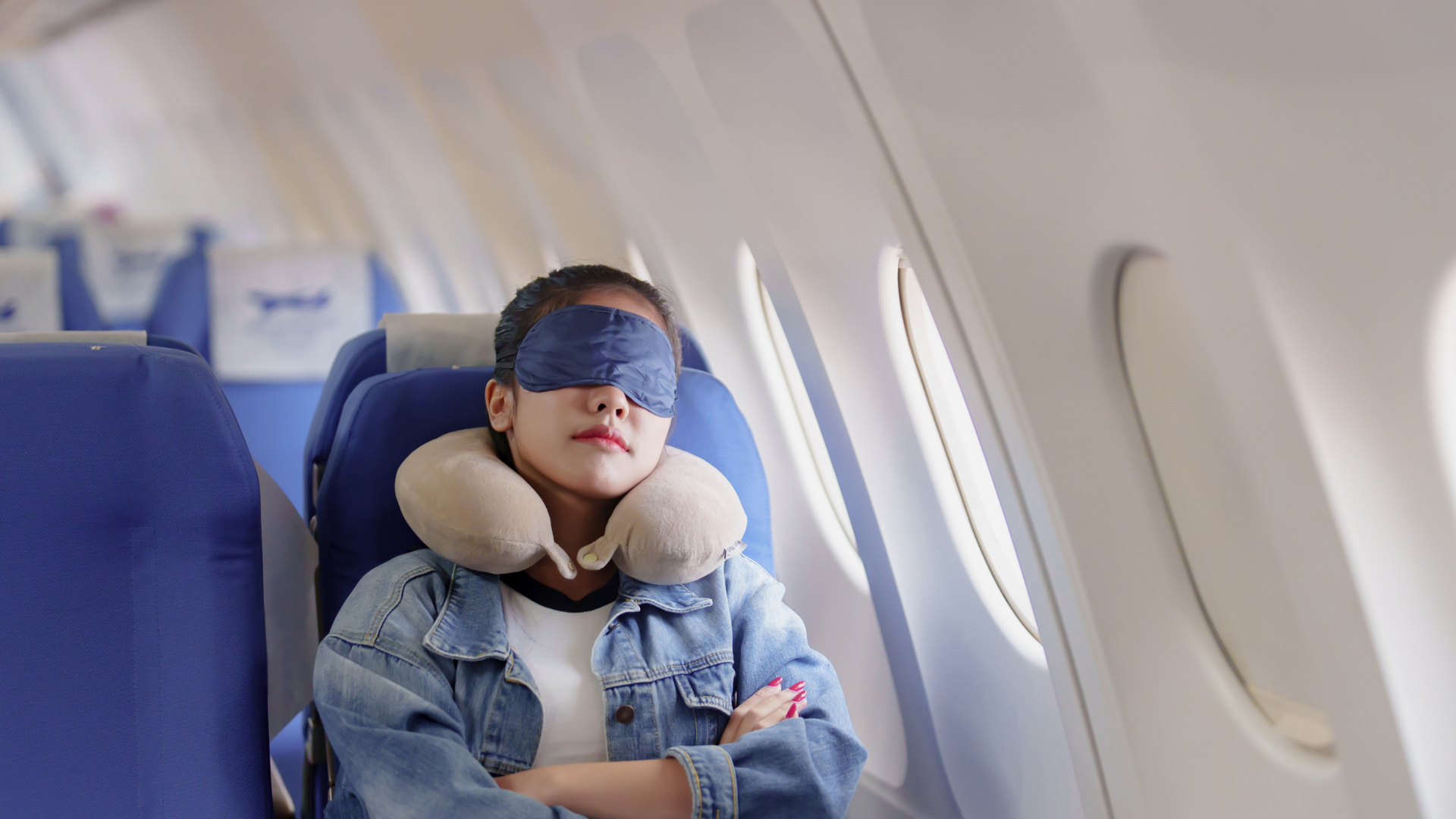

Sleeping on a plane can feel almost impossible. Between the cramped seats, cabin noise, dry air, and constant interruptions, getting real rest at 35,000 feet is a challenge. However, with the right preparation and strategy, you can significantly improve your chances of sleeping well, even on long-haul flights.
This guide shares practical, science-backed tips for sleeping on a plane so you can arrive at your destination feeling refreshed instead of exhausted. Read more or explore here at our Knowledge Hub for more insomnia and sleep-related blogs to help you improve your rest wherever you are.
Why Sleeping on a Plane Is So Difficult
Before we dive into solutions, it helps to understand the problem. Airplane cabins are not designed for quality sleep. Here’s why:
- Limited space: Economy seats restrict movement and legroom.
- Noise: Engine sounds, announcements, and other passengers.
- Dry air: Cabin humidity is very low, which can cause dehydration.
- Disruptions: Food service, turbulence, and bathroom breaks.
- Time zone changes: Your body clock may not match your destination.
Now let’s explore how to overcome these challenges.
1. Choose the Right Seat
Your seat location makes a huge difference.
Best Seats for Sleeping:
- Window seat: You can lean against the wall and avoid being disturbed by seatmates getting up.
- Seats near the front: Generally quieter and deplane faster.
- Away from bathrooms and galleys: These areas have constant foot traffic and noise.
If possible, avoid seats near emergency exits that may not recline.
2. Dress for Comfort
Airplanes can be unpredictable when it comes to temperature. Dress in layers so you can adjust as needed.
What to Wear:
- Loose-fitting clothing
- Breathable fabrics like cotton
- Warm socks
- A light sweater or hoodie
Avoid tight jeans or restrictive clothing that can limit circulation.
3. Bring the Right Sleep Accessories
A few small items can completely transform your experience.
Must-Have Sleep Essentials:
- Neck pillow: Supports your head and prevents neck strain.
- Eye mask: Blocks cabin lights and screen glare.
- Noise-canceling headphones or earplugs: Reduces engine and passenger noise.
- Travel blanket or large scarf: Adds warmth and comfort.
These items create a personal “sleep environment” even in a crowded cabin.
4. Adjust to Your Destination’s Time Zone
If you’re traveling across time zones, try syncing your sleep to your destination.
For example:
- If it’s nighttime at your destination, try to sleep on the plane.
- If it’s daytime, stay awake and sleep after arrival.
This strategy reduces jet lag and helps your body adjust faster.
5. Avoid Heavy Meals and Alcohol
It may be tempting to drink wine or eat a heavy meal before sleeping, but both can disrupt rest.
- Heavy meals can cause discomfort and indigestion.
- Alcohol may make you sleepy at first but reduces sleep quality.
- Caffeine (coffee, soda, energy drinks) can stay in your system for 6–8 hours.
Instead, choose a light meal and drink plenty of water.
6. Stay Hydrated
Airplane cabins have very low humidity, which can dry out your throat and nasal passages. Dehydration makes you feel more tired and uncomfortable.
Drink water regularly throughout the flight, but avoid overdoing it so you’re not constantly waking up for bathroom trips.
7. Use Relaxation Techniques
If you struggle to fall asleep, try calming your body and mind.
Simple Techniques:
- Deep breathing (inhale for 4 seconds, exhale for 6)
- Progressive muscle relaxation (tense and release muscle groups)
- Listening to calming music or white noise
- Guided meditation apps
These methods lower stress and help your body enter sleep mode.
8. Recline Properly and Support Your Body
Even slight seat recline can improve comfort.
- Recline gently (after checking behind you).
- Use a pillow behind your lower back for support.
- Place a small bag under your feet if they don’t touch the floor comfortably.
Good posture prevents stiffness and helps you sleep longer.
9. Limit Screen Time Before Sleeping
Watching movies or scrolling on your phone stimulates your brain and exposes you to blue light, which interferes with melatonin (the sleep hormone).
Try turning off screens at least 30 minutes before you want to sleep.
10. Consider Natural Sleep Aids (With Caution)
Some travelers use melatonin supplements to adjust to new time zones. Melatonin can help signal your body that it’s time to sleep.
However:
- Consult a healthcare professional before use.
- Avoid mixing sleep aids with alcohol.
- Test it before your trip to see how your body reacts.
Never take strong sleeping medication unless prescribed. Take our quick quiz to get personalized supplement recommendations designed to support your unique sleep needs and help you rest more deeply, at home or in the air.
11. Prepare Before You Board
Good in-flight sleep starts before takeoff.
- Get adequate rest the night before.
- Arrive at the airport early to reduce stress.
- Walk around before boarding to stretch your legs.
- Set up your sleep kit as soon as you sit down.
Being organized reduces anxiety and helps you relax faster.
12. Manage Expectations
You may not get perfect sleep on a plane, and that’s okay.
Even light sleep or resting with your eyes closed helps your body recover. Focus on improving your comfort rather than achieving a full night’s rest.
Final Thoughts
Sleeping on a plane doesn’t have to be miserable. By choosing the right seat, dressing comfortably, using sleep accessories, and preparing your body properly, you can significantly improve your in-flight rest.
These tips for sleeping on a plane are especially helpful for long-haul flights, where rest can make the difference between starting your trip energized or exhausted.
With the right strategy, you can turn your next flight into a surprisingly restful experience, even at 35,000 feet. Want better sleep beyond travel? Take our quick quiz to discover supplement recommendations tailored to your specific needs and lifestyle, so you can wake up feeling truly refreshed, wherever you are.
Frequently Asked Questions
1. Is it safe to take sleeping pills on a plane?
Sleeping pills can help some people rest during long flights, but they should be used with caution. Strong prescription sleep medications may cause deep sedation, reduced awareness, or delayed reaction time in emergencies. They can also increase the risk of blood clots because you may move less during the flight.
If you are considering sleep medication, consult a healthcare professional before traveling. Many travelers prefer mild options like melatonin, which may help adjust to new time zones with fewer side effects.
2. How can I sleep better in economy class?
Sleeping in economy class can be challenging due to limited space, but it is still possible. Choose a window seat so you can lean against the wall and avoid being disturbed. Use a supportive neck pillow and bring an eye mask and earplugs to block light and noise.
Wearing loose clothing and stretching before boarding can also improve comfort. Even if you cannot sleep deeply, resting your eyes and relaxing your body can help reduce fatigue.
3. Does drinking alcohol help you sleep on a plane?
Alcohol may make you feel sleepy at first, but it often reduces sleep quality. It can disrupt your sleep cycles, cause dehydration, and increase the chances of waking up during the flight. Airplane cabins are already dry environments, and alcohol can make dehydration worse.
For better sleep, it is usually best to avoid alcohol and instead drink water or herbal tea.
4. How do I reduce jet lag after a long flight?
To reduce jet lag, start adjusting your sleep schedule a few days before your trip if possible. During the flight, try to sleep according to your destination’s time zone. After arrival, spend time in natural sunlight and stay active to help reset your internal clock.
Staying hydrated, avoiding heavy meals, and getting a full night’s sleep on your first night can also speed up recovery.