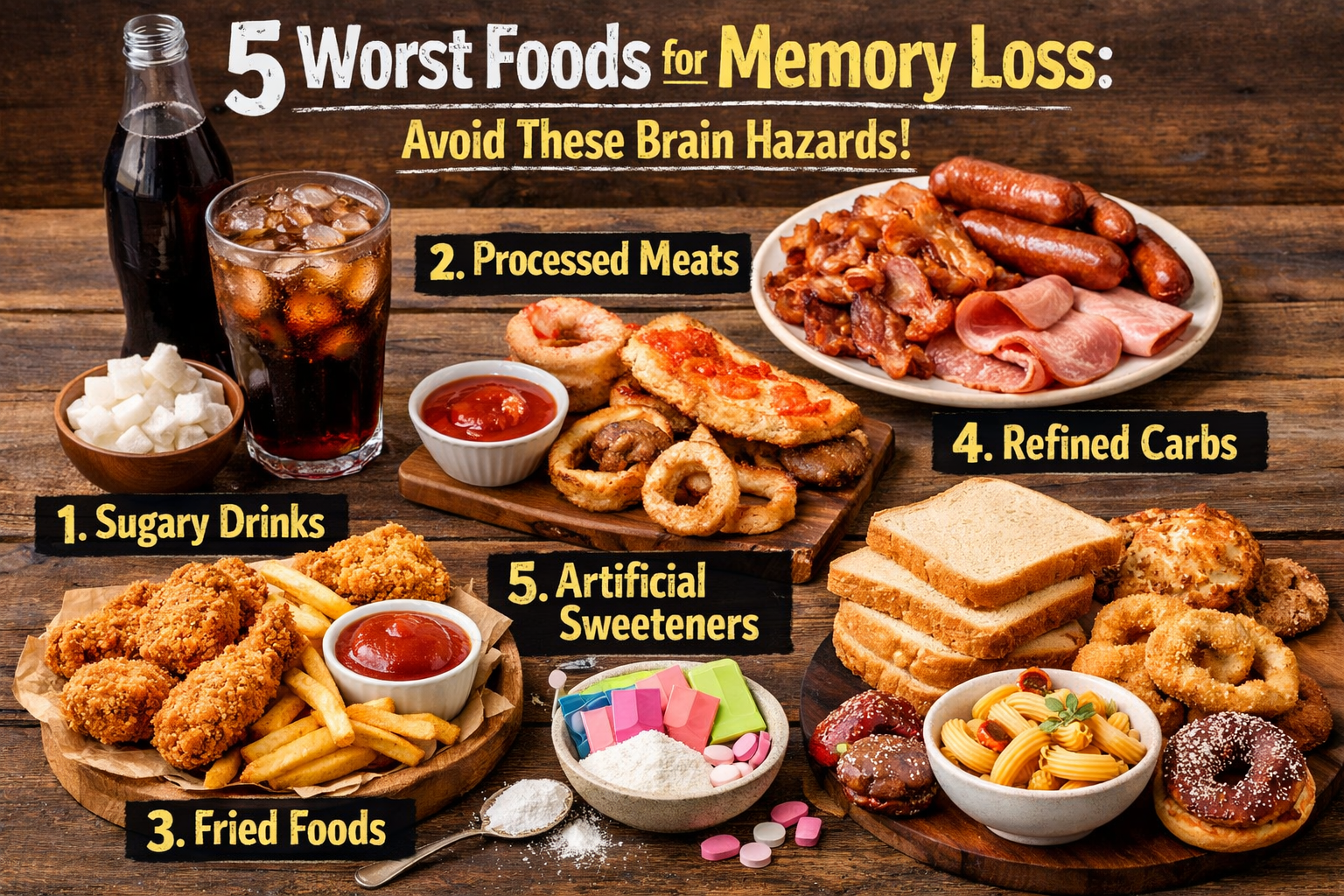

Diet shapes more than waistlines. It affects thinking, mood, and long-term memory. If you are asking what are the 5 worst foods for memory loss this is the place to start. Some everyday items can speed cognitive decline, raise dementia risk, and harm the brain structures that store memories.
Why Diet Matters For Memory
Memory loss is common as people age, but it is not inevitable. Growing evidence links what we eat to how well our brain performs. Diet influences inflammation, blood sugar control, and blood flow. These processes affect the hippocampus and prefrontal cortex, two areas central to memory and attention.
Rates of mild cognitive impairment and dementia are rising, especially among older adults. While genetics and age play a role, modifiable factors such as diet, exercise, and sleep offer powerful levers. Studies increasingly point to certain food groups that consistently harm cognitive health. Understanding these foods helps reduce risk and preserve mental sharpness.
What This Article Will Cover
The goal of this post is clear. We will name the five worst foods for memory loss and explain why they are harmful. You will also get practical guidance on safer choices to protect your brain. This piece focuses on evidence-based guidance without medical jargon so you can act on it today.
- Sugary drinks and foods that spike blood sugar
- Refined carbohydrates and white flour products
- Artificial trans fats found in some packaged snacks
- Fried and processed meats high in saturated fat and sodium
- Ultra-processed foods loaded with additives and preservatives
Each of these categories links to common mechanisms of harm: insulin resistance, chronic inflammation, impaired blood flow, and negative shifts in gut bacteria that affect the brain. Later sections will unpack how these effects contribute to memory problems and dementia risk.
Before we dive into details, remember that small changes add up. Swapping one or two items today can lower inflammation and improve blood sugar control. If you want a quick reference for what to avoid when asking what are the 5 worst foods for memory loss continue to the next section where each category is explained with practical swaps.
How these foods damage memory
Now that you know the categories, let us examine three of the most harmful groups in detail. Understanding the biological effects helps you make smarter swaps. This section focuses on sugary drinks and high-fructose corn syrup, refined carbohydrates, and artificial trans fats, with clear reasons these items are among the worst foods for memory loss and practical alternatives to try today.
Sugary drinks and high-fructose corn syrup
Liquid sugars are absorbed quickly, causing repeated blood sugar spikes and higher insulin levels. Over time this pattern can lead to insulin resistance and chronic inflammation, both of which harm the hippocampus, the brain region most important for forming new memories.
Research has reported links between high added-sugar intake and greater rates of cognitive decline, including higher odds of dementia. Excess sugar also alters metabolic signals that the brain uses to regulate mood and focus, which contributes to brain fog and poor recall.
- Infused water with lemon, cucumber, or berries
- Unsweetened herbal teas or sparkling water with a splash of citrus
- Whole fruit instead of fruit juices or soda to keep fiber and slow sugar absorption
Refined carbohydrates
Refined carbs such as white bread, pastries, and many store-bought breakfast cereals digest rapidly. Those rapid digestion cycles create surges in blood glucose followed by crashes. These swings impair attention and working memory in the short term and increase systemic inflammation long term.
Studies link diets high in refined carbohydrates with impaired function in the prefrontal cortex, which governs decision making, attention, and the ability to form and retrieve memories. Over years this pattern can accelerate cognitive decline compared with diets that emphasize whole grains and fiber.
- Choose whole grains like oats, barley, and brown rice
- Opt for legumes and beans as steady-release carbohydrate sources
- Pair carbohydrates with protein or healthy fats to blunt glucose spikes
Artificial trans fats
Artificial trans fats are found in some margarine, shortening, and many packaged baked goods. These fats raise harmful cholesterol and promote inflammation in blood vessels and brain tissue. Chronic vascular inflammation reduces blood flow to memory centers and can accelerate the accumulation of harmful proteins associated with Alzheimer disease.
Evidence links higher trans fat intake to poorer memory performance and higher long-term dementia risk. Even small reductions in trans fat can improve cardiovascular health and protect cognitive function.
- Use extra virgin olive oil for low to medium-heat cooking
- Include sources of omega-3s such as salmon, sardines, and walnuts
- Choose avocado and nut butters over packaged spreads with hydrogenated oils
Putting changes into practice
When asking what are the 5 worst foods for memory loss, focus first on replacing the items that most affect your daily routine. Swap one sugary drink per day for water or herbal tea. Replace a refined-carb snack with a handful of nuts and fruit. Check ingredient labels for hydrogenated or partially hydrogenated oils and avoid those products.
Small, consistent changes lower inflammation, stabilize blood sugar, and improve blood flow to the brain. Over weeks to months many people notice better focus, less brain fog, and improvements in short-term recall. Use meal planning and simple swaps to reduce exposure to these brain hazards while increasing whole foods that support memory health.
Fried And Processed Meats: A Hidden Risk To Memory
Fried and processed meats are more than a heart concern. High levels of saturated fat, sodium, and preservatives in these products can reduce healthy brain tissue and lower blood flow to memory centers. Nitrates and other additives may increase inflammation and oxidative stress, making it harder for the brain to clear waste proteins linked to dementia.
Practical changes can cut risk without drastic dieting. Try limiting processed meats like sausages, hot dogs, and deli slices. Avoid frequent deep-fried items and choose cooking methods that preserve nutrients and reduce harmful compounds.
- Choose baked, steamed, or grilled lean proteins instead of fried options
- Swap processed meats for fatty fish such as salmon or trout twice a week
- Use legumes, tofu, and tempeh as plant-based protein swaps
- Season with herbs and citrus instead of heavy sauces high in sodium
Still unsure what to take?
Answer a few questions and get a personalized supplement recommendation instantly.

Ultra-Processed Foods And The Gut-Brain Connection
Ultra-processed foods combine refined ingredients, industrial additives, flavor enhancers, and preservatives. These products are often low in fiber and high in sugar, salt, and unhealthy fats. The result is disrupted gut microbiome balance, which can trigger chronic gut-brain inflammation and raise the risk of cognitive impairment.
Population research shows higher intake of ultra-processed foods correlates with measurable declines in cognition. Reducing how much of your diet comes from packaged snacks, ready meals, and sugary desserts lowers inflammatory signals that affect memory.
- Cook more simple meals from whole ingredients to control additives
- Read labels and avoid items with long ingredient lists full of unfamiliar chemicals
- Choose plain yogurt, nuts, fruit, and whole-grain snacks over processed bars and chips
Practical Steps To Protect Memory Every Day
Making dietary changes feels easier with a plan. Focus on steady progress rather than perfection. Small swaps build habits that reduce inflammation, stabilize blood sugar, and improve circulation to the brain.
- Plan a weekly menu that emphasizes whole foods and limits ultra-processed items
- Replace one processed snack or sugary drink per day with a whole-food alternative
- Aim for at least two servings of oily fish per week or a plant-based omega-3 source
- Cook larger batches and freeze portions to avoid convenience-driven choices
- Check ingredient lists for trans fats, high-fructose corn syrup, and long additive lists
Final Thoughts And Next Steps
When you ask what are the 5 worst foods for memory loss the real answer is that several common foods add up to real risk. Reducing sugary drinks, refined carbs, trans fats, fried and processed meats, and ultra-processed products can lower inflammation and support brain health. Changes do not need to be extreme to matter.
Start with one swap this week and build from there. Track how you feel, note any improvements in focus and recall, and consider sharing your progress with a healthcare provider. If you use digital tools, consider tracking meals and memory patterns to spot what helps you most.
Taking action now gives your brain a better chance to stay sharp. Small steps add up into long-term protection against cognitive decline. Try one change today and make a plan for the next.
Memory does not decline overnight. It fades gradually through lack of the right support.
If you notice slower recall or mental fatigue, it is often a signal, not just age or workload.
Take the 3 minute assessment and build your personalized memory support formula
Your brain is unique. Your inputs should be too.
Learn more about how memory works!
Frequently asked questions
What are the signs of memory loss related to diet?
Diet-related memory issues often start with mild forgetfulness, slowed recall, frequent brain fog, and trouble concentrating. If you notice these symptoms after heavy consumption of the foods in question, consider asking what are the 5 worst foods for memory loss and testing simple dietary swaps.
Can changing my diet improve memory?
Yes. Switching from high-sugar, fried, and ultra-processed foods to whole foods can reduce inflammation and improve blood flow. When asking what are the 5 worst foods for memory loss, cutting those items often leads to clearer thinking and better short-term recall within weeks to months.
How quickly can dietary changes impact memory?
Some people notice improved focus and less brain fog within a few weeks. Meaningful changes in cognitive tests and long-term risk reduction may take months to years. If you wonder what are the 5 worst foods for memory loss, replacing them consistently is the key to seeing results over time.
Are there specific nutrients that support memory health?
Yes. Nutrients such as omega-3 fatty acids, antioxidants, B vitamins, choline, and vitamin D support memory and brain function. When thinking about what are the 5 worst foods for memory loss, balance those harmful items with foods rich in these nutrients for best effect.