
Understanding Memory Supplements
In today’s fast-moving world, staying mentally sharp has become essential. With busy schedules, constant information, and increasing stress, many people want simple ways to improve memory, protect brain cells, and support long-term brain health. Because of this, students, professionals, and older adults are turning to memory supplements to boost mental clarity and overall cognitive function.
These supplements often called brain boosters or nootropics offer a convenient way to improve focus, support learning, and maintain strong cognitive performance.
Memory support depends on both acute cognitive enhancers and long-term brain nutrition. This guide fits into our wider exploration of learning, focus, and recall strategies covered in our Memory and focus knowledge base.
Understanding Memory Supplements
Memory supplements are designed to support different parts of brain function. Most formulas include a mix of vitamins, minerals, herbal extracts, amino acids, and natural compounds known to support cognitive health.
These ingredients may help:
- Improve memory and recall
- Boost concentration and mental focus
- Support long-term brain health
- Reduce mental fatigue
- Enhance learning and thinking speed
Research suggests that certain nutrients can protect brain cells from inflammation and oxidative stress, which are major causes of cognitive decline, especially in adults over age 50.
More people today are adding plant-based nutrients, leafy greens, exercise, and supplements into their daily routine to support brain health alongside strong social connections and a healthy lifestyle.
The Rising Popularity of Brain Boosters
Memory supplements are becoming popular among people of all ages. Clinical studies continue to highlight the benefits of:
- Omega-3 fatty acids (DHA and EPA)
- Ginkgo biloba
- Magnesium
- Bacopa monnieri
- Phosphatidylserine
This growing interest has led to:
- A rapidly expanding market for nootropics
- More personalized supplement formulas
- Increased use among both young and older adults
- Easier access to science-backed products
People are no longer waiting for signs of cognitive decline or Alzheimer’s disease. Instead, they’re taking early steps to protect their brain health through better nutrition, anti-inflammatory habits, and high-quality supplements.
.png)
Scientific Evidence for Key Memory-Boosting Ingredients
Magnesium L-Threonate: A Proven Brain Booster
Magnesium L-threonate is one of the most researched forms of magnesium for the brain. Unlike regular magnesium, it can easily cross the blood-brain barrier and directly support cognitive function.
Studies suggest it may:
- Improve short-term and long-term memory
- Strengthen communication between brain cells
- Improve sleep quality (which helps the brain store memories)
This makes magnesium L-threonate a strong option for people who want better memory and reduced mental fatigue.
Lion’s Mane Mushroom: Natural Support for Memory and Focus
Lion’s mane is a plant-based nootropic well-known for supporting neurogenesis the growth of new brain cells.
Research shows lion’s mane may:
- Improve memory in older adults
- Boost focus and mental clarity
- Support long-term cognitive performance
Because of its natural anti-inflammatory benefits, lion’s mane is often included in modern brain health formulas.
Omega-3 Fatty Acids: Essential for Brain Health
Omega-3 fatty acids especially DHA and EPA play a key role in protecting and building brain cells. They have strong anti-inflammatory effects, making them important for reducing cognitive decline.
Clinical trials show omega-3 supplements may:
- Reduce age-related memory loss
- Improve learning and recall
- Support healthy brain development
- Protect brain cells from inflammation
Omega-3s can be taken through fish oil supplements or plant-based algae oil, which is ideal for vegetarians.
Commercially Available Cognitive Support Supplements
Citicoline (CDP-Choline): Supporting Cognitive Function
Citicoline is not just a choline donor. It delivers two biologically active components that target separate bottlenecks in cognition.
Cytidine → Uridine Pathway
Uridine is a rate limiting molecule for building new synaptic membranes. When uridine availability is low, the brain cannot update or strengthen neural connections efficiently. Citicoline raises uridine levels which improves membrane turnover and synaptic density. This is one of the reasons citicoline is used in post stroke cognitive recovery and mild vascular cognitive impairment.
Choline → Acetylcholine Production
Acetylcholine controls attention, encoding of new memories, and processing speed. When the system is under-supplied, people feel mentally slow even if they are well rested. Most cheap choline salts (choline bitartrate, phosphatidylcholine) barely cross the blood brain barrier. Citicoline does, which is why it consistently outperforms them.
Phospholipid Support
Citicoline increases phosphatidylcholine and phosphatidylserine production. These lipids form the structural backbone of neuronal membranes. Better membrane integrity improves neurotransmitter receptor function, signal conduction, and resilience under stress.
Clinical Outcomes
Trials in mild cognitive impairment show improvements in attention, motivation, and episodic memory. Effects take weeks, not hours. This is a structural support ingredient, not a stimulant.
Who benefits most:
- Adults 40+ noticing slower recall
- Anyone with chronically low mental energy despite normal sleep
- Post illness cognitive dullness
- People with heavy multitasking demands
Dosing: 250 to 500 mg per day. Splitting the dose stabilizes acetylcholine levels.
NAD+ Precursors: Supporting Healthy Brain Aging
NAD+ is the core metabolic currency most people never think about. When levels fall, neurons lose their ability to maintain energy balance and stress resistance. That drives subtle cognitive decline long before memory issues appear.
Mitochondrial Output
Neurons rely on extremely high ATP output. They do not store glycogen and cannot tolerate energy dips. NAD+ is required for every major metabolic pathway that produces ATP. As NAD+ falls with age, neurons run with lower capacity which produces mental fatigue, slower switching between tasks, and reduced working memory.
DNA Repair and Cellular Surveillance
NAD+ activates sirtuins and PARPs. This is the machinery that keeps damaged DNA under control. When repair signaling slows, neural aging accelerates. Increased NAD+ improves cellular housekeeping and preserves neuronal stability.
Neuroinflammation Regulation
Chronic low grade inflammation drains NAD+ and stresses mitochondria. Boosting NAD+ improves the ability of neurons and glial cells to handle inflammatory load. This leads to clearer cognition under stress, better resilience during poor sleep, and improved baseline mood stability.
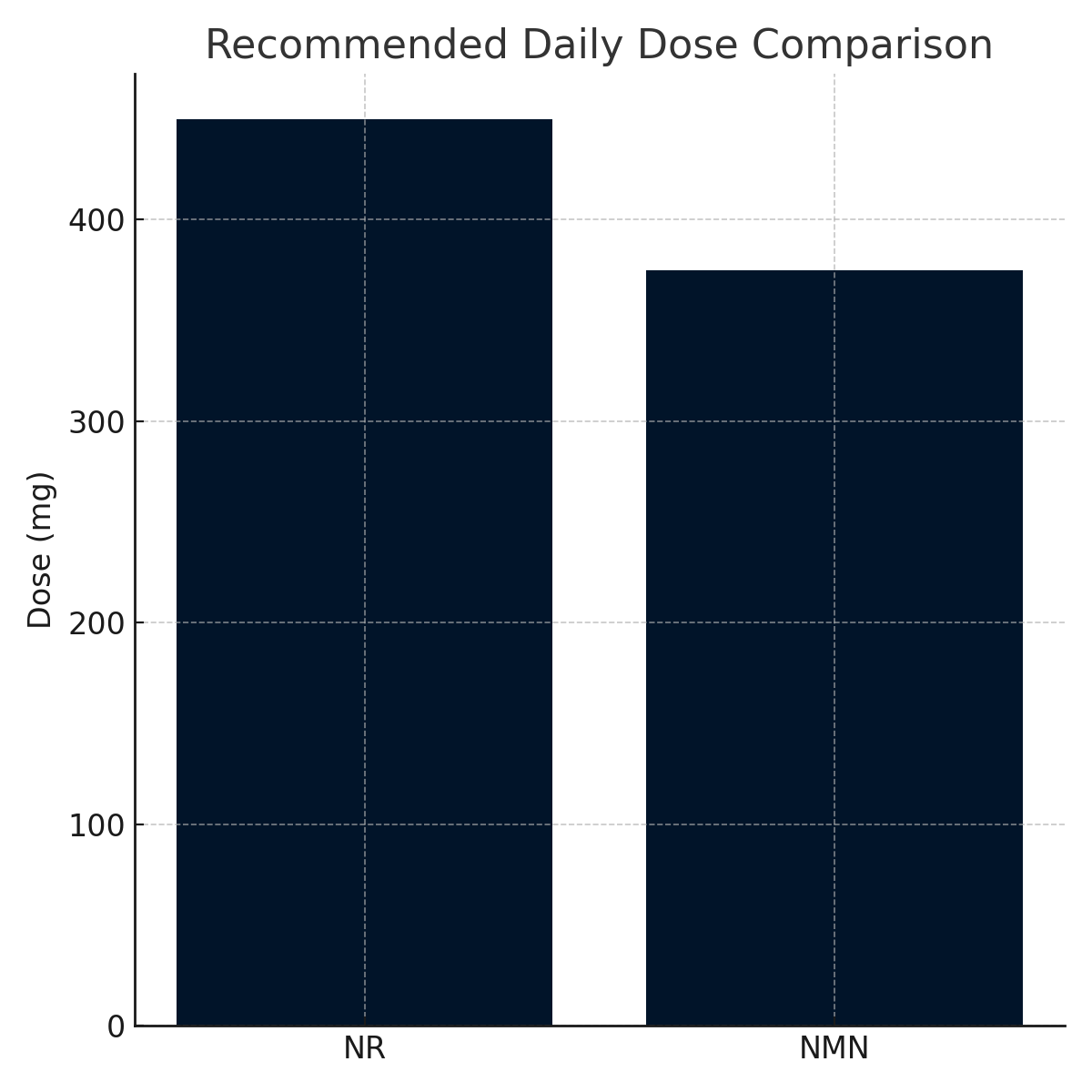
NR vs NMN
NR is absorbed and converted to NAD+ through a clear, well proven pathway. NMN has potential transport advantages but the data is less complete. Real world differences are minimal. NR has stronger human evidence. NMN has stronger consumer enthusiasm.
Who benefits most:
- Adults 35 to 65
- Anyone with afternoon cognitive drop off
- People under chronic stress
- Individuals prioritizing long term brain aging rather than short term stimulation
Dosing:
- NR: 300 to 600 mg daily
- NMN: 250 to 500 mg daily
- Higher doses add cost with minimal added benefit
Guesswork wastes money. Take the quiz and get a science based formula!
Frequently Asked Questions
Do I need a doctor’s approval before taking memory supplements?
You don’t need approval for most over-the-counter options. You do need it if you take medication, have a medical condition, or plan to stack multiple ingredients.
Can I take memory supplements every day?
Yes. These ingredients rely on cumulative effects. Daily use is required or you won’t see stable cognitive changes.
Can memory supplements replace healthy habits?
No. They amplify what your brain already has. Poor sleep, high stress, and weak nutrition will cap the benefit.
Are memory supplements safe for teenagers or students?
Most natural nootropics are fine for students. Teenagers should avoid strong stimulants and high doses of caffeine or racetams. Always check product age guidelines.
Can I combine multiple memory supplements?
Yes, if the stack avoids ingredient duplication and keeps each pathway within a safe range. Stacking is normal in nootropic formulas because cognition depends on multiple systems.
What should I do if a supplement gives me side effects?
Stop the ingredient immediately and cut the dose in the next trial. Headaches, nausea, or sleep disruption usually come from overdosing or poor timing.
How long does it take to notice improvements?
Most users see initial changes in two to four weeks. Choline donors, caffeine derivatives, and L-theanine act sooner. Omega 3, phosphatidylserine, and adaptogens take longer.
Are synthetic nootropics stronger than natural ones?
Often yes, but the tradeoff is a higher risk of tolerance or side effects. Natural compounds tend to be safer for long term use.
Should I take memory supplements in the morning or evening?
Anything that increases focus or alertness belongs in the morning. Anything that supports repair or inflammation reduction can be taken later in the day.
Do memory supplements work for everyone?
No. Results vary because deficiencies, sleep quality, stress levels, and neurotransmitter profiles differ from person to person. Matching the ingredient to the problem beats generic use.
.