
Jaw tension is a common issue that many people experience, often as a result of stress. This condition can manifest as tightness, pain, or discomfort in the jaw muscles, and is frequently linked to stress-induced behaviors such as teeth clenching or grinding. The impact of jaw tension extends beyond mere discomfort, potentially leading to long-term oral health issues if not addressed. Understanding how to relieve jaw tension from stress is essential for maintaining both dental health and overall well-being.
Understanding Jaw Tension from Stress
Jaw tension typically arises when stress triggers involuntary habits like clenching or grinding the teeth, known as bruxism. This tension can lead to various symptoms, including headaches, earaches, and even temporomandibular joint (TMJ) disorders. The prevalence of jaw tension is significant, affecting many individuals who may not even realize the connection between their stress levels and oral discomfort. Addressing jaw tension is crucial, not only to alleviate immediate pain but also to prevent potential long-term complications.
Self-care techniques and stress management strategies offer effective ways to combat jaw tension. By incorporating specific exercises, lifestyle changes, and relaxation methods, individuals can significantly reduce the discomfort associated with jaw tension. These approaches focus on both relieving the physical symptoms and addressing the underlying stress that contributes to the problem.
The Mind-Body Connection
The link between emotional stress and physical symptoms, such as jaw tension, is well-documented. Stress can manifest physically in various ways, with jaw tension being a common outcome. The mind-body connection highlights the importance of managing stress to improve physical health. By effectively managing stress, individuals can experience significant improvements in jaw discomfort and overall quality of life.
Implementing stress management techniques, such as mindfulness, deep breathing exercises, and relaxation practices, can help in reducing the physical manifestations of stress, including jaw tension. Understanding this connection empowers individuals to take proactive steps in managing both their mental and physical health, ultimately leading to a more balanced and comfortable life.
Physical Interventions for Jaw Tension
Jaw Exercises and Stretches
To effectively relieve jaw tension from stress, incorporating specific jaw exercises into your daily routine can make a significant difference. These exercises help in strengthening and relaxing the jaw muscles, reducing stress-induced tension.
- Goldfish exercises: These involve placing one finger on the TMJ and another on the chin, then dropping the lower jaw halfway and closing it again. Repeat this movement six times in one set, ideally twice a day.
- Resisted opening/closing: Place your thumb under your chin and gently push downward while opening your mouth. For closing, place your fingers on the top of your chin and resist as you close your mouth. Perform this exercise five times, twice daily.
- Side-to-side movements: Using a small object like a pencil, move your jaw from side to side. This exercise can be done for a few minutes each day to enhance flexibility.
These exercises are widely recommended and can be easily integrated into your routine, helping to alleviate discomfort and improve jaw mobility.
Heat or Cold Therapy
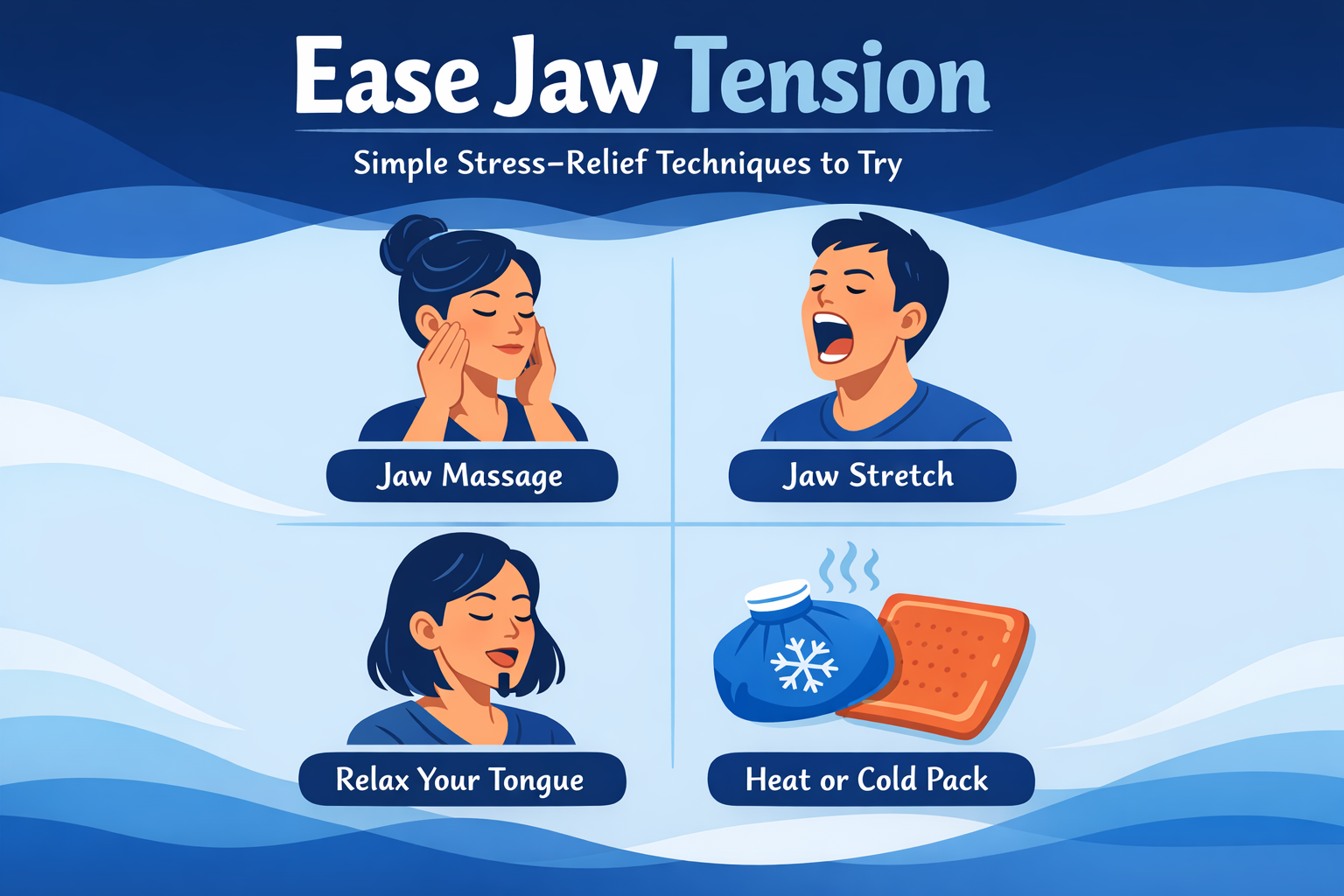
Applying heat or cold therapy is a simple yet effective way to manage jaw tension. Heat helps relax the muscles, while cold therapy can reduce inflammation.
Here’s a step-by-step guide for each method:
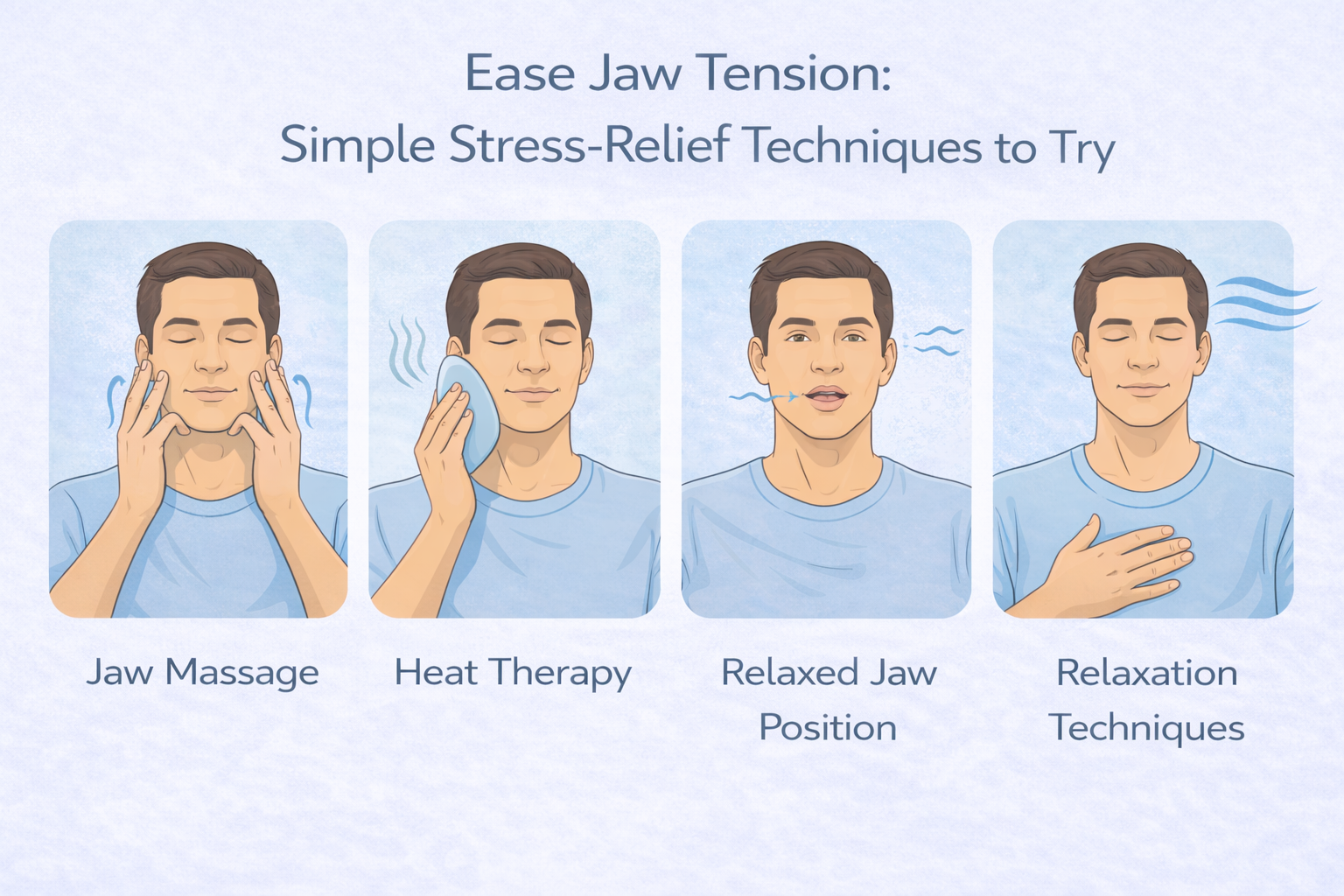
- Heat therapy: Use a warm compress or heating pad on the jaw area for 15-20 minutes. Ensure the temperature is comfortable to avoid burns.
- Cold therapy: Wrap ice packs in a cloth and apply to the jaw for 10-15 minutes. This can help reduce swelling and numb the area.
Alternating between heat and cold can provide additional relief, especially after performing jaw exercises.
Self-Massage Techniques
Self-massage can be a powerful tool in reducing jaw tension. Focus on the masseter and temporalis muscles, which are often the most affected by stress.
- Use your fingers to apply gentle pressure in circular motions on these muscles.
- Spend a few minutes each day massaging the area, focusing on any particularly tense spots.
- Be mindful to use gentle pressure to avoid overworking the muscles.
Regular self-massage can help release tension and improve circulation, contributing to overall jaw relaxation.
Lifestyle and Habit Changes
Conscious Jaw Relaxation
Adopting the habit of conscious jaw relaxation can significantly reduce clenching and grinding. A simple technique to remember is the “teeth apart, lips together” cue. This promotes a relaxed jaw position throughout the day.
Additionally, maintaining good posture is crucial. Poor posture can exacerbate jaw tension, so ensure your head is aligned with your spine, especially when sitting at a desk or using electronic devices.
Oral Habits and Awareness
Being aware of oral habits is essential in managing jaw tension. Proper tongue positioning and teeth spacing can prevent unnecessary clenching.
- Ensure your tongue rests on the roof of your mouth without touching the teeth.
- Keep your teeth slightly apart when not chewing or speaking.
Consider using reminders or apps to help monitor these habits, ensuring they become second nature over time. These small adjustments can make a significant impact on reducing jaw tension and improving comfort.
Overall Stress Management Techniques
Mindfulness and Relaxation Practices
Incorporating mindfulness and relaxation practices into your routine can be a highly effective way to relieve jaw tension from stress. Techniques such as yoga, meditation, and deep breathing exercises are known to reduce stress levels and promote relaxation.
Yoga combines physical postures with breathing exercises, which can help in releasing tension throughout the body, including the jaw. Meditation encourages mental calmness, which can alleviate stress-induced physical symptoms. Deep breathing exercises, such as diaphragmatic breathing, can also help in reducing tension by promoting relaxation and increasing oxygen flow.
Progressive muscle relaxation is another beneficial technique. It involves tensing and then slowly releasing different muscle groups, which can help in identifying and reducing muscle tension, including in the jaw area.
Holistic Approaches
Holistic approaches, such as the use of essential oils and aromatherapy, can complement other stress-relief methods. Essential oils like lavender or chamomile are known for their calming properties and can be used in diffusers or applied topically to promote relaxation.
Incorporating these practices into your daily routine can enhance overall relaxation and contribute to reducing jaw tension. Creating a calming environment with soothing scents can help in managing stress levels and preventing the onset of tension.
When to Seek Professional Help
While home remedies and lifestyle changes can be effective, there are times when professional help is necessary. If you experience persistent pain, difficulty opening your mouth, or if symptoms interfere with daily activities, it may be time to consult a professional.
Dentists can evaluate your oral health and provide treatments such as mouthguards or other dental interventions. Physiotherapists can offer specialized exercises and manual therapy to address jaw tension. Mental health counselors can help manage underlying stress and anxiety that contribute to physical symptoms.
Built around your needs, not generic stacks
Answer a few questions and let Cenario guide you toward a personalized starting point.
Frequently Asked Questions
What causes jaw tension?
Jaw tension is often caused by stress, anxiety, and habits like teeth grinding or clenching. These behaviors can be involuntary responses to stress and can lead to discomfort and tension in the jaw muscles.
Can jaw tension lead to other health issues?
Yes, chronic jaw tension can contribute to headaches, earaches, and even temporomandibular joint (TMJ) disorders. If left untreated, it can lead to more serious oral health problems.
How often should I perform jaw exercises?
It is recommended to perform jaw exercises daily, ideally multiple times a day, to achieve the best results. Consistency is key to relieving jaw tension from stress effectively.
Are there any risks associated with self-massage?
Self-massage is generally safe, but it’s important to apply gentle pressure and avoid overworking the muscles. If you experience increased pain or discomfort, it is advisable to stop and consult a professional.
What should I do if home remedies don’t work?
If home remedies are ineffective, it’s advisable to consult a healthcare professional for further evaluation and treatment options. Persistent symptoms may require professional intervention to address underlying issues effectively.
Frequently Asked Questions
What causes jaw tension?
Jaw tension is often caused by stress, anxiety, and habits like teeth grinding or clenching. These behaviors can be involuntary responses to stress and can lead to discomfort and tension in the jaw muscles.
Can jaw tension lead to other health issues?
Yes, chronic jaw tension can contribute to headaches, earaches, and even temporomandibular joint (TMJ) disorders. If left untreated, it can lead to more serious oral health problems.
How often should I perform jaw exercises?
It is recommended to perform jaw exercises daily, ideally multiple times a day, to achieve the best results. Consistency is key to relieving jaw tension from stress effectively.
Are there any risks associated with self-massage?
Self-massage is generally safe, but it’s important to apply gentle pressure and avoid overworking the muscles. If you experience increased pain or discomfort, it is advisable to stop and consult a professional.
What should I do if home remedies don’t work?
If home remedies are ineffective, it’s advisable to consult a healthcare professional for further evaluation and treatment options. Persistent symptoms may require professional intervention to address underlying issues effectively.