Experiencing chest pain can be frightening. Many people immediately worry about heart problems or a life-threatening heart attack, especially when the pain appears suddenly. However, not all chest pain is cardiac in origin. In many cases, people experience chest pain due to stress, anxiety, or panic attacks.
Stress-related chest pain is surprisingly common and often feels very similar to heart attack chest pain, which is why it causes so much fear. Learning how to tell the difference, and knowing how to respond, can help you feel calmer, safer, and more in control.
This guide focuses on anxiety-related chest pain, explains how stress affects the body, and shares evidence-based techniques to help relieve symptoms while also explaining when to seek medical attention.
Understanding Stress-Related Chest Pain
Stress-related or anxiety-related chest pain occurs when emotional distress triggers physical symptoms in the body. When you are under stress, your nervous system releases stress hormones such as adrenaline and cortisol. These hormones increase your heart rate, tighten muscles, and raise blood pressure.
As a result, you may notice:
- Chest tightness or pressure
- Sharp or aching chest sensations
- Shortness of breath
- A racing or pounding heart
- Dizziness or lightheadedness
Unlike chest pain caused by serious heart problems, anxiety-related chest pain is often linked to emotional triggers and may improve when stress levels decrease.
That said, any new or unexplained chest pain should always be taken seriously, especially if it is severe or persistent.
Anxiety and Chest Pain: Why It Feels So Real
Anxiety and chest pain are closely connected. During panic attacks, the body enters a heightened fight-or-flight state. Muscles tense, breathing becomes shallow, and the heart works harder than usual.
Common features of anxiety-related chest pain include:
- Muscle tightness caused by prolonged muscle tension
- Rapid or irregular breathing
- Pain that comes and goes
- Pain that worsens during stress but improves with relaxation
Even though this type of chest pain is usually not life threatening, the sensations are intense and very real. Fear often makes symptoms worse, creating a cycle of anxiety → chest pain → more anxiety.
Stress vs. Heart Attack Chest Pain: Key Differences
Understanding the difference can help reduce fear, but never self-diagnose.
Heart attack chest pain often includes:
- Crushing or squeezing pressure
- Pain spreading to the arm, jaw, or back
- Severe shortness of breath
- Nausea or cold sweats
- Pain that does not ease with rest
Anxiety-related chest pain often includes:
- Sharp or stabbing sensations
- Pain localized to one area
- Symptoms triggered by stress or fear
- Improvement with calm breathing or relaxation
If you are unsure, always seek medical attention immediately.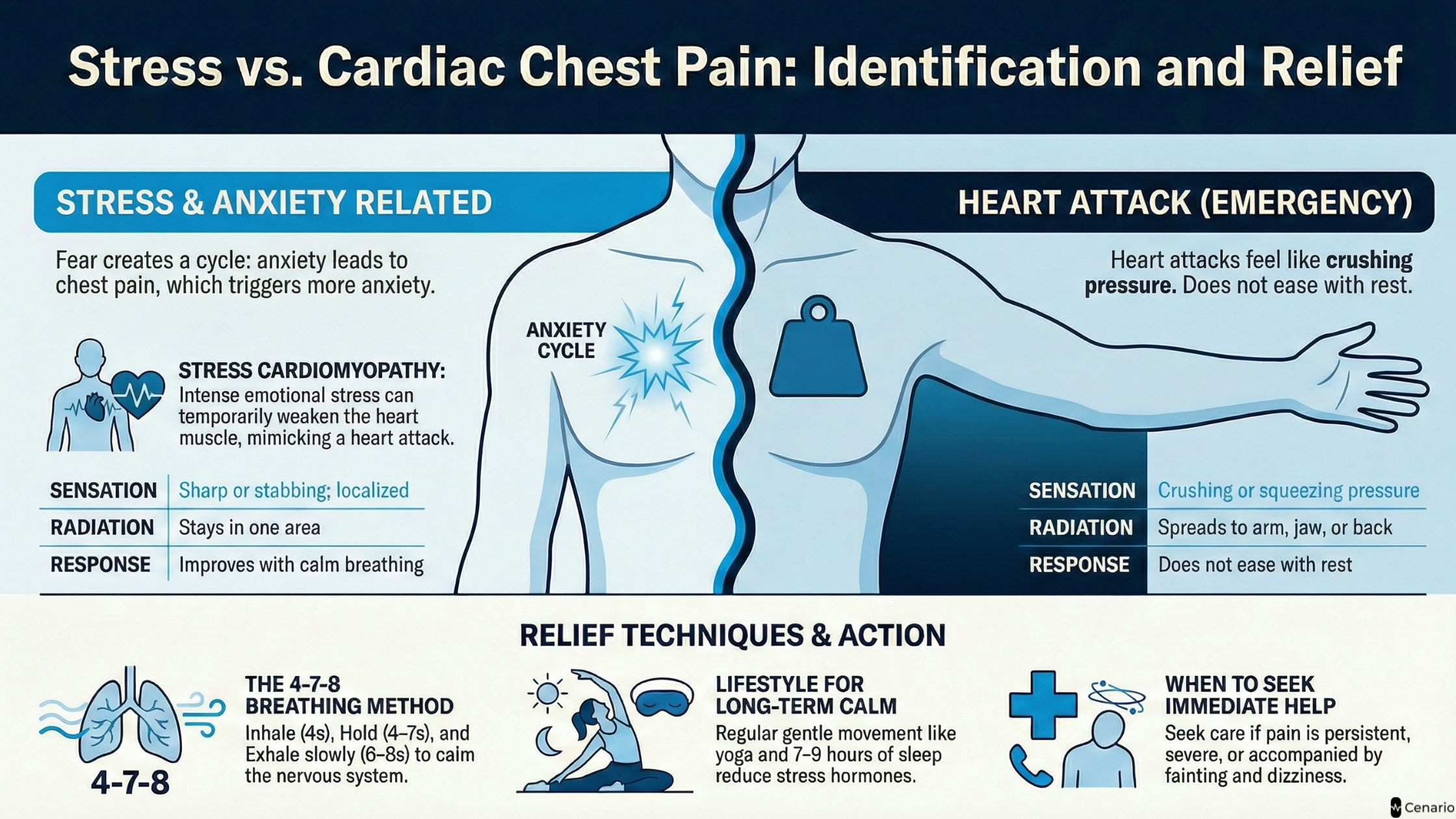
Immediate Relief Techniques for Stress-Related Chest Pain
Deep Breathing Exercises
Deep breathing is one of the fastest ways to calm the nervous system and reduce chest discomfort.
Try this method:
- Inhale slowly through your nose for 4 seconds
- Hold your breath for 4–7 seconds
- Exhale slowly through your mouth for 6–8 seconds
This helps slow your heart rate, reduce muscle tension, and bring your body back to balance. Focusing on breathing also anchors you in the present moment, which can interrupt panic responses.
Mindfulness and Meditation
Mindfulness helps you observe sensations without fear. Instead of reacting to chest pain with panic, mindfulness teaches you to acknowledge it calmly.
Benefits include:
- Reduced stress hormone levels
- Better emotional regulation
- Fewer panic attacks over time
Start with short, guided meditations and gradually increase duration as you become comfortable.
Physical Activity and Regular Exercise
Regular exercise reduces stress hormones and improves cardiovascular health. It also helps the body release endorphins, which improve mood and lower anxiety.
Effective options include:
- Walking
- Yoga
- Stretching
- Swimming
Gentle movement helps relieve muscle tension and decreases the likelihood of anxiety-induced chest pain.
Lifestyle Changes for Long-Term Relief
Healthy Diet
A balanced diet supports the nervous system and helps stabilize energy and mood. Nutrient-rich foods support your body’s stress response and reduce inflammation.
Focus on:
- Leafy greens
- Whole grains
- Berries
- Nuts and seeds
Avoid excessive caffeine and sugar, which can worsen anxiety and increase heart rate.
Adequate Sleep
Poor sleep heightens stress and increases sensitivity to physical symptoms. Aim for 7–9 hours of quality sleep each night.
Good sleep habits include:
- Consistent sleep schedules
- Limiting screen time before bed
- Creating a calm sleep environment
Better sleep improves emotional resilience and reduces anxiety-related chest pain.
Professional Help and When to Seek It
Medical Evaluation
You should seek medical care if chest pain:
- Is severe or persistent
- Comes with shortness of breath, dizziness, or fainting
- Feels different from previous episodes
A medical professional can rule out serious heart problems and give you peace of mind.
Cognitive Behavioral Therapy and Treatment Options
Cognitive Behavioral Therapy (CBT) is one of the most effective treatments for anxiety and chest pain related to stress. CBT helps you:
- Identify fear-based thought patterns
- Reduce panic responses
- Build healthier coping strategies
In some cases, medication may be recommended alongside therapy. Always consult a healthcare provider to determine the best plan.
Home Remedies and Additional Tips
Over-the-Counter Pain Relievers
If chest discomfort is linked to muscle strain, medications like ibuprofen or acetaminophen may help temporarily. Use only as directed and avoid long-term reliance without guidance.
Hot Drinks and Cold Packs
Warm herbal tea promotes relaxation
Cold packs can reduce localized discomfort
Apply cold packs for 15–20 minutes and combine with slow breathing for best results.
Understanding Stress Cardiomyopathy
Stress cardiomyopathy, also known as “broken heart syndrome,” occurs when intense emotional stress temporarily weakens the heart muscle. Symptoms may resemble a heart attack, including chest pain and shortness of breath, but the condition is usually reversible with medical care.
Because symptoms closely mimic serious heart conditions, immediate medical evaluation is essential.
Final Thoughts: You Are Not Alone
Stress-related chest pain can feel overwhelming, but it is manageable. Understanding the link between anxiety and chest pain, learning calming techniques, and knowing when to seek medical attention can dramatically reduce fear and improve quality of life.
By addressing stress early, practicing deep breathing, staying active, and seeking professional support when needed, you can break the cycle of anxiety and physical discomfort.
If you frequently experience chest pain, don’t ignore it, but don’t panic either. Help is available, and relief is possible.
Take the Cenario Quiz to get personalized supplement recommendations designed to support stress balance, emotional calm, and overall mental well-being.
Frequently Asked Questions
1. Can stress and anxiety cause chest pain that feels like a heart attack?
Yes. Anxiety-related chest pain can feel very similar to heart attack chest pain. Stress hormones increase heart rate, tighten chest muscles, and affect breathing, which can cause pain and shortness of breath. While usually not life threatening, you should still seek medical attention if symptoms are severe or new.
2. How long does stress-related chest pain last?
Stress-related chest pain may last minutes or hours and can come and go during ongoing stress or panic attacks. Deep breathing, relaxation, regular exercise, and cognitive behavioral therapy can help reduce symptoms. Persistent pain should be checked by a medical professional.
3. When should I seek medical help for chest pain?
Seek medical care immediately if chest pain is intense, persistent, or comes with dizziness or shortness of breath. Even if anxiety is suspected, ruling out heart problems is essential for safety and peace of mind.