

In today’s demanding work environments, workplace stress has become increasingly common. While occasional stress is part of any job, prolonged or chronic stress at work can have serious consequences for your mental health and physical well-being. If you’re struggling to keep up with your job duties and feel overwhelmed, it might be time to consider stress leave from work.
In this guide, we’ll cover the warning signs that signal you may need a break, explain how to request stress leave, outline your rights under the Family and Medical Leave Act (FMLA), and share strategies for managing stress leave and planning your return to work.
What is Stress Leave from Work?
Stress leave is time off granted to an employee experiencing severe stress that prevents them from fulfilling their work responsibilities. In the United States, this type of leave is often protected under the Family and Medical Leave Act (FMLA) for eligible employees.
Under the FMLA, you may qualify for up to 12 weeks of unpaid, job-protected leave if a health condition, including a mental health crisis caused by stress, interferes with your ability to perform your job. Importantly, your employer must have at least 50 employees within a 75-mile radius, and you must have worked at least 1,250 hours over the past 12 months to be eligible.
Common Signs You May Need Stress Leave from Work
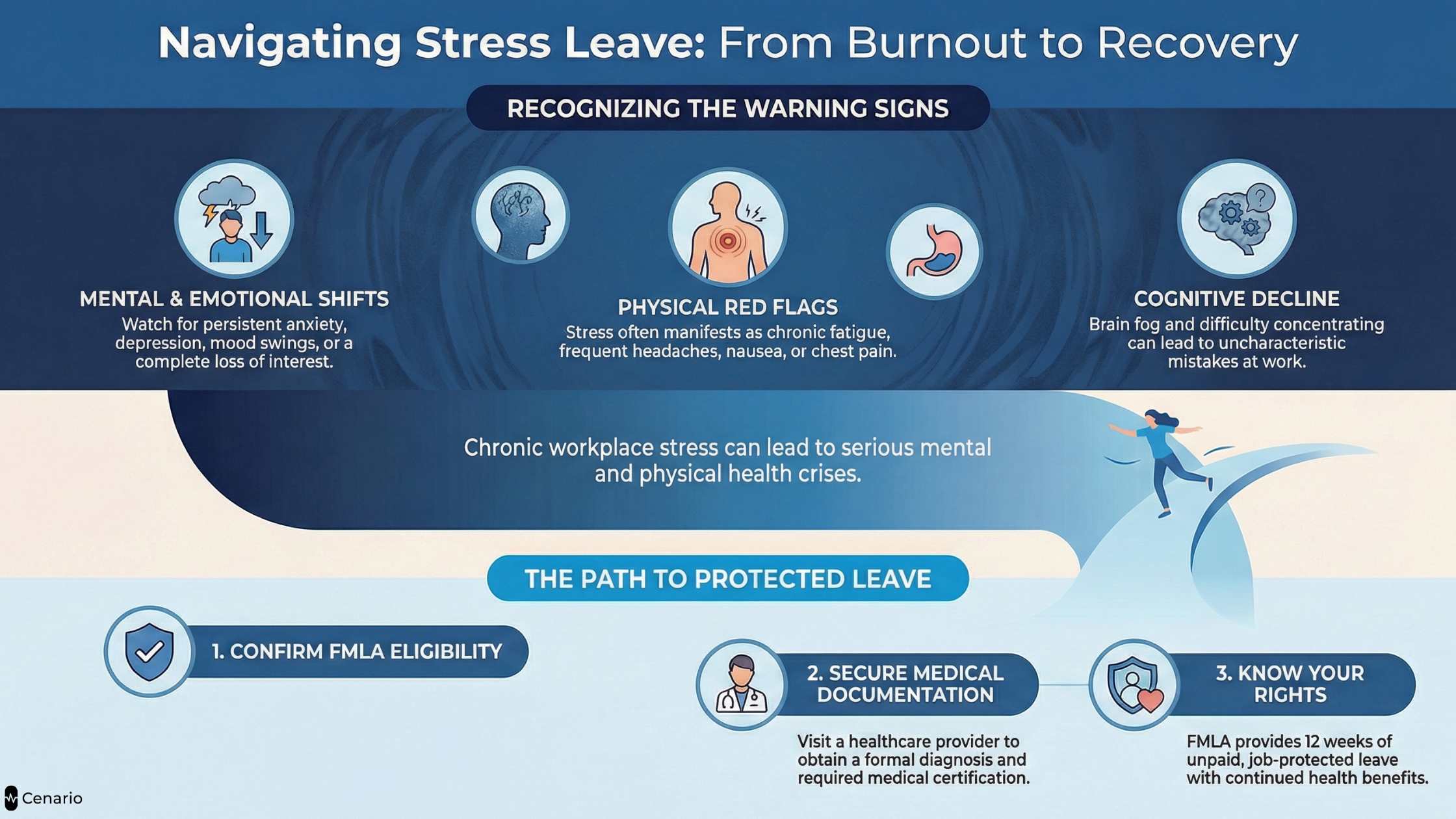
Recognizing the signs of chronic stress is crucial before it leads to burnout or more serious health conditions. Here are the top indicators that you may need to take a break:
1. Chronic Fatigue and Low Energy
If you’re waking up tired despite getting enough sleep, or if you feel physically drained throughout the day, your body could be signaling that it’s overwhelmed by stress.
2. Anxiety, Depression, or Mood Swings
Work-related stress often leads to mental health issues like anxiety or depression. You might feel on edge, hopeless, or emotionally exhausted. These are serious symptoms that warrant time off and professional support.
3. Difficulty Concentrating and Forgetfulness
A foggy brain, poor decision-making, or frequent mistakes at work can be signs that stress is impairing your cognitive function and ability to perform your job duties effectively.
4. Physical Symptoms of Stress
Chronic stress may manifest physically through headaches, nausea, chest pain, or digestive problems. If these symptoms are frequent and unexplained, it’s time to consider how workplace stress might be contributing.
5. Loss of Interest in Work and Hobbies
Losing enthusiasm for your job or personal interests is a clear red flag. You may dread work, feel detached, or lack motivation altogether.
6. Isolation and Avoidance Behavior
Avoiding coworkers, ignoring calls, or withdrawing socially can signal a deeper emotional toll caused by work stress.
7. Emotional Outbursts or Crying Easily
If small frustrations lead to tears or irritability, you may be emotionally overloaded and need a break to reset.
When to Request Stress Leave
If you’re experiencing one or more of the symptoms above, you should consider requesting stress leave from work. Don’t wait until the problem becomes unmanageable. Recognizing the need for help early on allows for better recovery and long-term well-being.
You’re entitled to put your mental health first, just as you would for a physical injury or illness.
How to Request Stress Leave Under FMLA
Follow these steps to request stress leave through your employer in compliance with the Family and Medical Leave Act:
1. Confirm Your Eligibility
To be an eligible employee, you must meet all three conditions:
- You’ve worked for your employer for at least 12 months.
- You’ve worked at least 1,250 hours during the past 12 months.
- Your employer has at least 50 employees within a 75-mile radius.
2. Visit a Healthcare Provider
You’ll need a diagnosis and documentation from a licensed healthcare professional confirming that you’re suffering from a serious health condition, such as anxiety, depression, or work-related stress, that requires leave.
3. Notify Your Employer
Inform your employer (typically through HR) that you need medical leave. You don’t have to disclose every detail, but you’ll need to provide a medical certification supporting your need for time off.
4. Submit Required FMLA Paperwork
Your HR department will provide FMLA forms. Complete these and ensure your healthcare provider fills out the necessary medical documentation.
5. Understand Your Rights
Under FMLA, you are entitled to:
- 12 weeks of unpaid, job-protected leave in a 12-month period.
- Continuation of your group health insurance benefits during the leave.
- Reinstatement to the same or equivalent position when you return to work.
While FMLA doesn’t mandate paid leave, you may be able to use accrued paid leave like sick or vacation days to receive income during your time off.
Managing Stress Leave: What to Do While You’re Away
Time away from work should be focused on recovery, not guilt or pressure. Here’s how to make the most of your stress leave:
1. Focus on Recovery
Use this time to rest, attend therapy, exercise, and engage in stress-reducing activities like meditation or journaling. Rebuilding your mental resilience is your top priority.
2. Set Clear Boundaries
Let your employer know that you will not be available for work-related communication during your leave. This helps you truly disconnect and heal.
3. Create a Support System
Stay connected with loved ones or join a support group for others dealing with workplace stress or burnout. You’re not alone.
4. Develop a Stress Management Plan
As you recover, work with your doctor or therapist to develop strategies to manage stress once you return. This may include setting better boundaries, time management, or requesting accommodations at work.
Returning to Work After Stress Leave
Your return to work can feel overwhelming, but preparation helps ease the transition:
1. Meet with Your Doctor First
Ensure you’re truly ready to return by getting professional clearance and discussing ongoing support you may need.
2. Communicate With HR
Discuss any accommodations you may need, such as a phased return, modified schedule, or reduced workload.
3. Ease Back Into Your Role
Try to return gradually, if possible. This helps you rebuild confidence and adjust to the work environment without being overwhelmed.
4. Keep Managing Your Mental Health
Don’t drop the self-care habits you developed during your leave. Managing stress is an ongoing process.
Final Thoughts
Taking stress leave from work is not a weakness, it’s a powerful act of self-care and self-respect. If your mental health is suffering due to workplace stress, know that you have legal protections under the Family and Medical Leave Act in the United States.
If you’re eligible and supported by your healthcare provider, don’t hesitate to request stress leave and take the time you need to recover. Use this break to manage stress, heal from burnout, and return stronger, with a plan to protect your well-being moving forward.
Remember: your health is your most important asset. Everything else can wait.
Take our quick quiz to get personalized supplement recommendations that support stress relief and mental clarity. Start your wellness journey today!
Frequently Asked Questions About Stress Leave
Can I Get Paid During Stress Leave?
FMLA only guarantees unpaid leave, but some employers offer paid leave options through sick time, vacation, or short-term disability benefits. Check your employee handbook or speak with HR.
Is Mental Health Covered Under FMLA?
Yes. Mental health conditions that impair your ability to work, such as severe anxiety, depression, or PTSD, qualify as a serious health condition under FMLA.
Will I Lose My Job if I Take Stress Leave?
Under FMLA, your job is protected. You are entitled to return to the same or an equivalent position after your leave, as long as you meet all eligibility requirements.