
Introduction to internal stress
In a world that moves faster every year, many people feel a constant low-level tension that never seems to come from outside. That tension is often internal stress, a pattern of self-criticism, unrealistic standards, and worry that lives inside your mind. Unlike the loud, obvious pressures of a deadline or a busy commute, internal stress works quietly. It changes how you think, how you feel, and how you act, even when your day looks calm on the surface.
Internal stress refers to stress that originates inside an individual. It includes negative self-talk, perfectionism, fear of failure, and self-imposed pressure. These inward drivers are different from external stressors, such as job demands, noise, or interpersonal conflict. While external stress reacts to events around you, internal stress is rooted in beliefs, habits of thinking, and emotional responses that persist over time.
What internal stress looks like
- Constant second-guessing or harsh self-judgment after small mistakes.
- Setting unrealistically high standards and feeling guilty for not meeting them.
- Ruminating over imagined outcomes or replaying scenarios in your head.
How internal stress differs from external stress
External stress usually has a clear trigger, such as a work presentation or a noisy environment. Internal stress can exist without a visible cause. You might wake up tense, replay negative thoughts, or feel pressure to perform even when external demands are low. Because it comes from within, internal stress often shapes how you interpret events, turning minor setbacks into major threats.
Why addressing internal stress matters
Ignoring internal stress lets it shape daily life. It increases anxiety, lowers self-esteem, and can lead to physical symptoms like tension and poor sleep. Over time, internal stress can reduce productivity, strain relationships, and undermine wellbeing. Recognizing these inward patterns is the first step toward change. Learning to notice negative self-talk, question perfectionist rules, and set realistic expectations reduces the hold of internal stress and opens a path to greater calm.
Causes and triggers of internal stress
Internal stress often grows from patterns that live inside long after the original event is gone. Key drivers include core beliefs about worth and competence, unprocessed trauma, and repeated comparisons to others. Social media and curated highlights can amplify self-criticism by making achievements look effortless.
personal beliefs and past experience
Messages learned in childhood or during stressful periods shape how you interpret setbacks. If you were taught that mistakes equal failure, you may respond to small errors with intense self-blame. Those beliefs become automatic triggers for internal stress.
modern triggers and habit loops
Habitual rumination and repetitive negative self-talk create a loop that keeps internal stress active. Checking feeds, replaying conversations, or rehearsing worst case scenarios can keep cortisol levels elevated even when nothing external is threatening.
How internal stress affects mind and body
Internal stress shows up in three linked areas: mental and emotional, physical, and behavioral. Each area feeds the others, which can make the cycle stubborn to break.
.png)
mental and emotional effects
- Anxiety and persistent worry.
- Low self esteem and harsh self judgment.
- Rumination and fear of failure that reduce creativity and risk taking.
physical signs
- Muscle tension in the neck, shoulders, and jaw.
- Headaches, digestive discomfort, and disrupted sleep.
- Chronic fatigue and higher resting heart rate or blood pressure.
behavioral changes
- Procrastination or avoidance despite high internal pressure.
- Social withdrawal or difficulty asking for help.
- Overworking to compensate for perceived inadequacy.
What happens in the body
When internal stress activates, the brain signals the body to prepare for threat. The sympathetic nervous system raises heart rate and pumps cortisol into the bloodstream. Short bursts of cortisol are normal. But if internal stress keeps signals active, cortisol stays elevated and affects sleep, digestion, and immune response. Over time this state makes it harder to shift back into calm and increases the risk of persistent health complaints.
Practical strategies to reduce internal stress
Approaches that help combine changing thought patterns, calming the nervous system, and building routines that support resilience.
cognitive techniques
- Notice automatic thoughts and test them against evidence. Ask what you would tell a friend in the same situation.
- Set realistic, measurable goals and break tasks into small steps to avoid perfectionism traps.
- Practice self compassion by naming pressure and allowing imperfection as part of learning.
mindfulness and relaxation
- Use simple breathing exercises to reduce immediate physiological arousal.
- Try short mindfulness meditations or body scans to interrupt rumination.
- Progressive muscle relaxation eases persistent tension in the neck and shoulders.
daily habits and lifestyle
- Move regularly. Even 20 minutes of brisk walking helps regulate mood and cortisol.
- Prioritize sleep and consistent meal patterns to stabilize energy and mood.
- Limit late night screen time and set clear digital boundaries to reduce comparison triggers.
professional options and workplace steps
Therapy, coaching, or group programs can teach cognitive behavioral skills and offer accountability. Employers can help by creating psychological safety, reasonable expectations, and access to wellbeing programs.
Build a simple plan to manage internal stress
Start with a short assessment, pick two strategies, and schedule them into your week. Example steps:
- Complete a quick check using a stress quiz.
- Choose one cognitive tool and one calming practice to use daily for two weeks.
- Track changes in sleep, mood, and productivity. Adjust the plan based on what works.
- Seek professional help if symptoms persist or worsen.
With steady practice, you can reduce the power of self-imposed pressure and move toward greater inner calm.
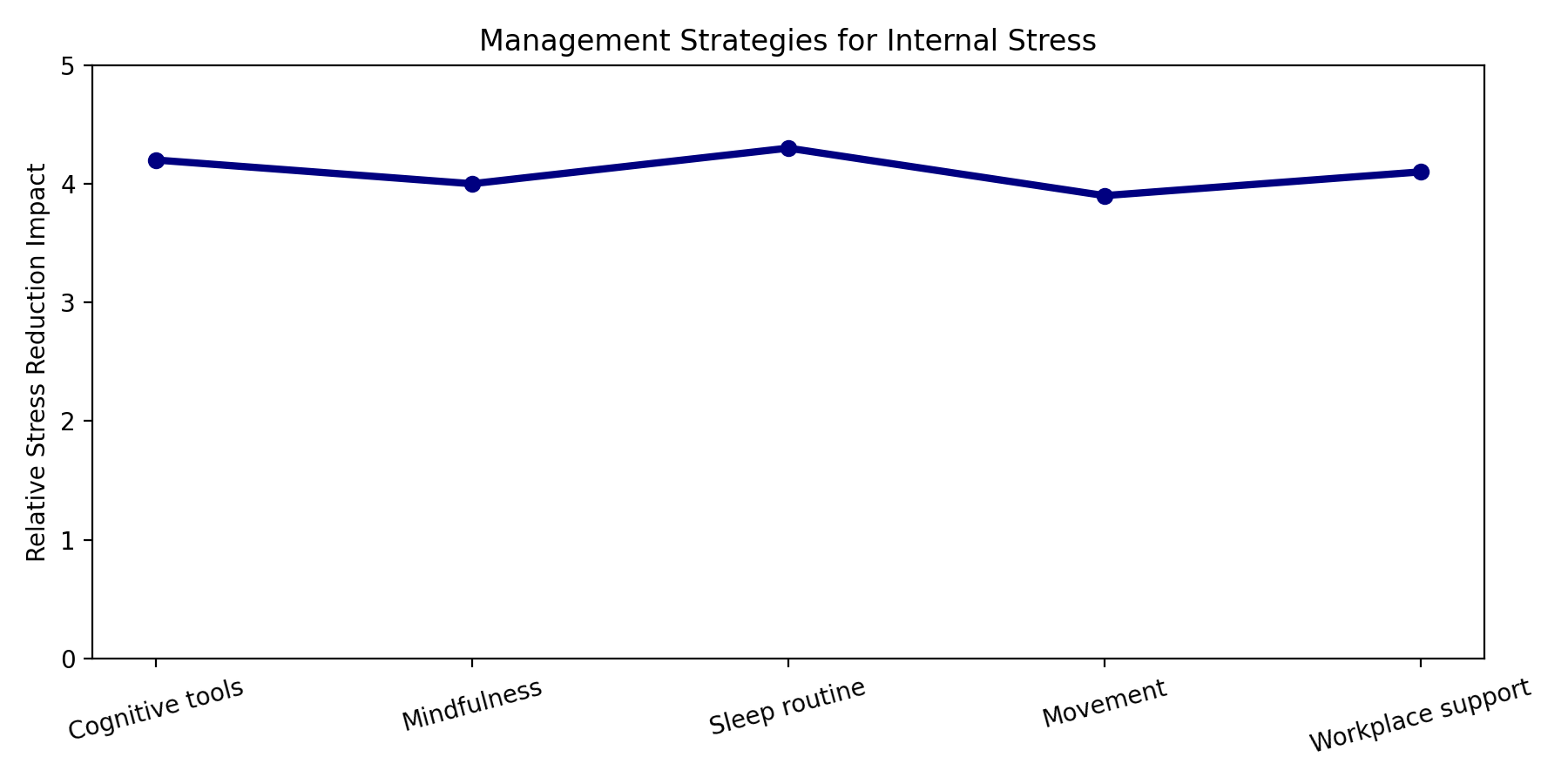
Management strategies for internal stress
Moving beyond awareness means using targeted tools that change how you think, how your body reacts, and how you act day to day. The approaches below build on basic ideas and give specific, repeatable steps you can use right away.
Cognitive behavioral tools
- Use a thought record. Write the triggering thought, the emotion, evidence for and against it, and a balanced alternative. This reduces the automatic power of internal stress.
- Run behavioral experiments. Test a feared outcome on a small scale to collect evidence against catastrophic predictions and reduce avoidance.
- Set implementation intentions. Instead of vague goals, plan: “If I catch myself ruminating, I will pause and do two minutes of box breathing.” Clear rules make breaking habit loops easier.
Mindfulness practices to try
- Label thoughts and sensations. When negative self-talk arises, name it: “thinking” or “worrying.” This adds distance and lowers reactivity.
- Practice brief anchors. A one minute grounding sequence a few times a day resets arousal and interrupts internal stress spirals.
- Use urge surfing for cravings to ruminate. Notice the intensity rise and fall without acting on it. This reduces the time spent stuck in repetitive loops.
Lifestyle routines that stick
- Create a predictable sleep and wake routine. Small improvements in sleep reduce baseline internal tension.
- Schedule movement as non negotiable. Short, regular activity sessions stabilize mood and reduce cortisol reactivity.
- Design digital boundaries. Limit social scrolling before bed and use focused work blocks to cut comparison triggers.
Workplace and leadership actions
Internal stress at work often stems from unclear expectations and a culture that punishes mistakes. Leaders can help by:
- Modeling realistic standards and sharing learning moments to normalize imperfection.
- Providing clear priorities and reducing low value tasks that fuel self-imposed pressure.
- Offering brief coaching or access to wellbeing programs so employees learn cognitive and behavioral tools.
How to measure progress and prevent relapse
Trackable, small wins keep momentum and help prevent setbacks.
simple metrics to use
- Daily mood ratings on a 1 to 10 scale and a weekly stress thermometer to spot trends.
- One or two behavioral markers, like number of avoidance episodes or minutes spent on worry, to measure practical change.
- Sleep quality and energy scores to see physiological shifts linked to internal stress.
maintenance strategies
Expect fluctuations. Build booster sessions into your plan, keep a short list of go-to practices, and set a monthly check in with a coach or trusted peer. If symptoms increase or start affecting function, consider therapy.
Final thoughts and next steps
Internal stress is influenced by habit, belief, and environment. It does not disappear overnight, but it does respond to clear, consistent strategies. Choose two concrete practices from this post, schedule them into your week, and review progress after two weeks. Small, steady changes add up to more calm and better decision making.
Ready to take the next step? Start with a short assessment, try one cognitive tool and one mindfulness practice for two weeks, and explore how workplace changes can reduce self-imposed pressure across your team.
Looking for the best option is pointless if it is not right for you.
Take the Cenario Quiz and get a personalized, science-backed recommendation in under 3 minutes.
Frequently Asked Questions
How long does it take to reduce internal stress?
Reducing internal stress depends on the pattern and intensity, but many people notice improvement within two to eight weeks when they practice cognitive tools and relaxation regularly. Consistency matters more than speed.
Can internal stress cause physical symptoms like headaches?
Yes. Internal stress can raise physiological arousal and cortisol, which commonly contributes to headaches, muscle tension, and sleep disruption. Addressing both thoughts and lifestyle helps lower these symptoms.
Is internal stress the same as an anxiety disorder?
Internal stress shares features with anxiety, but it is a broader pattern of self-imposed pressure and negative thinking. If worry is persistent, severe, or impacts daily function, speak with a mental health professional to evaluate for an anxiety disorder.
.