
Understanding the Causes of Shoulder Stress
In today’s fast-paced world, shoulder stress has become a common ailment, especially among those engaged in sedentary or high-stress jobs. Many individuals experience discomfort and pain in their shoulders, often characterized by stiffness, tension, and a reduced range of motion. Addressing these symptoms is crucial as they can significantly impact daily activities and overall well-being.
Understanding the Causes of Shoulder Stress
Shoulder stress can arise from various physiological and psychological factors. Poor posture, often seen in individuals who spend long hours at desks, can lead to repetitive strain on the shoulder muscles. Additionally, stress-induced muscle tension is a common culprit, causing the muscles in the shoulders and neck to tighten involuntarily. Recognizing these causes is essential for effectively managing and alleviating shoulder stress.
Physiological factors such as repetitive movements and overuse of shoulder muscles can also contribute to stress in this area. On the psychological front, anxiety and stress can exacerbate muscle tension, creating a cycle of discomfort and pain. By understanding these underlying causes, individuals can take proactive steps to relieve stress in their shoulders.
Purpose of This Post
This blog post aims to explore evidence-based methods for relieving shoulder stress. By combining physical exercises, relaxation techniques, and lifestyle adjustments, individuals can find effective ways to reduce tension and improve their quality of life. Whether you’re dealing with occasional shoulder discomfort or chronic tension, this guide offers practical solutions to help you unlock and soothe shoulder stress.
Stay tuned as we delve into specific exercises and techniques that can make a significant difference in your shoulder health. From stretching routines to mindfulness practices, we’ll cover a range of strategies designed to promote relaxation and restore mobility. By implementing these methods, you can take control of your shoulder health and enjoy a more comfortable, stress-free life.
Stretching and Physical Exercises
Regular stretching plays a vital role in alleviating shoulder stress by enhancing flexibility and reducing muscle tension. Studies have shown that incorporating stretching into your routine can significantly improve posture and decrease pain. Let’s explore some key exercises that target shoulder tension effectively.
Hand Behind Back Stretch
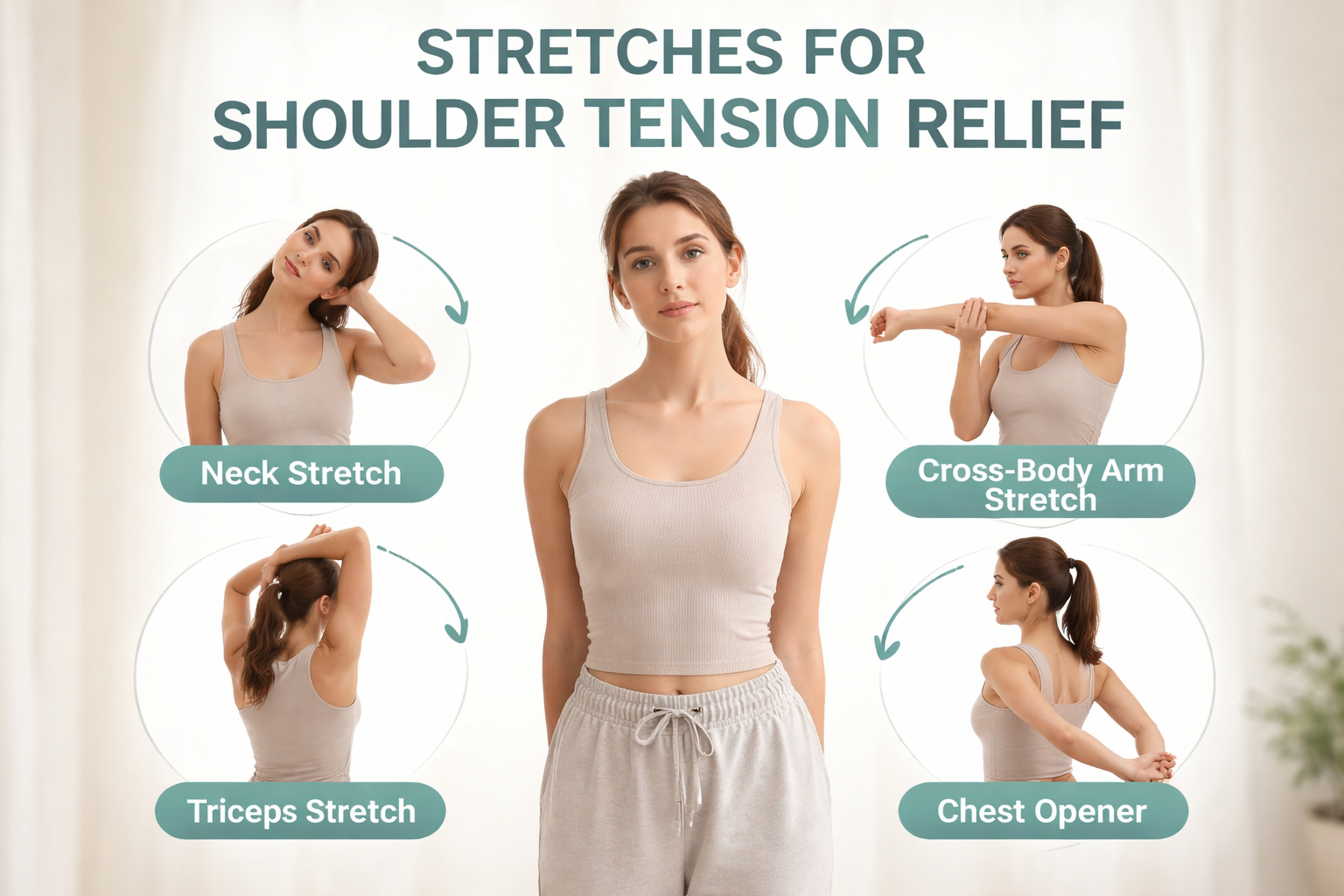
This exercise is designed to release tension in the shoulders and neck. To perform it, stand or sit comfortably, placing one hand behind your back and gently pulling it towards the opposite side with your other hand. Hold the stretch for 15-30 seconds, feeling the release in your shoulder muscles. This simple yet effective stretch can be done daily to maintain shoulder flexibility.
Cross Arm Stretch
The cross arm stretch is excellent for loosening tight shoulder muscles. Begin by extending one arm across your body at shoulder height. Use your opposite hand to gently pull the extended arm towards your chest. Hold this position for about 20 seconds before switching arms. Incorporating this stretch into your routine can help ease tension and improve shoulder mobility.
Assisted Shoulder Rotation and Forward Table Slide
These exercises are particularly beneficial for enhancing shoulder mobility. For the assisted shoulder rotation, use a resistance band or towel to support your arm as you rotate it outward. The forward table slide involves placing your hands on a table and sliding them forward while keeping your back straight. Both exercises should be performed slowly and controlled to maximize benefits.
Yoga-inspired Moves
Yoga poses such as Cat-Cow and Child’s Pose offer dual benefits of physical relief and relaxation. The Cat-Cow pose involves alternating between arching and rounding your back, which helps in releasing tension from the shoulders and spine. Child’s Pose, on the other hand, provides a gentle stretch to the shoulders while promoting relaxation through deep breathing. Practicing these poses can enhance overall shoulder health and stress reduction.

Relaxation Techniques
Incorporating relaxation techniques into your daily routine can significantly reduce shoulder stress by lowering muscle tension and promoting overall well-being. Let’s delve into some effective methods.
Deep Breathing Exercises
Deep breathing exercises, such as box breathing and diaphragmatic breathing, are powerful tools for stress relief. Box breathing involves inhaling deeply for four counts, holding the breath for four counts, exhaling for four counts, and pausing for another four counts. Diaphragmatic breathing focuses on deep, slow breaths that engage the diaphragm, reducing tension in the shoulders and neck. These exercises can be practiced anywhere and are highly effective in calming the nervous system.
Mindfulness and Progressive Muscle Relaxation (PMR)
Mindfulness practices and PMR are excellent for reducing pain perception and improving well-being. PMR involves tensing and relaxing different muscle groups, including the shoulders, to release built-up tension. Research indicates that PMR can lead to measurable decreases in chronic neck and shoulder pain. Integrating these techniques into your routine can help break the cycle of stress and tension.
By combining these stretching exercises and relaxation techniques, you can effectively manage and relieve stress in your shoulders. Regular practice not only alleviates physical discomfort but also enhances your mental well-being, leading to a more balanced and stress-free life.
Mind-Body Connection and Psychological Stress
Understanding the intricate link between psychological stress and physical tension is crucial in addressing shoulder stress. When stress levels rise, the body often responds with involuntary muscle tension, particularly in the shoulders and neck. This tension can exacerbate discomfort and lead to a cycle of stress and physical pain. Techniques such as guided imagery can play a significant role in calming the nervous system, helping to break this cycle. By visualizing peaceful and calming scenarios, individuals can promote relaxation and reduce muscle tension.
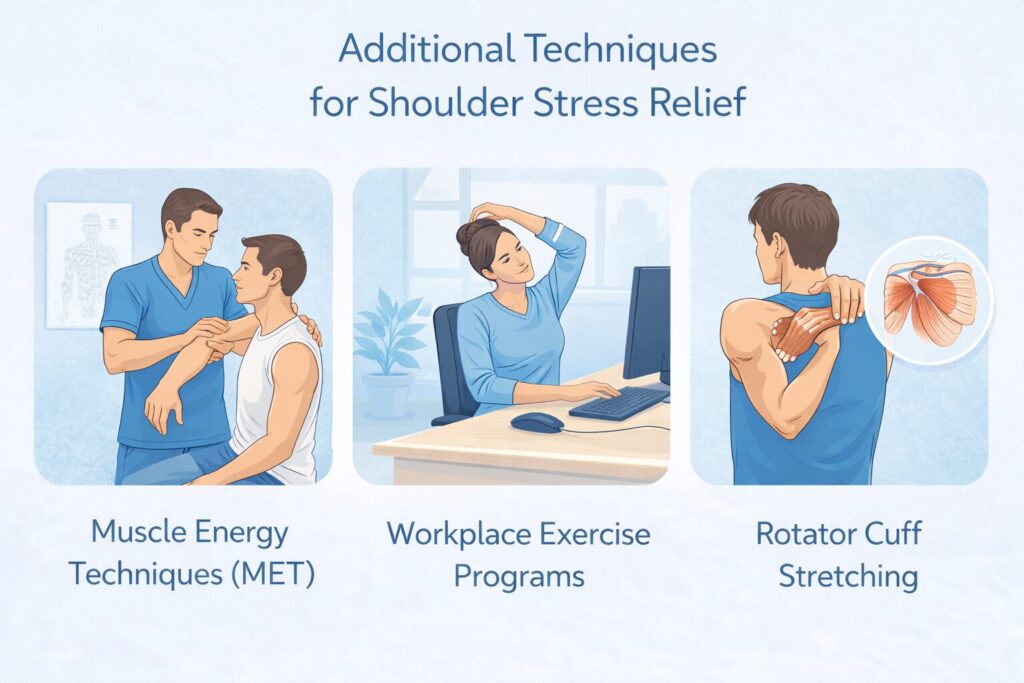
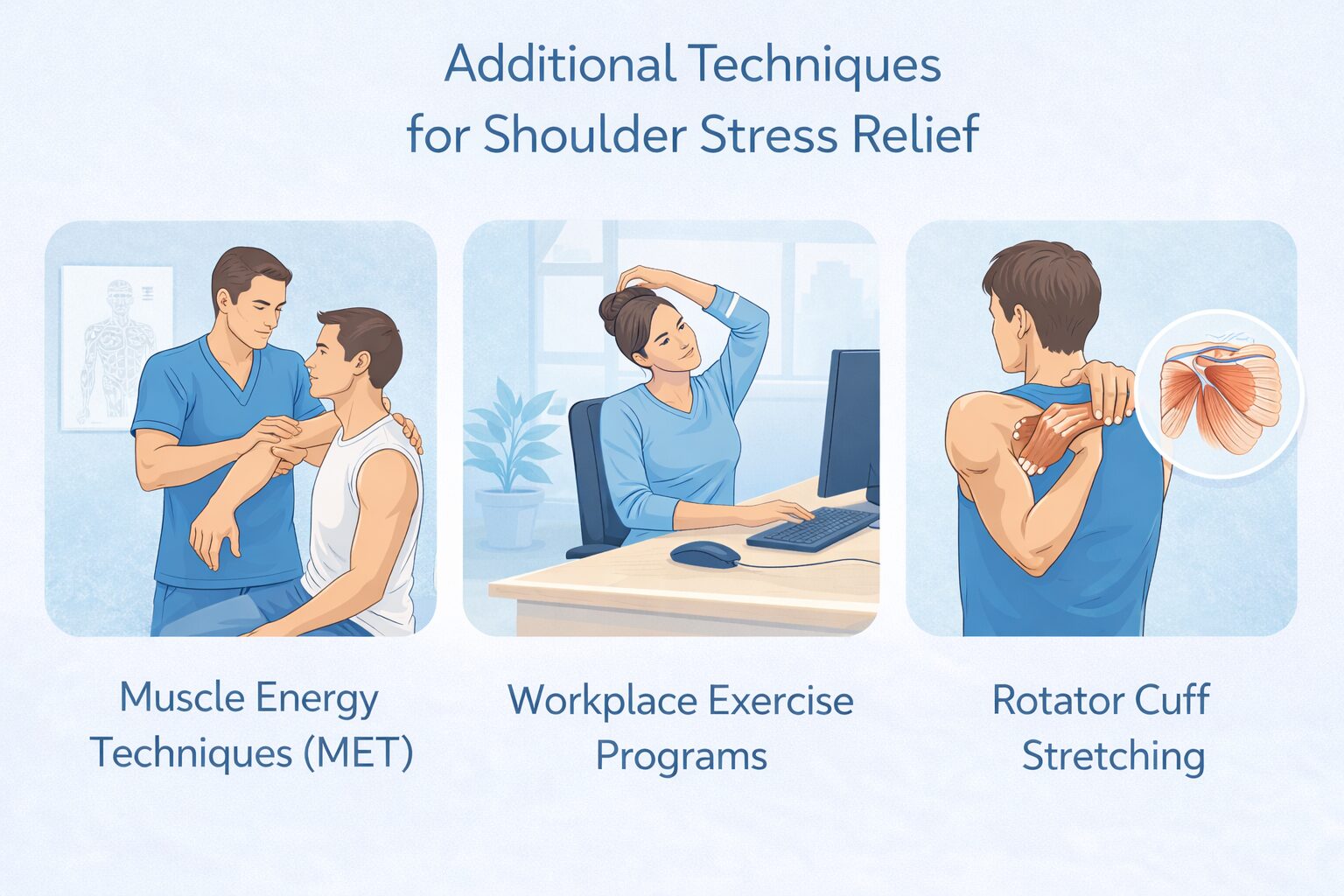
Additional Techniques for Shoulder Stress Relief
Muscle Energy Techniques (MET)
Muscle Energy Techniques (MET) are advanced methods used to relieve shoulder stress. These techniques involve gentle muscle contractions against resistance, which can help lengthen muscles and improve range of motion. MET can be particularly effective for individuals experiencing chronic tension in the shoulders, as it targets the muscle fibers directly to promote relaxation and flexibility.
Workplace Exercise Programs
For those in office settings, integrating simple exercise routines into the workday can greatly alleviate shoulder tension. Exercises such as shoulder shrugs, neck stretches, and desk yoga can be performed during short breaks to reduce stress. These activities not only decrease muscle tension but also enhance concentration and productivity.
Rotator Cuff Stretching
Targeting the rotator cuff through specific stretching exercises is essential for comprehensive shoulder relief. The rotator cuff is a group of muscles and tendons that stabilize the shoulder joint. Stretching these muscles can prevent stiffness and improve overall shoulder function. Incorporating rotator cuff stretches into your routine can provide significant relief from stress-related tension.
Final Thoughts on Managing Shoulder Stress
Effectively managing shoulder stress requires a holistic approach that combines physical exercises, relaxation techniques, and lifestyle adjustments. By understanding the mind-body connection and incorporating strategies like MET and workplace exercises, individuals can experience significant improvements in shoulder health. Regular practice of these methods not only reduces physical discomfort but also enhances mental well-being, leading to a more balanced and stress-free life.
Looking for the best option is pointless if it is not right for you.
Take the Cenario Quiz and get a personalized, science-backed recommendation in under 3 minutes.
Frequently Asked Questions
What are the most effective stretches for shoulder stress relief?
Effective stretches for relieving shoulder stress include the hand behind back stretch, cross arm stretch, assisted shoulder rotation, and forward table slide. These exercises target specific areas of tension, promoting flexibility and reducing discomfort.
How often should I perform these exercises to see results?
To see noticeable results, it’s recommended to perform these exercises at least three to four times a week. Consistency is key, and regular practice over several weeks can lead to significant improvements in shoulder flexibility and reduced stress.
Can stress really affect my shoulder muscles?
Yes, stress can significantly impact shoulder muscles. Psychological stress often leads to involuntary muscle tension, particularly in the shoulders and neck, contributing to discomfort and pain. Managing stress through relaxation techniques can help alleviate this tension.
Are there quick fixes for shoulder stress relief at work?
Quick fixes for shoulder stress relief at work include micro-break exercises such as shoulder shrugs, neck rolls, and deep breathing techniques. These can be performed in just a few minutes and are effective in reducing tension and improving focus.
When should I seek professional help for shoulder stress?
If shoulder stress persists despite regular exercises and relaxation techniques, or if the pain is severe and impacts daily activities, it’s advisable to seek professional help. A healthcare provider can assess the situation and recommend appropriate treatments or therapy.