

Which jobs are the most stressful in 2026? As the economy and work culture continue to evolve, that question has become more important than ever. Many workers are now facing tighter deadlines, higher expectations, and new safety risks. Knowing which industries are the most stressful can help people make smarter career choices, guide workplace policies, and protect their mental and physical health.
Why Job Stress Matters in 2026
Workplace stress doesn’t just make you tired, it can lead to serious health problems like anxiety, sleep disorders, and even heart disease. It also causes burnout, lowers productivity, and makes employees quit faster. In 2026, these problems are showing up more clearly in some industries than others.
What the Welltory Report Found
Welltory recently analyzed stress across U.S. industries using a data-based scoring system. Instead of relying on personal feelings, the report looked at structural stress factors like:
- Weekly hours and overtime
- Workplace injuries and illnesses
- Quit rates and layoffs
- Earnings vs. job openings
- Burnout and related health data
All of this was combined into a stress score from 1 to 100 for each industry. That gives us a clearer, more objective answer to which jobs are the most stressful—at an industry level rather than by specific job titles.
Top Findings From the 2026 Stress Rankings
The results show that leisure and hospitality is the most stressful industry, mainly due to erratic schedules, emotional labor, low wages, and constant understaffing. Other high-stress sectors include:
- Professional & business services
- Transportation & warehousing
- Mining & logging
This ranking highlights how stress is often built into the structure of the job, not just based on individual complaints. That makes the data more useful for companies, policymakers, and job seekers alike.
1: Leisure and Hospitality
Leisure and hospitality scored 66—the highest on the Welltory stress index. Jobs like servers, bartenders, and front-desk staff deal with long shifts, unpredictable hours, and emotional labor from constant customer interaction. Many of these roles also have unstable income due to irregular scheduling, which adds financial stress.
2: Professional & Business Services
This white-collar sector scored 56. Workers like consultants, analysts, and legal staff often handle intense pressure from clients, constant deadlines, and frequent overtime. Even if there’s little physical danger, the mental demands are sky-high, with little time to recover.
3: Transportation & Warehousing
Scoring around 53, this industry involves both physical strain and tight delivery timelines. Drivers, warehouse workers, and logistics staff often work long hours with safety risks and unpredictable schedules, especially when supply chains are unstable.
4: Mining & Logging
At 50, mining and logging are physically demanding and risky jobs. Workers often operate in remote areas, far from their families, and face dangerous work environments. The higher pay in these industries helps a bit, but doesn’t remove the mental and physical toll.
5: Private Education & Health Services
With a score of 46, this group includes teachers and healthcare workers like nurses. These roles are emotionally intense, with overcrowded classrooms, packed hospital floors, and limited support. While many find these jobs rewarding, burnout is common due to chronic stress.
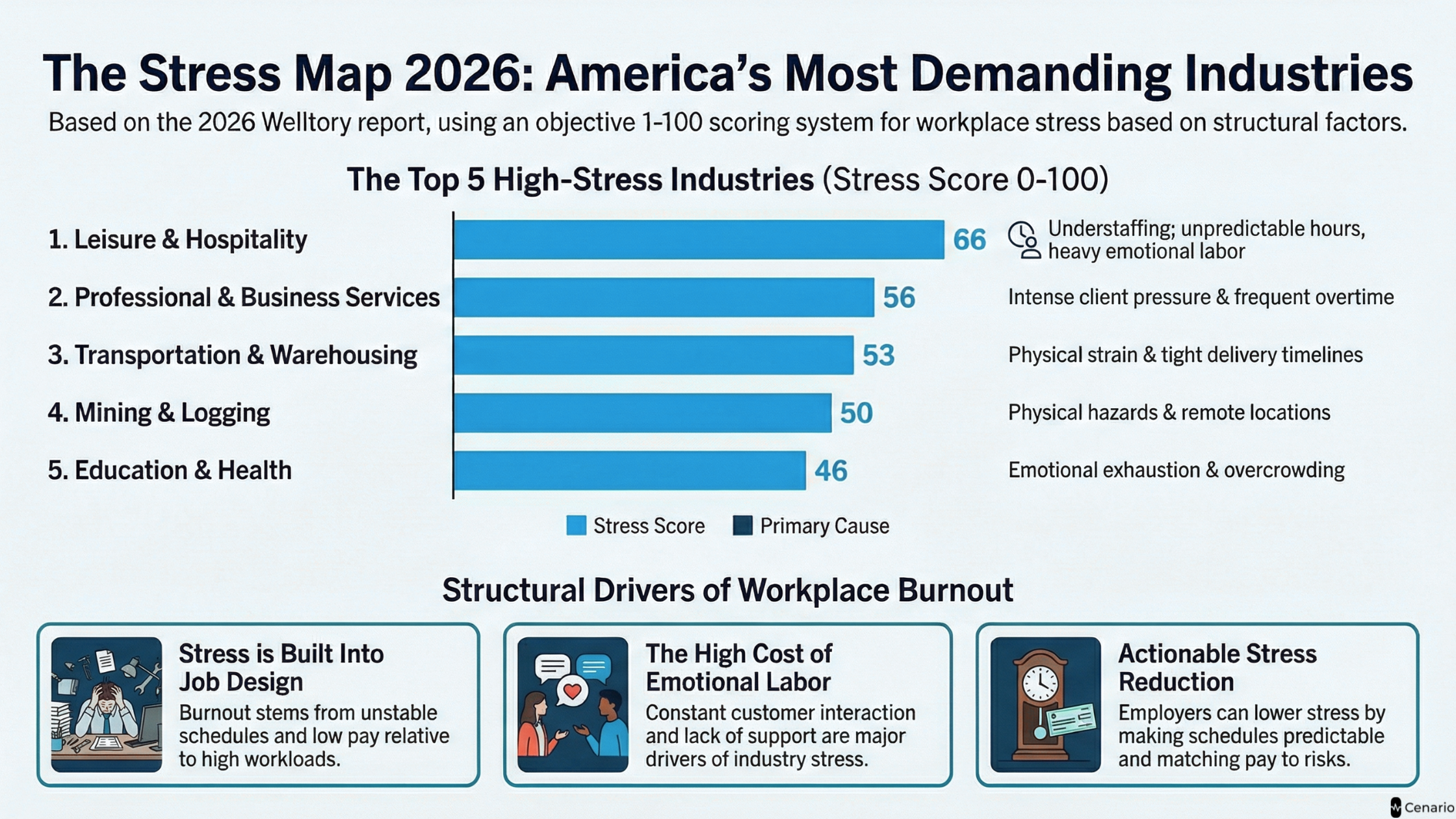
Quick View: Top 5 Stressful Industries
| Rank | Industry | Stress Score | Main Causes |
|---|---|---|---|
| 1 | Leisure & Hospitality | 66 | Irregular hours, emotional labor, understaffing |
| 2 | Prof. & Business Services | 56 | Long hours, client demands, job insecurity |
| 3 | Transportation & Warehousing | 53 | Time pressure, safety risks |
| 4 | Mining & Logging | 50 | Hazards, remote locations, injury risk |
| 5 | Education & Health | 46 | Emotional exhaustion, overcrowding |
What Makes a Job Stressful?
Stress at work usually comes from how a job is structured, not just from one bad day. Common causes include:
- Unstable or changing schedules
- Low pay compared to workload or risk
- Too few staff to handle the work
- High emotional demands with little support
- Physical danger or time-sensitive responsibilities
These factors don’t just affect workers—they also impact employers, who end up with higher turnover, more burnout, and a harder time hiring.
What Employers and Workers Can Do
Here are some ways companies and workers can help reduce stress:
- Make schedules predictable and fair
- Match pay to job risks, both physical and emotional
- Hire enough staff and train them well
- Offer mental health resources and support systems
- Use stress-tracking tools to spot problems early
Tools like Welltory can help companies monitor stress in real time and take action before it gets worse.
Other Stressful Industries Worth Noting
Several other sectors score in the low 40s, including:
- Information (score: ~43): Workers face deadline pressure and responsibility for cybersecurity and tech performance.
- Construction (score: ~43): Physical danger, strict timelines, and weather issues add stress.
- Retail & Utilities (scores: ~42): Retail has customer service stress and odd hours. Utility workers manage critical systems under risky conditions.
How Job Stress Shapes Career Choices
Because stress often comes from the job structure itself, it’s not always easy to fix without big changes. But understanding the stress landscape can help:
- Workers can pick roles that offer more balance or better support
- Employers can make smarter staffing and scheduling decisions
- Policymakers can design laws that reduce chronic workplace stress
Low-Stress Career Features
Jobs with lower stress often have:
- Predictable schedules
- Low physical danger
- Fair pay for the workload
When looking at career options, compare your current job’s stress factors with roles in lower-stress industries.
Final Thoughts
The most stressful jobs in 2026 are shaped by systemic issues—not just how hard someone works. Leisure and hospitality sits at the top of the stress rankings, but many other industries face their own unique pressures.
Whether you’re an employee planning your next career move or a manager working to prevent burnout, this data offers a valuable roadmap. Start by tracking stress levels, adjusting schedules, or providing better mental health resources. Even small, consistent changes can lead to big improvements over time.
Want to take action right now?
Take the free Cenario quiz to get a personalized supplement recommendation designed to support your energy, focus, and stress recovery, tailored to your specific work and lifestyle challenges.
Frequently Asked Questions
What are some specific jobs with the highest burnout?
Roles like servers, housekeepers, nurses, and delivery drivers tend to have the highest burnout. These jobs often involve long hours, emotional pressure, and physical strain—especially in industries like hospitality, healthcare, and transportation.
Can changing industries help reduce long-term stress?
Absolutely. Moving from a high-stress industry (like hospitality or mining) to a lower-stress one (like tech support or administration) can lead to better mental health, more stable hours, and less emotional and physical exhaustion.
How can employers find out if their workplace is too stressful?
Employers can track key indicators like overtime hours, injury reports, quit rates, and employee surveys. Tools like Welltory also offer stress monitoring that helps spot problems early and guide improvements.
What signs should I look for to know if my job is too stressful?
Common signs include constant fatigue, trouble sleeping, anxiety before work, and feeling emotionally drained. If you notice these symptoms regularly, it may be time to reevaluate your workload or work environment.