
Understanding Brain Fog
In today’s fast paced world, many people experience a cluster of symptoms they describe as brain fog. The pattern is predictable. Mental fatigue. Slower recall. Reduced focus. Difficulty switching tasks. These symptoms are not random. They map to identifiable biological pathways that become disrupted when stress, sleep loss, poor diet, or inflammation stack up. As more individuals look for ways to restore mental clarity, supplements have become a common tool because they can target these pathways directly.
Brain fog rarely has a single cause. It is often linked to stress load, poor sleep, inflammation, or nutrient deficiencies that affect cognitive processing. This article fits into our broader framework for restoring mental clarity and cognitive performance, which we explore across our evidence-based supplements and brain health guides.
1. Low acetylcholine
This neurotransmitter controls focus, working memory, and information processing. When levels drop, people feel slow, forgetful, and unable to sustain attention.
2. Low dopamine
Dopamine governs motivation, drive, and cognitive initiation. Low dopamine makes thinking feel effortful. Tasks feel harder than they should.
3. Mitochondrial slowdown
The brain uses disproportionate amounts of ATP. When cellular energy production drops, cognitive output drops with it. This shows up as sluggish thinking and mental fatigue.
4. Inflammation
Inflammatory cytokines blunt neurotransmission and reduce synaptic efficiency. Even mild inflammation from poor diet, stress, or illness can create a noticeable fog.
5. Circadian disruption
Irregular sleep timing or low morning light exposure shifts the internal clock. This reduces daytime alertness and produces the classic heavy headed feeling that many call brain fog.
These drivers explain why the symptom affects productivity so sharply. You struggle to concentrate. Recall becomes slower. Problem solving takes more effort. The brain is not failing in a general sense. It is failing for specific reasons.
As people understand these mechanisms, they often turn to targeted supplementation. The goal is not to “cure brain fog” as a vague problem, but to correct the exact pathway that is disrupted. Supplements for acetylcholine, dopamine, inflammation control, mitochondrial output, and circadian alignment each solve different versions of brain fog. Matching the supplement to the mechanism produces the highest impact.
The Role of Nutrition and Supplements
Nutrition is one of the strongest levers for cognitive performance. The brain is a high demand organ. It relies on continuous delivery of amino acids, fatty acids, vitamins, minerals, and glucose to maintain neurotransmission, energy production, and synaptic repair. When any of these inputs drop below optimal levels, the brain compensates by reducing output. People experience this as slower thinking, poor focus, and lower mental stamina.
Deficiencies are more common than they seem. Low B vitamins, low omega 3 intake, insufficient magnesium, and low vitamin D all impair pathways that directly influence attention, memory, and mood. These gaps usually come from stress, poor sleep, calorie restriction, heavy training, or inconsistent eating patterns. When diet cannot reliably cover all requirements, supplements become a tool for restoring these pathways with precise doses.
Supplements do not fix brain fog in a blanket way. They work by targeting specific mechanisms. The important ones are:
Omega 3 fatty acids
These support membrane fluidity and synaptic signaling. Low omega 3 levels reduce neurotransmitter efficiency and slow information processing. Supplementation helps restore cell membrane function and supports better cognitive speed.
B complex vitamins
B6, B9, and B12 drive methylation and neurotransmitter synthesis. When they run low, dopamine and acetylcholine production drop. This shows up as poor focus, low motivation, and weaker memory formation.
Vitamin D
Vitamin D regulates inflammatory signaling and supports neurotrophic factors that protect brain cells. Low levels increase inflammation and impair cognitive clarity. Correcting deficiency often improves overall mental sharpness.
Magnesium
Magnesium is involved in over three hundred enzymatic reactions, including ATP production and NMDA receptor regulation. When magnesium is low, energy output drops and neural firing becomes dysregulated. This produces mental fatigue and slower thinking.
L theanine
L theanine increases alpha wave activity and improves GABA and dopamine balance. It produces calm alertness rather than sedation. It is particularly useful for stress induced brain fog.
These nutrients address gaps that diet alone often cannot cover consistently. When used correctly, they strengthen the underlying systems responsible for clarity and focus. The key is selecting supplements that match the biological cause of the fog, not piling on random products.
Top Supplements for Brain Fog
.png)
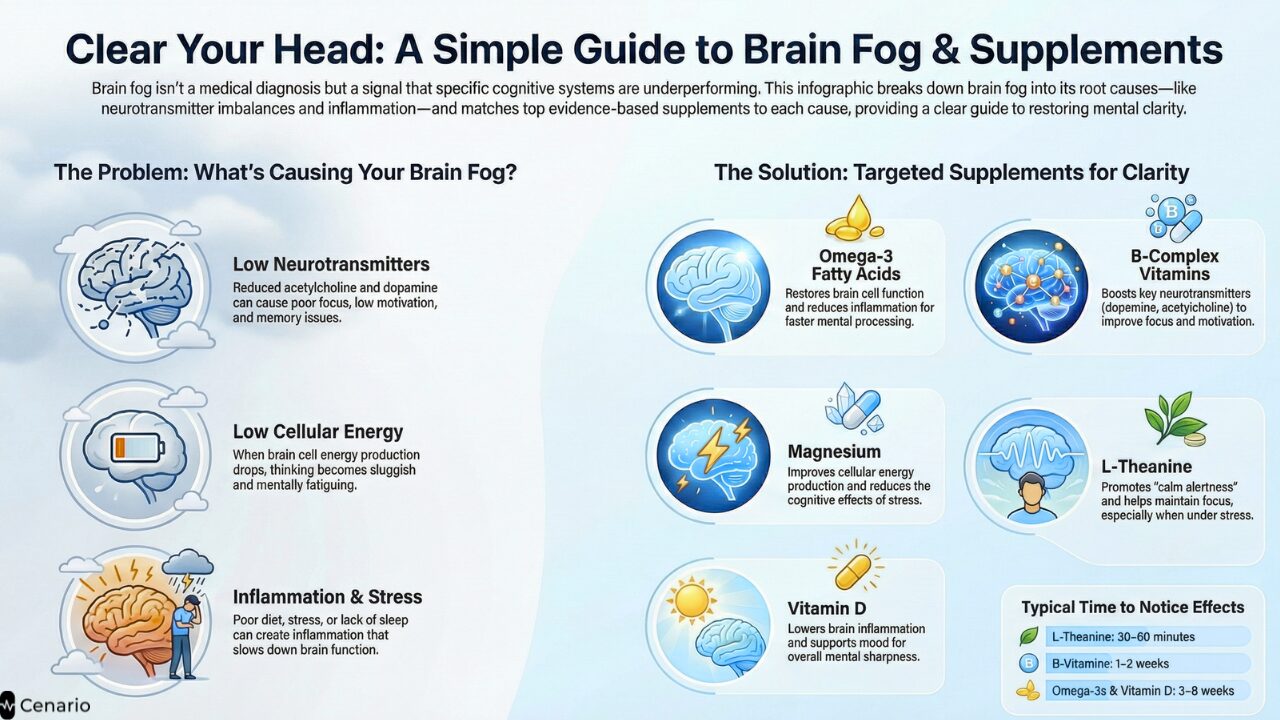
Brain fog is not solved by generic supplementation. It improves when you target the neurotransmitters, inflammation markers, and energy pathways that are underperforming. The supplements below are evidence based and map directly to those mechanisms. The graphs visually anchor each mechanism so readers understand why these nutrients matter.
Omega 3 Fatty Acids (EPA and DHA)
Omega 3s correct membrane rigidity and restore synaptic signaling. When EPA and DHA are low, neurons fire less efficiently. People experience this as slower recall and reduced focus.
EPA improves inflammatory tone. DHA improves membrane fluidity. Together they improve processing speed, working memory, and mood stability.
Why it works for brain fog
- Raises membrane fluidity so neurotransmitters bind more efficiently
- Reduces inflammation that slows synaptic transmission
- Supports dopamine and acetylcholine pathways
Typical intake
250 to 500 mg combined EPA and DHA daily. Higher doses are used for inflammation heavy cases.
Food sources
Salmon, sardines, mackerel. Supplements fill the gap for anyone not eating fatty fish three times per week.
B Complex Vitamins
B6, B9, and B12 control neurotransmitter synthesis. When these drop, dopamine, acetylcholine, and serotonin production drop with them. That is why fatigue, low motivation, and cognitive sluggishness show up in B vitamin deficiencies.
Why it works for brain fog
- Increases dopamine synthesis
- Supports acetylcholine production
- Improves methylation which supports cognitive stamina
Key point
All eight B vitamins matter. A complete complex prevents partial deficiencies.
Vitamin D
Vitamin D regulates immune signaling inside the brain. When levels drop, inflammatory cytokines rise, reducing synaptic efficiency. Vitamin D also supports neurotrophic factors that protect neurons.
Why it works for brain fog
- Lowers inflammation driven cognitive slowdown
- Supports mood regulation and energy
- Improves daytime alertness by supporting circadian stability
Typical intake
600 to 800 IU daily for maintenance. Deficiencies often require more.
Magnesium (Especially Magnesium Threonate)
Magnesium drives ATP production and controls NMDA receptor activity. When magnesium drops, energy output falls and neural firing becomes unstable. Magnesium threonate is effective because it crosses into the brain more efficiently.
Why it works for brain fog
- Improves neural energy production
- Reduces stress related cognitive impairment
- Stabilizes glutamate and GABA balance
Typical intake
200 to 400 mg per day. Threonate is the cognitive form. Glycinate is the relaxation form.
L Theanine
L theanine increases alpha wave activity and improves calm alertness. It does not sedate. It improves clarity by reducing stress induced noise in the cortex.
Why it works for brain fog
- Balances dopamine and GABA
- Reduces cortical overstimulation
- Improves task switching and focus under stress
Typical intake
100 to 200 mg. Works well alone or paired with caffeine for stable focus.
Other Notable Supplements for Brain Fog
Brain fog is not solved by one nutrient. When primary pathways like acetylcholine, dopamine, mitochondrial output, or inflammation are disrupted, secondary support compounds can create meaningful improvements. The supplements below are not as mainstream as omega 3s or B vitamins, but they influence mechanisms that matter for clarity and cognitive speed.
Choline
Choline is the raw material for acetylcholine. When intake is low, acetylcholine synthesis drops. This produces classic brain fog symptoms: poor short term memory, trouble learning new information, and reduced mental stamina.
Why it works
- Increases acetylcholine availability
- Enhances working memory and processing speed
- Supports structural integrity of neuronal membranes
Choline forms differ. CDP choline and alpha GPC produce the strongest cognitive effects because they convert efficiently into acetylcholine.
Ginkgo Biloba
Ginkgo is not a “memory herb.” It is a blood flow modulator. It increases cerebral perfusion, which improves oxygen and nutrient delivery to metabolically active regions of the brain.
Why it works
- Increases blood flow to prefrontal and parietal regions
- Enhances recall and attention under fatigue
- Reduces cognitive slowdown in aging and stress
Effects are modest but reliable when blood flow is the limiting factor.
Phosphatidylserine
Phosphatidylserine maintains cell membrane function. Neurons use it to regulate signaling, repair processes, and receptor sensitivity.
Why it works
- Improves synaptic efficiency
- Supports memory formation
- Lowers cortisol, which helps stress driven brain fog
It is one of the few compounds with consistent benefits in older adults and individuals with high stress loads.
Vitamin C, Polyphenols, Zinc, and Probiotics
These are not primary cognitive enhancers. They correct underlying biochemical loads that often worsen brain fog.
Vitamin C
Antioxidant support that reduces oxidative stress on neurons. Helpful when inflammation or poor diet amplify reactive oxygen species.
Polyphenols
Compounds like quercetin and resveratrol improve mitochondrial resilience and reduce microinflammation inside the brain.
Zinc
Regulates glutamate, GABA, and dopamine. Low zinc leads to slower neurotransmission and mood instability.
Probiotics
The gut brain axis influences cognition through inflammation, neurotransmitter production, and vagal signaling. Probiotics help when digestive or immune issues are part of the fog.
Choosing the Right Supplements
Selecting the right supplement matters just as much as choosing the right nutrient. To get the best results and avoid low-quality products always look for:
- Third-party tested supplements (to ensure purity and potency)
- Clean formulas with no unnecessary fillers
- Evidence-based dosages backed by research
- Transparent ingredient lists you can trust
If you have medical conditions, take prescription medications, or experience persistent symptoms, it’s important to consult a healthcare provider before starting any new supplement regimen.
Why Choose Cenario Supplements?
Cenario formulates each product with clinically supported ingredients, clean formulas, and research-based dosages designed to support brain health, mental clarity, mood, and stress resilience. Our supplements are made for people who want real, noticeable improvements not generic, under-dosed blends.
If you’re unsure which supplement your brain needs, we make it easy.
Not Sure Where to Start? Take Our Quiz!
Find the perfect supplement tailored to your symptoms
Take the Cenario Quiz → Get personalized recommendations for brain fog, stress, memory, sleep, and mood.
Your results will guide you toward the most effective nutrients for your unique cognitive needs, no guessing, no overwhelm
Frequently Asked Questions
What causes sudden brain fog even if I’m generally healthy?
Sudden brain fog is often triggered by short-term issues rather than chronic conditions. Common causes include:
- poor sleep (even one bad night)
- dehydration
- high stress or cortisol spikes
- long screen time
- skipping meals or eating mostly processed foods
These factors temporarily disrupt neurotransmitters and energy production. When corrected, symptoms usually improve quickly often within a day or two.
How do I know which supplement is right for my type of brain fog?
Match symptoms to the biological pattern:
- Low motivation, slow start-up → B-complex, Rhodiola
- Poor focus + forgetfulness → Omega-3 (EPA/DHA), choline, phosphatidylserine
- Stress-induced fog → L-theanine, magnesium
- Low mood + cloudy thinking → Omega-3 EPA, vitamin D
- Heavy, fatigued head → Magnesium, iron (only if deficient)
Blood tests are the best way to confirm deficiencies so you can tailor your supplement plan accurately.
How long before supplements start improving mental clarity?
Each supplement works on a different timeline:
- L-theanine: 30–60 minutes
- Magnesium: 3–7 days
- B vitamins: 1–2 weeks
- Omega-3 (EPA/DHA): 3–6 weeks
- Vitamin D: 4–8 weeks
If you see no improvement after 8–12 weeks, your brain fog may be related to sleep, stress, hormones, or medical conditions not just nutrition.
Can supplements fix brain fog on their own?
Supplements can significantly help, but they work best when paired with healthy habits.
They cannot fully override:
- chronic stress
- lack of sleep
- inflammatory diets
- thyroid issues, anemia, or hormonal imbalance
The strongest long-term improvements come from supplements plus lifestyle habits like regular sleep, a Mediterranean-style diet, movement, hydration, and sunlight.
.