
Why People Turn to Ashwagandha for Stress Relief
Ashwagandha has reemerged as a go-to adaptogen for people seeking natural ways to manage stress. Used for centuries in Ayurvedic medicine, this root extract now appears in capsules, powders, and tinctures across health stores and online marketplaces. Searches for ashwagandha buy have risen as more consumers look for gentle, daily tools to support mood and resilience.
Ashwagandha is prized for its adaptogenic properties, which means it may help the body adapt to physical and mental stress. Many users report improved calm, better sleep, and a greater capacity to handle daily pressure. In modern wellness conversations, the herb is often recommended alongside lifestyle measures like sleep hygiene, movement, and breath work. If you type ashwagandha buy into a search box, you will see a mix of product pages, market reports, and review guides. That variety reflects both strong demand and a crowded marketplace.
Forms, Sourcing, and What Expect When You Buy
When you plan to buy ashwagandha, note that common formats include capsules, tablets, powdered root, and standardized extracts. Capsules and tablets are the most convenient for consistent dosing, while powders let you mix the herb into drinks. Key things to check are:
- Standardization: look for extracts standardized to withanolides, the active compounds linked to adaptogenic effects.
- Sourcing and quality: companies that list country of origin, testing methods, and third-party certifications usually offer more reliable products.
- Dosage and form: common daily doses range from moderate single servings to divided doses; follow product labels or consult a clinician.
How This Guide Helps You Decide
This post aims to make the early stages of your buying journey clearer. Later sections will compare top formulations, brands, and buying channels so you can choose the best ashwagandha to buy for stress relief.
In the next section we will look at market trends and the most common applications of ashwagandha, plus practical tips for comparing online retailers and pharmacies when you decide to buy. Understanding the landscape now will save time and help you pick a high-quality supplement that fits your needs.
Market Trends and What The Growth Means for People Who Want to Buy Ashwagandha
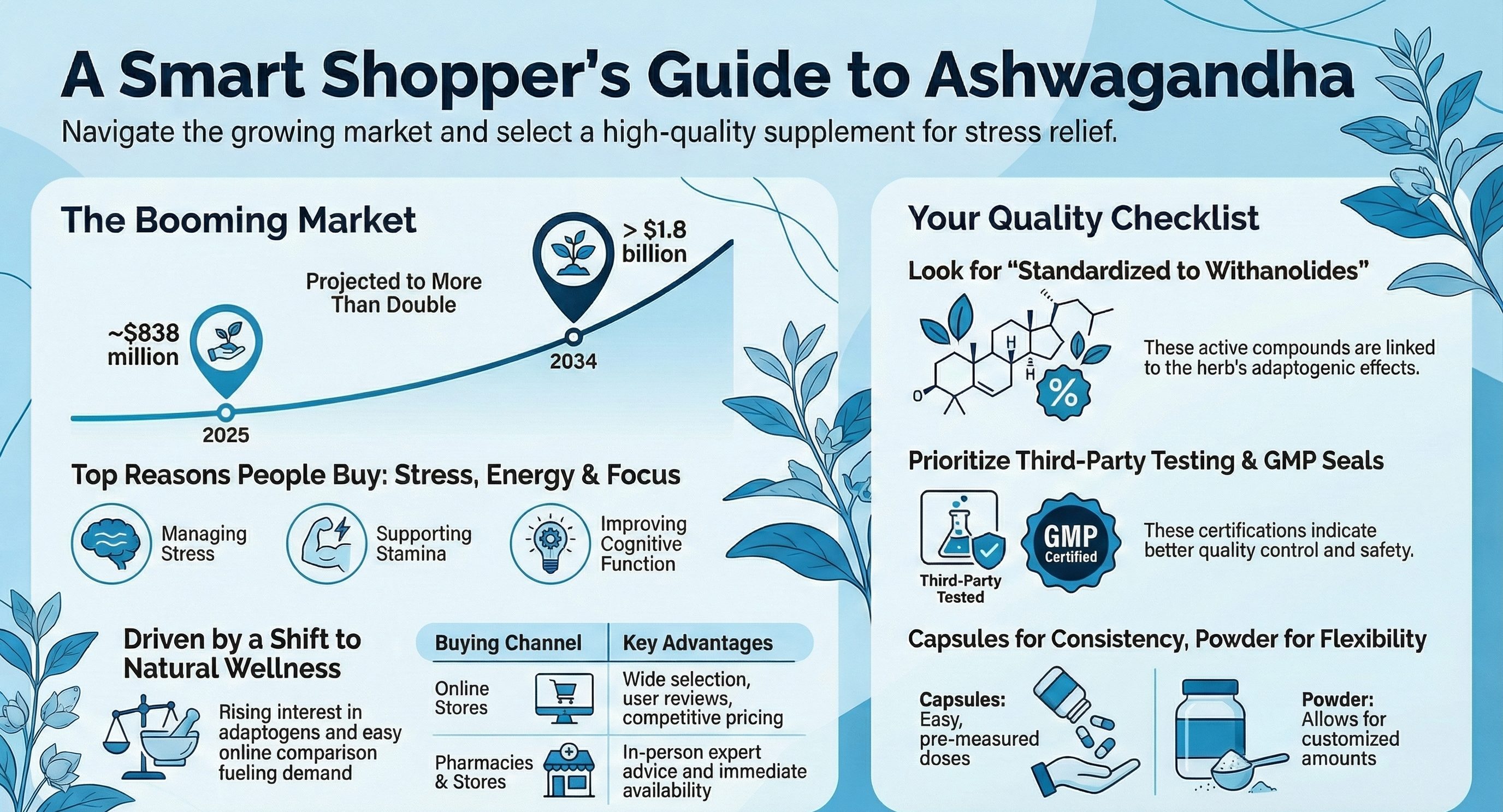
The ashwagandha market is expanding quickly. Forecasts project growth from roughly USD 837.50 million in 2025 to about USD 1,864.51 million by 2034, reflecting a compound annual growth rate near 9.3 percent. That growth matters for shoppers because it affects availability, price competition, and the variety of formulations you can buy ashwagandha in.
Key Drivers Behind Rising Demand
- Increased interest in natural approaches to mental wellbeing and lifestyle self-care.
- More clinical and consumer attention to adaptogens, which boosts mainstream retail listings.
- Rapid expansion of online retail, where product choice, reviews, and pricing are easy to compare.
What Applications Dominate Purchases
Most purchases are driven by a few consistent use cases. These include stress and anxiety management, general energy or stamina support, and cognitive focus. Retail data shows capsules and tablets lead sales because they allow reliable dosing and fit daily routines. Powders and tinctures remain popular among people who prefer mixing their supplements into drinks or customizing doses.
Where to Buy Ashwagandha and How Channels compare
Online stores are the fastest growing channel for ashwagandha buy. Their strengths are wide selection, customer reviews, and competitive pricing. Retail pharmacies and health food stores still hold steady because shoppers often want in-person advice and immediate purchase.
Online Advantages
- Large product range and easy side-by-side comparison of labels and certifications.
- User reviews and ratings that reveal real-world tolerability and perceived effects.
- Subscription and bulk options that lower per-dose cost for regular users.
Pharmacy and Store Advantages
- Opportunity to ask staff about interactions, dosing, and product provenance.
- Immediate access without shipping wait time.
- Often carry pharmacist-recommended brands with established safety records.
regional insights for sourcing and supply
Production is concentrated in Asia-Pacific, with India as a primary source of raw root and standardized extracts. North America leads in consumer demand, largely via e-commerce. That geography means many global brands list India as the origin while packaging, testing, and certification often occur in the importing country.
how to choose the right product when you buy ashwagandha
Picking a quality supplement is about transparency and fit. Use these practical criteria to compare options without getting lost in marketing language.
selection checklist
- Extract type and standardization: look for the withanolide percentage and named extracts like KSM-66 or Sensoril if you prefer clinically studied forms.
- Full-spectrum versus isolated extract: decide if you want whole-root profiles or concentrated extracts that aim for specific active compounds.
- Third-party testing and GMP certification: lab reports or seals indicate better quality control.
- Ingredient list and allergens: check for fillers, artificial additives, and common allergens.
- Dosage and serving form: capsules and tablets are easiest for routine dosing; powders allow flexible amounts. Typical single doses in studies range from about 300 mg to 600 mg, but follow label directions and consult a clinician if needed.
- Brand transparency: companies that list sourcing, extraction methods, and testing details are easier to trust.
products to consider
Below are common product types to search for when you plan to buy ashwagandha. These suggestions focus on credible features rather than specific health claims.
- Standardized capsule with KSM-66 extract for consistent withanolide content and broad market presence.
- Sensoril-based formulations pitched for higher withanolide concentration in smaller doses.
- Organic whole-root powder for people who prefer minimal processing and flexible dosing.
- Combination formulas that pair ashwagandha with magnesium or B vitamins for users seeking multi-nutrient support.
- Third-party tested brands with GMP and organic certifications listed on the label.
Choosing the right ashwagandha supplement
When you plan to ashwagandha buy, focus on transparency, formulation, and evidence. A clear label and independent testing matter more than marketing language. Below are practical factors to weigh so you buy ashwagandha that is likely to deliver consistent quality and safer use.
Quality signals to look for
- Standardization and extract name: look for withanolide percentage or named extracts such as KSM-66 or Sensoril, which indicate standardized potency.
- Certificate of analysis (COA): reputable sellers publish third-party lab results you can review before you buy ashwagandha.
- GMP and third-party seals: Good Manufacturing Practice and independent testing reduce the risk of contaminants and mislabeling.
- Clear dosing information: serving size, withanolide content per serving, and total capsules or grams per container help you compare cost per effective dose.
- Ingredient transparency: check for fillers, allergens, or added herbs so the formula fits your needs and sensitivities.
- Country of origin and sourcing: many high-quality extracts originate in India, but processing and testing may occur elsewhere.
Products to consider when you buy ashwagandha
Rather than naming single brands, consider these product types as you search to buy ashwagandha.
- Standardized KSM-66 capsules: widely studied and convenient for daily dosing.
- Sensoril formulations: typically higher withanolide concentration in smaller doses, useful if you prefer low-serving amounts.
- Organic whole-root powder: for people who want minimal processing and flexible dosing mixed into drinks.
- Combination supplements: ashwagandha paired with magnesium, L-theanine, or B vitamins for multi-faceted stress support.
- Third-party tested vegan capsules: good for dietary preferences and allergy concerns.
Practical tips for buying online
- Compare price per effective dose, not just bottle price, when you ashwagandha buy online.
- Read recent user reviews focusing on tolerability and shipping reliability rather than broad health claims.
- Verify the seller and check batch numbers or COAs listed on the product page.
- Use trusted marketplaces and online pharmacies for better return and refund policies.
- Consider subscription plans for regular use to lower per-dose cost, but confirm cancellation terms.
Dosage, timing, and safety notes
Typical clinical doses range from about 300 mg to 600 mg daily for standardized extracts, though formulations and withanolide content vary. Start with a lower dose to assess tolerance. Take ashwagandha with food if you experience stomach upset. If you are pregnant, breastfeeding, or taking immunosuppressants, thyroid medication, or sedatives, consult your clinician before you buy ashwagandha.
Final Thoughts
Choosing the best ashwagandha to buy comes down to clear labeling, reliable testing, and a formulation that fits your routine.
For a guided pick, try the short quiz to help you decide the best place to buy ashwagandha for your needs. When you buy ashwagandha with these checks in place, you reduce risk and increase the chance of a helpful, consistent supplement experience.
Frequently Asked Questions
How long before I notice stress relief after I buy ashwagandha?
Most people notice subtle changes in sleep and stress within two to six weeks, though some report benefits sooner. When you ashwagandha buy, expect gradual effects rather than immediate relief and track progress for at least a month.
Which form is best to buy for convenience and consistent dosing?
Capsules and tablets are the most convenient for consistent dosing and travel. If you plan to ashwagandha buy for daily use, pick a standardized capsule with clear withanolide content to maintain consistent intake.
Can I return a product after I buy ashwagandha if it does not suit me?
Return policies vary by retailer. Before you buy ashwagandha, check the seller’s refund, return, and expiration policies and keep packaging in case you need to return the product.
.