

Understanding magnesium and why it matters
Magnesium is one of those minerals people often overlook until sleep gets shaky or anxiety runs high. It plays a quiet but vital role in nerve function, muscle relaxation, and the balance of calming brain chemicals. More readers and clinicians are exploring magnesium supplements as a practical way to improve sleep quality and reduce everyday anxiety symptoms.
Understanding magnesium and why it matters
At its core, magnesium helps support GABA, a neurotransmitter that eases nerve activity and promotes calm. It also influences cortisol, the stress hormone that can keep you awake at night. Because of these effects, many people ask which magnesium is best for sleep and anxiety when they want a natural option to help with falling asleep, staying asleep, or managing mild worry.
Why people are turning to magnesium now
Interest in magnesium supplements has grown for several reasons:
- Sleep problems are common, and fewer people want long-term prescription sleep aids.
- Some forms of magnesium have good absorption and mild calming effects with fewer side effects.
- Magnesium often fits into a broader wellness routine that includes nutrition and stress management.
What this guide will cover
This post aims to guide you through the different magnesium types and how they relate to sleep and anxiety. You will learn which forms tend to help with sleep onset versus cognitive symptoms like racing thoughts, and which forms may calm physical anxiety responses. While research is mixed in some areas, the overall evidence supports magnesium as a useful option for many people dealing with mild sleep issues or anxiety.
How to use this information
Think of this as a symptom-first roadmap. Instead of just listing chemical names, we link magnesium forms to real complaints – trouble falling asleep, waking at night, racing mind, or heart-racing anxiety.
Choosing the right magnesium form for your symptoms
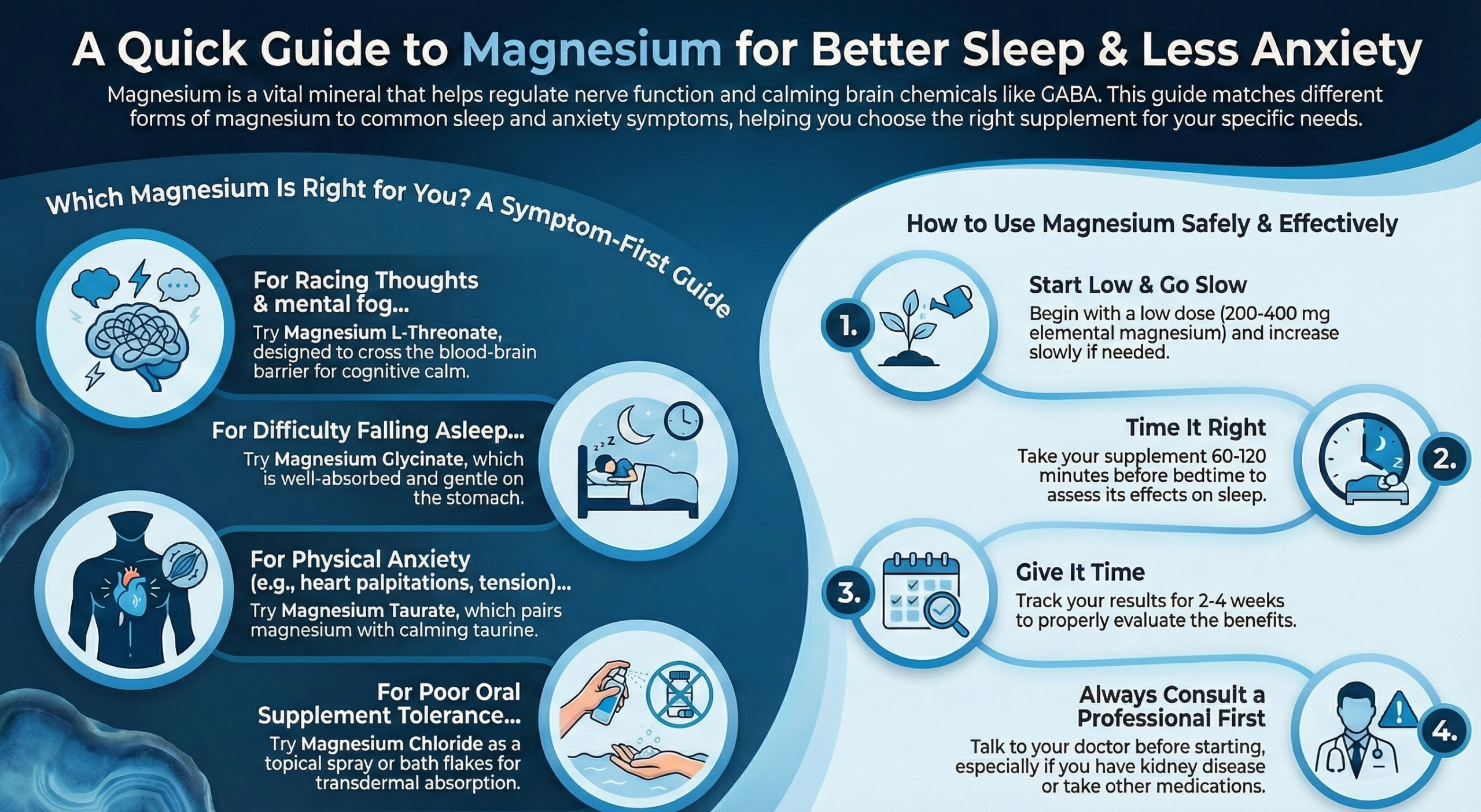
When asking which magnesium is best for sleep and anxiety, think about the symptom you most want to change. Different forms vary in how well they cross into the brain, how gentle they are on the gut, and what secondary benefits they offer. Use the short guide below to match form to symptom.
Form-by-symptom quick guide
- Racing thoughts or memory issues: magnesium l-threonate is designed to cross the blood brain barrier and is often chosen when cognitive calm is the goal.
- Difficulty falling asleep or waking up anxious: magnesium glycinate is well absorbed and gentle on digestion, making it a common first choice for sleep and general anxiety.
- Physical symptoms such as heart palpitations or tension: magnesium taurate pairs magnesium with taurine, which can be helpful when the body feels keyed up.
- Occasional constipation plus need for relaxation: magnesium citrate relaxes muscles and may have a mild laxative effect, so it can be useful but may be poorly timed for some people.
- Topical or transdermal use: magnesium chloride is available in sprays and flakes for baths and may help with nervous system comfort for people who tolerate oral supplements poorly.
Why elemental magnesium and absorption matter
Not all supplement labels list the same numbers. Two milligrams of a compound do not equal two milligrams of elemental magnesium. Forms with higher elemental magnesium can sound impressive, but absorption is the key. A form with moderate elemental magnesium and higher bioavailability will usually be more effective for sleep and anxiety than a poorly absorbed high elemental form.
How to test and personalize your plan
Personalization closes the gap between theory and results. Follow a simple trial framework:
- Choose one form aligned with your main symptom.
- Start with a low dose, then increase slowly to the typical range of 200 to 400 mg of elemental magnesium daily, if tolerated.
- Take the supplement 60 to 120 minutes before bedtime to assess effects on sleep onset and pre-sleep anxiety.
- Track outcomes for 2 to 4 weeks: sleep latency, nighttime awakenings, next-day calm, and any digestive changes.
- If you see no benefit or have side effects, switch to another form and repeat the trial.

Safety, timing, and medication interactions
Magnesium is usually well tolerated, but some forms may cause loose stools. Because magnesium can interact with certain medications, including some antibiotics, thyroid medication, and certain blood pressure drugs, check with a healthcare professional before starting. If you are pregnant, breastfeeding, or have kidney disease, seek medical advice first.
Stacking, lifestyle, and cost considerations
Magnesium often works best as part of a broader routine. Combining it with calming nutrients and habits can improve results:
- Consider pairing magnesium with sleep-friendly compounds like L-theanine, or adaptogens such as ashwagandha, after consulting a provider.
- Timing matters: avoid taking magnesium at the same moment as some medications to reduce interaction risk.
- Cost varies by form and brand. Compare cost per milligram of elemental magnesium and factor in how many weeks a bottle will last.
Combining Magnesium With Other Supplements
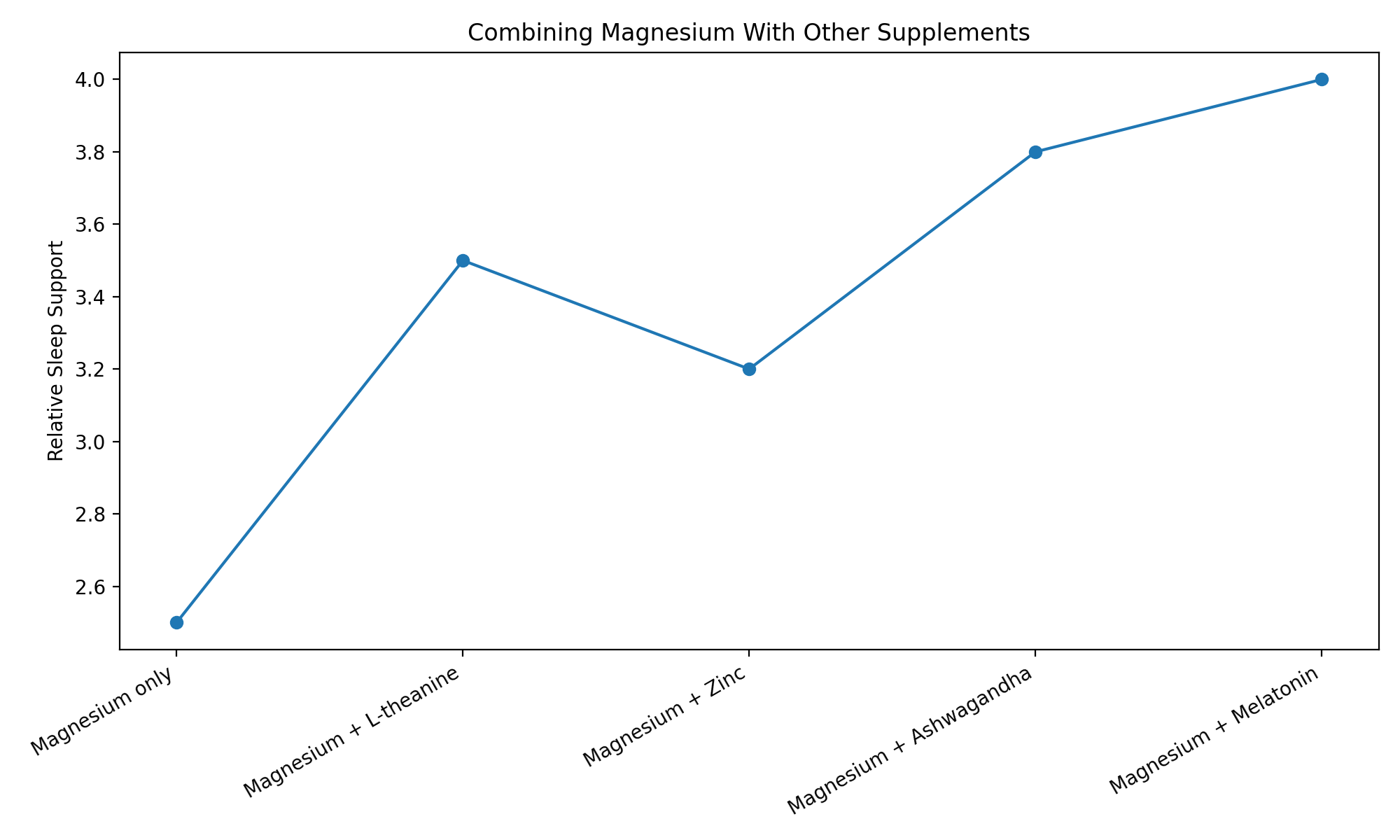
Magnesium can be a helpful base for a sleep and anxiety routine, but it often works best when paired with complementary nutrients. Many people ask which magnesium is best for sleep and anxiety and then wonder what else to add. Safe, low-dose stacks can enhance relaxation without increasing side effects.
Common complementary supplements
- L-theanine: Promotes calm without sedation. It pairs well with magnesium glycinate to ease racing thoughts before bed.
- Zinc: Supports sleep quality and metabolic balance. Zinc plus magnesium can be useful when diets are low in both minerals.
- Ashwagandha: An adaptogen that may reduce stress; consider lower doses at first and avoid combining with strong sedatives.
- Melatonin: Short-term use can help reset sleep timing. Use cautiously and for specific sleep phase issues rather than nightly long-term use.
Practical stacking tips
- Start with one change at a time so you can see what works.
- Take magnesium 60 to 120 minutes before bed and add L-theanine or melatonin closer to sleep if needed.
- Watch for additive effects like drowsiness and reduce doses accordingly.
- Consult your healthcare provider before adding multiple supplements, especially if you take prescription medications.
Addressing Common Concerns and Variations
People respond differently to magnesium forms. Genetics, gut health, age, and current medications all influence results. If you are asking which magnesium is best for sleep and anxiety, remember there is no single correct answer for everyone. A short, structured trial helps identify the ideal form and dose.
Managing side effects and tolerance
Some forms, like magnesium citrate, are more likely to cause loose stools. If digestive upset occurs, switch to a gentler option such as magnesium glycinate or try a lower dose. For those with reduced kidney function, magnesium can accumulate and must be used under medical supervision.
Cost, convenience, and form factors
Cost per milligram of elemental magnesium varies by form and brand. Powdered or bulk capsules can offer better value, while topical magnesium chloride may be a good alternative for people who cannot tolerate oral supplements. Compare price, dose, and days per bottle when evaluating options.
Lifestyle Integration and When to Seek Help
Magnesium is a tool, not a cure. Combine supplementation with sleep hygiene and stress management to get the best results. Key habits include a consistent sleep schedule, reduced evening caffeine, light exposure management, and regular exercise. If sleep problems or anxiety persist despite a targeted trial of magnesium and lifestyle changes, seek advice from a clinician.
Checklist before starting or adjusting magnesium
- Confirm current medications with your provider to rule out interactions.
- Choose one form and a conservative starting dose, then track effects for 2 to 4 weeks.
- Consider blood tests or a professional consult if symptoms are severe or do not improve.
Final thoughts and next steps
Deciding which magnesium is best for sleep and anxiety depends on your main symptoms, tolerance, and goals. Use a symptom-first trial, pay attention to side effects, and combine magnesium with targeted lifestyle changes for the greatest chance of success.
Ready to take the next step toward better sleep and calmer days? Start a short trial with one magnesium form, track your progress, and adjust based on what you learn.
Frequently Asked Questions
Can I take magnesium with my prescription sleep medication?
Magnesium can interact with some drugs, so ask your clinician before combining supplements. When deciding which magnesium is best for sleep and anxiety while on medication, a provider can recommend safe timing and dosing.
How quickly will I notice benefits on sleep and anxiety?
People report changes from a few days to several weeks. If you are trying to find which magnesium is best for sleep and anxiety, plan a 2 to 4 week trial at a consistent dose to evaluate effects.
Is topical magnesium as effective as oral forms?
Topical magnesium chloride can help local muscle relaxation and may support nervous system comfort for some people. It can be a good option if oral supplements cause digestive issues, but oral forms are generally preferred when assessing which magnesium is best for sleep and anxiety.
.