
Stress is showing up more often and hitting harder than many people expect. Packed schedules, nonstop notifications, and ongoing uncertainty are pushing anxiety levels up while sleep quality and recovery drop. As a result, more people are looking past meditation and talk therapy alone and exploring the best supplements for stress. The appeal is straightforward: natural options that may reduce tension, steady mood, and improve sleep without the side effects some associate with prescription medications.
Stress-relief supplements, explained
Supplements for stress relief are built from plant extracts, minerals, and amino acids that influence how the body responds to pressure. Some products focus on a single ingredient, while others combine several compounds to support mood, energy, and sleep at the same time. Because stress affects multiple systems, many people end up using more than one category to create a routine that fits their day.
Core categories to understand
Adaptogens
Herbs traditionally used to improve stress tolerance and support balance in the HPA axis. Ashwagandha and rhodiola are two of the most studied examples.
Minerals
Magnesium is the most common here. It supports nervous system signaling, relaxation, and sleep quality, which indirectly affects cortisol and stress perception.
Amino acids
L-theanine is widely used for calm focus without sedation. It is popular for daytime stress and pairs well with caffeine or adaptogens.
Herbal extracts
Botanicals such as saffron and lemon balm are increasingly included for mood support and emotional balance, especially in modern blended formulas.
Why people turn to supplements
People search for the best supplements for stress because they want tools that are practical and flexible. Supplements are easy to integrate into daily routines, can be targeted for daytime calm or nighttime sleep, and allow dosing adjustments based on workload or stress levels. Buyers are also more informed than before and often look for clinical evidence, transparent labeling, and third-party testing before choosing a product.
What this guide is for
This guide is designed to give you a clear, research-aware overview of the best supplements for stress in 2025. The next sections will break down how each category works, typical dosing ranges, safety considerations, and how to combine supplements without overdoing it. If you want to explore specific products or ingredient details, visit the product categories or use the dictionary for definitions. You can also take a short stress quiz to get starter suggestions tailored to your symptoms and daily demands.
Adaptogens with real clinical support
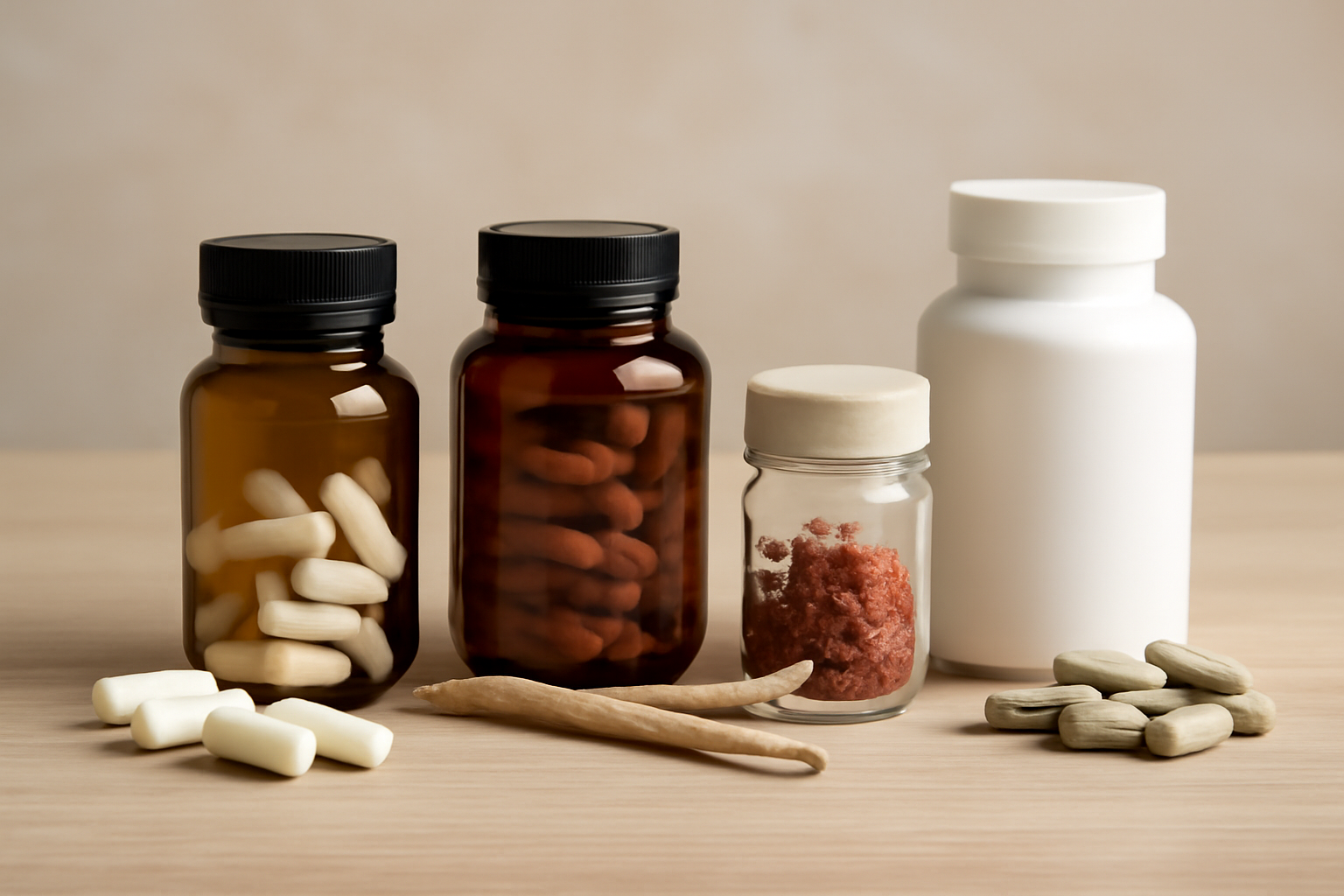
When people look for the best supplements for stress, adaptogens usually rank first because they work upstream on the stress response. These herbs help regulate the hypothalamic pituitary adrenal axis and can moderate cortisol rather than simply masking symptoms. Among the many options on the market, ashwagandha and rhodiola stand out for having repeatable human trial data.
Ashwagandha: evidence, dosing, and use cases
Ashwagandha is one of the most researched adaptogens for stress and anxiety. Most high quality trials use standardized extracts such as Sensoril or KSM-66, which ensures consistent levels of active compounds. Across multiple studies, daily doses in the 300 to 600 mg range led to meaningful reductions in perceived stress and measurable drops in cortisol over four to twelve weeks.
People often describe the effect as a calmer baseline rather than a sedative feeling. Sleep quality may improve, especially when stress is the main reason for restlessness.
Typical dosing
- 300 mg once or twice daily, depending on extract strength and standardization
- Consistent daily use is important. Benefits tend to build gradually over several weeks
Who should be cautious
- Ashwagandha can interact with thyroid medication and sedatives
- Avoid use during pregnancy or breastfeeding unless a clinician advises otherwise
Well known options
- Ritual
- Needed
- Klaire Labs
Rhodiola rosea: stress resilience and mental stamina
Rhodiola is especially useful when stress shows up as fatigue, burnout, or reduced mental endurance. Unlike ashwagandha, which is often calming, rhodiola tends to feel mildly energizing and is best taken earlier in the day. Clinical studies typically use standardized extracts that contain both rosavins and salidroside, the compounds linked to its stress protective effects.
Trials suggest rhodiola can reduce stress related cortisol spikes and improve performance under pressure, which makes it popular with professionals facing long workdays or cognitive overload.
Typical dosing
- 200 to 400 mg per day
- Take in the morning or early afternoon to avoid sleep disruption
Quality considerations
- Look for extracts standardized to about 3 to 5 percent rosavins
- Sustainable sourcing matters because wild rhodiola has been overharvested
Popular options
- Momentous
- HUM Nutrition
- Triquetra
Minerals and amino acids with targeted effects
Adaptogens work best when foundational nutrients are not overlooked. Minerals and amino acids support the nervous system directly and often complement herbal strategies.
Magnesium: form, dose, and timing
Magnesium is one of the most reliable nutrients for stress support. It plays a role in GABA signaling, muscle relaxation, and sleep regulation. Many people do not get enough from diet alone, especially during periods of high stress.
Form selection matters. Magnesium glycinate is well tolerated and commonly used for relaxation and sleep. Citrate can help with bowel regularity but may cause loose stools. Oxide is inexpensive but poorly absorbed.
Recommended intake
- 100 to 400 mg of elemental magnesium daily, adjusted for diet and sensitivity
- Evening dosing works best when sleep or tension is the main concern
- Splitting the dose can reduce digestive side effects
Trusted options
- Swanson
- SFI Health
L-theanine: calm focus without sedation
L-theanine is an amino acid best known for promoting relaxed alertness. It increases alpha brain wave activity and helps smooth out stress responses without making most people feel tired. This makes it a strong daytime option when anxiety shows up as restlessness or mental overdrive.
Clinical studies commonly use single doses of 100 to 200 mg and show reduced stress markers and improved focus within an hour.
Practical use
- Onset is usually 30 to 60 minutes
- 200 mg is a common single dose for acute stress
- Pairs well with caffeine to reduce jitters while preserving focus
Brands to explore
- Ritual
- Innerbody
- Green Roads
How to combine these options
For many people, the best supplements for stress are not a single product but a simple, well planned combination. A common approach is an adaptogen like ashwagandha or rhodiola for baseline resilience, paired with magnesium in the evening and L-theanine during high stress moments in the day. Start low, add one ingredient at a time, and track sleep, mood, and energy over several weeks to find what works best for you.
Functional Stacks and Herbal Extracts
Herbal extracts are increasingly used as part of structured, functional stacks rather than as isolated remedies. The goal is simple: combine ingredients that act on different stress pathways so you get calmer mood, better focus, and improved sleep without heavy sedation.
Saffron is a good example of an herb that has moved from niche to mainstream. Standardized saffron extracts, most commonly sold under names like Affron, are studied at 15 to 30 mg per day. Human trials show antidepressant and anxiety-reducing effects in some groups, particularly when stress and low mood overlap. As with most botanicals, standardization is critical. Non-standardized saffron powders are unreliable and often underdosed.
Practical Stacks for Day and Night
Stacking works best when timing matches your symptoms. Below are clear, evidence-aligned examples you can adjust with a clinician.
Daytime focus and stress control
- L-theanine 100 mg
- Caffeine 50 to 100 mg
- Rhodiola 200 mg taken in the morning
This stack supports alertness and stress resilience without jitteriness. L-theanine smooths stimulant effects while rhodiola supports mental stamina.
Balanced all-day support
- Ashwagandha 300 mg around midday
- Magnesium glycinate 100 to 200 mg in the evening
This approach targets cortisol earlier in the day and nervous system recovery at night.
Nighttime mood and sleep support
- Magnesium glycinate 200 to 400 mg
- Standardized saffron extract 15 to 30 mg
This combination is often used when stress shows up as low mood plus poor sleep quality.
Safety, Testing, and Product Quality
Side effects from stress supplements are usually mild. The most common issues are digestive upset, light drowsiness, or small changes in blood pressure. Extra caution is needed if you:
- Take blood thinners
- Use thyroid or psychiatric medications
- Are pregnant or breastfeeding
Always confirm supplement plans with a clinician in these cases.
Quality markers to prioritize
- Third-party testing and accessible certificates of analysis
- Standardized extracts such as KSM-66, Sensoril, Affron, or clearly defined rosavin content
- Full transparency on ingredient amounts, not proprietary blends
In 2025, traceability from raw material to finished product is becoming a baseline expectation rather than a bonus.
Trends in Stress-Relief Supplements
The market is shifting away from single-ingredient fixes toward targeted, research-backed stacks. Consumers now expect:
- Clinical dosing that matches human trials
- Clear standardization
- Independent lab verification
Multi-ingredient blends that pair an adaptogen, a mineral, and an amino acid aim to cover both biological stress drivers and day-to-day symptoms in one routine.
Multi-Ingredient Blends vs Single Ingredients
Blends
- Pros: convenience, synergy, broader coverage
- Cons: harder to identify which ingredient helps or causes side effects
Single ingredients
- Pros: precise dosing, easier troubleshooting, clinician-guided protocols
- Cons: require more planning and consistency
Best practice is simple. Add one new product at a time and track mood, sleep, and energy for two to four weeks before changing anything.
Daytime vs Nighttime Strategies
Daytime formulas usually emphasize calm focus. Ingredients like L-theanine, low-dose rhodiola, and saffron reduce stress without sedation.
Nighttime formulas focus on recovery and sleep quality, most often with magnesium glycinate and calming botanicals.
CBD Gummies: Popular but Uneven Quality
CBD gummies are popular because they are easy to take and taste good. Many are combined with L-theanine or ashwagandha for relaxation. Quality varies widely.
If you use CBD:
- Look for full cannabinoid panels showing CBD and THC levels
- Avoid products without batch-specific lab reports
- Confirm legal THC limits for your region
Practical Safety and Stacking Rules
Start low and go slow
- Use the lowest effective dose
- Introduce one supplement every two weeks
- Keep a short daily log of sleep, mood, and energy
Watch for interactions
- Blood thinners, thyroid drugs, and some antidepressants are the most common concerns
- Stop use and consult a clinician if symptoms worsen or feel unusual
Always check labels
- Elemental magnesium amounts should be stated
- Rhodiola should list rosavin and salidroside content
- L-theanine dosage should be explicit
Building a Simple Plan
Start by identifying your main issue:
- Baseline stress and irritability ashwagandha
- Poor sleep and tension magnesium glycinate
- Daytime anxiety or overstimulation L-theanine
Add one complementary ingredient only if needed. For product comparisons and starter stacks, browse product categories or use the dictionary to verify ingredient forms. If you want tailored guidance, take the stress quiz.
Conclusion
The best supplements for stress are not about chasing trends. They are about using evidence-backed ingredients, clear dosing, and thoughtful timing. A slow, structured approach paired with sleep hygiene, movement, and stress management delivers the most reliable results. If you want a personalized starting point, take the stress quiz and explore lab-tested options in the product categories.
Frequently Asked Questions
What are the best supplements for stress relief?
Ashwagandha, magnesium glycinate, L-theanine, and standardized saffron extracts have the strongest balance of evidence and tolerability.
How do adaptogens reduce stress?
They help regulate the HPA axis and normalize cortisol output, reducing overreaction to daily stressors over time.
Are side effects common?
Most are mild, but interactions are possible with blood thinners, thyroid medication, and some antidepressants.
How long until results appear?
L-theanine can work within an hour. Magnesium may improve sleep in days to weeks. Ashwagandha and saffron usually require four to twelve weeks for consistent effects.
Frequently Asked Questions
What are the best supplements for stress relief?
Ashwagandha, magnesium glycinate, L-theanine, and standardized saffron extracts have the strongest balance of evidence and tolerability.
How do adaptogens reduce stress?
They help regulate the HPA axis and normalize cortisol output, reducing overreaction to daily stressors over time.
Are side effects common?
Most are mild, but interactions are possible with blood thinners, thyroid medication, and some antidepressants.
How long until results appear?
L-theanine can work within an hour. Magnesium may improve sleep in days to weeks. Ashwagandha and saffron usually require four to twelve weeks for consistent effects.