
Many people use the phrase adrenal fatigue to explain long term stress symptoms like low energy, poor sleep, irritability, and reduced stress tolerance. The problem is not that your adrenal glands stop working. The real issue is that the hypothalamic pituitary adrenal axis becomes dysregulated. This axis controls cortisol rhythms, motivation, metabolic rate, and your ability to handle stress. When it falls out of sync, the symptoms can feel identical to burnout.
Correcting this system means restoring predictable cortisol timing, reducing chronic sympathetic activation, and supporting healthy neurotransmitter and mitochondrial function. Supplements work only when they hit one of these mechanisms. Anything outside that is marketing.
.png)
Symptoms often labeled as “adrenal fatigue” are closely tied to stress physiology, sleep disruption, and cortisol imbalance. This article fits into our broader analysis of stress adaptation and recovery strategies within the Supplement-based stress resilience framework.
What Adrenal Fatigue Actually Is
The HPA axis works through a feedback loop. The brain senses stress and sends signals that stimulate cortisol release. Cortisol then tells the brain to turn the stress response off. If stress never ends, this signalling goes off balance.
The measurable consequences:
- Low morning cortisol that destroys energy and mental sharpness
- Elevated evening cortisol that blocks sleep and recovery
- Constant noradrenaline activity that creates the “wired but exhausted” feeling
- Slower mitochondrial ATP production which drives fatigue
- Heightened inflammation that worsens mood and energy
Your goal is to correct these patterns. The supplements below are the ones that show statistically significant changes in human trials.
Key Nutrients That Actually Work
1. Ashwagandha (KSM 66 or Sensoril)
Ashwagandha is the strongest cortisol regulator available over the counter. Multiple human trials show reductions in cortisol ranging from 14 to 30 percent depending on dosage. People report better sleep, calmer stress response, and improved resilience under high psychological load.
Mechanisms:
- Modulates HPA feedback
- Reduces sympathetic nervous system activity
- Supports GABA signalling for calm focus
Effective dose: 300 to 600 mg daily.
2. Rhodiola Rosea
Rhodiola is ideal for people who feel mentally exhausted but overstimulated. In controlled studies, Rhodiola improved cognitive performance during high stress tasks, reduced fatigue, and lowered cortisol spikes.
Mechanisms:
- Enhances mitochondrial ATP output
- Supports serotonin and dopamine regulation
- Blunts stress induced fatigue
Effective dose: 200 to 400 mg daily.
3. Magnesium Glycinate
Chronic stress depletes magnesium faster than any other mineral. Low magnesium increases neural excitability which worsens anxiety and disrupts sleep. Glycinate is the best form for nervous system stability.
Mechanisms:
- NMDA receptor regulation
- Increased GABA activity
- Reduced evening cortisol in human studies
Effective dose: 200 to 400 mg.
4. B Complex (Methylated)
B vitamins drive neurotransmitter synthesis, red blood cell production, and methylation. These are all compromised under chronic stress. Studies show improved mood, reduced fatigue, and better cognitive control when deficiencies are corrected.
Mechanisms:
- B6 regulates serotonin and dopamine
- Folate and B12 control methylation and energy production
- B5 supports adrenal hormone synthesis
Effective dose: Full B complex with active forms.
5. Omega 3 (EPA Dominant)
EPA reduces inflammation that feeds back into disrupted HPA signalling. Clinical studies show improvements in mood, cognitive function, and stress resilience.
Mechanisms:
- Reduced cytokines (IL 6, TNF alpha)
- Improved neuronal membrane fluidity
- Strong effects on mood regulation circuits
Effective dose: 1 to 2 g EPA daily.
6. Vitamin D
Low vitamin D disrupts cortisol regulation and mood. Research consistently links deficiency with fatigue, poor sleep quality, and higher stress reactivity.
Mechanisms:
- Vitamin D receptors in HPA pathway
- Serotonin synthesis
- Mitochondrial energy support
Effective dose: 1000 to 4000 IU daily.
7. L Theanine
Fast acting and clean. L Theanine brings down stress related brain activity within an hour. Good for people who feel overwhelmed or overstimulated.
Mechanisms:
- Boosts GABA and glycine
- Reduces glutamate excitability
- Promotes alpha wave patterns
Effective dose: 100 to 200 mg.
Comparison Table
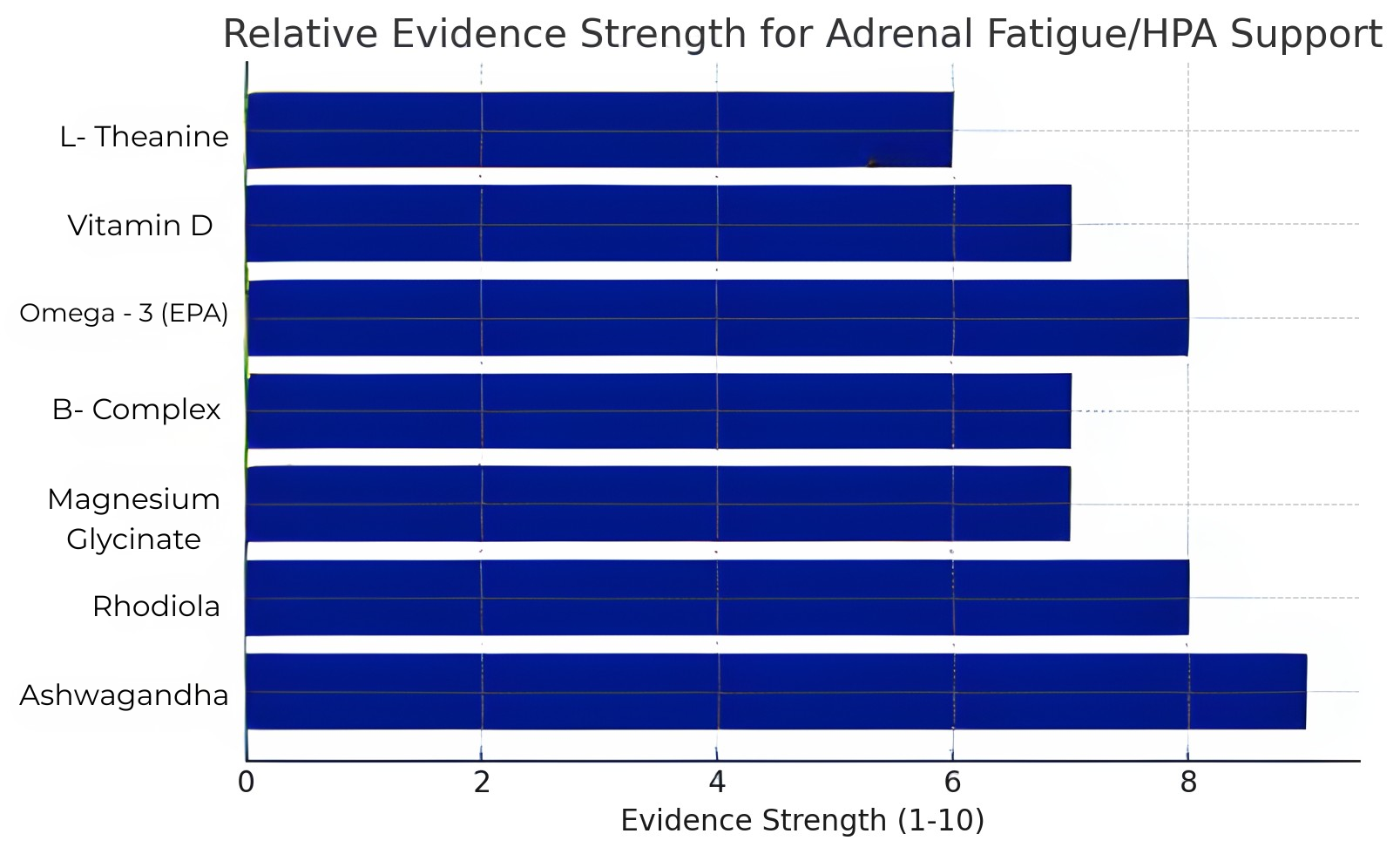
| Supplement | Main Benefit | Mechanism | Ideal For | Evidence Strength (1–10) | Effective Dose |
|---|---|---|---|---|---|
| Ashwagandha | Cortisol reduction | HPA modulation, GABA activity | High stress, fatigue, poor sleep | 9 | 300–600 mg |
| Rhodiola | Anti fatigue, mental performance | ATP production, neurotransmitter balance | Burnout, mentally drained, wired | 8 | 200–400 mg |
| Magnesium Glycinate | Calming, improved sleep | NMDA regulation, GABA | Anxiety, poor sleep | 7 | 200–400 mg |
| B Complex | Mood + energy support | Methylation, neurotransmitters | Fatigue, mood instability | 7 | Standard B complex |
| Omega 3 (EPA) | Lower inflammation, mood | Cytokine reduction, neuronal stability | Stress, inflammation, low mood | 8 | 1–2 g EPA |
| Vitamin D | Mood + energy | HPA control, serotonin | Indoor lifestyle, low sunlight | 7 | 1000–4000 IU |
| L Theanine | Fast acting calm | GABA, glycine, alpha waves | Overstimulation, anxiety | 6 | 100–200 mg |
Herbal Adaptogens for Stress Recovery
Adaptogens influence how the brain and endocrine system respond to stress. Their value comes from their mechanisms, not from the idea of “natural stress support.”
Holy Basil
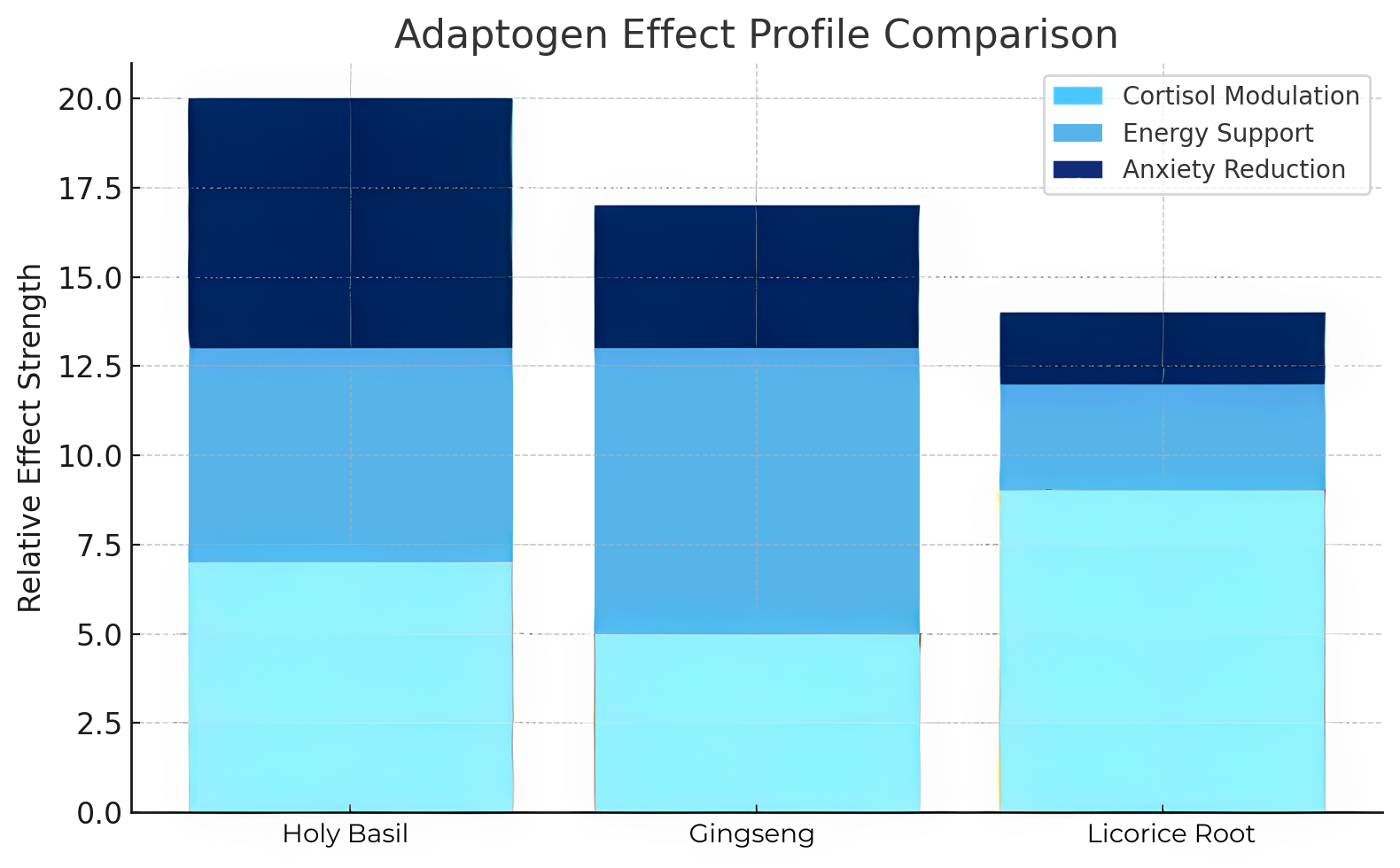
Holy Basil consistently improves mood stability and reduces stress sensitivity. Studies show calmer emotional reactivity, improved concentration, and more stable energy patterns. It works by lowering cortisol during stress, supporting dopamine and serotonin balance, and boosting antioxidant activity in the brain. It suits people who feel overwhelmed or emotionally reactive.
Ginseng
Ginseng is an activator. It improves mitochondrial ATP output, strengthens working memory, and boosts physical and cognitive stamina. It is effective for people with true low energy and sluggish cognition. People who already feel anxious or overstimulated often react poorly because it increases alertness. In the right context, it lifts performance, but it is not calming.
Licorice Root
Licorice root increases cortisol by preventing its breakdown. This is only beneficial if morning cortisol is abnormally low. When used incorrectly, it raises blood pressure, causes fluid retention, and worsens stress symptoms. It should not be used casually and should never be taken long term. Most people do not need it.
What Not to Waste Money On
A large portion of adrenal supplements exist because stress is a strong marketing angle, not because the ingredients work.
Stimulant blends loaded with caffeine, yerba mate, or synthetic “focus enhancers” only mask fatigue. After the initial boost wears off, cortisol becomes even more dysregulated.
Sugary adrenal drinks provide a short burst of glucose followed by a sharper crash, which strains the system further.
Multi adaptogen blends with tiny doses of each herb look impressive on the label but fail in practice because none of the ingredients reach clinical levels. If the dose is too small, there is no physiological effect.
Lifestyle Factors That Control the HPA Axis
Supplements only work fully when the behavioural inputs that drive cortisol patterns are aligned.
Sleep timing has the strongest influence. Going to bed and waking up within a consistent one hour window restores morning cortisol and improves daytime alertness. Irregular sleep destroys this rhythm.
Morning sunlight is non negotiable. Light entering the eyes soon after waking resets the circadian and hormonal cycle for the entire day. People who avoid morning light often experience chronic fatigue and irregular sleep.
Evening stimulation blocks the natural decline in cortisol. Late exercise, caffeine after midday, and intense screen exposure push the brain into alert mode, leading to the common “tired but wired” cycle.
Protein intake shapes neurotransmitter synthesis. Low protein diets limit dopamine, serotonin, and norepinephrine production, all of which affect mood, focus, and energy.
How to Build an Effective Supplement Stack
A minimal recovery stack for most people includes ashwagandha, magnesium glycinate, and EPA focused omega 3. Together they target cortisol regulation, nervous system calmness, and inflammation.
A stronger recovery stack includes ashwagandha, rhodiola, magnesium, vitamin D, and EPA omega 3. This combination helps people dealing with both fatigue and chronic stress.
When anxiety is a major symptom, L Theanine provides fast acting calmness and makes the rest of the stack work more effectively.
When fatigue is the dominant symptom, rhodiola and a methylated B complex support mitochondrial function and neurotransmitter pathways in a more targeted way.
When Supplements Cannot Fix the Issue
Certain conditions overpower any supplement protocol. Thyroid dysfunction, severe sleep deprivation, chronic undereating, alcohol misuse, and clinical mood disorders require direct treatment. Supplements may help, but they cannot correct the underlying problem on their own.
Take Our Mental health Quiz – Match your mood, stress, and sleep symptoms to the right ingredients!
Frequently Asked Questions
How do I know if my symptoms are from adrenal fatigue or something else?
Adrenal fatigue symptoms overlap with many conditions such as thyroid issues, anemia, sleep disorders, chronic depression, and nutritional deficiencies. If symptoms persist despite lifestyle changes, it’s wise to consult a professional to rule out other causes.
How long does it take to feel better once I start supplements and lifestyle changes?
Most people notice improvements within 2 to 6 weeks, especially with better sleep and consistent sunlight exposure. However, full HPA axis stabilization can take 8 to 16 weeks, depending on stress levels and overall health.
Can I take all the recommended supplements together?
Yes, most HPA-support supplements can be safely combined. However, stimulant-like adaptogens (e.g., ginseng) or cortisol-raising herbs (e.g., licorice root) should only be taken with guidance. Start with a basic stack first, then add more only if needed.
Is it safe to take adrenal supplements long-term?
Foundational nutrients like magnesium, omega-3, vitamin D, B-complex, and L-theanine are safe long-term. Adaptogens like ashwagandha and rhodiola are best used in cycles: 8–12 weeks on, 1–2 weeks off to maintain sensitivity and avoid diminishing returns.
Can lifestyle alone fix adrenal fatigue without supplements?
Yes, but recovery is usually slower. Consistent sleep timing, increased protein intake, reduced caffeine, morning sunlight, and stress-reduction practices can normalize cortisol rhythms. Supplements make the process faster and more stable but are not mandatory.
.