
What High Cortisol Really Means
High cortisol is not a random stress issue. It is a full system shift inside the HPA axis, the loop that controls every stress response in your body. When cortisol stays elevated for weeks or months, the axis stops reacting the way it should. The brain keeps signaling danger even when nothing is happening. That drives metabolic changes that show up in very specific patterns.
Most people think high cortisol only means “I feel stressed”. That is wrong. High cortisol creates predictable, measurable physiological changes. You get worse blood sugar control. You store more fat around the midsection. Your sleep rhythm breaks down because cortisol refuses to drop at night, and you wake up already tense because cortisol spikes too early. Your immune system becomes less efficient, so you get sick easier or develop more inflammation. Your brain becomes more sensitive to threat signals, which amplifies anxiety.
The reason this matters is simple. You do not fix high cortisol by taking random calming supplements. You fix it by understanding which part of the system is failing. If your cortisol is high at night, your sleep architecture is the weak point. If your cortisol is high all day, your feedback loop is unstable. If your cortisol spikes when nothing stressful is happening, your nervous system is primed in the wrong direction. Each pattern needs a different solution.
There is another problem. People often confuse high cortisol with adrenal fatigue. These are not the same. Most cases of “adrenal fatigue” are actually high cortisol causing chronic exhaustion. When cortisol stays high for too long, the body starts ignoring the signal and you feel both tired and wired. That leads to afternoon crashes, brain fog, irritation, emotional sensitivity, faster heart rate, and weaker stress tolerance.
The reality is that high cortisol is a survival response running at the wrong time. Your brain is operating like you are constantly in a high pressure situation. That creates a loop. Poor sleep raises cortisol. High cortisol ruins sleep. Poor blood sugar stability raises cortisol. High cortisol ruins blood sugar control. Inflammation pushes cortisol up. Cortisol pushes inflammation up. Without intervention, the loop keeps running.
This is why targeted supplements work. The right compounds can improve HPA feedback, stabilize neurotransmitters, reduce nighttime spikes, and calm the overactive system that keeps cortisol elevated. The wrong supplements do nothing. Or worse, they increase the problem.
High cortisol affects energy, mood, fat storage, and sleep quality. This article expands on the hormonal and metabolic implications of stress discussed across our supplements and cortisol regulation framework.
How Elevated Cortisol Affects Your Health
High cortisol is not a vague stress marker. It drives measurable changes across metabolism, hormones, brain chemistry, and recovery. When cortisol stays elevated, the body shifts into a catabolic state and starts prioritizing short term survival over long term stability. That produces symptoms people misinterpret as separate problems, even though they come from the same source.
Metabolic Disruption
High cortisol pushes glucose into the bloodstream. This is useful during real danger but destructive when it happens all day. Your insulin response gets weaker, appetite rises, and cravings increase. You store more visceral fat because cortisol tells the body to conserve energy. This is why people with high cortisol gain fat around the midsection even when total calories have not changed.
Sleep Breakdown
Cortisol is supposed to peak in the morning and drop through the evening. When that curve flattens or stays high at night, you lose deep sleep. You fall asleep slower, wake up more often, and feel wired even when tired. The next day starts with elevated cortisol again. This is the loop that keeps people stuck.
Brain and Mood Effects
Cortisol changes neurotransmission. It increases threat detection and reduces serotonin and GABA stability. You feel more anxious, more irritable, and more reactive. Small problems feel bigger because your brain is processing everything as potential danger. Long term, high cortisol reduces BDNF, which lowers resilience and makes focus weaker.
Inflammation and Immunity
Chronically elevated cortisol does not keep inflammation down. It does the opposite. The body becomes resistant to cortisol’s anti inflammatory signal. You get higher baseline inflammation, more joint pain, more sensitivity, and more frequent sickness.
Physical Fatigue
People expect high cortisol to feel energetic, but the opposite happens. When the feedback loop breaks, you get constant fatigue. Not because cortisol is low, but because the stress system is running nonstop. It drains energy production and floods the body with the wrong signals at the wrong times.
Why This Matters
Most supplements advertised for cortisol target only relaxation. Relaxation alone does not fix HPA axis disruption. You need ingredients that correct feedback, lower inflammation, stabilize neurotransmission, and reset the cortisol curve. The next section covers the ones that actually work.
Best Supplements for High Cortisol
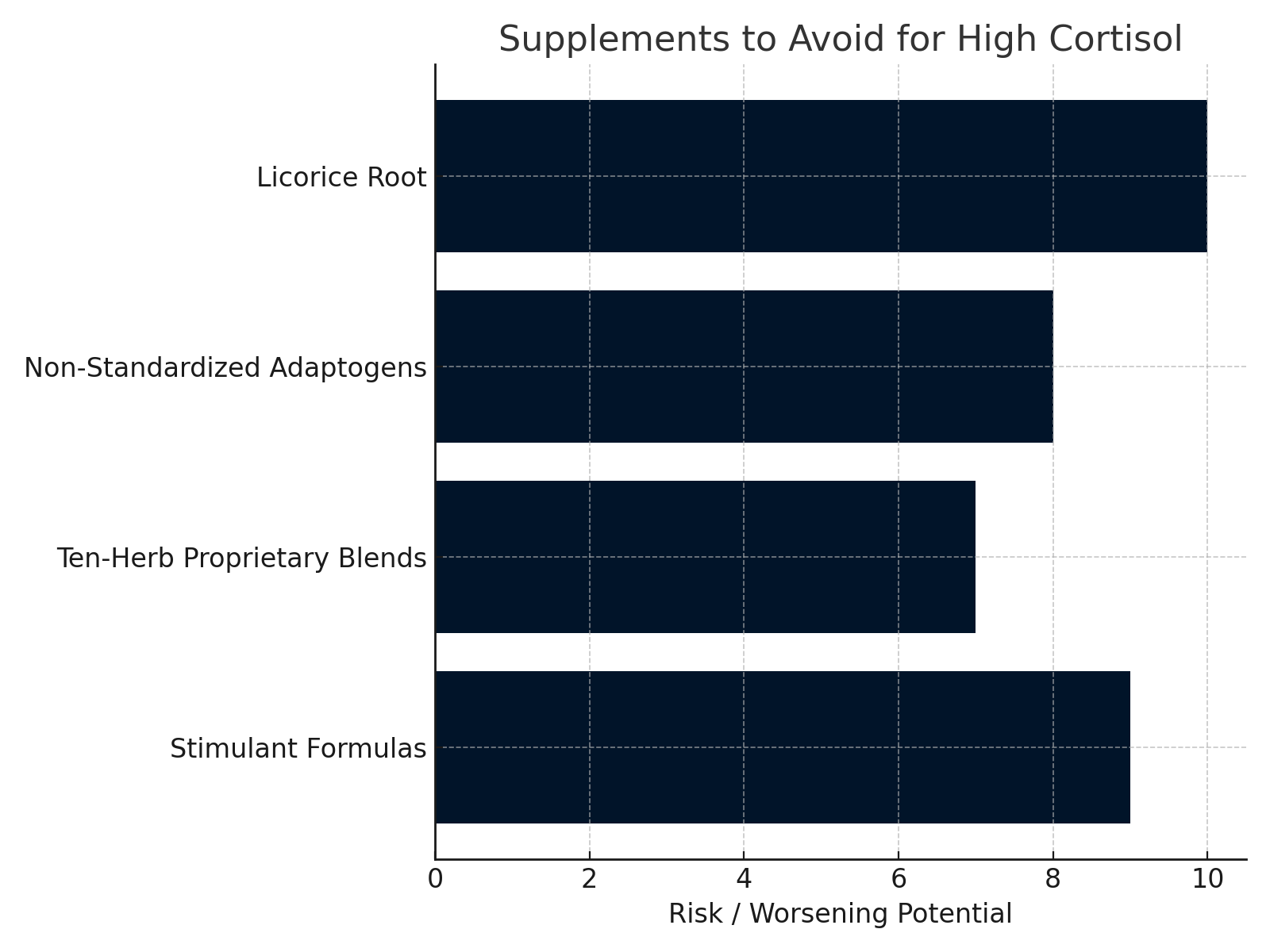
You fix cortisol by targeting the systems that create the elevation. That means feedback control, inflammation, sleep architecture, and acute stress responses. Each supplement below hits a specific mechanism. People get poor results when they mix ten random herbs. You get better outcomes by picking the two or three that match your pattern.
Ashwagandha
Ashwagandha is one of the most reliable supplements for reducing high cortisol levels, supported by multiple randomized controlled trials.
Why It Works
Ashwagandha improves communication within the HPA axis by reducing the signal from the hypothalamus, which is the “command center” that tells your adrenal glands to release cortisol. Most supplements do not influence this pathway, which makes ashwagandha uniquely effective. It also stabilizes GABA, the brain’s primary calming neurotransmitter, helping you feel relaxed without sedation.
Best For
Chronic stress, emotional reactivity, low resilience, poor sleep quality.
Dose
300–600 mg daily.
Rhodiola Rosea
Rhodiola is a performance adaptogen, ideal for people who feel burned out or mentally drained.
Why It Works
Rhodiola helps your body produce less cortisol for the same stressor, meaning your stress response becomes more efficient and less reactive. Unlike calming herbs, Rhodiola supports energy and alertness while preventing stress-induced crashes.
Best For
Fatigue, low motivation, heavy workload, mental pressure, productivity struggles.
Dose
200–400 mg in the morning.
Phosphatidylserine
If your cortisol is highest at night, this is the top supplement to fix that pattern.
Why It Works
Phosphatidylserine lowers cortisol by reducing ACTH — the hormone that triggers adrenal cortisol release. This makes it extremely helpful for people who feel “tired but wired,” have racing thoughts, or can’t shut down at night.
Best For
Nighttime cortisol elevation, restless sleep, overthinking before bed.
Dose
200–400 mg taken in the evening.
Magnesium Glycinate
Magnesium glycinate helps the nervous system relax, which indirectly reduces cortisol by improving sleep and lowering stress reactivity.
Why It Works
Stress rapidly drains magnesium from the body. Low magnesium levels make cortisol harder to regulate. Magnesium supports GABA activity and reduces excitatory brain signaling, leading to deeper sleep and better stress resistance.
Best For
Muscle tension, poor deep sleep, anxiety, headaches, irritability.
Dose
200–400 mg at night.
L-Theanine
L-theanine is ideal for people who experience cortisol spikes during pressure or mental overload.
Why It Works
This amino acid promotes alpha-wave activity in the brain, creating a calm focus. It gently lowers acute stress responses, helping the brain feel safe so the body doesn’t overproduce stress hormones.
Best For
Racing thoughts, work stress, social anxiety, fear-based cortisol spikes.
Dose
100–300 mg, daytime or before stress.
Omega-3 (EPA & DHA)
Omega-3 fatty acids are powerful anti-inflammatory nutrients, essential for people whose cortisol elevation is linked to inflammation, mood issues, or brain fog.
Why It Works
Inflammation pushes cortisol higher. Omega-3 fatty acids reduce inflammatory signals, which helps normalize your cortisol baseline. They also support brain health, stable mood, and smoother stress regulation.
Best For
Brain fog, low mood, chronic inflammation, long-term stress load.
Dose
1–2 grams combined EPA + DHA per day.
Holy Basil (Tulsi)
Holy Basil helps regulate the emotional and mental stress response.
Why It Works
It supports neurotransmitters involved in mood regulation, helping reduce emotional reactivity and repetitive negative thinking. It brings a sense of emotional grounding.
Best For
Rumination, emotional sensitivity, overwhelm, mood-related stress.
Dose
300–500 mg.
Lemon Balm
Lemon Balm is a gentle but effective herb that helps your nervous system shift into parasympathetic mode (rest and calm).
Why It Works
It enhances GABA activity, helping reduce tension and lowering cortisol spikes driven by an overactive mind. It is especially helpful for people who struggle to wind down.
Best For
Evening irritability, anxiety at night, tension, difficulty relaxing.
Dose
300–600 mg, especially in the evening.
Your Next Step: Stop Guessing. Start Personalizing.
High cortisol shows up differently for everyone — nighttime spikes, all-day elevation, sudden stress bursts, or long-term fatigue. A random supplement routine won’t fix that, but a personalized plan will.
Take the Cenario Supplement Quiz
Your body has a pattern. Your stress has a root cause. Your supplements should match your cortisol rhythm, not someone else’s.
The Cenario Quiz gives you a customized plan based on your symptoms and daily stress triggers, with clear guidance on what to take and when.
Stop guessing. Start healing smarter.
Take the Cenario Supplement Quiz today.
Frequently Asked Questions
How do I know if I have high cortisol levels?
You can suspect high cortisol levels if you notice several common signs happening at the same time. Many people with elevated cortisol experience weight gain around the belly, constant stress even on normal days, disrupted sleep, and strong food cravings. Others feel mentally foggy, emotionally reactive, or “tired but wired.” The most accurate way to confirm your cortisol levels is through lab testing, such as saliva, blood, or urine cortisol tests. These tests show whether your cortisol is high in the morning, at night, or throughout the entire day.
How long does it take to see reduced cortisol levels?
Most people start noticing improvements within two to four weeks, especially with better sleep and more stable energy levels. Changes related to mood, inflammation, and weight can take four to eight weeks or longer, depending on lifestyle, stress load, and consistency. Supplements work best when combined with healthy daily habits, such as a nutritious diet, stress management, and practicing mindfulness.
Can supplements replace therapy, rest, and lifestyle changes?
Supplements can significantly support managing cortisol levels, but they cannot replace essential habits like sleep, recovery, emotional regulation, or therapy when needed. Supplements work as tools that help your body reset and respond better to stress, but long-term balance still requires a combination of good sleep, healthy nutrition, physical activity, and coping strategies.
Are omega-3 fatty acids really necessary?
Omega-3 fatty acids are highly beneficial for the brain, nervous system, and inflammation control. They support a calmer mood, more stable stress hormones, and better cognitive function. While they are not mandatory like vitamins, research shows that low omega-3 intake is linked to higher inflammation and more stress-related symptoms. If your diet is low in fatty fish, omega-3 supplements can make a noticeable difference.
Is green tea better than coffee for stress?
For many people, yes. Coffee can cause sharp cortisol spikes, especially when consumed on an empty stomach or in large amounts. Green tea, on the other hand, provides gentle caffeine but also contains L-theanine, a compound that promotes calm focus and smoother stress levels. This makes green tea a better choice for managing stress throughout the day.
Can I combine more than one supplement from this list?
Yes, most people benefit from combining two or three supplements that match their symptoms. For example, some people choose ashwagandha and magnesium for anxiety and sleep, while others use rhodiola with omega-3 fatty acids for better energy and inflammation support. It’s best to start with small combinations, observe how your body feels, and increase only if needed.
.