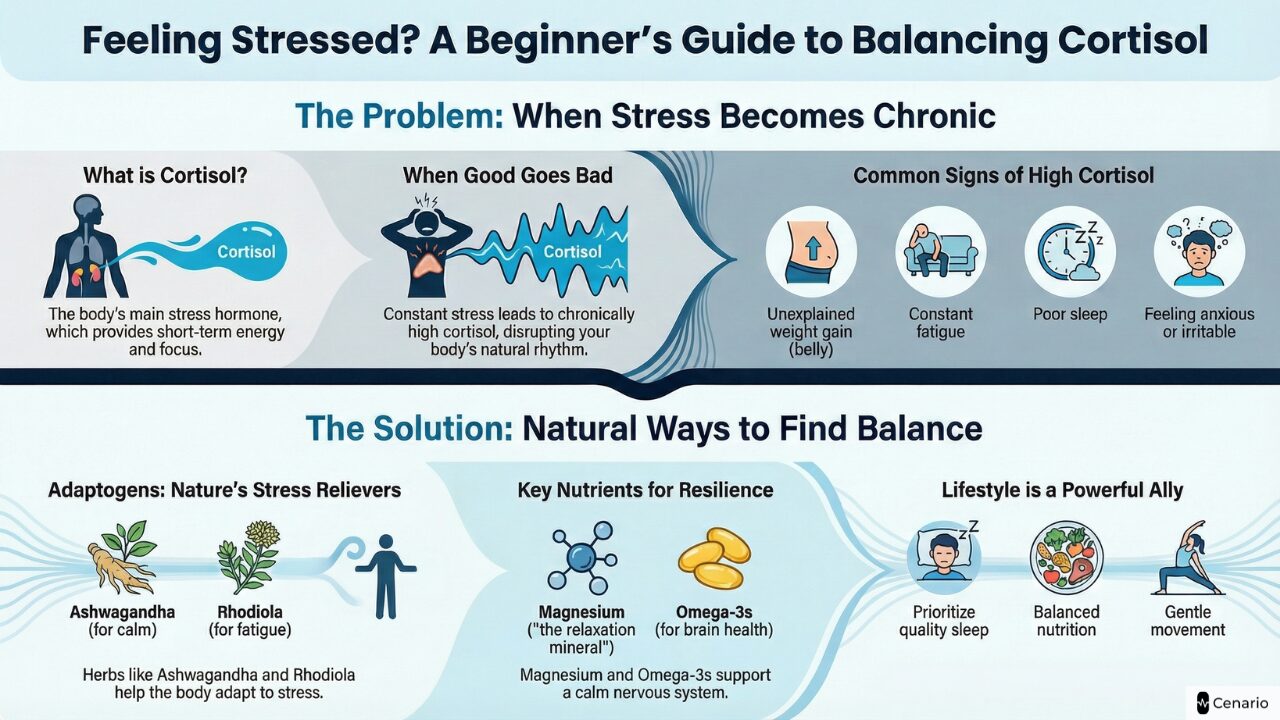

Cortisol, commonly known as the “stress hormone,” is a key player in how the body responds to pressure, challenges, and daily demands.
It’s produced by the adrenal glands (small glands that sit on top of your kidneys) and affects many essential functions:
- Regulating metabolism (how your body uses energy)
- Controlling inflammation
- Helping manage stress
- Supporting blood pressure
- Influencing sleep-wake cycles
In simple terms, cortisol helps keep you alert, energized, and ready to handle stressful situations. Short-term increases in cortisol, like when you’re late for work or exercising, are normal and even helpful.
Elevated cortisol plays a central role in stress, sleep disruption, anxiety, and burnout. This beginner’s guide fits into our larger exploration of hormonal balance and stress-related supplementation within our stress and cortisol support resources.
When Cortisol Becomes a Problem
Issues start when stress is no longer temporary. If your body is constantly under pressure emotionally, mentally, or physically cortisol can remain elevated for long periods instead of rising and falling as needed.
Chronically high cortisol levels have been linked to:
- Trouble sleeping or staying asleep
- Weight gain, especially around the abdomen
- Constant fatigue or low energy
- Weakened immune system (getting sick more often)
- Irritability, anxiety, or mood swings
- Brain fog and difficulty focusing
Over time, this can affect many systems in your body, from your heart and metabolism to your mood and mental clarity. Understanding how cortisol works is the first step in managing stress more effectively.
The Growing Interest in Natural Cortisol Supplements
As more people become aware of how chronic stress impacts long-term health, there has been a huge rise in interest in natural supplements that may help reduce or balance cortisol levels.
People are drawn to these supplements because they:
- Offer a more holistic, gentle approach to managing stress
- May support both mental and physical wellness
- Are often seen as alternatives or complements to prescription medications
Natural cortisol-support supplements usually include:
- Adaptogenic herbs (like ashwagandha, rhodiola, cordyceps)
- Vitamins (like vitamin C and B vitamins)
- Minerals (like magnesium)
- Amino acids and other compounds (like L-theanine, phosphatidylserine, omega-3 fatty acids)
These ingredients don’t “switch off” stress, but they may help the body respond to stress more efficiently and recover more quickly.
Purpose of This Guide
This guide gives you a simple, beginner-friendly understanding of how cortisol affects your body, which natural supplements may help manage stress levels, how these supplements work, and how to combine them with healthy lifestyle habits for better results.
Whether you’re dealing with fatigue, poor sleep, anxiety, or the effects of chronic stress, this guide will help you understand your options and make informed choices. By the end, you’ll know how natural supplements can fit into a practical, effective stress-management routine.
Understanding Cortisol and Its Impact
Cortisol is a steroid hormone produced by the adrenal glands and is central to the body’s stress response system, often called the “fight-or-flight” response.
How Cortisol Works
When your body senses stress whether it’s physical (like pain or illness), emotional (like worry or conflict), or environmental (like noise or work pressure) your brain sends signals to the adrenal glands to release cortisol. Once released, cortisol:
- Increases blood sugar to provide quick energy
- Helps you stay alert and focused
- Temporarily alters immune and digestive function so your body can prioritize dealing with the “threat”
In healthy conditions, cortisol:
- Peaks in the morning to help you wake up and feel alert
- Slowly declines throughout the day
- Reaches its lowest point at night to promote restful sleep
What Happens When Cortisol Stays High?
When stress is chronic (ongoing), cortisol can stay elevated and lose its natural rhythm. This can lead to:
- Persistent fatigue – feeling tired even after rest
- Anxiety and restlessness – feeling “on edge” most of the time
- Insomnia or poor sleep quality – difficulty falling or staying asleep
- Increased abdominal fat – especially around the belly
- Blood sugar imbalances – energy crashes, sugar cravings
- Muscle breakdown – weaker muscles and slower recovery
- Weakened immune function – more frequent colds or infections
Because cortisol touches so many systems in the body, keeping it balanced is essential for both physical and emotional well-being.

Signs You May Have High Cortisol
Only lab tests can confirm your cortisol levels, but some common signs of chronically elevated cortisol include:
- Difficulty falling asleep or waking up frequently at night
- Waking up tired even after a full night’s sleep
- Frequent feelings of overwhelm, anxiety, or irritability
- Unexplained weight gain, especially around the midsection
- Sugar or salt cravings
- Low sex drive
- Frequent headaches
- Weakened immunity (getting sick often)
If several of these symptoms sound familiar, it may be worth discussing cortisol testing or stress management strategies with a healthcare professional.
Top Supplements to Reduce or Balance Cortisol
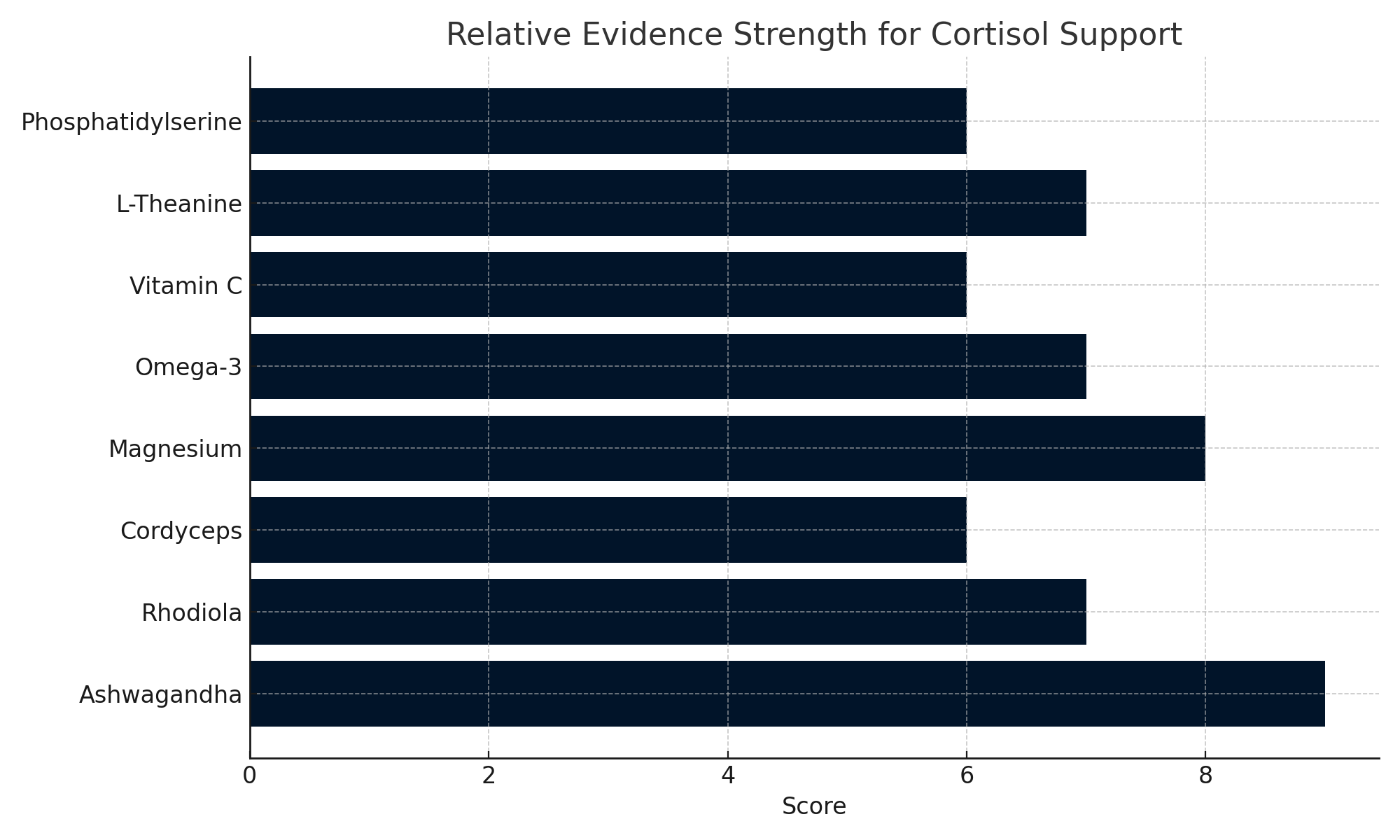
Below are some of the most researched and commonly used natural supplements known for supporting healthy cortisol levels. These are not cures, but they can be helpful tools when used wisely and combined with healthy habits.
1. Adaptogens: Nature’s Stress Relievers
Adaptogens are natural substances that help the body adapt to stress more effectively. They don’t simply “sedate” you they help regulate stress responses and promote overall resilience.
They may:
- Balance stress hormones like cortisol
- Support energy and stamina
- Improve mental clarity
- Help the body recover faster after stress
Ashwagandha
Ashwagandha is one of the most widely studied adaptogenic herbs. Research suggests it can significantly reduce serum cortisol, making it a popular choice for stress and anxiety support.
How it may help:
- Supports a calmer stress response
- May improve sleep quality
- Can reduce feelings of anxiety and overwhelm
- Supports energy and resilience during the day
Many people take ashwagandha to help with long-term stress, burnout, or difficulty “switching off” at night.
Rhodiola Rosea
Rhodiola is known for its ability to combat physical and mental fatigue.
Potential benefits:
- Supports endurance and stamina
- May improve mood and motivation
- Helps with mental clarity and focus during stressful times
It’s especially helpful for people who feel mentally drained, exhausted, or burned out from work or study.
Cordyceps
Cordyceps is a medicinal mushroom traditionally used to enhance energy and stamina.
How it may support cortisol balance:
- Supports natural energy production at the cellular level
- May improve oxygen use and endurance
- Can complement other adaptogens to build overall resilience
When combined, Rhodiola + Cordyceps may help reduce fatigue while keeping you mentally and physically more resilient to stress.
2. Magnesium: The Relaxation Mineral
Magnesium is often called the “relaxation mineral” because it plays a key role in calming the nervous system.
Low magnesium levels are associated with:
- Increased stress sensitivity
- Muscle tension
- Difficulty relaxing
- Poor sleep quality
How magnesium may help with cortisol:
- Supports a calmer nervous system
- Helps relax muscles and reduce tension
- May lower cortisol levels, especially in chronically stressed individuals
- Can improve sleep quality and recovery
Common forms used in supplements include magnesium glycinate, citrate, and malate. Some forms are gentler on the stomach than others.
3. Omega-3 Fatty Acids: Support for Brain and Body
Omega-3 fatty acids (like EPA and DHA found in fish oil) are known for their anti-inflammatory and brain-supportive properties.
How omega-3s may support healthy cortisol:
- Help regulate inflammation, which is often elevated during chronic stress
- Support brain function, mood, and emotional stability
- May improve the body’s ability to cope with stress
Omega-3s are especially useful for people who experience mood changes, brain fog, or low resilience under stress.
4. Vitamin C: Helping the Body Handle Stress
Vitamin C is heavily used by the adrenal glands, especially during times of stress.
While vitamin C doesn’t directly “block” cortisol, it:
- Supports normal adrenal function
- Acts as an antioxidant, protecting cells from stress-related damage
- Helps maintain energy and immune function during stressful periods
When your body is under constant stress, your vitamin C needs may increase. Ensuring adequate intake through food or supplements can support overall stress resilience.
5. L-Theanine: Calm Without Sleepiness
L-theanine is an amino acid naturally found in green tea. It’s well-known for promoting relaxation without drowsiness.
Benefits for cortisol and stress:
- Promotes a calm, focused state
- Can help reduce stress-related increases in cortisol
- May be helpful before stressful events (presentations, exams, busy days)
Many people use L-theanine during the day to stay calm and clear-headed, or in the evening to help unwind.
6. Phosphatidylserine: Supporting Stress Recovery
Phosphatidylserine is a phospholipid (a fat-like compound) that’s an important building block of brain cell membranes.
How it may help:
- Supports recovery after physical or mental stress
- May help reduce cortisol spikes following intense exercise or stress
- Supports memory, focus, and mental performance
It’s often used by athletes, high-performers, or people with demanding jobs who want to support both brain function and stress recovery.
Other Helpful Nutrients for Stress and Cortisol Balance
In addition to the main supplements above, these nutrients are often included in cortisol-support formulas:
- B vitamins (especially B5, B6, B12): support energy production, nervous system health, and normal psychological function.
- Zinc: supports immunity and hormone balance.
- Probiotics: a healthy gut can positively influence stress and mood through the gut-brain axis.
While they may not directly “lower cortisol” on their own, they can strengthen the body’s overall ability to handle stress.
Holistic Ways to Support Cortisol Levels
Supplements can be powerful, but they work best when combined with lifestyle changes. To naturally support healthy cortisol levels, consider:
Regular physical activity
Gentle movement like walking, yoga, or light strength training helps regulate cortisol. Extremely intense exercise, however, may temporarily increase cortisol—so balance is key.
Consistent, quality sleep
Aim for 7–9 hours of sleep and a regular sleep schedule. Cortisol has a daily rhythm, and irregular sleep can disrupt it.
Balanced nutrition
Focus on whole foods: lean protein, healthy fats, whole grains, fruits, and vegetables. Skipping meals or eating lots of sugar can worsen blood sugar swings and stress levels.
Relaxation techniques
Deep breathing, meditation, prayer, journaling, or gentle stretching can calm the nervous system and reduce cortisol over time.
Reduce stimulants
Too much caffeine or alcohol can increase stress on the body and interfere with sleep, making cortisol balance more difficult.
Using supplements together with these habits often gives better long-term results than relying on pills alone.
How to Choose the Right Cortisol Supplement
With so many products on the market, here are a few things to consider:
1. Check the ingredient list
Look for clearly labeled doses of active ingredients, not just “proprietary blends” with no quantities.
2. Look for third-party testing
This helps ensure the product is tested for purity, quality, and contaminants.
3. Match the supplement to your main concern
- Trouble sleeping? → Magnesium, L-theanine, ashwagandha
- Fatigue and burnout? → Rhodiola, cordyceps, omega-3s
- Brain fog and stress recovery? → Phosphatidylserine, omega-3s
4. Consider timing
- Energizing adaptogens (like rhodiola or cordyceps) are usually best earlier in the day.
- Calming supplements (like magnesium or L-theanine) may be better in the evening.
5. Avoid unrealistic claims
Be cautious of products that promise instant cures, dramatic weight loss, or “complete hormone reset in days.” Cortisol balance takes time and consistency.
Warnings and Precautions
Even natural supplements can have side effects or interact with medications. It’s best to talk to a healthcare provider before starting anything new—especially if you’re taking medication, have a chronic condition, or are pregnant, breastfeeding, or trying to conceive.
Some supplements may cause mild issues:
- Magnesium can lead to digestive upset in higher doses.
- Omega-3s may increase bleeding risk if taken in large amounts.
- Adaptogens like ashwagandha, rhodiola, and cordyceps can affect thyroid, blood pressure, or blood sugar in some people.
- Phosphatidylserine and L-theanine may cause minor digestive or sleep changes in sensitive individuals.
Remember, supplements should support your stress-management routine—not replace healthy habits.
When to Seek Professional Help
Consult a doctor if your symptoms are severe or getting worse (like extreme fatigue, major weight changes, severe anxiety, or depression), if you suspect a deeper issue such as thyroid problems or adrenal disorders, or if you’ve tried multiple strategies with no improvement.
A healthcare provider can run proper tests, identify underlying causes, and guide you toward a safe, personalized plan for balancing stress and hormones.
Final Thoughts
Cortisol is not the enemy it’s a vital hormone that helps you survive and adapt. The real problem is chronic, unmanaged stress that keeps cortisol high for too long.
Thoughtfully chosen supplements like adaptogens, magnesium, omega-3s, vitamin C, L-theanine, and phosphatidylserine can support your body’s natural stress response and help restore balance. When combined with healthy sleep, nutrition, movement, and relaxation habits, they can become powerful allies in your journey toward better mental and physical well-being.
Use this guide as a starting point, listen to your body, and work with a healthcare professional to find the best approach for you.
Take the Cenario Mental Health Supplement Quiz and get a personalized plan!
Frequently Asked Questions
Do cortisol supplements really work?
Yes. Adaptogens like ashwagandha, rhodiola, and cordyceps can help support healthier cortisol levels by improving how your body handles stress. They work best with consistent use and healthy habits like good sleep and nutrition.
How long before I feel the results?
Most people notice changes in 2–6 weeks, depending on the supplement and stress levels. Fast-acting options like L-theanine can work within minutes, while adaptogens and omega-3s take longer to show full benefits.
Who should be cautious with these supplements?
People who are pregnant, breastfeeding, or taking thyroid, blood pressure, mood, or blood-thinning medications should consult a doctor first. Those with autoimmune or hormone-related conditions should also get medical advice before starting cortisol-support supplements.