
Unlock Better Mood With Probiotics for Mental Health
Probiotics for mental health are gaining attention because they offer something many people want but struggle to find: a natural, low-risk way to support mood, stress resilience, and emotional balance. These live microorganisms are best known for improving digestion, yet research increasingly shows that their influence extends well beyond the gut. Through the gut–brain connection, probiotics can affect how the brain responds to stress, processes emotion, and maintains cognitive flexibility.
For people dealing with low mood, chronic stress, anxiety, or emotional fatigue, this connection is especially relevant. Mental health challenges are rarely isolated to the brain alone. They are shaped by inflammation, immune signaling, metabolic health, and neurotransmitter balance. Probiotics work indirectly by influencing these underlying systems rather than acting as fast-acting mood enhancers. That makes them slower, but potentially more sustainable, tools when used correctly.
The Gut–Brain Axis and Its Role in Emotional Health
The gut–brain axis refers to the constant two-way communication between the gastrointestinal tract and the central nervous system. This communication happens through multiple overlapping pathways. Nerve signaling, particularly through the vagus nerve, allows gut activity to influence brain regions involved in emotion and stress regulation. At the same time, immune messengers and metabolic byproducts produced by gut bacteria affect inflammation levels and neurotransmitter synthesis.
Because of this system, changes in gut microbiota composition can alter serotonin availability, stress hormone signaling, and neuroplasticity. Probiotics for mental health aim to gently rebalance this ecosystem. Instead of forcing a chemical response, they support conditions that allow the brain to regulate itself more efficiently. This explains why some people experience improved calm, better stress recovery, or more stable mood after several weeks of consistent use.
How Probiotics May Influence Mood and Stress Response
The biological mechanisms behind probiotics and mental health are complex and still being refined. Current evidence suggests that certain probiotic strains may reduce low-grade inflammation that is often elevated in people with depression or anxiety. Others appear to influence how tryptophan is metabolized, which affects serotonin production. Some studies also show changes in brain-derived neurotrophic factor, a protein involved in learning, adaptability, and emotional resilience.
These effects are subtle rather than dramatic. Probiotics are unlikely to create sudden mood shifts. Instead, they may reduce background stress load, improve emotional regulation, and support a more stable baseline over time. This is why probiotics are best viewed as supportive tools rather than replacements for therapy or medication.
If you are currently managing mood symptoms with professional care, probiotics may be worth discussing as an adjunct rather than a standalone strategy.
The Emergence of Psychobiotics
Psychobiotics are probiotics studied specifically for their effects on mental health. Interest in this category has grown rapidly as clinical trials accumulate. Several reviews of randomized controlled studies report that a majority show statistically meaningful improvements in mood or anxiety scores when probiotics are used for four to eight weeks.
Some trials also suggest that probiotics may enhance response to antidepressants or improve emotional processing when combined with standard treatments. However, results are not universal. Differences in strains, doses, trial length, and participant characteristics all influence outcomes. This variability explains why some people notice clear benefits while others experience little change.
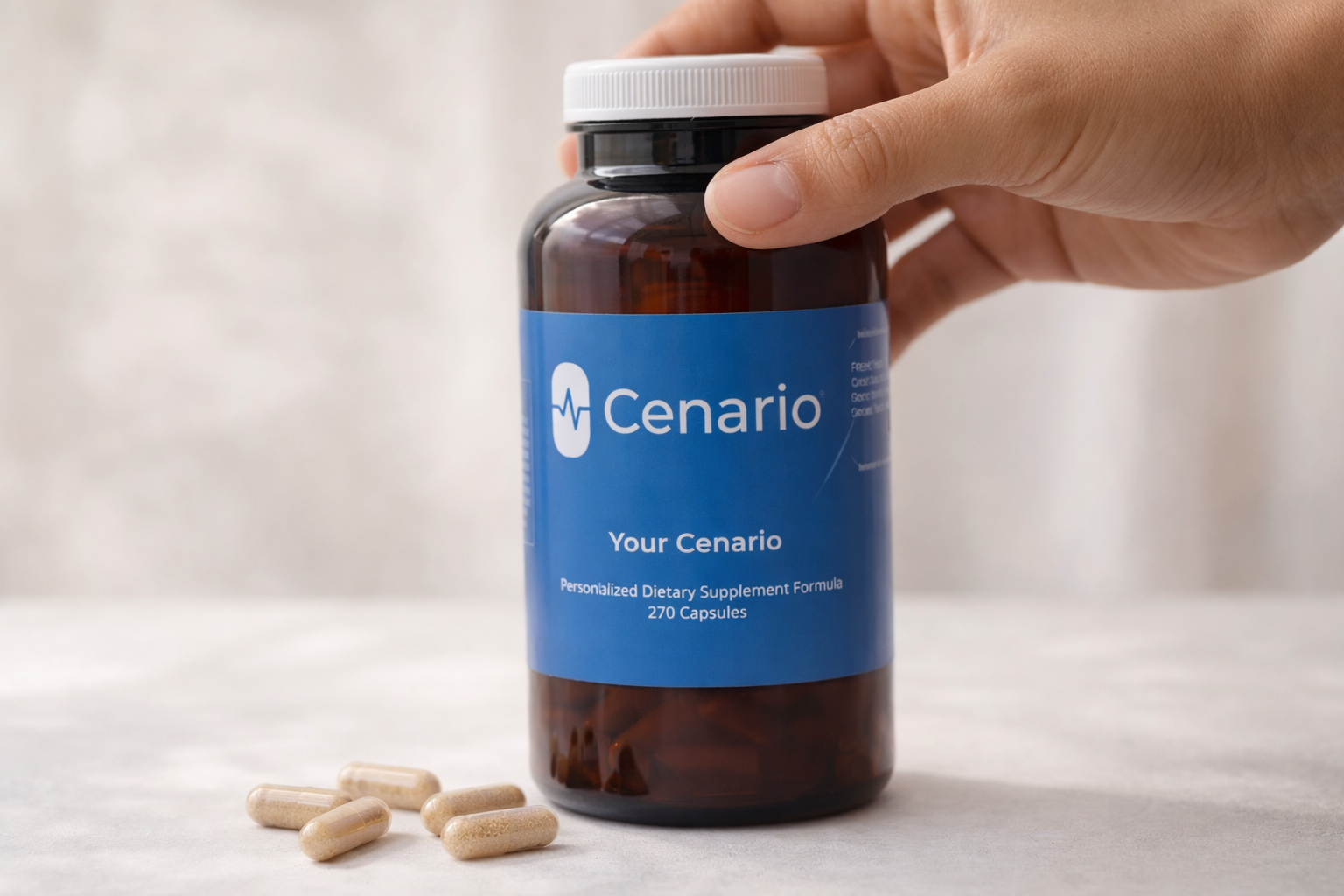
If you want to explore which formulations are commonly used in mental health research, you can review strain-specific explanations in the Cenario dictionary or take the Cenario quiz to narrow options based on your goals.
What Clinical Evidence Tells Us So Far
Across clinical studies, certain patterns repeat. Multispecies formulas containing Lactobacillus and Bifidobacterium strains are most often associated with positive outcomes. Improvements typically appear within one to two months and tend to be modest but meaningful. These benefits are more consistent when probiotics are used alongside lifestyle interventions such as improved sleep, nutrition, and stress management.
Importantly, probiotics do not appear to blunt emotional range or cause dependency. This safety profile is one reason they are being studied as long-term supportive tools rather than short-term symptom suppressors.
Why Strain Selection Matters
Not all probiotics influence the brain in the same way. Evidence repeatedly points to specific strains that interact with stress and mood pathways. Lactobacillus helveticus and Lactobacillus rhamnosus have been associated with reduced anxiety in several trials. Bifidobacterium longum and Bifidobacterium breve appear linked to lower depression scores and improved emotional processing. Emerging research is also exploring next-generation strains with strong anti-inflammatory effects.
Multistrain formulations may be more effective because they act on several pathways at once. One strain may influence immune signaling, another neurotransmitter metabolism, and another gut barrier integrity. Together, they create broader support than any single strain alone.
Probiotics as Preventive Support, Not Just Treatment
Beyond clinical symptoms, probiotics are increasingly studied for everyday emotional resilience. Trials in healthy adults show subtle but measurable effects, such as reduced negative emotional bias, improved stress recovery, and better emotional processing during challenging tasks. These changes may not always show up on standard questionnaires, but they can still improve quality of life.
People with higher baseline stress, sleep disruption, or inflammatory risk markers appear more likely to benefit. This makes probiotics a potential tool for prevention rather than crisis intervention.
A realistic approach is to commit to a defined trial period. Four weeks is often enough to detect early changes, while eight weeks allows time for gut communities to stabilize. Tracking mood, sleep, and stress tolerance during this window provides more insight than relying on memory alone.
Why Results Differ From Person to Person
One of the biggest challenges in probiotic research is individual variability. Baseline gut composition, diet quality, recent antibiotic use, metabolic health, and immune status all influence how a person responds. Two people taking the same product may experience very different outcomes because their gut environments are not the same.
This variability reinforces the importance of transparent labeling, realistic expectations, and structured trials rather than impulsive supplement hopping.
Practical Guidance for Safe and Effective Use
When considering probiotics for mental health, product quality matters as much as strain selection. Look for multispecies formulas that clearly list strains and colony-forming units per dose. Products that include prebiotics may enhance survival and colonization, though they are not required for everyone.
Probiotics for Mental Health: How to Choose the Right Option
Probiotics for mental health are not interchangeable. Benefits depend on strain selection, formulation, dose, and your baseline biology. To make this practical, the comparison table below shows how different probiotic approaches stack up for mood, stress, and emotional resilience.
Comparison Table: Probiotics for Mental Health
| Feature | Single-Strain Probiotic | Multistrain Probiotic | Psychobiotic-Focused Formula |
|---|---|---|---|
| Typical strains | One Lactobacillus or Bifidobacterium strain | Multiple Lactobacillus + Bifidobacterium strains | Clinically studied mood-related strains |
| Best use case | Digestive support, mild gut issues | General mood and stress support | Anxiety, low mood, stress resilience |
| Evidence for mood | Limited and inconsistent | Moderate and more consistent | Strongest evidence so far |
| Mechanisms targeted | Narrow, strain-specific | Multiple pathways (immune, neurotransmitters, gut barrier) | Inflammation, serotonin pathways, stress response |
| Onset of effects | Variable | 4–8 weeks | 4–8 weeks, sometimes earlier |
| Risk profile | Very low | Very low | Very low |
| Ideal user | Gut-focused goals | Broad emotional support | Targeted mental health support |
Key Benefits People Seek From Probiotics for Mental Health
People do not turn to probiotics expecting instant relief. Instead, most are looking for subtle but meaningful improvements that build over time.
Commonly reported benefits include:
- A calmer baseline mood with fewer stress spikes
- Improved emotional regulation during challenging days
- Reduced anxiety intensity rather than complete elimination
- Better stress recovery after poor sleep or high workload
- Mild improvements in focus and emotional clarity
These changes tend to appear gradually and often become noticeable only when people look back after several weeks of consistent use.
Practical Points Before Starting
Before adding probiotics for mental health, a few fundamentals improve the odds of success.
Formulation matters
Products should list specific strains, not just species names. Strain identifiers indicate research relevance and quality control.
Dose is not everything
Higher CFU counts are not always better. Effective products range widely, and survival to the gut matters more than headline numbers.
Consistency beats intensity
Daily use for at least four weeks is more important than sporadic high doses.
Context matters
Diet, sleep, stress load, and recent antibiotic use all influence results. Probiotics work best when paired with fiber intake and basic lifestyle support.
How to Run a Smart Trial
Treat probiotics like a structured experiment rather than a passive supplement.
- Choose one clearly labeled multispecies product
- Commit to a minimum four-week trial, ideally eight weeks
- Track mood, stress tolerance, and sleep quality weekly
- Avoid introducing multiple new supplements at the same time
- Reassess and decide whether benefits justify continued use
This approach reduces confusion and helps you identify real effects rather than placebo noise.
Safety Notes and Who Should Be Cautious
Probiotics for mental health are generally safe, but caution is still appropriate in some situations.
- People who are immunocompromised should consult a clinician first
- Anyone taking psychiatric medication should coordinate changes with their prescriber
- Mild digestive symptoms can occur early and usually resolve within days
- Probiotics are not substitutes for therapy, medication, or crisis care
Used responsibly, probiotics have one of the lowest risk profiles among mental health adjuncts.
Final Thoughts
Probiotics for mental health are not a cure, but they can support mood stability, stress resilience, and emotional regulation for the right person using the right formulation. The strongest outcomes come from clear expectations, quality products, and structured trials, not impulse buying.clear expectations, quality products, and structured trials, not impulse buying.
Want a faster way to narrow your options?
Take the Cenario quiz to identify probiotic formulations aligned with your mood goals, stress profile, and lifestyle. It removes guesswork and helps you start with a product that actually fits your needs.
Frequently Asked Questions
Do probiotics really help mental health?
For some people, yes. Clinical trials show modest but meaningful improvements in mood and stress, especially when probiotics are used consistently for 4–8 weeks and combined with lifestyle or clinical care.
How long do probiotics for mental health take to work?
Most benefits appear between four and eight weeks. Earlier changes can happen, but lasting effects usually require sustained use.
Are probiotics better than antidepressants?
No. Probiotics are adjuncts, not replacements. They may support emotional regulation but should not replace prescribed treatment without medical supervision.
Which probiotic strains are best for anxiety or depression?
Evidence most often supports Lactobacillus helveticus, Lactobacillus rhamnosus, Bifidobacterium longum, and Bifidobacterium breve, especially in multistrain formulas.
Can probiotics worsen anxiety?
This is uncommon, but transient digestive discomfort or stimulation can feel uncomfortable for some people early on. Starting low and monitoring response helps.