

Exploring Natural Memory Enhancement
In a world where cognitive health is increasingly prioritized, the idea of enhancing memory through natural means has captured widespread attention. Many individuals are turning to herbal remedies as a promising avenue for boosting brain function and memory retention. The allure of these natural solutions lies in their potential to improve cognitive health without the side effects often associated with synthetic alternatives.
The Intersection of Tradition and Science
Herbal remedies have been used for centuries in various cultures to support mental clarity and memory. Today, modern science is beginning to validate what ancient traditions have long espoused. This convergence of old and new knowledge is particularly evident in the study of herbs like sage, ashwagandha, gotu kola, and rosemary. These herbs are gaining recognition for their potential role in memory enhancement, supported by both traditional wisdom and scientific research.

Key Herbs for Memory Enhancement
Among the most notable herbs, sage is revered for its ability to improve memory and focus. Clinical trials suggest that sage may enhance cognitive performance by inhibiting acetylcholinesterase, an enzyme that breaks down acetylcholine, a neurotransmitter crucial for memory and learning.
Ashwagandha, another powerful herb, is known for its adaptogenic properties, helping the body manage stress while supporting memory and cognitive function. Research indicates that ashwagandha may reduce oxidative stress and inflammation, both of which are linked to cognitive decline.
Gotu kola, often used in traditional Ayurvedic medicine, is currently under scientific scrutiny for its potential to combat cognitive impairment in older adults. Preliminary studies suggest that it may enhance memory by improving blood circulation and reducing anxiety.
Rosemary, widely used in culinary arts, is also celebrated for its memory-boosting properties. Compounds like rosmarinic acid found in rosemary have been shown to support brain health, potentially improving memory and concentration.
Setting the Stage for Exploration
This blog post aims to delve deeper into the mechanisms behind these herbs, examining the scientific evidence that supports their use and exploring any potential limitations. By understanding both the traditional uses and modern scientific findings, readers can gain a comprehensive perspective on how these herbs might serve as effective tools for memory enhancement.
Scientific Validation of Key Herbs
Sage: Enhancing Memory and Focus
Sage, scientifically known as Salvia officinalis, has been extensively studied for its potential to improve memory and cognitive function. Human clinical trials have demonstrated that sage can enhance memory and focus by inhibiting acetylcholinesterase, an enzyme responsible for breaking down acetylcholine. Acetylcholine is a neurotransmitter crucial for memory and learning, and its preservation is vital for cognitive health. Additionally, sage possesses antioxidant properties that protect brain cells from oxidative stress, further supporting its role in memory enhancement.
Ashwagandha: Supporting Psychological Well-being
Ashwagandha, or Withania somnifera, is renowned for its adaptogenic properties, which help the body manage stress more effectively. This herb is linked to memory enhancement and improved psychological well-being. Scientific studies have shown that ashwagandha reduces oxidative stress and inflammation, both of which are associated with cognitive decline. By mitigating these harmful processes, ashwagandha supports overall brain health and memory function.
Gotu Kola: Combating Cognitive Impairment
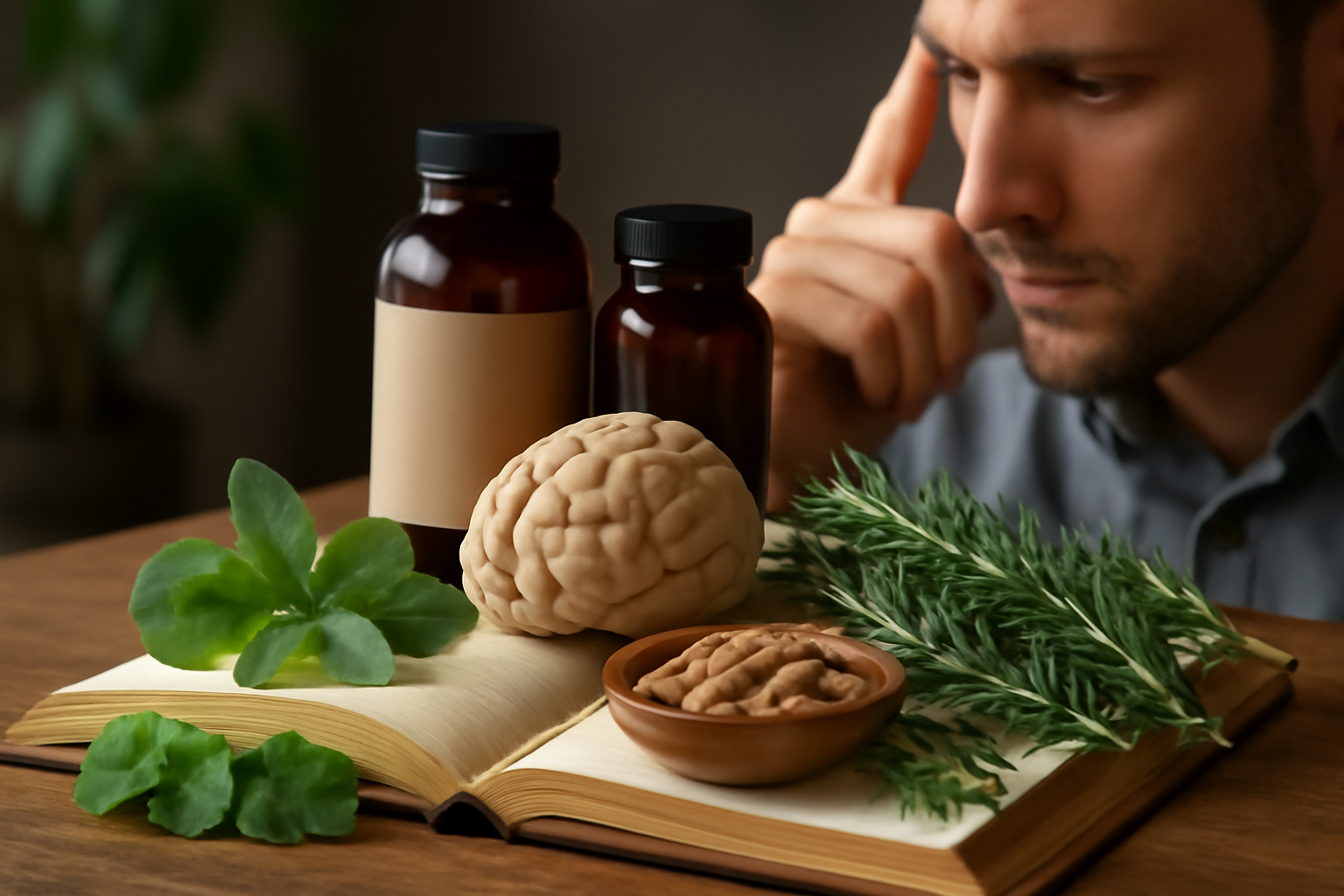
Gotu kola, or Centella asiatica, is gaining attention in the scientific community for its potential to combat cognitive impairment, particularly in older adults. Ongoing clinical trials are assessing its impact on cognitive function, with preliminary evidence suggesting that it may improve memory by enhancing blood circulation and reducing anxiety. This herb’s traditional use in Ayurvedic medicine is now being supported by modern research, highlighting its potential benefits for memory enhancement.
Mechanisms of Action
Biochemical Actions of Memory-Enhancing Herbs
The herbs discussed exhibit several common biochemical actions that contribute to their memory-enhancing properties. These include:
- Antioxidant Activity: Protects brain cells from oxidative damage, a key factor in cognitive decline.
- Cholinergic Activity: Inhibition of acetylcholinesterase, preserving acetylcholine levels essential for memory.
- Anti-inflammatory Effects: Reduces inflammation, which can negatively impact cognitive function.
These mechanisms are crucial for understanding how these herbs support cognitive health and memory enhancement.
Summary of Mechanisms of Action
| Herb | Mechanism of Action |
|---|---|
| Sage | Antioxidant, acetylcholinesterase inhibition |
| Ashwagandha | Antioxidant, anti-inflammatory |
| Gotu Kola | Improves circulation, reduces anxiety |
Traditional vs Modern Approaches
Integrating Traditional Wisdom with Scientific Research
The use of herbs for memory enhancement is deeply rooted in traditional medicine systems, such as Ayurveda and South Asian practices. These traditions have long recognized the cognitive benefits of herbs like sage, ashwagandha, and gotu kola. Today, modern scientific research is validating these traditional uses through rigorous clinical trials and studies.
The synergy between traditional wisdom and contemporary research offers a comprehensive understanding of how these herbs can be effectively used for memory enhancement. By bridging the gap between ancient knowledge and modern science, we can better appreciate the potential of these natural remedies in promoting cognitive health.
Emerging Trends and Research in Herbal Memory Enhancement
Rosemary: A Culinary Herb with Cognitive Benefits
Rosemary, or Rosmarinus officinalis, has long been cherished for its aromatic qualities and culinary uses. Recent research highlights its potential as a memory enhancer. Meta-analyses have shown that compounds like rosmarinic acid in rosemary may improve memory and cognitive function. Additionally, rosemary oil is used in aromatherapy to support mild cognitive impairment, offering a natural approach to memory enhancement.
Blends and Synergy: Combining Herbs for Enhanced Effects
Combining different herbs may amplify their cognitive benefits. Blends such as sage, rosemary, and lemon balm are gaining popularity for their synergistic effects. These combinations are believed to enhance memory and focus by leveraging the unique properties of each herb. Evidence suggests that such blends might offer a more comprehensive approach to cognitive health, although further research is needed to confirm these benefits.
Limitations and Considerations
While the potential of herbs good for memory is promising, it’s important to acknowledge the limitations of current research. Variability in study results and publication bias can affect the reliability of findings. Moreover, many studies are preclinical or involve small sample sizes. Therefore, more robust human trials are essential to validate these promising results and establish standardized guidelines for herbal use.
Frequently Asked Questions
Are These Herbs Safe for Everyone to Use?
While herbs such as sage, ashwagandha, rosemary, and gotu kola are generally considered safe, it is advisable to consult with a healthcare provider before use, especially for individuals taking other medications or with underlying health conditions.
How Long Does It Take to See Improvements in Memory with These Herbs?
Results can vary depending on the individual and the specific herb used. Some studies suggest improvements may be noticed within a few weeks, but consistent use is often recommended for more significant results.
Can These Herbs Be Taken Together for Better Results?
There is some evidence to suggest that combining herbs may have synergistic effects, enhancing their overall efficacy. However, it is best to follow expert guidance or clinical recommendations when using herbal blends.
Are There Any Side Effects Associated with These Herbs?
Side effects are generally mild, but each herb may have specific contraindications or interactions. For instance, high doses of rosemary may cause stomach upset, while ashwagandha can affect thyroid function.
Where Can I Find These Herbs?
These herbs are widely available in health food stores, online, and as supplements. However, the quality and concentration of herbal products can vary, so it is important to choose reputable sources.