

What is Aversion Therapy?
Aversion therapy, also called aversive conditioning, is a type of behavioral treatment that helps people stop unwanted habits or behaviors by linking them to something unpleasant. The goal is to make the behavior less appealing by creating a negative association with it.
This method is based on classical conditioning, a learning process where one thing gets connected to another through repeated pairing. In this case, a behavior that might feel rewarding at first (like smoking or drinking alcohol) is paired with something uncomfortable, like feeling sick or experiencing a bad taste. Over time, this causes the person to develop an aversion (a strong dislike) toward the behavior.
Aversion therapy became popular in the mid-1900s and has often been used to treat substance use disorders, especially for people struggling with alcoholism, alcohol dependence, and alcohol addiction.
It’s important to know that aversion therapy is not meant to punish the person. Instead, it’s used to change behavior patterns by making harmful habits feel less rewarding or pleasant.
How Does Aversion Therapy Work?
Aversion therapy works by using aversive conditioning, which means connecting a harmful behavior to something that causes discomfort, pain, or strong dislike.
Example:
Someone who wants to stop drinking alcohol might take a medication called Disulfiram (Antabuse). If they drink alcohol while taking the medication, they experience symptoms like:
- Nausea
- Vomiting
- Chest pain
- Anxiety
This uncomfortable reaction helps their brain link alcohol consumption with feeling sick. After a while, just the thought of drinking alcohol may trigger the memory of those bad feelings, which can help the person avoid it.
Other types of aversion therapy use things like:
- Mild electric shocks
- Unpleasant images or smells
- Bitter substances applied to stop habits like nail-biting
The idea is to replace the short-term pleasure of the behavior with a strong mental or physical dislike, so the person naturally wants to avoid doing it.
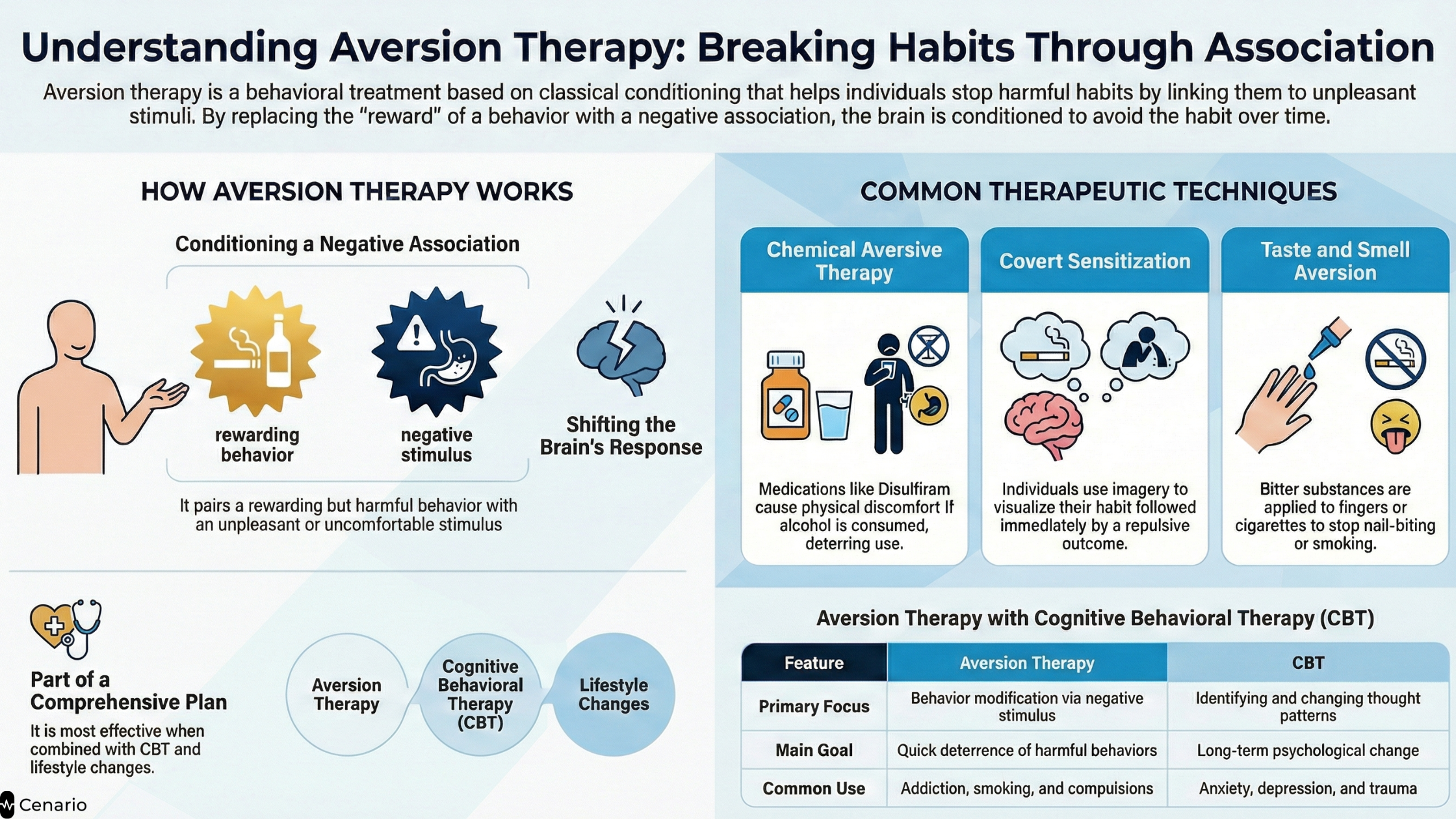
Types of Aversion Therapy Techniques
Aversion therapy can use different techniques depending on the person and the behavior being treated. Here are the most common types:
1. Chemical Aversive Therapy
This method uses medications that cause unpleasant physical reactions when taken with a substance like alcohol. It helps create a negative connection between the substance and how it makes the person feel.
Common examples include:
- Disulfiram (Antabuse): A drug used in the treatment of alcoholism. If a person drinks alcohol while taking Disulfiram, they may experience nausea, vomiting, and headaches. This helps them avoid drinking in the future.
- Emetine: A medication that causes vomiting when taken with alcohol, used in some clinical settings.
This method is especially helpful for people with alcohol dependence or long-term alcohol addiction.
2. Electrical Shock Therapy
In this method, the person receives mild electric shocks while being exposed to or engaging in the unwanted behavior, like smoking, gambling, or drug use.
These shocks are not harmful, but they are uncomfortable. The goal is to create a physical deterrent, helping the person connect the behavior with discomfort.
While controversial, this method has been used in the past to treat certain paraphilic disorders and addiction-related behaviors.
3. Covert Sensitization (Imagery-Based Aversion Therapy)
This technique doesn’t use any physical discomfort. Instead, it relies on the power of the mind.
The person is guided to imagine themselves doing the unwanted behavior, followed by a strong, unpleasant outcome, like getting sick or feeling embarrassed.
For example, someone might picture themselves drinking alcohol and then immediately imagine vomiting or getting caught and feeling ashamed. Over time, this can create a mental aversion to the behavior.
4. Taste and Smell Aversion
This technique uses bitter or unpleasant tastes or smells to create a negative reaction.
It’s commonly used for:
- Smoking cessation
- Nail-biting
- Thumb-sucking
For example, a bitter-tasting chemical like denatonium benzoate can be placed on cigarettes or fingers. This causes a strong negative reaction, making the person less likely to repeat the behavior.
Aversion Therapy for Alcohol Addiction
Aversion therapy has been widely used in the treatment of alcoholism. Alcohol addiction is a complex issue that involves both mental dependence and social influences. One of the most common aversion techniques used for alcohol is chemical-based therapy, especially with a drug called Disulfiram (Antabuse).
How It Works:
- The person takes a daily dose of Disulfiram (usually under medical supervision).
- If they drink alcohol while on the medication, they experience immediate and unpleasant reactions such as:
Nausea
Vomiting
Headaches
Anxiety
Chest pain
Trouble breathing - Over time, they begin to associate alcohol with feeling sick, which helps reduce their desire to drink.
When combined with relapse prevention strategies and mental health counseling, this method can greatly improve abstinence rates and support recovery.
However, aversion therapy is not a complete solution by itself. It works best when it’s part of a larger recovery plan that includes therapy, support groups, lifestyle changes, and ongoing medical support.
Aversion Therapy for Smoking and Other Behaviors
Aversion therapy is also used to help people stop smoking and manage other compulsive behaviors.
For Smoking Cessation, Common Techniques Include:
- Rapid smoking – smoking many cigarettes in a short time to cause nausea
- Applying bitter chemicals to cigarettes or lips to make smoking unpleasant
- Using mild electric shocks triggered during smoking to create discomfort
Other Behaviors Treated with Aversion Therapy:
- Nail-biting and skin-picking
- Gambling addiction
- Compulsive eating
- Certain paraphilic disorders (involving harmful or unwanted sexual behaviors)
In all these cases, aversion therapy aims to remove the immediate pleasure a person gets from the behavior and replace it with discomfort or negative feelings, helping to create long-term behavior change.
Effectiveness of Aversion Therapy
The success of aversion therapy depends on several key factors:
What Makes It More Effective:
- The person is motivated and willing to change
- The behavior is clearly identified and targeted
- The therapy is combined with other treatments (like CBT)
- There is ongoing support and follow-up care
Pros of Aversion Therapy:
- Can produce quick behavior changes
- Works well as a deterrent, especially with chemical aversion
- Can be life-saving in severe addiction cases
Cons of Aversion Therapy:
- May stop working if the negative stimulus isn’t used consistently
- Raises ethical concerns, especially with electric shock methods
- Doesn’t treat underlying emotional or psychological issues
- Some people may replace the old habit with a new one (substitution behavior)
Research shows aversion therapy is most effective when it’s part of a complete treatment plan that includes relapse prevention, mental health support, and long-term care.
Ethical Concerns and Limitations
Aversion therapy has been criticized over the years, especially when it involves physical discomfort like electric shocks.
Main Ethical Concerns:
- Using the therapy without full consent
- Causing emotional or psychological harm
- Risk of trauma, especially in vulnerable groups (such as children or people with disabilities)
- Historical misuse, such as in conversion therapy (which has since been banned or discredited)
Today, aversion therapy is much more controlled and ethical. Most therapists prefer safer options like imagery-based therapy or chemical aversion over physical punishment methods.
When and For Whom Is Aversion Therapy Recommended?
Aversion therapy may be a good option for:
- People with serious substance use disorders
- Those struggling with alcohol addiction or alcohol dependence
- Individuals who have not improved with other types of therapy
- Highly motivated people who are ready to make a change
It’s very important that aversion therapy is done under the care of a licensed therapist or medical provider. It should also be combined with other treatments like cognitive-behavioral therapy (CBT), mental health counseling, and relapse prevention strategies to improve long-term success.
Cognitive Behavioral Therapy (CBT) vs. Aversion Therapy: What’s the Difference?
While aversion therapy aims to condition someone to associate a negative stimulus with a harmful behavior, Cognitive Behavioral Therapy (CBT) focuses on identifying and changing the thought patterns that drive those behaviors.
Key Differences:
| Feature | Aversion Therapy | CBT |
|---|---|---|
| Focus | Behavior modification via negative stimulus | Cognitive restructuring (changing thoughts and beliefs) |
| Techniques | Chemical aversion, mild electric shocks, imagery | Thought challenging, exposure therapy, skills training |
| Best For | Quick deterrence of harmful behaviors | Long-term psychological change and self-awareness |
| Common Uses | Alcohol addiction, smoking cessation, compulsions | Anxiety, depression, trauma, addiction, OCD |
Can They Be Combined?
Yes. In fact, combining aversion therapy with CBT can enhance long-term results. While aversion therapy can help with immediate behavior reduction, CBT addresses underlying mental health patterns, reducing the risk of relapse.
The Role of Relapse Prevention in Long-Term Recovery
Relapse prevention is a crucial component of addiction treatment, especially for those recovering from substance use disorders or compulsive behaviors. Aversion therapy may initiate behavioral change, but without proper follow-up care, the risk of relapse remains high.
Key Elements of Relapse Prevention:
- Identifying triggers: Emotional stress, social pressure, or environments tied to previous use.
- Developing coping strategies: Mindfulness, support systems, and distraction techniques.
- Building lifestyle changes: Exercise, nutrition, sleep, and positive social connections.
- Therapeutic support: Regular sessions with a counselor or participation in group therapy.
- Supplemental aids: Some programs integrate nutrition or supplement plans to support mental health and physical recovery.
Why It Matters:
Even after successful aversive conditioning, behaviors can resurface during periods of emotional distress. Relapse prevention ensures individuals are equipped with tools to maintain abstinence and resist temptations, making the difference between temporary change and long-term recovery.
Conclusion
Aversion therapy remains a powerful but controversial behavioral treatment. Whether through chemical aversion, mild electric shocks, or imagery-based aversion therapy, the goal is the same: to condition the brain to reject and avoid harmful behaviors by associating them with discomfort.
While it’s particularly effective in the treatment of alcoholism, smoking cessation, and other substance use disorders, it should always be seen as part of a comprehensive therapeutic plan, not a standalone solution. Ethical concerns, especially those related to physical punishment, have rightly influenced the field to move toward more humane, effective, and client-centered approaches.
If you’re struggling with addiction, compulsive behavior, or simply exploring behavioral therapy options, aversion therapy might be a useful tool to consider with guidance from a licensed mental health professional.
Looking for additional support? Take our short cenario-based quiz to get personalized supplement recommendations tailored to your unique needs and goals, whether it’s improving focus, reducing cravings, or supporting overall mental wellness.
Need help breaking free from addiction? Talk to a licensed provider about whether aversion therapy is right for you.
Frequently Asked Questions (FAQs)
1. Does aversion therapy work for alcohol addiction in the long term?
Aversion therapy can help with alcohol addiction, especially when medications like Disulfiram are used. These medications cause unpleasant effects (like nausea) if you drink alcohol, which helps you avoid drinking. However, long-term success depends on more than just this therapy. It works best when combined with relapse prevention, mental health counseling, and strong support systems. On its own, it may not deal with the deeper causes of addiction.
2. What are the side effects of chemical-based aversion therapy?
Chemical-based aversion therapy uses drugs that cause a bad reaction when you drink alcohol. For example, Disulfiram can cause symptoms like nausea, vomiting, chest pain, shortness of breath, and anxiety. These reactions are meant to help you associate alcohol with feeling sick. But if not taken correctly or without a doctor’s guidance, the side effects can be serious. That’s why this kind of therapy should always be used under medical supervision.
3. Is electric shock still used in aversion therapy today?
Mild electric shocks were once common in aversion therapy, but they are used much less now. Due to ethical concerns and better therapy methods, most professionals avoid this approach. Today, more people use imagery-based aversion therapy (where you imagine bad outcomes) or chemical-based methods that are safer and more acceptable.
4. Can aversion therapy help with other behaviors besides addiction?
Yes. Aversion therapy isn’t just for alcohol or drug addiction. It can also help with habits like smoking, nail-biting, hair-pulling (trichotillomania), gambling, overeating, and even certain sexual behaviors. How well it works depends on the behavior, the method used, and whether it’s part of a larger mental health treatment plan.
Frequently Asked Questions
1. Does aversion therapy work for alcohol addiction in the long term?
Aversion therapy can help with alcohol addiction, especially when medications like Disulfiram are used. These medications cause unpleasant effects (like nausea) if you drink alcohol, which helps you avoid drinking. However, long-term success depends on more than just this therapy. It works best when combined with relapse prevention, mental health counseling, and strong support systems. On its own, it may not deal with the deeper causes of addiction.
2. What are the side effects of chemical-based aversion therapy?
Chemical-based aversion therapy uses drugs that cause a bad reaction when you drink alcohol. For example, Disulfiram can cause symptoms like nausea, vomiting, chest pain, shortness of breath, and anxiety. These reactions are meant to help you associate alcohol with feeling sick. But if not taken correctly or without a doctor’s guidance, the side effects can be serious. That’s why this kind of therapy should always be used under medical supervision.
3. Is electric shock still used in aversion therapy today?
Mild electric shocks were once common in aversion therapy, but they are used much less now. Due to ethical concerns and better therapy methods, most professionals avoid this approach. Today, more people use imagery-based aversion therapy (where you imagine bad outcomes) or chemical-based methods that are safer and more acceptable.
4. Can aversion therapy help with other behaviors besides addiction?
Yes. Aversion therapy isn’t just for alcohol or drug addiction. It can also help with habits like smoking, nail-biting, hair-pulling (trichotillomania), gambling, overeating, and even certain sexual behaviors. How well it works depends on the behavior, the method used, and whether it’s part of a larger mental health treatment plan.