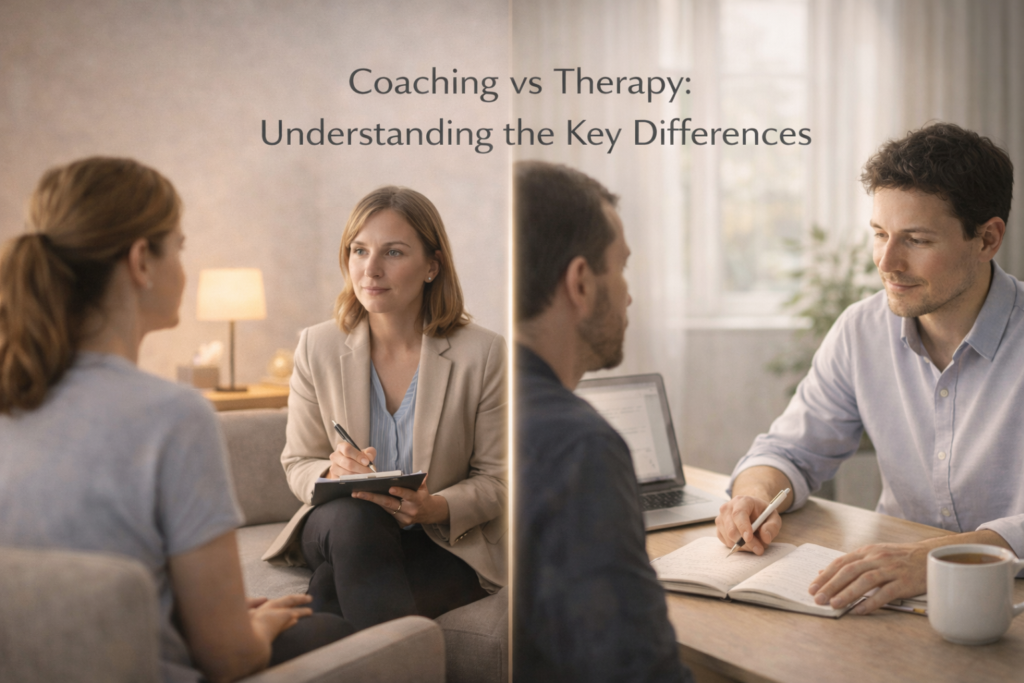

When people feel stuck, overwhelmed, or unsure about their next steps in life, they often consider seeking support. Two common options are coaching and therapy. While both involve working with a trained professional and having meaningful conversations, they serve different purposes and are designed to meet different needs.
Understanding the key differences between coaching and therapy can help you decide which approach is best suited for your situation.
If you’d like to better understand personal growth, emotional wellness, and mental health support options, read or explore more here at our Knowledge Hub for additional mental health–related articles and helpful resources. You can also take the quiz to get personalized supplement recommendations designed to support stress regulation, mood balance, focus, and overall well-being.
What Is Therapy?
Therapy, also known as psychotherapy or counseling, is a mental health service provided by licensed professionals such as psychologists, clinical social workers, or licensed counselors. Therapy focuses on diagnosing and treating mental health conditions, emotional distress, and psychological challenges.
Therapists are trained to help individuals manage issues such as anxiety, depression, trauma, grief, relationship difficulties, and other emotional concerns. Sessions often explore past experiences, patterns of thinking, and emotional responses that may be contributing to current struggles.
Therapy provides a safe and confidential environment to process difficult emotions and develop coping strategies. It may involve specific treatment methods such as Cognitive Behavioral Therapy (CBT), trauma-focused therapy, or other evidence-based approaches.
In many cases, therapy addresses healing and emotional stabilization.
What Is Coaching?
Coaching, on the other hand, is typically future-focused and goal-oriented. Life coaches, career coaches, or wellness coaches work with individuals who want to improve performance, clarify goals, or make meaningful life changes.
Coaching does not diagnose or treat mental health disorders. Instead, it focuses on personal development, accountability, and strategic planning. Clients may seek coaching to improve time management, build confidence, enhance leadership skills, or achieve specific life goals.
A coach helps identify strengths, clarify priorities, and create action plans. The emphasis is on forward movement and measurable progress.
Coaching often appeals to individuals who feel generally stable but want guidance and structure to reach their next level of growth.
Key Differences Between Coaching and Therapy
Although coaching and therapy may seem similar on the surface, they differ significantly in focus, training, structure, and purpose. Understanding these distinctions can help you make a more informed decision about which type of support best fits your needs.
1. Focus and Direction of Work
One of the most important differences lies in the primary focus of each approach.
Therapy often explores the past to better understand the present. A therapist may help you examine how childhood experiences, past relationships, trauma, or long-standing thought patterns influence your current emotions and behaviors. The goal is often emotional healing, symptom reduction, and improved mental health functioning.
Coaching, in contrast, is generally future-oriented. While a coach may briefly discuss past experiences, the main emphasis is on where you are now and where you want to go. Coaching centers on setting goals, creating action plans, and building strategies for personal or professional growth. Instead of asking, “What happened to you?” coaching often asks, “What do you want to achieve next?”
In simple terms, therapy focuses more on healing, while coaching focuses more on growth.
2. Training, Credentials, and Regulation
Another major difference involves professional qualifications and regulation.
Therapists are licensed healthcare professionals. They must complete advanced academic degrees, supervised clinical training, and state or national licensing exams. They are regulated by professional boards and must follow strict ethical and legal guidelines. These regulations are designed to protect clients and ensure high standards of care.
Coaches may complete certification programs through coaching organizations, but requirements vary widely. Coaching is not regulated in the same way as mental health services, and coaches are not licensed to diagnose or treat mental health conditions. While many coaches are highly skilled and well-trained, the standards are not uniform across the profession.
This difference is important when deciding the level of professional oversight and clinical expertise you may need.
3. Scope of Practice
Therapists are trained to assess, diagnose, and treat mental health disorders such as anxiety, depression, trauma-related conditions, and other psychological concerns. They can provide structured treatment plans and use evidence-based therapeutic techniques.
Coaches do not diagnose or treat mental health conditions. Their scope of practice is centered on performance improvement, goal achievement, skill development, and accountability. If emotional distress becomes significant during coaching, a coach may recommend seeking therapy.
This distinction ensures that individuals receive appropriate support based on the severity and type of challenges they are facing.
4. Confidentiality and Legal Protections
Confidentiality standards also differ between therapy and coaching.
Therapists are legally required to follow healthcare privacy laws and strict documentation procedures. Client information is protected under professional regulations, and therapists must follow clear guidelines regarding confidentiality and mandatory reporting.
Coaches also maintain confidentiality as part of professional ethics. However, they are not bound by the same healthcare laws and regulations that govern licensed therapists. The legal protections surrounding therapy are typically more formal and structured.
5. Insurance and Cost Structure
Therapy is often covered, at least partially, by health insurance when addressing diagnosable mental health conditions. Coverage depends on the provider, location, and insurance plan.
Coaching services are usually not covered by health insurance because they are considered personal development rather than healthcare. Clients typically pay out of pocket for coaching services.
This financial difference can influence decision-making for many individuals.
In summary, therapy is designed to treat mental health conditions and support emotional healing, often by exploring past experiences and psychological patterns. Coaching is designed to enhance performance, clarify goals, and create forward movement in specific areas of life.
Both can be valuable. The key is choosing the right form of support based on whether you need clinical mental health treatment or structured personal growth guidance.
When to Choose Therapy
Therapy may be the right choice if you are experiencing persistent sadness, anxiety, trauma-related symptoms, relationship conflict, or difficulty functioning in daily life.
If stress feels overwhelming, if you struggle with emotional regulation, or if you suspect a mental health condition, working with a licensed therapist is important. Therapy provides clinical support and structured treatment when needed.
Seeking therapy is not a sign of weakness. It is a proactive step toward emotional health.
When to Choose Coaching
Coaching may be appropriate if you feel emotionally stable but want to improve specific areas of your life. For example, you might want to advance your career, develop healthier habits, strengthen time management, or increase productivity.
If your primary goal is growth, clarity, or performance improvement rather than emotional healing, coaching may be a good fit.
Coaching works best for individuals who are ready to take action and commit to measurable change.
Can Coaching and Therapy Work Together?
Yes, in many cases they can complement each other. Some individuals work with a therapist to address emotional challenges while also working with a coach to pursue professional or personal goals.
For example, someone managing anxiety in therapy might also seek coaching to improve leadership skills at work. Each professional focuses on a different aspect of development.
Clear communication and boundaries between providers are important to ensure appropriate support.
Common Misconceptions
One common misconception is that therapy is only for people with severe mental illness. In reality, therapy can benefit anyone seeking emotional insight and coping tools.
Another misconception is that coaching is simply giving advice. Effective coaching involves structured questioning, accountability, and strategic planning rather than telling clients what to do.
Both approaches require commitment and openness to change.
Making the Right Choice
Choosing between coaching and therapy depends on your needs, goals, and current emotional state.
Ask yourself whether you are seeking healing or growth. Are you trying to manage emotional distress, or are you looking to enhance performance and clarity? Your answer can guide your decision.
If you are unsure, consulting with a licensed therapist or certified coach can help clarify which path is most appropriate.
Final Thoughts
Coaching and therapy both provide valuable forms of support, but they serve different purposes. Therapy focuses on mental health treatment and emotional healing, while coaching emphasizes goal achievement and personal development.
Neither approach is better than the other. The key is choosing the one that aligns with your current needs.
Understanding these differences empowers you to seek the right type of guidance, so you can move forward with confidence and clarity.
If you’re ready to take a proactive step toward improving your mental and emotional well-being, consider taking the quiz to get personalized supplement recommendations designed to support your unique stress levels, energy needs, and long-term wellness goals.
Frequently Asked Questions
1. Can I switch from coaching to therapy if my needs change?
Yes. Your needs may evolve over time. If you begin coaching and later realize you need support for emotional distress or mental health concerns, transitioning to therapy is appropriate. Many people adjust their support systems as their goals shift.
2. Is coaching regulated the same way as therapy?
No. Therapists are licensed healthcare professionals who must meet strict education, training, and ethical requirements. Coaching certification standards vary, and coaches are not licensed to diagnose or treat mental health conditions.
3. Can I work with both a coach and a therapist at the same time?
In some cases, yes. Individuals may work with a therapist to address emotional healing while also working with a coach to pursue career or personal goals. Clear communication and defined roles are important to ensure balanced support.