

Dialectical Behavior Therapy (DBT) is an evidence-based type of psychotherapy that helps people manage strong emotions, reduce harmful behaviors, and improve their overall quality of life. It was first created for people with borderline personality disorder (BPD), but today it is widely used for many mental health conditions, including anxiety, depression, eating disorders, and post-traumatic stress disorder (PTSD).
If you often feel emotionally overwhelmed, act on impulses, or struggle with constant negative thoughts, DBT offers clear and practical tools that can help you feel more in control, improve your relationships, and become emotionally stronger.
This guide explains what dialectical behavior therapy (DBT) is, how therapy sessions work, what skills you will learn, and why it is trusted in many mental health settings today.
What Is Dialectical Behavior Therapy (DBT)?
DBT was developed in the late 1980s by psychologist Dr. Marsha Linehan as a special type of cognitive behavioral therapy (CBT). While CBT mainly focuses on changing unhelpful thoughts and behaviors, DBT teaches something different: how to accept yourself while also working to change.
DBT is built on two main ideas:
Acceptance: You are doing the best you can right now.
Change: You can learn new skills to make your life healthier.
The word dialectical means bringing two opposite ideas together. In DBT, that means accepting who you are while also working toward growth. This balance makes dialectical behavior therapy DBT especially helpful for people who experience strong emotions, act impulsively, or struggle in relationships.
Who Can Benefit From DBT?
Although DBT was first created for borderline personality disorder (BPD), it is now used for many other challenges, including:
- Eating disorders
- Post-traumatic stress disorder (PTSD)
- Depression and long-term anxiety
- Substance use problems
- Self-harm or suicidal thoughts
- Emotional dysregulation (difficulty controlling emotions)
- Relationship problems
- Other complex mental health conditions
DBT can also help people who do not have a diagnosis but often feel intense emotional reactions, stress easily, or struggle with communication and boundaries.
How DBT Works in a Mental Health Setting
DBT is usually taught in a structured program with different types of support. Most programs include:
1. Individual Therapy
In individual therapy, you meet one-on-one with a therapist. These therapy sessions focus on using DBT skills in your daily life. You work on handling emotional crises, managing negative thoughts, and replacing unhealthy behaviors with better coping strategies.
2. DBT Skills Training (Group Session)
DBT skills training usually takes place in a group session, similar to a class. This is not regular group therapy. Instead, you learn step-by-step skills and practice them with others in a supportive environment.
3. Coaching Between Sessions
Some DBT programs offer short coaching by phone or message. This helps you apply DBT skills in real-life situations when emotions feel overwhelming.
Together, these parts make sure DBT is not just something you talk about—it is something you practice in everyday life.
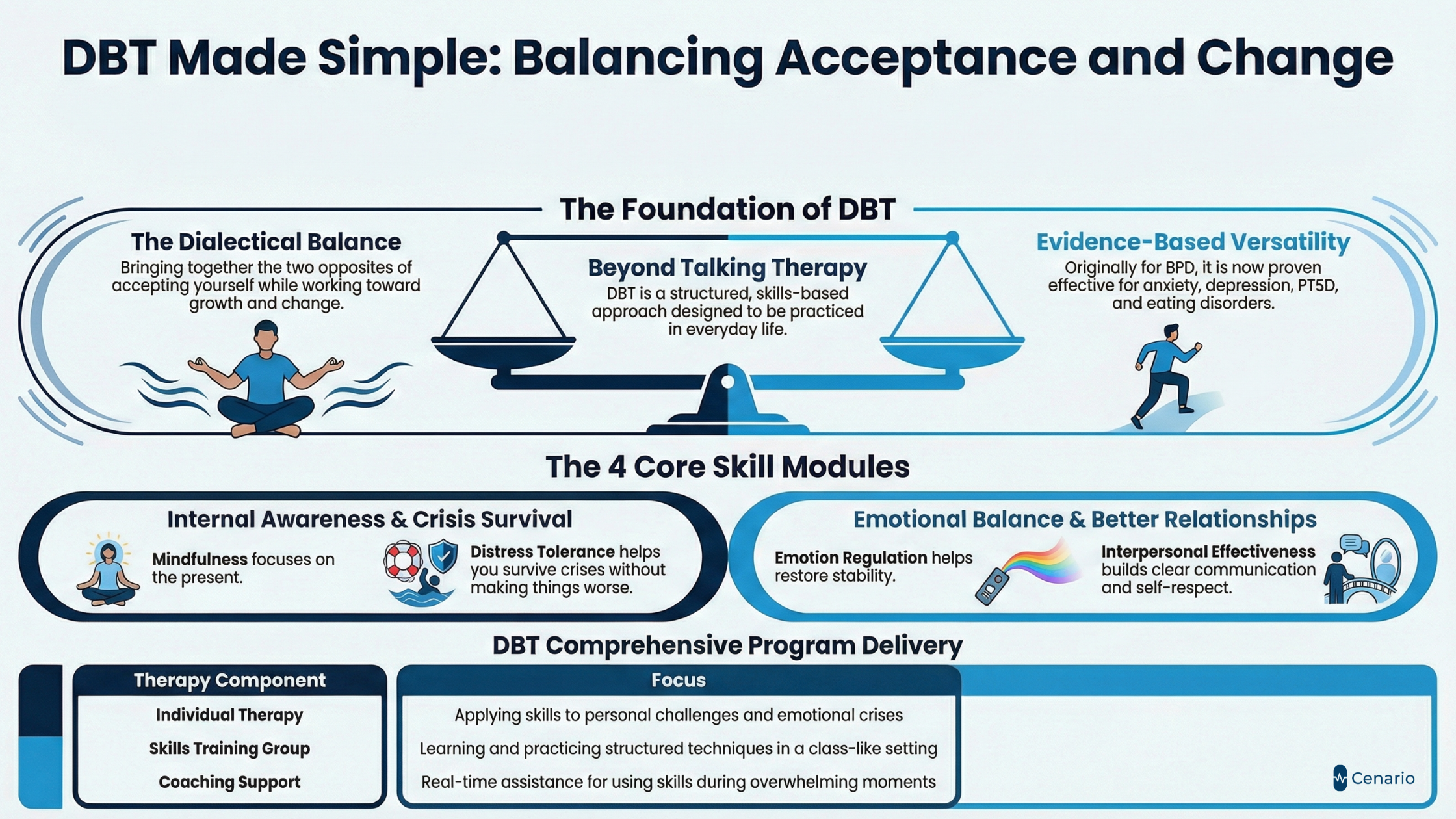
The Four Core DBT Skill Modules
1. Mindfulness: Paying Attention to the Present
Mindfulness is the foundation of DBT. It teaches you to notice your thoughts, emotions, and body sensations without judging them.
Instead of being controlled by negative thoughts or emotional reactions, mindfulness helps you pause, observe what is happening, and choose how to respond.
Why it matters:
Mindfulness improves focus, reduces impulsive behavior, and helps you manage intense emotional experiences with more control.
2. Distress Tolerance: Getting Through Emotional Crises
Distress tolerance skills teach you how to handle emotional pain when a situation cannot be changed right away. The goal is to survive difficult moments without making things worse.
Examples include:
- Grounding exercises using your senses
- Self-soothing activities (music, warm showers, comfort routines)
- Healthy distractions
- Radical acceptance (accepting reality as it is, even if you don’t like it)
Why it matters:
Distress tolerance prevents emotional breakdowns from turning into harmful actions and helps you stay safe during overwhelming situations.
3. Emotion Regulation Skills: Managing Your Feelings
Emotion regulation skills help you understand your emotions, reduce emotional sensitivity, and respond in healthier ways.
You learn how to:
- Identify and name emotions correctly
- Reduce emotional vulnerability through sleep, nutrition, and routine
- Create more positive emotional experiences
- Change emotional reactions that are not helpful
Why it matters:
When emotions feel out of control, these skills help restore balance, improve decision-making, and support long-term emotional stability.
4. Interpersonal Effectiveness: Improving Communication and Relationships
Interpersonal effectiveness teaches you how to communicate clearly, set boundaries, and keep your self-respect while respecting others.
DBT helps you:
- Ask for what you need confidently
- Say “no” without guilt
- Handle conflict calmly
- Build healthier emotional connections
Why it matters:
Strong relationships are essential for mental well-being. These skills reduce conflict and help create more stable, respectful relationships.
How DBT Is Different From CBT
While cognitive behavioral therapy (CBT) focuses on changing distorted thinking patterns, DBT including both acceptance and change offers a more balanced approach.
Key differences:
- DBT strongly focuses on emotion regulation skills, distress tolerance, and interpersonal effectiveness
- It is structured and skills-based
- It validates emotional pain while still encouraging growth
- It is designed for people with intense emotional responses and high emotional sensitivity
This makes DBT especially helpful for people who feel overwhelmed, misunderstood, or stuck in emotional cycles.
What to Expect From DBT Over Time
With regular practice, DBT can help you:
- Gain better emotional control
- Reduce impulsive behaviors
- Experience fewer emotional crises
- Improve relationships
- Handle stress more effectively
- Improve your overall quality of life
DBT does not remove emotional pain completely, but it teaches you how to respond in healthier, more constructive ways.
Can DBT Be Used Outside Therapy?
Yes. While working with a therapist is ideal, many DBT tools can be used on your own. Mindfulness, emotion tracking, communication techniques, and self-soothing strategies can be practiced daily.
Workbooks, worksheets, and reflection exercises allow people to continue building emotional skills even outside formal therapy sessions.
Why DBT Is Considered Evidence-Based
DBT is one of the most researched treatments in psychology. Studies show that it is effective for:
- Borderline personality disorder (BPD)
- Eating disorders
- Post-traumatic stress disorder (PTSD)
- Depression, anxiety, and emotional dysregulation
Because it is evidence-based, DBT is widely used in hospitals, clinics, and outpatient programs across many mental health settings around the world.
Final Thoughts
Dialectical Behavior Therapy (DBT) provides a practical and compassionate way to manage emotions, improve relationships, and face life’s challenges with greater strength. By teaching both acceptance and change, DBT helps people reduce harmful patterns and build a healthier, more stable life.
If you want a clear, skills-based approach that supports emotional understanding and real growth, DBT offers one of the most effective paths toward long-term mental well-being.
Want extra support for your mental wellness journey? Take the Cenario Quiz to receive personalized supplement recommendations based on your unique needs, designed to complement healthy habits, emotional regulation, and daily self-care.
Start your personalized plan today and take the next step toward feeling your best.
Frequently Asked Questions (FAQ)
1. Is Dialectical Behavior Therapy (DBT) only for borderline personality disorder (BPD)?
No. While dialectical behavior therapy (DBT) was originally developed to treat borderline personality disorder (BPD), it is now widely used for many mental health conditions. DBT is effective for eating disorders, post-traumatic stress disorder (PTSD), anxiety, depression, emotional dysregulation, self-harm behaviors, and difficulties with impulse control. Because DBT teaches practical skills for managing intense emotional experiences, it can benefit anyone seeking better emotional balance and healthier coping strategies.
2. How is DBT different from cognitive behavioral therapy (CBT)?
Both cognitive behavioral therapy (CBT) and DBT help people change unhelpful behaviors and negative thoughts, but DBT places a stronger emphasis on emotional acceptance and skills development. DBT including mindfulness, distress tolerance, emotion regulation skills, and interpersonal effectiveness allows individuals to both accept their current emotional experiences and actively work toward positive change. This balance makes DBT especially helpful for people who feel emotionally overwhelmed or reactive.
3. What happens in DBT therapy sessions?
DBT typically includes individual therapy, DBT skills training, and sometimes coaching support.
In individual therapy, clients work one-on-one with a therapist to apply skills to personal challenges, manage emotional crises, and address harmful patterns.
In DBT skills training, usually held in a group session, participants learn and practice structured techniques for emotion regulation, communication, and stress management.
These combined therapy sessions ensure that skills are both understood and used in real-life situations.
4. Can DBT really improve my quality of life?
Yes. Research shows that DBT is an evidence-based approach that significantly improves emotional stability, relationships, and overall quality of life. By strengthening distress tolerance, reducing impulsive reactions, improving interpersonal effectiveness, and building emotional awareness, DBT helps individuals feel more in control of their emotions and better equipped to handle daily challenges in any mental health setting.
5. Can DBT be combined with supplements or other wellness tools?
Yes. While dialectical behavior therapy (DBT) focuses on building emotional and behavioral skills, many people choose to support their mental well-being with additional wellness tools such as nutrition, lifestyle changes, and supplements. When used responsibly, supplements can complement DBT by supporting stress response, mood balance, sleep, and focus. For a more personalized approach, you can take the Cenario Quiz to receive supplement recommendations based on your unique needs, helping you create a well-rounded plan for emotional health and daily self-care.