

Relationships are meant to feel safe. They should be places where we feel seen, valued, understood, and emotionally secure. In healthy relationships, we can be ourselves without fear, and we trust that the people we love will support us during hard times. Still, even strong and loving relationships can face challenges over time.
Misunderstandings, unresolved arguments, stress, trauma, or emotional neglect can slowly weaken emotional connections. When communication breaks down and painful patterns repeat, many couples and individuals begin to feel disconnected, lonely, frustrated, or emotionally stuck. These struggles are often shaped by strong emotional responses, such as fear, anger, or sadness, that go unspoken or misunderstood. Some people feel unheard or unimportant, while others feel overwhelmed, criticized, or emotionally shut down.
Emotion Focused Therapy (EFT), also known as emotionally focused therapy EFT, offers a research-based therapeutic approach to healing these emotional bonds. Instead of focusing only on arguments or behaviors, EFT looks deeper. It helps people understand their emotional responses, heal attachment wounds, and rebuild trust and closeness through emotional safety and connection.
This guide explains what Emotion Focused Therapy EFT is, how it works, and how it helps people build stronger, safer, and more fulfilling relationships.
What Is Emotion Focused Therapy (EFT)?
Emotion Focused Therapy is a structured, short-term form of psychotherapy developed in the 1980s by Sue Johnson. EFT is based on attachment theory, which explains that humans naturally need emotional closeness, safety, and connection with others.
From infancy to adulthood, secure emotional bonds help us manage our emotions, cope with stress, and feel safe in the world. When these bonds are threatened, through rejection, neglect, betrayal, or emotional distance, the brain reacts strongly. These reactions often appear as intense emotional responses, including fear, anger, defensiveness, or emotional withdrawal.
Emotion Focused Therapy EFT is most often used with couples, but it is also effective for individuals and families. Among modern therapeutic approaches, EFT stands out because it focuses on emotions as the key to lasting change. The main idea behind EFT is simple but important:
Our emotions influence how we behave, and unmet emotional or attachment needs are often the real cause of relationship problems.
Instead of blaming one person or trying to “fix” someone, Emotion Focused Therapy helps people understand how emotional responses and unhealthy interaction patterns develop, and how they can work together to change them.
Why Traditional Arguments Don’t Fix Relationship Problems
Many people believe relationship problems come from poor communication or frequent arguments. While communication does matter, Emotion Focused Therapy EFT shows that most conflicts are not really about the topic being argued about.
Couples often argue about:
- Money
- Parenting styles
- Household responsibilities
- Time and attention
- Trust or boundaries
But beneath these arguments are deeper emotional questions, such as:
- Do you care about me?
- Am I important to you?
- Can I rely on you when I’m hurting?
- Will you stay emotionally close to me?
When these emotional needs are not met or acknowledged, emotional responses can become intense. Partners may react by attacking, withdrawing, or shutting down, even when what they truly want is closeness and reassurance.
The Science Behind EFT and Attachment
Attachment theory explains how our earliest emotional bonds shape the way we connect with others throughout life. When basic attachment needs, such as safety, reassurance, closeness, and emotional support, are met, relationships feel secure, supportive, and stable.
When these needs are threatened, the brain reacts as if it is in danger. Stress hormones increase, emotions become harder to control, and defensive emotional responses take over. This is why people may become angry, anxious, or emotionally distant during conflicts, even when they want to feel close.
Relationship problems can feel overwhelming because emotional disconnection affects the brain in powerful ways. Research shows that emotional rejection or loss activates the same brain pathways linked to physical pain. This helps explain why rejection, abandonment, or ongoing conflict can feel deeply painful, not just emotionally, but physically as well.
Emotion Focused Therapy EFT helps calm the nervous system by restoring emotional safety. Among evidence-based therapeutic approaches, EFT is especially effective because it helps people feel secure again. When emotional safety is restored, individuals can communicate more clearly, show understanding, and respond with care instead of fear or defensiveness.
Common Emotional Patterns EFT Addresses
Many couples think they are arguing about things like money, time, or household chores. Emotionally Focused Therapy (EFT) shows that most relationship problems follow repeating emotional patterns, often called cycles.
Some of the most common cycles include:
The Pursuer–Withdrawer Cycle
One partner tries to feel close again by criticizing, demanding, or showing anger. The other partner pulls away emotionally to protect themselves. The more one partner pushes, the more the other withdraws. This creates a painful cycle that keeps repeating.
Emotional Shutdown
In this pattern, both partners stop sharing their feelings. Conversations become short or shallow, affection decreases, and emotional distance grows. Over time, this can lead to loneliness, even if the relationship continues.
Repetitive, Unresolved Conflict
The same arguments happen over and over without being fully resolved. As time goes on, resentment builds, trust weakens, and emotional safety slowly fades.
EFT helps couples notice these patterns without blaming each other. Instead of seeing their partner as the problem, they learn to see the cycle as the real issue, and work together to break it and rebuild emotional connection.
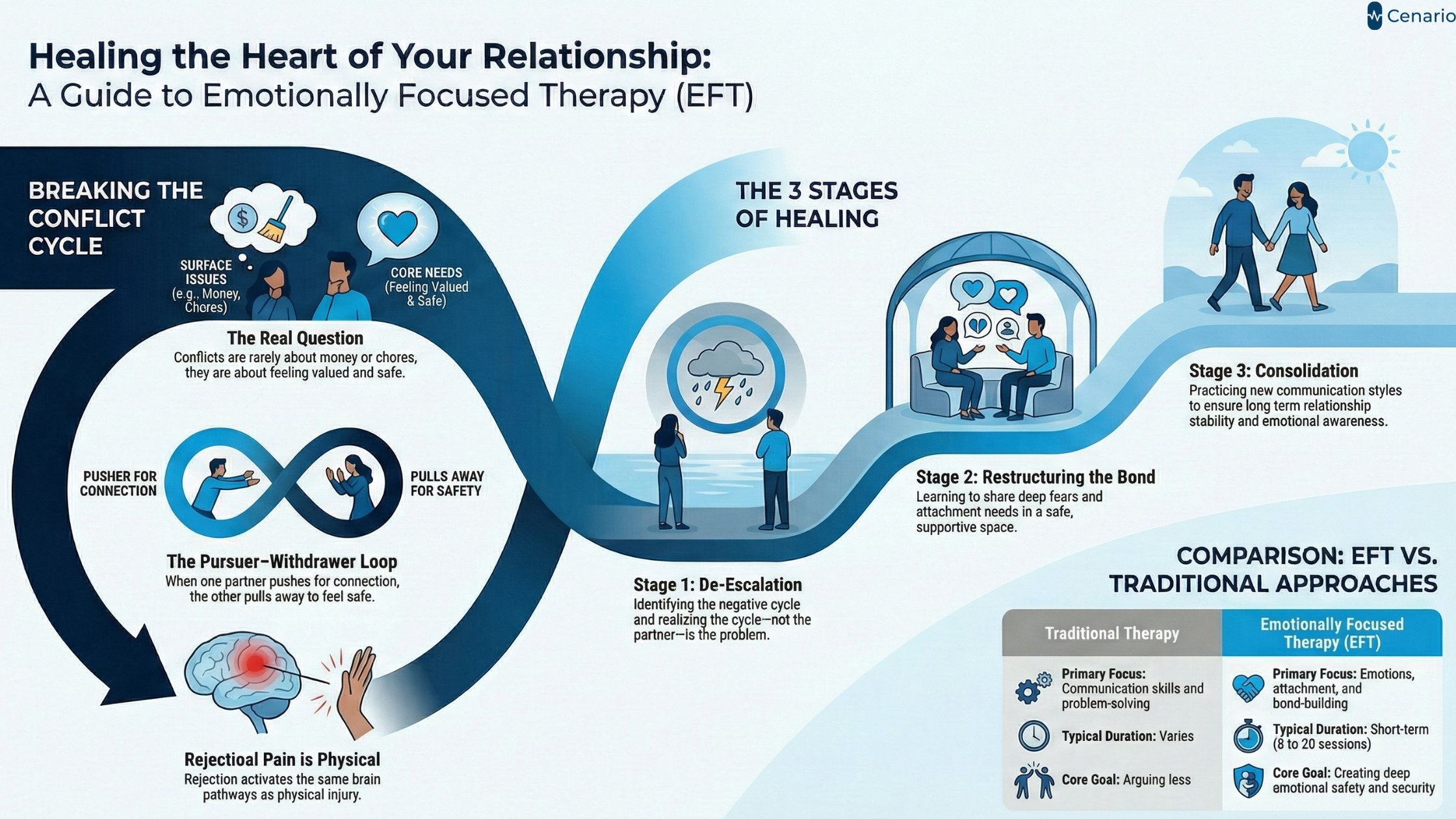
The Three Stages of Emotionally Focused Therapy
Emotionally Focused Therapy follows a clear process that helps people move from emotional distance to stronger and safer connections.
Stage 1: De-Escalation and Understanding the Cycle
In the first stage, the therapist helps identify unhealthy interaction patterns and the emotions behind them. People begin to see how feelings like fear, sadness, insecurity, or longing are often hidden under anger or emotional withdrawal.
This stage focuses on lowering tension and helping partners feel safer during conversations. Instead of blaming each other, they begin to understand that they are not enemies, but partners stuck in a painful cycle.
Stage 2: Restructuring Emotional Responses
In this stage, people learn how to share deeper and more honest emotions in a safe and supportive space. Instead of shutting down or becoming defensive, partners start to talk openly about their emotional needs.
This may include sharing fears of being abandoned, feelings of not being good enough, or a need for reassurance and closeness. When partners respond with understanding, trust slowly begins to return.
These new emotional moments help rebuild the bond and create a stronger sense of connection and safety.
Stage 3: Consolidation and Integration
In the final stage, couples practice their new ways of communicating and responding emotionally. They learn how to use these skills in everyday situations and future conflicts.
By the end of therapy, partners better understand each other, feel more emotionally aware, and have tools to maintain a healthy and secure relationship.
Who Can Benefit From Emotionally Focused Therapy?
Emotionally Focused Therapy can help many people, including:
- Couples dealing with frequent arguments, emotional distance, or poor communication
- Individuals struggling with attachment issues, fear of abandonment, or emotional shutdown
- Partners healing after betrayal or loss of trust
- Families experiencing emotional disconnection or ongoing tension
Research shows that EFT often leads to long-lasting improvements in relationship satisfaction, emotional closeness, and emotional security.
EFT and Emotional Healing Beyond Relationships
Although EFT focuses on relationships, its benefits often go beyond them. As emotional safety improves, many people notice positive changes in other areas of life, such as:
- Lower anxiety and better emotional control
- Improved stress management and a calmer nervous system
- Higher self-esteem and better understanding of emotions
- Better overall mental and emotional well-being
When emotional bonds heal, people often feel more confident, balanced, and emotionally steady in their daily lives.
Supporting Emotional Healing Holistically
Therapy is a strong foundation for emotional healing, but long-term well-being is best supported through a holistic approach. Ongoing emotional stress, anxiety, and relationship problems can put extra pressure on the nervous system and affect brain chemistry.
Supporting mental health through healthy daily habits, emotional regulation techniques, and science-backed supplements may help the body stay more balanced during the healing process. Because emotional and mental health needs are different for everyone, personalized support can be especially helpful.
Final Thoughts: Healing Bonds Is Possible
Disconnection does not mean failure. It often means that something important needs care, understanding, and emotional attention. Emotionally Focused Therapy offers a compassionate, research-backed path toward deeper connection, emotional safety, and lasting healing.
Relationships thrive when people feel understood, emotionally secure, and supported. With the right tools, guidance, and intention, healing emotional bonds is not only possible, it can be life-changing.
Ready to support your emotional healing journey?
Take our quick quiz to receive personalized supplement recommendations tailored to your unique emotional and mental wellness needs.
Take the quiz and start rebuilding balance, from the inside out.
Frequently Asked Questions
1. How is Emotionally Focused Therapy different from traditional couples therapy?
Emotionally Focused Therapy focuses on emotions and attachment, not just communication skills or problem-solving techniques. Traditional couples therapy often teaches partners how to argue less or communicate more clearly. EFT goes deeper by looking at why conflicts happen in the first place. It helps partners understand their emotional needs and how fear, insecurity, or past emotional wounds influence their reactions. When the emotional bond begins to heal, communication naturally becomes easier and more effective.
2. . Is Emotionally Focused Therapy only for couples?
No. While EFT is most commonly used with couples, it is also effective for individuals and families. Individual EFT helps people understand their attachment patterns, emotional triggers, and relationship challenges. Family EFT focuses on improving emotional safety and connection between parents and children or among family members, helping repair emotional distance and rebuild trust.
3. How long does Emotionally Focused Therapy usually take?
Emotionally Focused Therapy is considered a short-term therapy, typically lasting between 8 and 20 sessions. The exact length depends on the concerns being addressed and the goals of the people involved. Some individuals and couples notice improvements early on, while others need more time to work through deeper emotional wounds. EFT focuses on meaningful, lasting change rather than quick or temporary solutions.
4. Is Emotionally Focused Therapy scientifically supported?
Yes. Emotionally Focused Therapy is one of the most well-researched and evidence-based forms of couples therapy. Developed by Sue Johnson, EFT has been studied for decades and consistently shows strong results in improving emotional connection, relationship satisfaction, and long-term relationship stability. Research also shows that many people continue to benefit from EFT long after therapy has ended.