

Heartbreak is a deeply painful and disorienting experience. Whether it’s the end of a romantic relationship, the loss of a friendship, or the collapse of a dream, the emotional toll can leave you feeling lost, overwhelmed, and unsure of how to move forward. The good news is: you can recover, and not just survive, but come out stronger.
In this post, we’ll dive into what heartbreak really is, why it causes so much pain, and how to begin the healing process using therapy-informed strategies, emotional awareness, and proven coping mechanisms.
What Is Heartbreak?
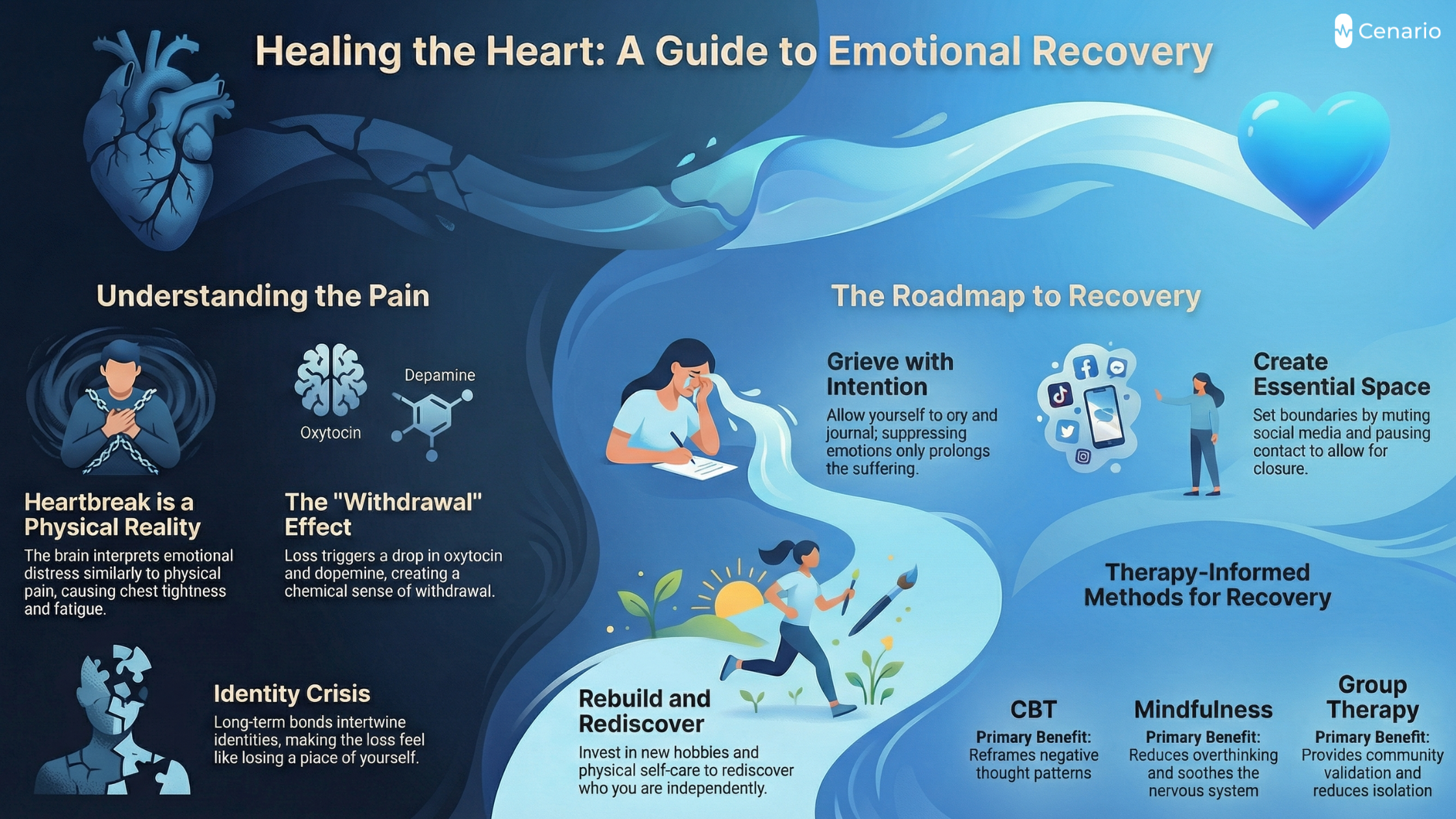
Heartbreak is more than a figure of speech. It’s a real emotional and physiological response to loss. In fact, scientific studies show that the brain interprets emotional distress in ways similar to physical pain. That’s why your chest may feel heavy, your stomach unsettled, and your whole body drained.
Heartbreak typically involves a mix of emotions, sadness, anger, confusion, fear, and grief. It might be triggered by:
- A breakup or divorce
- A betrayal or deep disappointment
- Losing a close friend
- The death of someone important
- Letting go of a long-term vision or dream
In all these cases, the emotional attachment you had, whether to a person, a future, or a sense of identity, is broken. That’s why heartbreak feels so devastating.
Why Does Heartbreak Hurt So Much?
Heartbreak isn’t just about the loss itself, it’s about what that loss represents. Let’s break down why it feels so intense:
1. Emotional Attachment
Humans are wired for connection. When you form a strong emotional bond, your brain releases chemicals like oxytocin and dopamine. After separation, your brain experiences a kind of withdrawal, leading to feelings of craving, distress, and emptiness.
2. Loss of Identity
In many long-term relationships, your identity becomes intertwined with the other person. After the relationship ends, it’s normal to feel like you’ve lost a piece of yourself. The question “Who am I without them?” often lingers for weeks or even months.
3. Feeling Lost
The future you once imagined has vanished. This loss of direction can leave you feeling lost, unsure of your purpose, and emotionally paralyzed.
4. Unprocessed Emotions: Sadness & Anger
Heartbreak triggers a rollercoaster of emotions, sadness, anger, regret, guilt, and even shame. These emotions, if not addressed, can bottle up and prolong your suffering.
5. Physical Pain
Many people report real, physical symptoms of heartbreak, from chest tightness and fatigue to digestive issues and insomnia. This isn’t in your head. Emotional trauma can manifest as physical pain.
How to Recover Emotionally: A Guide to the Healing Process
Healing from heartbreak doesn’t mean pretending everything is fine. It means acknowledging your pain, working through it with intention, and gradually rebuilding your life. Here are evidence-based ways to help you begin the healing process:
1. Allow Yourself to Grieve Fully
Heartbreak is a form of grief. You’re mourning something meaningful, and that deserves respect.
- Let yourself cry. It’s a natural release of stress and pain.
- Write in a journal to express your unfiltered thoughts.
- Don’t suppress emotions like sadness and anger, they are part of the healing process.
Grieving isn’t a sign of weakness, it’s a sign of your emotional depth.
2. Practice Self-Compassion and Emotional Awareness
Instead of blaming yourself or obsessing over what went wrong, try to extend compassion inward.
- Speak to yourself with the same kindness you would offer a close friend.
- Acknowledge that it’s okay to not be okay.
- Understand that recovery is not linear, some days will hurt more than others.
3. Seek Professional Support: Therapy Helps
Talking to a licensed therapist can help you untangle complex emotions and teach effective coping mechanisms.
- Cognitive Behavioral Therapy (CBT) can help you recognize and reframe negative thought patterns.
- Mindfulness-based therapy teaches you to stay present and reduce mental overthinking.
- Group therapy offers a sense of community and validation.
If you find yourself stuck in long-term emotional distress, therapy is not just helpful, it’s necessary.
4. Set Boundaries: Space Is Essential
Remaining in close contact with your ex or the person who hurt you can slow your recovery. While it might feel comforting, it often prevents emotional closure.
- Consider taking a break from communication.
- Unfollow or mute them on social media for a while.
- Focus on healing before considering a future connection.
5. Rebuild Your Identity
When a relationship or dream ends, you may need to rediscover who you are without it.
- Reflect on what brings you joy outside of that connection.
- Explore new hobbies, interests, and communities.
- Set personal goals, both small and ambitious to re-ignite your motivation.
Rebuilding your identity is a powerful step in moving forward.
6. Surround Yourself with Supportive People
Healing is easier when you’re not alone.
- Talk to friends and family who uplift and understand you.
- Avoid toxic positivity, you don’t need to be told to “just move on.”
- Join support groups if you feel isolated or misunderstood.
Being seen, heard, and supported makes a huge difference.
7. Take Care of Your Body
Your emotional health is directly linked to your physical well-being.
- Get regular sleep and rest, your brain processes emotional pain during sleep.
- Eat nourishing foods that stabilize your mood.
- Exercise regularly to release endorphins and reduce stress.
Treat your body like it’s recovering from an illness, because in many ways, it is.
8. Use Mindfulness & Meditation as Daily Coping Mechanisms
Mindfulness is one of the most effective coping mechanisms for heartbreak. It teaches you to sit with your pain without being overwhelmed by it.
- Try guided meditations through apps like Calm or Insight Timer.
- Use deep breathing techniques to soothe your nervous system.
- Practice gratitude daily, even small joys can be healing.
9. Reflect and Learn
As your heart begins to mend, reflect on what this experience has taught you.
- What values do you now realize are non-negotiable?
- How can you avoid repeating harmful patterns in the future?
- What strengths have you discovered in yourself during this time?
Turning pain into wisdom is one of the most powerful parts of the healing process.
10. Trust That Healing Takes Time
Healing is a journey. It may take longer than you expect, and that’s okay.
- Don’t compare your timeline to anyone else’s.
- You may still feel pain from time to time, but that doesn’t mean you’re not healing.
- With each day, your heart learns how to carry the weight a little easier.
One day, you’ll wake up and realize the sadness doesn’t control you anymore.
Final Thoughts: You Can Heal
Heartbreak is painful, but it’s not permanent. While the emotional weight may feel unbearable at times, healing is possible, and it’s already underway the moment you choose to face the pain instead of running from it.
Through emotional awareness, healthy coping mechanisms, professional support, and consistent self-compassion, you can move from feeling lost to feeling grounded, empowered, and whole again.
This experience, however difficult, can become the foundation for greater clarity, emotional resilience, and deeper self-love. You are not broken you are in the middle of becoming something stronger.
Remember: Healing takes time, but it also takes intention. You deserve peace, balance, and support every step of the way and you’re capable of finding it.
Take the Next Step in Your Healing Journey
Want to support your emotional recovery from the inside out?
Take our quick quiz to get a personalized supplement recommendation designed to support mood, stress balance, and emotional well-being.
Frequently Asked Questions
1. How long does it take to heal from heartbreak?
There’s no fixed timeline for healing from heartbreak. For some, it might take a few weeks; for others, especially after a long-term relationship, it may take several months or even longer. Factors like the depth of emotional connection, the nature of the breakup, and the support system you have in place all affect the healing process. Be patient with yourself and remember: healing is not linear.
2. Is it normal to feel physical pain after a breakup?
Yes, it’s completely normal. Emotional trauma can trigger symptoms that feel like physical pain, including chest tightness, fatigue, digestive issues, or loss of appetite. These are your body’s response to intense emotional stress. Practicing self-care, healthy coping mechanisms, and seeking professional support can help manage both the emotional and physical symptoms of heartbreak.
3. What are some effective coping mechanisms to deal with heartbreak?
Effective coping mechanisms include talking to a therapist, journaling your thoughts, meditating, exercising, spending time with loved ones, and setting healthy boundaries with your ex. Avoid numbing the pain with alcohol or distractions; instead, allow yourself to process emotions like sadness and anger in a healthy, supported way. Over time, these strategies will support your emotional recovery.