

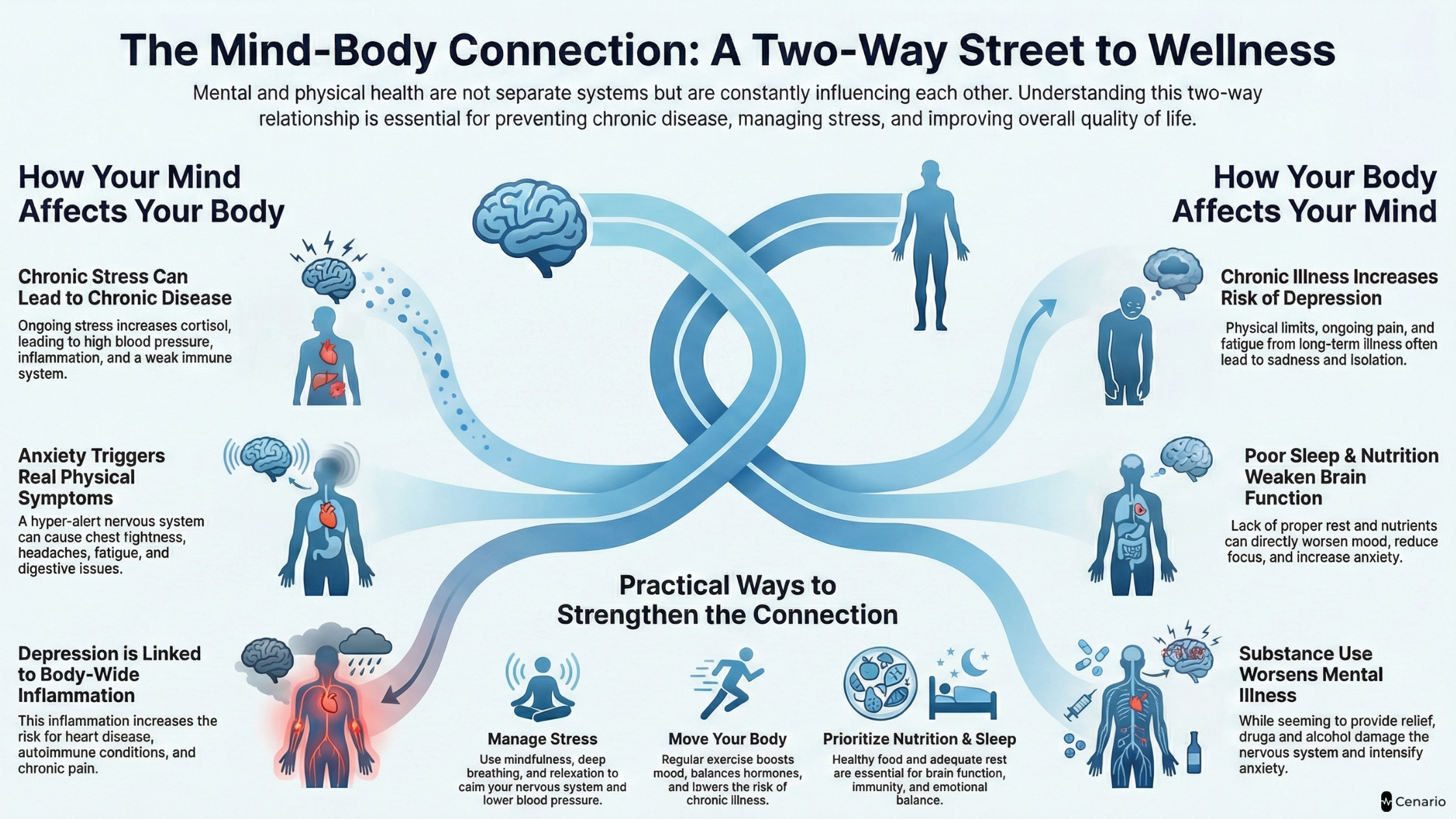
Mental and physical health are deeply intertwined, shaping not only how we feel but how we function in everyday life. Rather than existing as separate systems, the mental and physical aspects of health constantly influence each other. When one is compromised, the other often follows. Understanding this mind–body connection is essential for protecting overall health, preventing chronic diseases, and improving long-term quality of life.
Modern research shows that emotional well-being plays a vital role in physical functioning, and that physical conditions significantly impact mental wellness. This integrated relationship is key to addressing today’s most common health issues, from mental illness to heart disease.
What Is the Mind–Body Connection?
The mind–body connection refers to the way thoughts, emotions, behaviors, and beliefs interact with biological systems such as the nervous system, hormones, and immune response. These systems affect everything from blood pressure and digestion to inflammation and immune defense.
A physical health condition such as chronic pain or hormonal imbalance can worsen mental health problems, while emotional stress, trauma, or anxiety can trigger or intensify physical symptoms. This two-way relationship explains why mental and physical wellness must be addressed together, especially when managing chronic illnesses and long-term health outcomes.
How Mental Health Affects Physical Health
1. Stress and Chronic Disease
Ongoing psychological stress activates the body’s stress response, increasing cortisol and adrenaline levels. Over time, this contributes to:
- Elevated blood pressure
- Increased inflammation
- Weakened immune function
- Digestive problems
- Disrupted sleep patterns
These changes are linked to heart disease, metabolic disorders, and other chronic diseases, ultimately increasing the risk of serious health complications. Left unmanaged, stress can have negative impacts on both physical resilience and emotional stability.
2. Anxiety and Physical Symptoms
People experiencing depression or anxiety often report physical symptoms such as chest tightness, nausea, dizziness, headaches, and fatigue. The nervous system remains in a state of hyper-alert, which places constant strain on the body. Over the long term, this can contribute to immune dysfunction, cardiovascular strain, and digestive disorders.
3. Depression and Inflammation
Mental illness, particularly depression, is strongly associated with increased inflammation in the body. This inflammatory response is linked to:
- Higher risk of heart disease
- Increased pain sensitivity
- Slower recovery from illness
- Reduced energy and physical activity
Research shows that people with untreated depression are more vulnerable to developing additional health issues, including autoimmune conditions and metabolic disorders.
How Physical Health Influences Mental Well-Being
1. Chronic Illness and Emotional Health
Living with long-term illnesses such as diabetes, heart disease, or autoimmune conditions can strongly affect mental health. Physical limits, ongoing tiredness, and lifestyle changes often lead to stress, sadness, and isolation, increasing the risk of anxiety or depression.
Many people experience both mental and physical health conditions at the same time, which is why treating the mind and body together is important for lasting recovery and a better quality of life.
2. Sleep, Nutrition, and Brain Function
Lack of sleep and poor nutrition can directly affect how the brain works. Missing important nutrients and not getting enough rest can worsen mood, increase anxiety, and reduce focus.
Healthy habits, such as balanced meals and proper sleep, support emotional stability, improve stress management, and protect mental health over time.
3. Substance Use and Mental Health
Substance use disorder affects both mental and physical health. Although alcohol or drugs may seem to ease emotional pain at first, they often increase anxiety, depression, and thinking problems while damaging the heart, liver, and nervous system.
Over time, substance use can worsen mental illness, harm the body, and reduce both life expectancy and quality of life.
Inflammation: A Hidden Link Between Mind and Body
Chronic inflammation is a biological bridge connecting mental and physical disorders. Persistent stress, poor sleep, inactivity, and processed diets increase inflammation, which is linked to:
- Depression or anxiety
- Cardiovascular disease
- Autoimmune disorders
- Neurodegenerative conditions
By addressing inflammatory triggers, individuals can reduce both emotional distress and physical deterioration, improving overall health across multiple systems.
Why an Integrated Approach Matters
Treating mental and physical health separately often leads to incomplete healing. A holistic model recognizes that:
- Emotional stress can worsen physical symptoms
- Physical illness can intensify psychological distress
- Long-term recovery requires addressing both simultaneously
Integrated care reduces negative impacts, improves treatment outcomes, and supports long-term wellness. For individuals managing mental health conditions, chronic diseases, or co-occurring disorders such as substance use disorder, this approach is essential for restoring balance and resilience.
Practical Ways to Support Mental and Physical Health
1. Stress Management
Practices like mindfulness, deep breathing, journaling, and relaxation exercises help calm the nervous system. They can lower blood pressure and reduce the harmful effects of long-term stress on the body.
2. Movement and Exercise
Regular physical activity helps improve blood flow, balance hormones, and boost mood. Exercise also lowers the risk of heart disease and other long-term illnesses, making it important for both mental and physical health.
3. Nutrition and Sleep
Eating healthy foods and getting enough sleep are essential for brain function, strong immunity, and emotional balance. These habits help build a strong mental health foundation and protect the body from long-term health problems.
4. Professional Support
Therapy, medical care, and healthy lifestyle changes play an important role in treating both mental health conditions and physical illnesses. Getting help early can prevent complications and lead to better long-term outcomes.
Final Thoughts
Mental and physical health are not separate—they are connected parts of overall well-being. Stress, illness, and emotional challenges affect both the mind and the body. Research shows that when we care for both together, we lower the risk of disease, become more resilient, and improve our quality of life.
Taking care of your mental health helps protect your body. Taking care of your body strengthens your mind. True wellness comes from respecting the strong connection between them.
Looking for extra support? Take our quick Cenario Quiz to get personalized supplement recommendations based on your unique mental and physical health needs. It’s a simple way to start caring for your mind and body together.
Frequently Asked Questions
1. Why are mental and physical health connected?
Because the brain and body constantly communicate with each other. Stress, emotions, and thoughts can affect the body, while illness, sleep, and nutrition can affect the mind.
2. Can improving physical health help mental health?
Yes. Exercise, good sleep, and healthy eating can improve mood, reduce anxiety, and increase focus by supporting brain function and hormone balance.
3. What is one simple way to support both mind and body?
Managing stress through deep breathing, regular movement, and healthy routines is a simple and effective way to protect both mental and physical health.