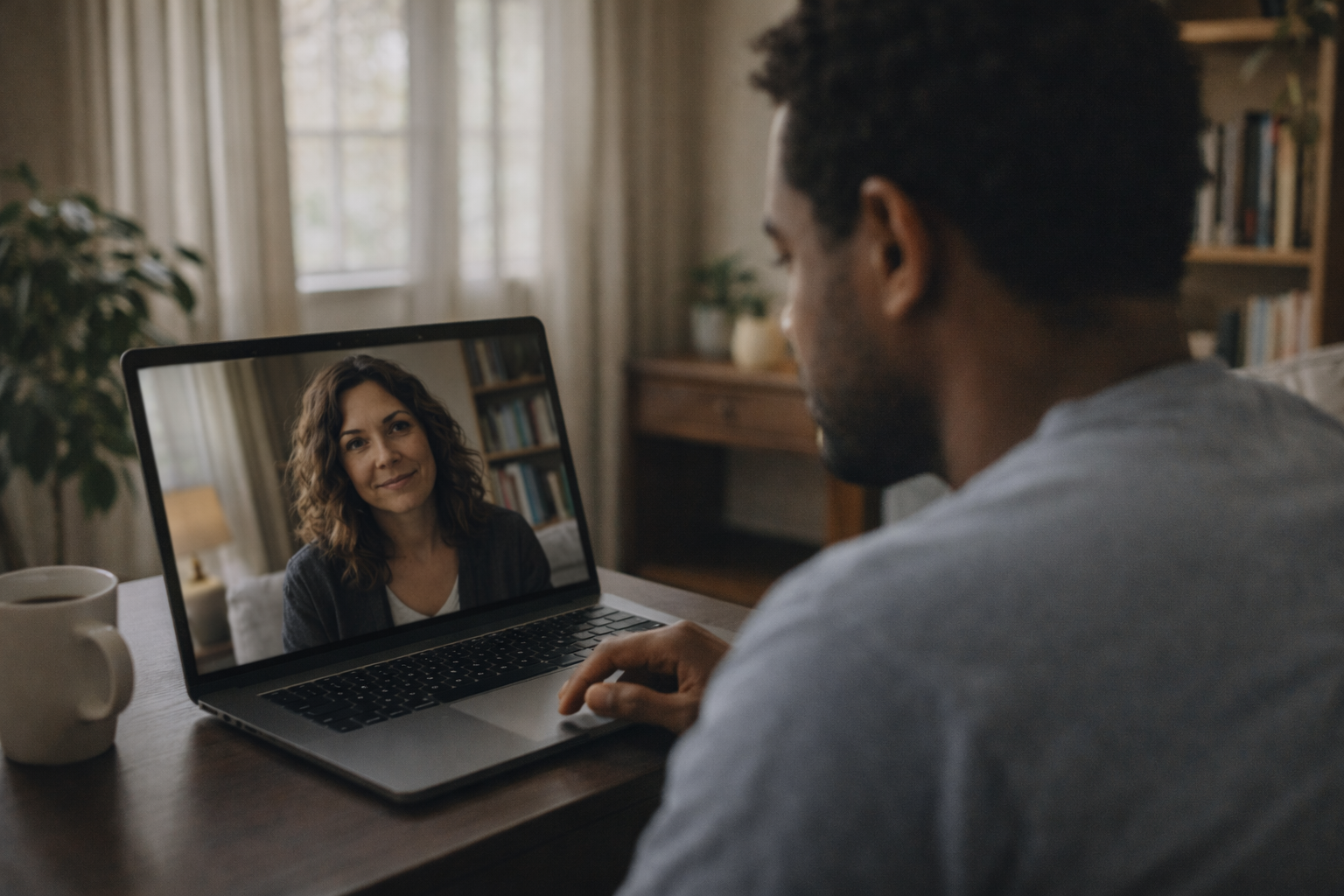

Social anxiety is more than just shyness. It is a persistent fear of being judged, embarrassed, or negatively evaluated in social situations. For people living with social anxiety disorder (SAD), everyday activities such as speaking in class, attending meetings, making phone calls, or even ordering food can feel overwhelming.
Fortunately, therapy is highly effective for treating social anxiety. In recent years, online therapy for social anxiety has become a popular and accessible option. But does it really work? What benefits does it offer?
In this detailed guide, we will explore how online therapy helps with social anxiety, what results you can expect, and why it may be the right choice for you.
Want to continue learning? Read more in our Knowledge Hub for additional therapy and mental health related articles and resources.
What Is Social Anxiety?
Social anxiety disorder is a mental health condition characterized by intense fear in social or performance situations. People with social anxiety often worry about:
- Being embarrassed or humiliated
- Saying the wrong thing
- Being judged or criticized
- Blushing, sweating, or shaking in public
- Being the center of attention
These fears can lead to avoidance behaviors, such as skipping social events, avoiding eye contact, or turning down opportunities at work or school.
Over time, avoidance can limit personal growth, career advancement, and relationships.
Ready to take the next step in your mental wellness journey? Take our quick quiz to receive personalized recommendations tailored to your unique needs and goals. Start today and discover the support that fits you best.
What Is Online Therapy?
Online therapy, also known as teletherapy or virtual counseling, allows individuals to meet with licensed therapists through:
- Video calls
- Phone sessions
- Secure messaging platforms
Sessions are conducted through secure and confidential systems, similar to in-person therapy but delivered remotely.
For people with social anxiety, online therapy may feel less intimidating than visiting a therapist’s office in person.
How Online Therapy Helps Social Anxiety
Online therapy uses evidence-based approaches that are proven to reduce symptoms of social anxiety. The most common and effective method is Cognitive Behavioral Therapy (CBT).
1. Cognitive Behavioral Therapy (CBT)
CBT helps individuals identify and challenge negative thought patterns. For example:
- “Everyone will think I sound stupid.”
- “If I make a mistake, it will be a disaster.”
- “People are always judging me.”
A therapist helps you examine the evidence for these thoughts and replace them with more balanced and realistic thinking.
Over time, this reduces fear and builds confidence.
2. Exposure Therapy
Avoidance strengthens anxiety. Exposure therapy gently and gradually helps individuals face feared situations in a safe and structured way.
For example, a therapist may guide you to:
- Practice speaking in small group settings
- Make short phone calls
- Attend low-pressure social events
Online therapy can actually make exposure exercises easier because the therapist can guide you in real time from your own environment.
3. Social Skills Training
Some individuals benefit from learning communication strategies, such as:
- Maintaining eye contact
- Practicing conversation starters
- Using assertive language
Therapists may role-play scenarios during video sessions to build confidence.
4. Mindfulness and Relaxation Techniques
Online therapy often includes tools like:
- Deep breathing exercises
- Progressive muscle relaxation
- Grounding techniques
These skills help calm the body’s stress response during social interactions.
Results of Online Therapy for Social Anxiety
Research shows that online therapy can be just as effective as in-person therapy for treating social anxiety disorder.
1. Reduced Anxiety Symptoms
Many individuals experience:
- Fewer panic symptoms
- Less avoidance behavior
- Reduced fear of judgment
Over time, social situations feel more manageable.
2. Increased Confidence
As negative thought patterns change and exposure exercises build tolerance, self-confidence improves.
People often report feeling more comfortable:
- Speaking in meetings
- Participating in class
- Attending social gatherings
3. Improved Relationships
Reduced anxiety makes it easier to form and maintain friendships, romantic relationships, and professional connections.
4. Better Work and Academic Performance
When fear no longer controls behavior, individuals are more likely to:
- Speak up with ideas
- Apply for promotions
- Participate in group projects
This can lead to long-term personal and professional growth.
Benefits of Online Therapy for Social Anxiety
Online therapy offers several unique advantages for people with social anxiety.
1. Comfort of Home
Attending therapy from home can reduce initial stress. For someone afraid of public settings, avoiding a waiting room may feel safer.
2. Gradual Exposure
Video sessions themselves can serve as a first step toward social interaction. Over time, this builds comfort with communication.
3. Greater Accessibility
Online therapy eliminates travel time and allows access to specialists who may not be available locally.
4. Flexible Scheduling
Evening and weekend appointments make it easier to stay consistent with treatment.
5. Privacy
Some individuals feel more comfortable knowing they do not have to visit a visible therapy office.
Who Is Online Therapy Best For?
Online therapy may be a strong option if you:
- Avoid social situations due to fear
- Feel nervous speaking in person
- Have a busy schedule
- Live in a rural or remote area
- Prefer the comfort of your home
However, individuals experiencing severe depression, suicidal thoughts, or complex mental health conditions may require in-person or additional support.
How Long Does It Take to See Results?
Progress varies from person to person. Some individuals notice improvement within 6–8 weeks of consistent therapy, especially with structured CBT programs.
Long-term change may take several months. Consistency, practice, and willingness to face fears are key factors in success.
Remember, overcoming social anxiety is not about becoming extroverted. It is about gaining freedom from fear.
Tips for Getting the Most Out of Online Therapy
To maximize results:
- Attend sessions regularly
- Complete homework assignments
- Practice exposure exercises
- Be honest about your fears
- Track your progress
Small steps lead to meaningful change over time.
Final Thoughts
Social anxiety can feel isolating and limiting, but it is highly treatable. Online therapy provides a convenient, effective, and accessible way to receive professional support.
Through structured approaches like Cognitive Behavioral Therapy, exposure exercises, and skill-building techniques, individuals can reduce anxiety, build confidence, and improve relationships.
Seeking help is a sign of strength. With the right guidance and consistent effort, it is possible to break free from social anxiety and create a more fulfilling and connected life.
If social fear has been holding you back, online therapy may be the first step toward lasting change and greater confidence.
Ready to take the next step? Take our quick quiz to receive personalized recommendations designed to support your mental wellness journey and help you move forward with confidence.
Frequently Asked Questions
1. Is online therapy really effective for social anxiety?
Yes, research shows that online therapy, especially Cognitive Behavioral Therapy (CBT) is highly effective for treating social anxiety disorder. Many studies have found that virtual therapy can produce results similar to in-person treatment. The key factors are working with a licensed therapist, attending sessions consistently, and actively practicing the techniques learned in therapy.
2. What if I feel too anxious to talk during online sessions?
It is completely normal to feel nervous at the beginning. Therapists who treat social anxiety understand this and move at a pace that feels manageable. You are not expected to be perfectly comfortable right away. In fact, starting therapy while feeling anxious can be part of the healing process. Over time, as trust builds, speaking during sessions usually becomes easier.
3. How long does online therapy for social anxiety usually last?
The length of therapy depends on the severity of symptoms and personal goals. Many structured CBT programs last around 12 to 16 weeks, but some individuals may benefit from longer support. Improvement often begins within the first few months, especially when clients practice exposure exercises and coping strategies between sessions.