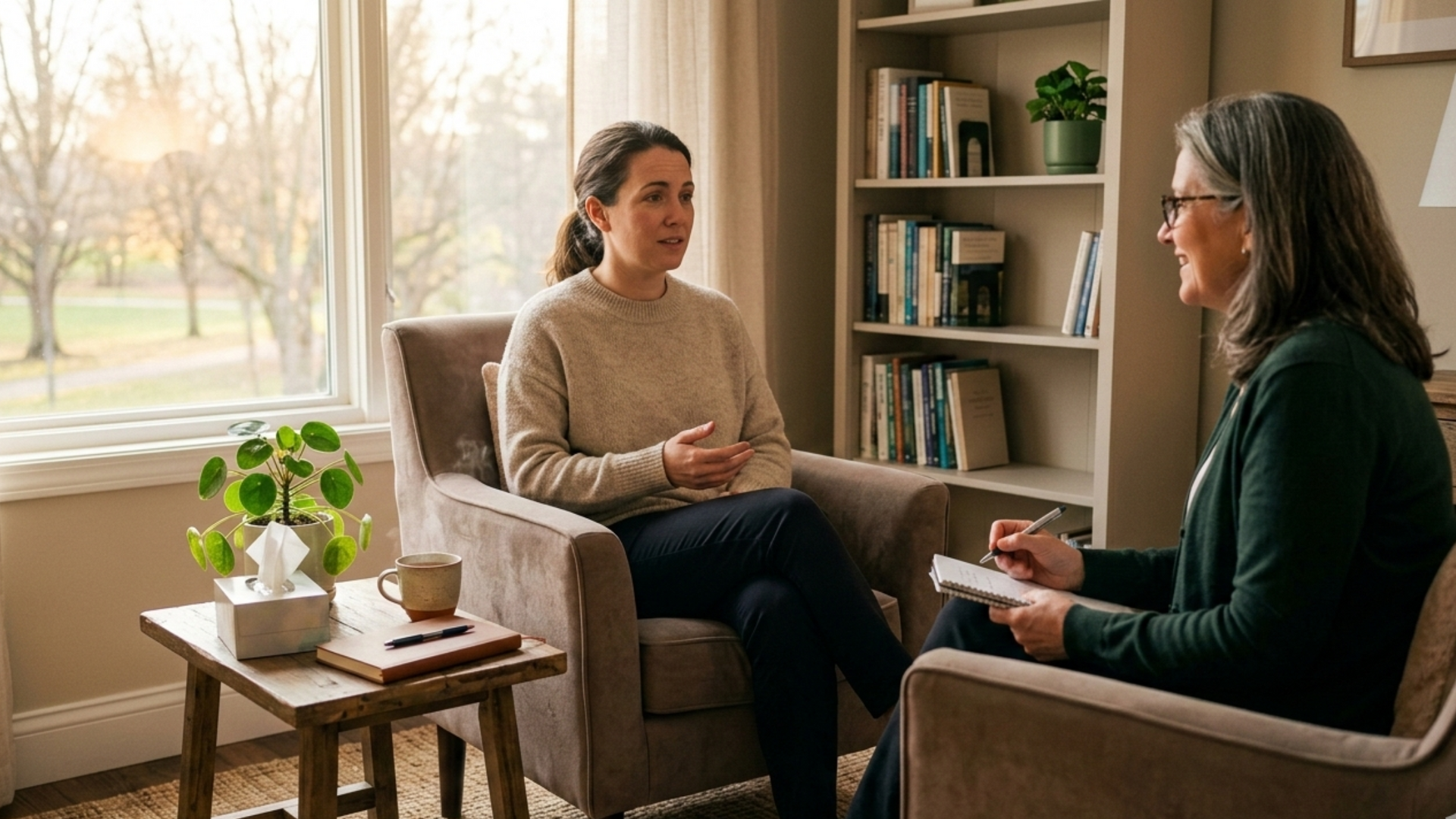

In today’s fast-moving world, more and more people are turning to therapy, not because they’re “broken,” but because they want to be truly heard and understood. What they’re often looking for isn’t advice or labels, but a space where they can safely explore their thoughts and feelings without fear of judgment.
This is exactly what Person-Centered Therapy (PCT), also known as Client-Centered Therapy, offers. Rooted in empathy, unconditional positive regard, and respect, this humanistic approach puts the person not the problem, at the heart of the therapeutic process.
In this guide, we’ll explore what makes Rogers’ Person-Centered Therapy unique, how it works, and why it continues to shape modern mental health practices.
What Is Person-Centered Therapy?
Developed by psychologist Carl Rogers in the mid-1900s, Person-Centered Therapy was a game-changer in the field of psychology. Rogers believed that people already have the potential to heal, grow, and lead fulfilling lives. What they often need is the right environment, one built on acceptance and understanding.
Instead of focusing on fixing or diagnosing, this Rogerian therapy approach sees emotional pain as a natural response to environments that stifle growth, like criticism, neglect, or trauma. Person-centered therapists don’t tell clients what to do or interpret their experiences. Instead, they let clients lead, trusting that healing happens best when it unfolds at the person’s own pace.
The Core Principles of Person-Centered Therapy
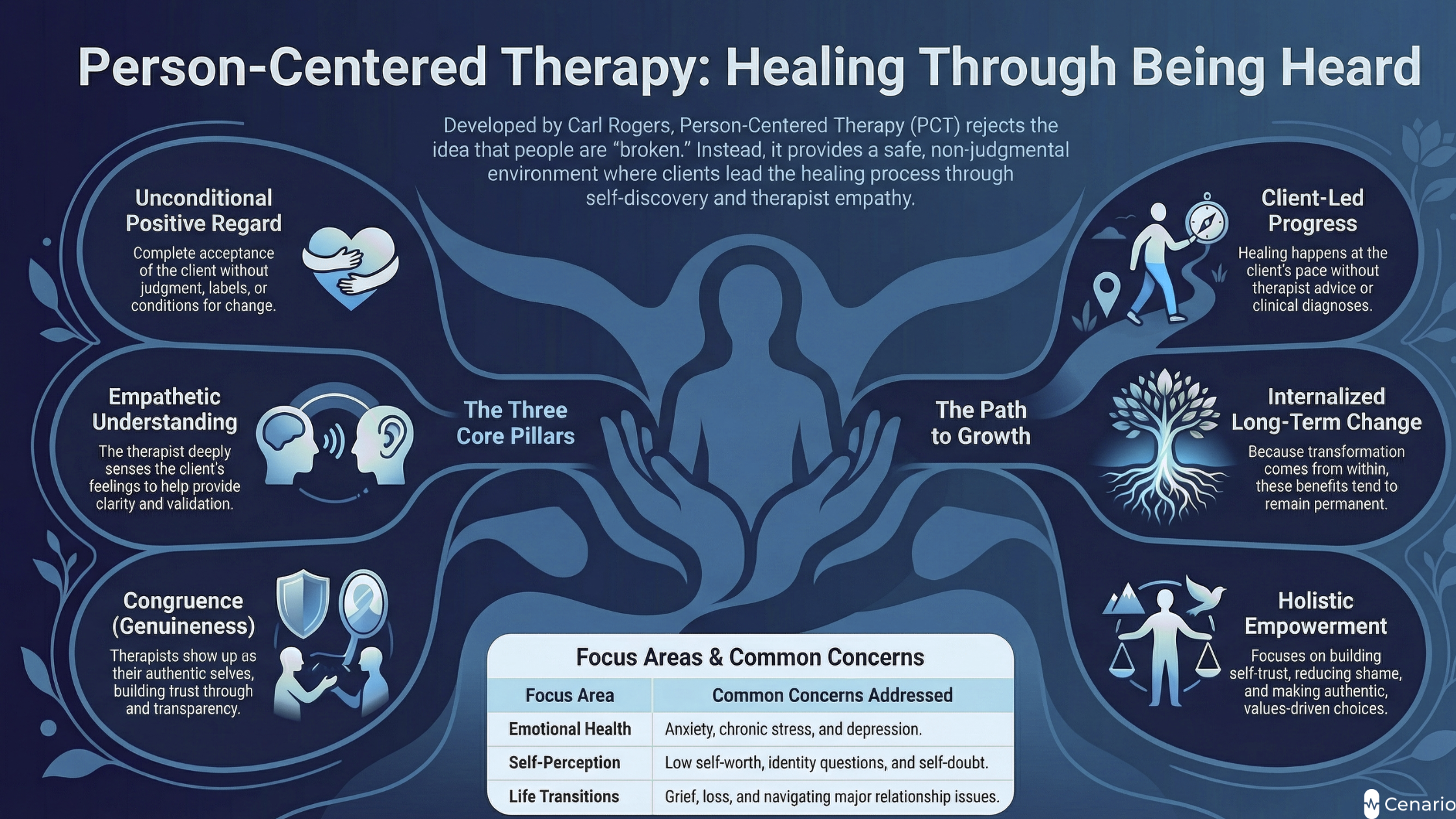
Carl Rogers identified three key elements that are essential for real change. These aren’t techniques, but ways of being that the therapist embodies throughout the therapeutic relationship.
1. Unconditional Positive Regard
This means complete acceptance of the client, without conditions. The therapist doesn’t judge, label, or try to change the person. This makes it safe for clients to share anything, whether it’s fear, shame, guilt, or confusion. Over time, this unconditional acceptance helps them begin accepting themselves.
2. Empathetic Understanding
More than just listening, empathetic understanding means the therapist truly “gets” what the client is feeling, sometimes even before the client fully understands it. By reflecting back those feelings and meanings, the therapist helps the person feel seen and validated, often bringing clarity to complex emotions.
3. Congruence (Genuineness)
A person-centered therapist is real and authentic. Instead of hiding behind a clinical façade, they respond honestly and transparently when appropriate. This honesty builds trust and invites clients to also show up as their true selves.
Together, these qualities create a healing space where people feel safe enough to explore, grow, and reconnect with who they are.
The Therapist’s Role in Person-Centered Therapy
In client-centered therapy, the therapist isn’t an expert giving instructions—they’re a compassionate guide. Their role includes:
- Actively listening without interrupting
- Reflecting the client’s thoughts and feelings
- Encouraging self-trust and inner wisdom
- Supporting exploration, not giving advice
This empowers clients to make decisions that align with their own values, not someone else’s.
Who Can Benefit from Person-Centered Therapy?
Because of its gentle, non-directive nature, PCT can help people dealing with:
- Anxiety or chronic stress
- Depression or emotional numbness
- Low self-worth or self-doubt
- Identity questions or life transitions
- Grief and loss
- Relationship issues
- Trauma, especially from feeling misunderstood or controlled
It’s particularly powerful for those who have felt judged, dismissed, or unheard in the past.
What Does a Typical Session Look Like?
A Person-Centered Therapy session may seem simple on the surface, but it can be profoundly healing.
Usually:
- The client decides what to talk about
- The therapist listens with empathy and reflects back what they hear
- There are no worksheets or diagnoses
- Emotional insight unfolds naturally over time
Clients often say they feel truly seen, sometimes for the first time.
Benefits of Person-Centered Therapy
This therapeutic approach supports long-term growth by:
- Encouraging self-trust and empowerment
- Building self-awareness
- Reducing shame and self-criticism
- Strengthening personal relationships
- Supporting authentic, values-driven choices
Because the changes come from within, they tend to stick.
Limitations to Consider
While powerful, Rogerian therapy isn’t right for everyone. Some possible downsides:
- Less structure for those who want clear direction
- May move slowly for those who struggle with self-reflection
- Might not be enough for severe mental health conditions on its own
That’s why many therapists blend Person-Centered Therapy with other approaches, like cognitive-behavioral or trauma-focused therapies.
Final Thoughts: The Healing Power of Being Heard
At its core, Person-Centered Therapy is about honoring the person—not diagnosing the problem. It works from the belief that people are not broken; they’ve just never been fully heard.
When someone is met with empathy, acceptance, and authentic human connection, healing naturally begins. They start to reclaim their voice, recognize their worth, and move toward a more empowered life.
If you’re searching for a therapeutic process that sees you as capable, worthy, and whole, this humanistic approach could be the path that leads you back to yourself.
Looking for additional support on your journey?
Take the Cenario Wellness Quiz to get a personalized supplement recommendation designed to support your mental and emotional well-being, aligned with your unique needs, lifestyle, and goals.
Frequently Asked Questions
1. Is Person-Centered Therapy effective for trauma recovery?
Yes, Person-Centered Therapy can be highly supportive for individuals healing from trauma, especially relational or emotional trauma. By offering a safe, non-judgmental environment where the client is fully accepted, this approach allows trauma survivors to rebuild trust, regain emotional safety, and process their experiences at their own pace. However, in cases of complex or severe trauma, it may be helpful to combine PCT with trauma-focused therapies.
2. How long does Person-Centered Therapy usually last?
There’s no fixed timeline for Client-Centered Therapy, as it is completely tailored to the individual. Some people may experience meaningful changes within a few sessions, while others benefit from long-term therapy over several months or years. Progress depends on the client’s goals, comfort with self-exploration, and the nature of the issues being addressed.
3. Can Person-Centered Therapy be done online?
Absolutely. Many person-centered therapists offer virtual sessions, and the core principles, empathetic understanding, unconditional positive regard, and genuineness, can be effectively conveyed through online platforms. As long as the therapist creates a warm, safe space, the therapeutic relationship can thrive remotely, making PCT accessible to more people.