
Sleep apnea is more than just loud snoring. It is a serious sleep disorder that affects breathing during sleep, often causing repeated pauses that can last from a few seconds to over a minute. These interruptions can happen dozens or even hundreds of times a night. Over time, untreated sleep apnea can increase the risk of heart disease, high blood pressure, diabetes, stroke, and chronic fatigue.
While many people are familiar with CPAP machines or surgery as treatment options, fewer know that physical therapy can play a powerful role in managing sleep apnea—especially obstructive sleep apnea (OSA). This guide explains how physical therapy works, who can benefit from it, and what recovery looks like in a gentle and practical way.
If you’re looking to better understand your sleep and overall wellness, read or explore more here at our Knowledge Hub for additional mental health and wellness-related articles. You can also take the quiz to get personalized supplement recommendations designed to support your sleep quality, breathing health, and overall recovery journey.
Understanding Sleep Apnea
There are three main types of sleep apnea:
- Obstructive Sleep Apnea (OSA) – The most common type. It occurs when the muscles in the throat relax too much during sleep, blocking the airway.
- Central Sleep Apnea (CSA) – Happens when the brain does not send proper signals to control breathing.
- Complex Sleep Apnea – A combination of obstructive and central types.
Physical therapy is most helpful for obstructive sleep apnea, because it focuses on strengthening muscles, improving breathing patterns, and enhancing posture, all of which influence airway function.
How Physical Therapy Helps with Sleep Apnea
Obstructive sleep apnea often involves weakness or poor coordination of the muscles in the throat, tongue, and upper airway. When these muscles collapse during sleep, airflow is blocked.
Physical therapy addresses this problem in several ways:
1. Strengthening Airway Muscles (Orofacial Myofunctional Therapy)
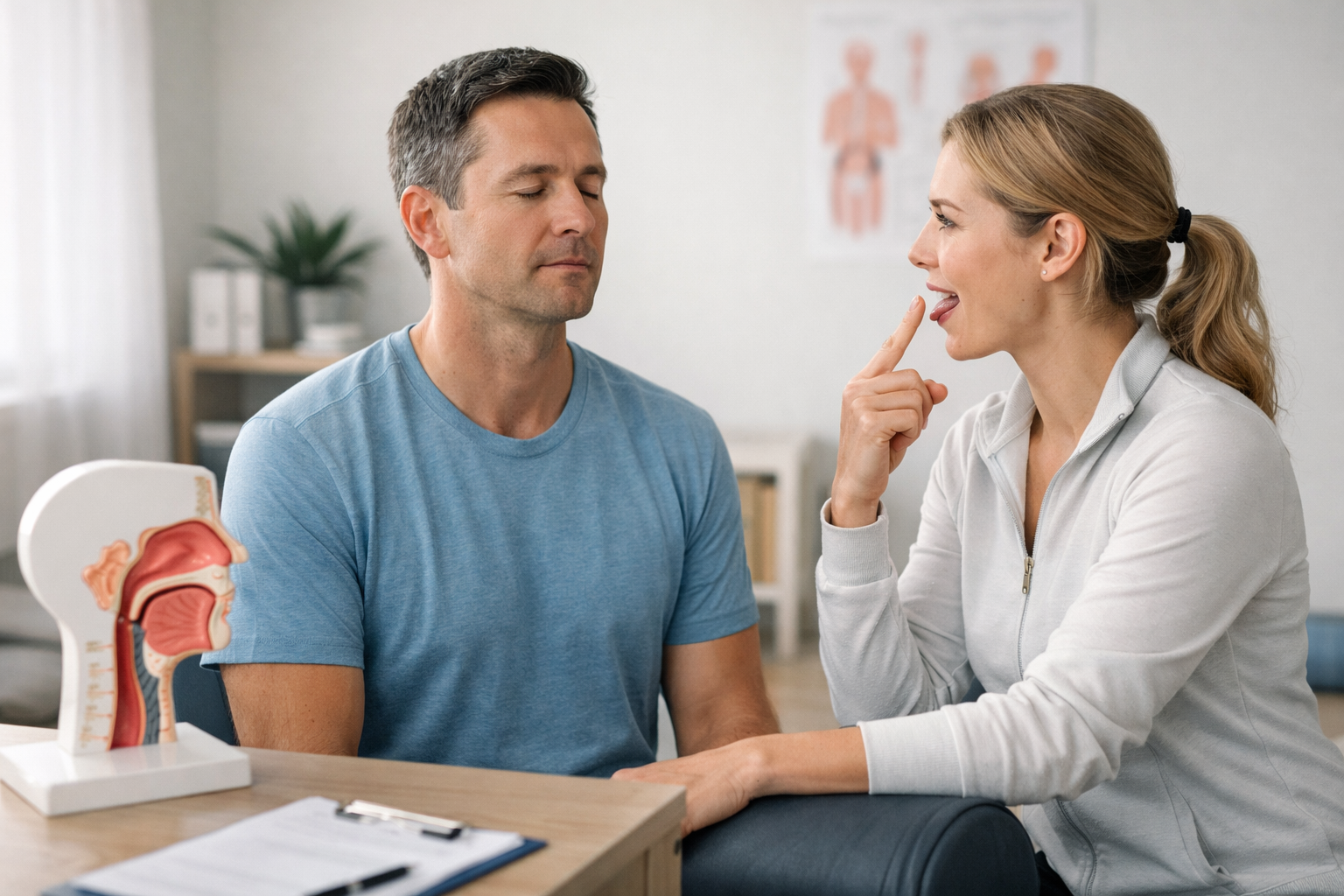
Orofacial myofunctional therapy is a specialized type of therapy that focuses on strengthening the tongue, lips, jaw, and throat muscles. These muscles help keep the airway open at night.
Research shows that consistent exercises can:
- Reduce the severity of mild to moderate sleep apnea
- Decrease snoring
- Improve oxygen levels during sleep
- Lower daytime sleepiness
These exercises are simple but require consistency. For example, patients may practice pressing the tongue against the roof of the mouth, controlled breathing exercises, or specific jaw movements. Over time, the muscles become stronger and less likely to collapse during sleep.
2. Breathing Retraining
Many people with sleep apnea breathe through their mouths instead of their noses, especially during sleep. Mouth breathing can narrow the airway and worsen obstruction.
Physical therapists teach:
- Proper nasal breathing techniques
- Diaphragmatic (belly) breathing
- Controlled breathing patterns
- Breath awareness training
Learning to breathe through the nose improves airflow, increases oxygen exchange, and reduces airway resistance. Diaphragmatic breathing also lowers stress and improves overall lung efficiency.
3. Posture Correction
Posture plays a larger role in sleep apnea than many people realize. Forward head posture, rounded shoulders, and tight neck muscles can reduce airway space.
Physical therapy often includes:
- Neck alignment exercises
- Shoulder and upper back strengthening
- Stretching tight chest and neck muscles
- Ergonomic corrections for daily life
Improved posture helps keep the airway more open, especially during sleep. It can also reduce neck pain and tension headaches, which are common in people with sleep disorders.
4. Weight Management Support Through Movement
Excess weight, particularly around the neck, increases pressure on the airway. While physical therapy is not a weight-loss program by itself, therapists often create safe, gradual exercise plans that help patients become more active.
Regular movement improves:
- Cardiovascular health
- Muscle tone
- Energy levels
- Sleep quality
When combined with dietary changes, physical activity can significantly reduce sleep apnea severity in overweight individuals.
What a Physical Therapy Program Looks Like
A physical therapy plan for sleep apnea is personalized. It usually begins with an evaluation that includes:
- Assessment of posture
- Breathing pattern analysis
- Neck and jaw muscle strength testing
- Sleep history review
- Lifestyle habits
Based on this evaluation, the therapist designs a program that may include daily exercises at home and weekly in-clinic sessions.
Typical Program Timeline
- First 2–4 weeks: Learning proper technique and building consistency
- 4–8 weeks: Muscle strengthening and noticeable reduction in snoring or fatigue
- 8–12 weeks: Measurable improvement in breathing and sleep quality
Consistency is critical. Like any muscle-strengthening program, benefits come from regular practice.
Is Physical Therapy Enough on Its Own?
For mild sleep apnea, physical therapy alone may significantly reduce symptoms. For moderate to severe cases, it often works best alongside other treatments such as:
- CPAP therapy
- Oral appliances
- Weight management programs
- Medical monitoring
Physical therapy can sometimes reduce dependence on CPAP pressure levels, making the machine more comfortable to use.
It is important to consult a sleep specialist before changing any existing treatment.
Benefits Beyond Sleep
One of the most encouraging aspects of physical therapy is that its benefits extend beyond sleep apnea. Many patients report:
- Improved energy during the day
- Better concentration
- Fewer headaches
- Reduced neck and jaw pain
- Lower stress levels
- Improved overall sleep quality
Because therapy focuses on strengthening and coordination, it enhances overall body function—not just breathing.
Who Is a Good Candidate?
Physical therapy for sleep apnea may be ideal for:
- People with mild to moderate obstructive sleep apnea
- Individuals who cannot tolerate CPAP
- Patients looking for non-surgical options
- Children with mild airway dysfunction
- Adults with poor posture and chronic mouth breathing
However, individuals with severe apnea or serious medical conditions should work closely with a sleep physician to ensure safety.
What to Expect Emotionally and Physically
Recovery through physical therapy is gentle and gradual. It is not a quick fix, but it is a natural and non-invasive approach.
In the beginning, exercises may feel unusual or slightly tiring. The tongue and throat muscles are rarely trained intentionally, so mild soreness is normal. With time, movements become easier and more automatic.
Emotionally, many people feel empowered knowing they are actively strengthening their own bodies rather than relying solely on machines or procedures.
Tips for Success
While the program is simple, success depends on daily commitment. Helpful habits include:
- Practicing exercises at the same time every day
- Tracking snoring or sleep changes
- Maintaining a healthy sleep schedule
- Avoiding alcohol before bed
- Sleeping on your side instead of your back
Even small improvements can significantly impact long-term health.
The Future of Sleep Apnea Treatment
As research continues, physical therapy and myofunctional therapy are gaining recognition as effective complementary treatments. They offer a low-risk, natural option that empowers patients to strengthen their own airway control.
While CPAP remains the gold standard for moderate to severe sleep apnea, physical therapy adds a valuable layer of support, especially for those seeking long-term lifestyle-based solutions.
Final Thoughts
Sleep apnea can affect every part of your life from heart health to mood and memory. But treatment does not have to feel overwhelming or invasive. Physical therapy offers a gentle, structured path toward better breathing and more restful sleep.
By strengthening airway muscles, improving posture, retraining breathing patterns, and supporting overall wellness, physical therapy helps restore balance in a natural and sustainable way.
If you or someone you love struggles with sleep apnea, consider speaking with a sleep specialist or physical therapist trained in airway and breathing therapy. Small daily exercises may lead to powerful, life-changing results one night of better sleep at a time. And if you’re ready to take the next step in supporting your sleep and overall health, take the quiz to get personalized supplement recommendations designed specifically for your unique needs and recovery goals.
Frequently Asked Questions
1. Can physical therapy completely cure sleep apnea?
Physical therapy can significantly improve symptoms of mild to moderate obstructive sleep apnea, especially when practiced consistently. However, it may not completely “cure” severe cases. Many people use it alongside treatments like CPAP or oral appliances to enhance results and reduce symptom severity.
2. How long does it take to see results from physical therapy for sleep apnea?
Most people begin noticing improvements in snoring, breathing, and daytime energy within 4 to 8 weeks of consistent practice. Stronger and more lasting results typically appear after 8 to 12 weeks. Like any muscle-strengthening program, progress depends on regular daily exercises.
3. Is physical therapy for sleep apnea safe for everyone?
In general, physical therapy is safe and non-invasive. It is especially helpful for individuals with mild to moderate obstructive sleep apnea. However, people with severe sleep apnea or other medical conditions should consult a sleep specialist before starting a therapy program to ensure it is appropriate for their situation.