
Self-doubt is a quiet yet powerful inner voice that can shake your confidence, limit your potential, and leave you feeling stuck. Whether it’s questioning your abilities at work, doubting your decisions, or feeling unworthy in relationships, self-doubt affects countless individuals every day.
But here’s the truth: you can overcome self-doubt. With the right therapeutic tools and professional support, it’s possible to retrain your mind and build lasting self-confidence.
In this post, we’ll explore:
- The root causes of self-doubt
- How therapy helps individuals overcome it
- Effective approaches like Cognitive Behavioral Therapy (CBT)
- When to seek a mental health professional
- Practical strategies to break free from negative thought patterns
- FAQs and resources, including guidance from the American Psychological Association
What Is Self-Doubt and Why Does It Happen?
Self-doubt is a lack of confidence in oneself and one’s abilities. It can manifest in various ways, such as:
- Constantly second-guessing yourself
- Fearing failure or rejection
- Feeling like an imposter, even when you’re successful
- Avoiding opportunities due to low self-esteem
Common Root Causes of Self-Doubt
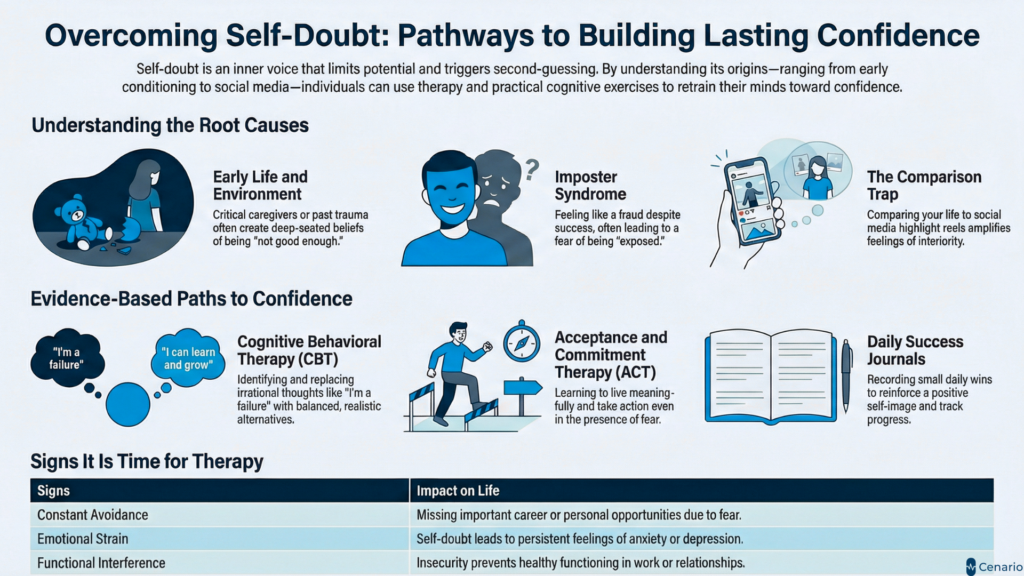
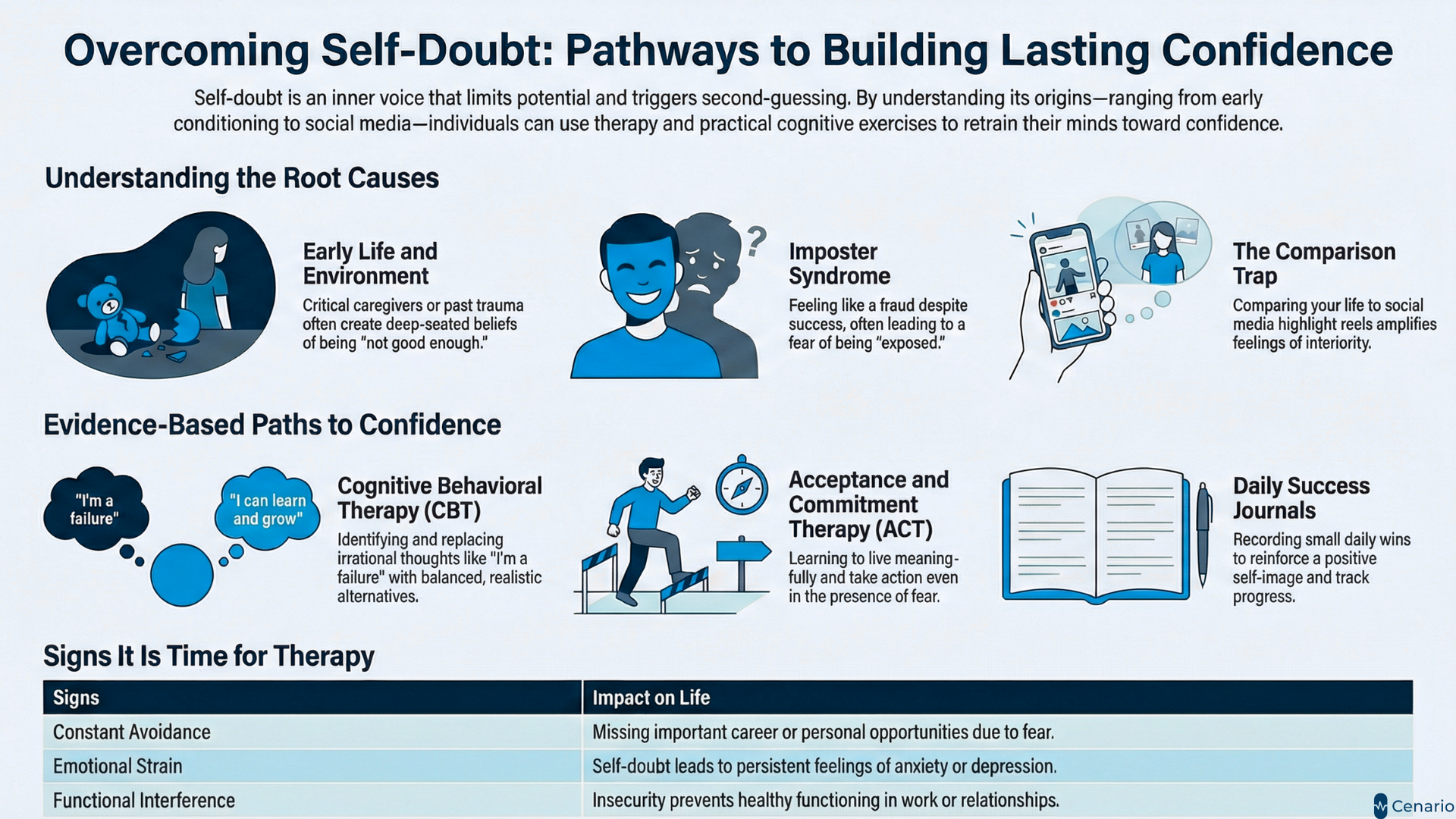
- Early Life Conditioning – Experiences with overly critical or emotionally distant caregivers can create deep-seated beliefs of inadequacy.
- Perfectionism – The need to be flawless creates fear of failure, which reinforces self-doubt.
- Bullying or Trauma – Past negative experiences often reinforce feelings of being “not good enough.”
- Social Media and Comparison – Comparing your life to others’ highlight reels online can amplify feelings of inferiority.
- Imposter Syndrome – A condition where people doubt their achievements and fear being exposed as a fraud, commonly linked to chronic self-doubt.
How Therapy Helps You Overcome Self-Doubt
Therapy provides a safe, non-judgmental space where you can explore the origins of self-doubt and learn to reframe your thinking.
Working with a mental health professional allows you to identify and challenge the inner critic, understand the impact of your past, and build the psychological tools needed to trust yourself.
Top Therapy Approaches to Overcome Self-Doubt
1. Cognitive Behavioral Therapy (CBT)
Cognitive Behavioral Therapy (CBT) is one of the most evidence-based approaches for managing and overcoming self-doubt. It works by helping individuals identify and reframe negative thought patterns that contribute to low self-esteem and insecurity.
How CBT Works:
- Cognitive restructuring: Replacing irrational thoughts like “I’m a failure” with balanced alternatives such as “I didn’t succeed this time, but I learned something.”
- Behavioral experiments: Testing assumptions and proving to yourself that you are capable.
- Thought records: Tracking automatic negative thoughts and analyzing their validity.
2. Self-Compassion Therapy
Often, the inner dialogue of someone struggling with self-doubt is filled with self-criticism. Self-compassion therapy, rooted in mindfulness and emotional acceptance, helps replace that harsh inner voice with kindness and understanding.
3. Acceptance and Commitment Therapy (ACT)
ACT focuses on accepting difficult emotions and moving forward with purpose-driven behavior. Instead of trying to eliminate self-doubt entirely, ACT teaches you how to live meaningfully even in the presence of fear and uncertainty.
4. Schema Therapy
This method dives into deep-rooted beliefs formed in early life. A mental health professional helps uncover and heal dysfunctional “schemas” (like feeling defective or incompetent) that fuel self-doubt.
5. Narrative Therapy
Narrative therapy helps you separate yourself from the problem. You learn to view self-doubt as something you experience, not who you are, allowing you to create a new, empowered personal story.
Practical Therapy-Based Strategies to Build Confidence
Here are some actionable steps that therapists often recommend to help clients overcome self-doubt:
- Keep a Success Journal – Write down even the smallest wins daily to reinforce a positive self-image.
- Practice Mindfulness – Become aware of negative thought patterns without letting them control your behavior.
- Use Positive Affirmations – Repeat believable, supportive phrases like “I am capable of handling challenges.”
- Visualize Success – Mental rehearsal strengthens confidence and prepares you for real-world situations.
- Challenge Automatic Thoughts – Use CBT techniques to question the truth of your self-critical thoughts.
- Surround Yourself With Positive Support – Feedback from supportive friends or mentors can reinforce your inner sense of worth.
When Should You See a Mental Health Professional?
If self-doubt:
- Interferes with your work or relationships
- Leads to anxiety or depression
- Causes you to avoid important life opportunities
- Feels overwhelming or constant
…then it’s time to reach out. A licensed mental health professional can guide you through personalized therapeutic strategies. You don’t need to handle this alone.
What Does the American Psychological Association Say About Self-Doubt?
The American Psychological Association (APA) acknowledges that self-doubt can stem from cognitive distortions and unresolved emotional issues. They recommend evidence-based treatments like Cognitive Behavioral Therapy (CBT) and stress the importance of emotional regulation, cognitive reframing, and professional support in overcoming low self-esteem.
Final Thoughts: You Can Overcome Self-Doubt
Self-doubt can be deeply rooted, but it’s not your destiny. With therapeutic support, tools like CBT, and a commitment to self-growth, you can overcome self-doubt and step into a more confident version of yourself.
Whether you’re just beginning to explore your inner world or ready to dive deep into therapy, the journey toward self-belief is not only possible, it’s worth it.
Ready to take the next step in building your confidence?
Take our Cenario Quiz to get a personalized supplement recommendation designed to support your mood, mental clarity, and emotional resilience, based on your unique experiences and lifestyle.
Take the quiz today to receive a personalized supplement recommendation tailored to support your mental clarity, emotional balance, and overall confidence.
Frequently Asked Questions (FAQs)
1. Can self-doubt be completely eliminated?
Self-doubt may not disappear entirely, but therapy helps you manage it effectively. The goal is not perfection, but growth and self-trust.
2. Is Cognitive Behavioral Therapy (CBT) effective for low self-esteem?
Yes, CBT is one of the most effective, research-backed methods to combat negative thought patterns and improve self-confidence.
3. How do I find the right mental health professional?
Start by exploring online therapist directories, asking for referrals from trusted friends, or using the American Psychological Association’s Psychologist Locator tool, which allows you to search for licensed psychologists in your area based on specialty, location, and services offered.