
Traditional therapy often takes place in a quiet office, with a client sitting across from a therapist in a structured setting. While this format works well for many people, it is not the only effective option. In recent years, walk and talk therapy has become an increasingly popular approach that combines movement, fresh air, and conversation to support emotional healing.
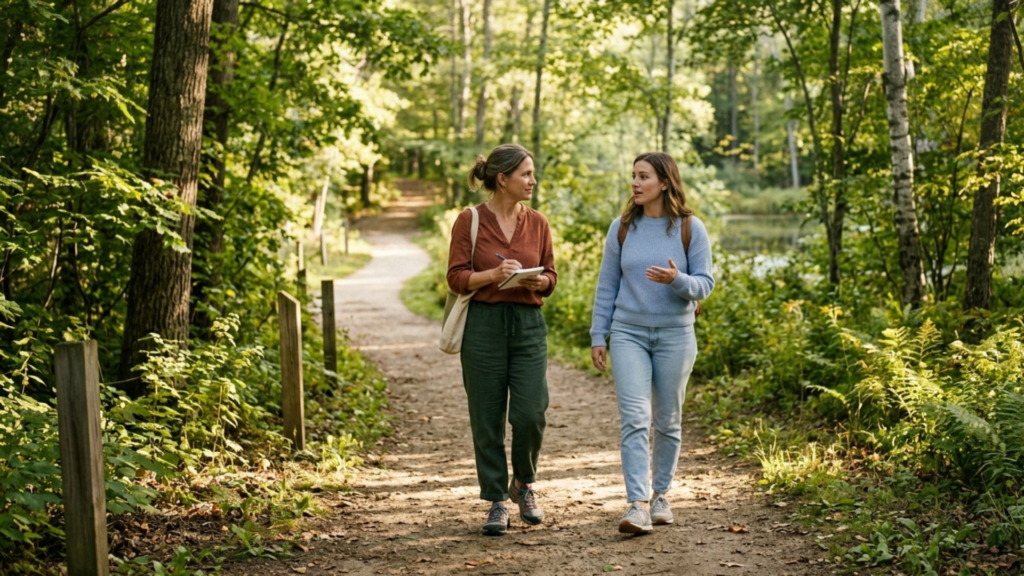
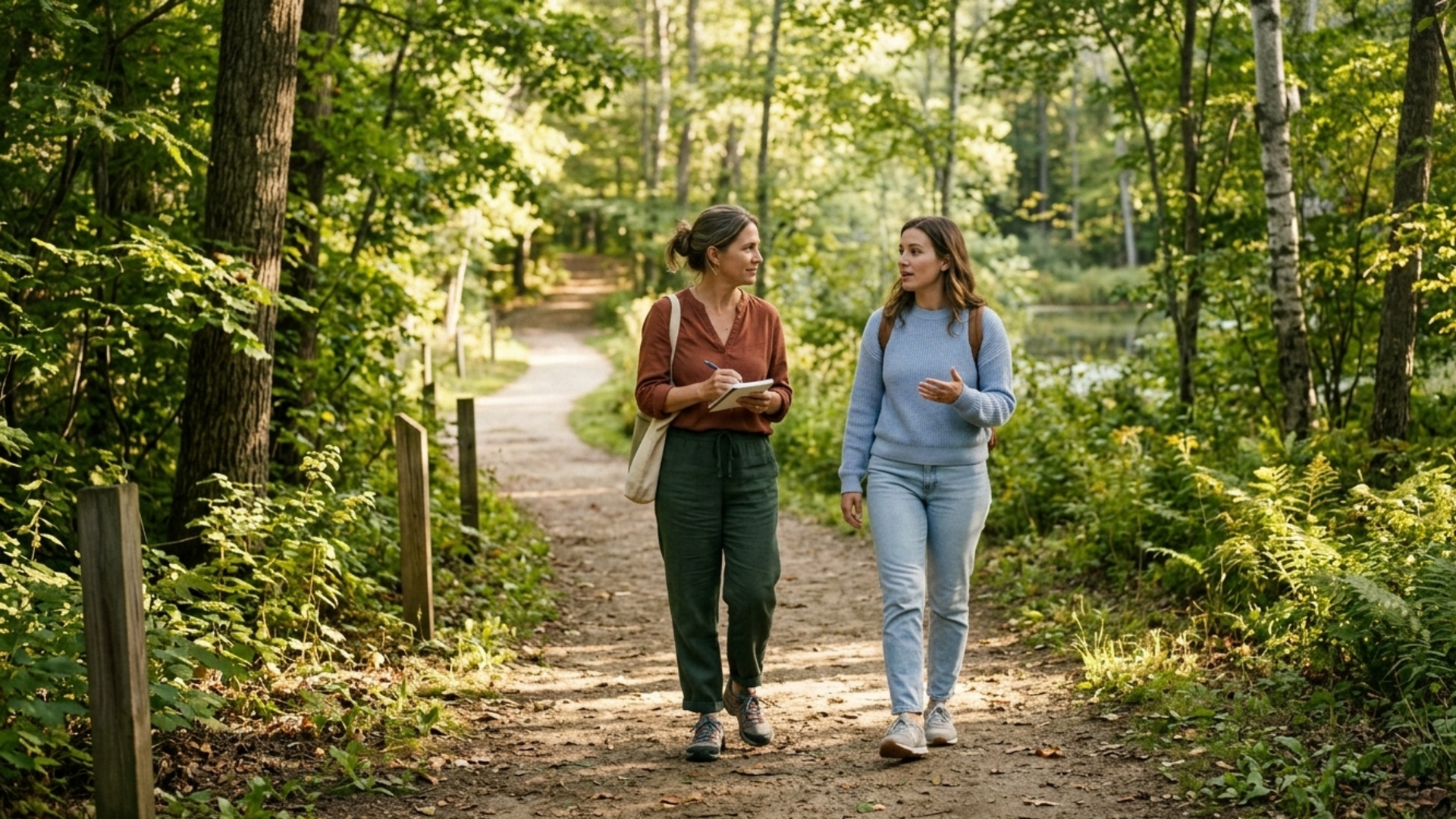
Walk and talk therapy takes the core principles of traditional counseling and brings them outdoors. Instead of sitting in chairs, the therapist and client walk side by side in a park, on a quiet trail, or through a peaceful neighborhood. This simple shift in environment can create powerful changes in how people think, feel, and open up during sessions.
In this article, we will explore what walk and talk therapy is, how it works, its benefits, and who might benefit most from this unique approach.
If you are looking to improve your mental well-being, read or explore more here at Knowledge Hub for more mental health–related articles and take the quiz to get personalized supplement recommendations designed to support mood balance, stress reduction, and overall cognitive wellness.
What Is Walk and Talk Therapy
Walk and talk therapy is a form of psychotherapy conducted while walking outdoors. It follows the same professional standards as in-office therapy. The therapist is licensed, sessions are confidential, and treatment goals are clearly defined. The main difference is the physical setting and the addition of gentle movement.
Sessions typically last between 45 and 60 minutes. The pace of walking is comfortable and adapted to the client’s needs. The focus remains on discussion, reflection, and therapeutic techniques, just as it would indoors.
This approach is rooted in the understanding that both physical movement and exposure to nature can positively influence mental health.
Why Movement Matters in Mental Health
Research shows that physical activity can significantly improve mood and reduce symptoms of anxiety and depression. When you walk, your body releases endorphins, which are natural chemicals that boost mood and reduce stress. Walking also lowers levels of cortisol, the hormone associated with stress.
In addition to the physical benefits, movement can influence how we think. Many people notice that their thoughts flow more freely while walking. This is partly because rhythmic movement helps regulate the nervous system, making it easier to process emotions.
Walking side by side rather than sitting face to face can also reduce feelings of pressure or vulnerability. Some individuals find it easier to talk openly when they are not making constant eye contact. The relaxed setting often creates a more natural and conversational atmosphere.
The Role of Nature in Healing
Nature itself has therapeutic effects. Studies in environmental psychology suggest that spending time outdoors can improve focus, reduce rumination (repetitive negative thinking), and promote a sense of calm.
Natural environments often provide:
- Fresh air and sunlight, which can improve mood
- Calming sounds such as birds or rustling leaves
- A sense of space that reduces feelings of confinement
For individuals who feel stuck, overwhelmed, or emotionally drained, being in an open outdoor setting can symbolically and physically represent movement forward.
How Walk and Talk Therapy Works
Although the setting is different, the therapeutic process remains structured and goal-oriented. At the beginning of treatment, the therapist and client discuss goals, such as managing anxiety, coping with grief, improving self-esteem, or navigating life transitions.
During the walk, the therapist may use various therapeutic techniques, including cognitive behavioral strategies, mindfulness exercises, or solution-focused discussions. For example, a therapist might guide a client through reframing negative thoughts while walking along a trail, or encourage grounding exercises by focusing on sensory experiences in nature.
Confidentiality is carefully considered. Therapists typically choose quieter routes and discuss privacy expectations with clients beforehand.
Benefits of Walk and Talk Therapy
Walk and talk therapy can be especially helpful for people who feel restless, uncomfortable in traditional office settings, or stuck in repetitive thought patterns.
Some of the key benefits include:
Improved mood through physical activity
Reduced anxiety due to natural surroundings
Enhanced creativity and problem-solving
Greater comfort and openness during conversation
A stronger mind-body connection
For individuals experiencing mild to moderate depression, stress, or burnout, the combination of talk therapy and movement can be particularly effective.
Who Is It Best For?
Walk and talk therapy is not ideal for everyone. It may not be suitable for individuals with mobility challenges, severe trauma symptoms that require a highly controlled environment, or certain medical conditions.
However, it can be especially beneficial for:
- People who feel confined in traditional therapy offices
- Teens or young adults who prefer informal settings
- Individuals dealing with stress, life transitions, or mild depression
- Clients who enjoy physical activity and being outdoors
A therapist can help determine whether this approach is appropriate based on personal needs and safety considerations.
Comparing Walk and Talk Therapy to Traditional Therapy
Both approaches are effective. The choice depends on personal preference, comfort level, and therapeutic goals.
Traditional therapy offers privacy, climate control, and a structured environment. Walk and talk therapy provides movement, fresh air, and a dynamic setting. Some therapists even offer a combination of both, depending on the client’s progress and seasonal factors.
The core element in both methods is the therapeutic relationship. Trust, empathy, and professional guidance remain central to success.
Final Thoughts
Walk and talk therapy represents a powerful blend of movement and meaningful conversation. By combining physical activity with emotional exploration, it supports both the body and mind in the healing process.
Healing does not always have to happen while sitting still. Sometimes, moving forward physically can help you move forward emotionally. For individuals who feel stuck, overwhelmed, or disconnected, walk and talk therapy may offer a refreshing and effective alternative to traditional counseling.
As mental health care continues to evolve, approaches like this remind us that healing can take many forms, and sometimes, the path to clarity begins with a simple step outside.
To further support your mental wellness journey, take the quiz to get personalized supplement recommendations designed to enhance emotional balance, reduce stress, and support overall brain health.
Frequently Asked Questions
1. Is walk and talk therapy as effective as traditional therapy?
Yes, for many individuals it can be just as effective. The therapeutic techniques used are similar; the main difference is the setting. The combination of movement and nature may even enhance mood and openness for some clients.
2. Is walk and talk therapy confidential?
Therapists take privacy seriously and choose quieter routes to minimize interruptions. However, since sessions occur outdoors, there is a small possibility of seeing others. Therapists discuss confidentiality expectations and comfort levels before beginning.
3. What should I wear to a walk and talk therapy session?
Comfortable clothing and supportive walking shoes are recommended. Since sessions take place outdoors, dressing appropriately for weather conditions is important.
4. Can walk and talk therapy help with anxiety or depression?
Yes. The physical activity involved in walking can naturally reduce stress hormones and improve mood. Combined with structured therapeutic techniques, it can be helpful for managing mild to moderate anxiety, depression, stress, and life transitions.