
Cognitive distortions are patterns of inaccurate or exaggerated thinking that can negatively influence how individuals interpret situations, experiences, and themselves. These distorted thought patterns often lead people to view events in an overly negative, unrealistic, or biased way. In psychology, cognitive distortions are important because they can affect emotions, behavior, and mental well-being.
The concept of cognitive distortions became widely recognized through the work of Aaron T. Beck, who developed cognitive therapy as a method for understanding and addressing negative thinking patterns. Beck observed that individuals experiencing emotional difficulties often interpreted situations through distorted thoughts that reinforced feelings of anxiety, sadness, or stress.
Recognizing cognitive distortions helps individuals understand how their thoughts influence emotions and behavior, making it possible to challenge unhelpful thinking patterns and develop healthier perspectives.
If you want to deepen your understanding of psychology, emotional well-being, and cognitive processes, you can read or explore more articles in the Knowledge Hub for more mental health related topics. You can also take the quiz to get personalized supplement recommendations designed to support focus, emotional balance, stress resilience, and overall cognitive wellness.
Understanding Cognitive Distortions
Human thinking is influenced by experiences, beliefs, and expectations. While thinking helps people interpret the world and make decisions, it can sometimes become biased or inaccurate. Cognitive distortions occur when individuals consistently interpret events in ways that are unrealistic or overly negative.
These patterns of thinking often develop gradually through past experiences, learned beliefs, or emotional reactions. When repeated frequently, they can become automatic thought patterns that influence how individuals perceive themselves and their environment.
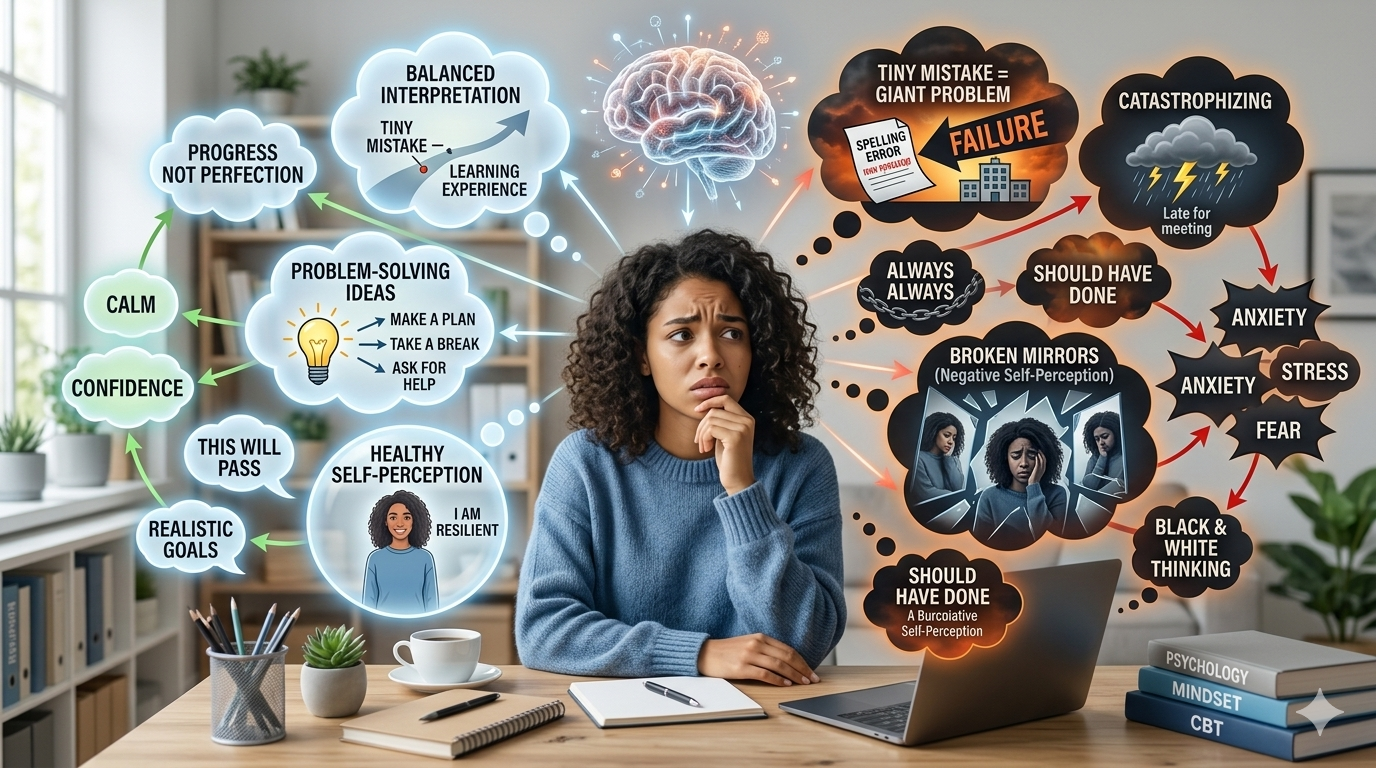
For example, a person might assume that one mistake means they are a complete failure, even when evidence suggests otherwise. Such thinking reflects a distorted interpretation rather than an accurate evaluation of the situation.
Understanding these distortions is an important step in recognizing how thoughts can influence emotional responses.
Common Types of Cognitive Distortions
Psychologists have identified several common forms of cognitive distortions that appear in everyday thinking.
Some examples include:
- All-or-nothing thinking, where situations are viewed in extreme categories such as complete success or total failure.
- Overgeneralization, where a single negative experience is interpreted as a pattern that will always occur.
- Mental filtering, where individuals focus only on negative aspects of a situation while ignoring positive details.
- Catastrophizing, where people expect the worst possible outcome even when the situation is uncertain or unlikely.
- Personalization, where individuals assume responsibility for events that may not actually be related to them.
These patterns can shape emotional reactions and influence behavior if they are not recognized and addressed.
Cognitive Distortions and Emotional Reactions
Cognitive distortions often influence how individuals experience emotions. When situations are interpreted through negative or unrealistic thoughts, emotional responses may become stronger or more distressing.
For example, if someone believes that a minor mistake means they are incapable or incompetent, they may experience feelings of shame or discouragement. In contrast, interpreting the same situation as a learning opportunity may lead to more balanced emotional responses.
This connection between thoughts and emotions is a key principle in cognitive psychology. By examining thinking patterns, individuals may gain insight into how their interpretations influence emotional well-being.
Cognitive Distortions in Mental Health
Cognitive distortions are commonly discussed in relation to mental health because persistent negative thinking patterns can contribute to emotional difficulties. Individuals experiencing anxiety, depression, or stress may be more likely to interpret situations through distorted thoughts.
However, cognitive distortions are not limited to individuals with mental health conditions. Many people occasionally experience these thought patterns, especially during stressful or uncertain situations.
Understanding cognitive distortions allows individuals to become more aware of their thinking patterns and evaluate whether their interpretations are accurate or exaggerated.
Recognizing and Challenging Cognitive Distortions
One important goal in cognitive psychology is helping individuals recognize distorted thinking patterns. Awareness allows people to pause and evaluate whether their thoughts accurately reflect reality.
When individuals identify a cognitive distortion, they can begin to examine alternative explanations or perspectives. For example, rather than assuming the worst possible outcome, a person may consider other possibilities that are more realistic or balanced.
Developing this ability to question automatic thoughts can support healthier emotional responses and more constructive problem-solving.
Modern Perspectives on Cognitive Distortions
Modern psychological approaches often incorporate strategies for identifying and reframing cognitive distortions. Cognitive-based therapies encourage individuals to examine their thoughts, recognize patterns of distortion, and replace them with more balanced interpretations.
Researchers continue to study how cognitive distortions influence emotional regulation, stress responses, and decision-making. These findings highlight the powerful role that thinking patterns play in shaping mental well-being.
By understanding how thoughts influence emotions and behavior, individuals can develop greater awareness of their cognitive processes and improve their psychological resilience.
Final Thoughts
Cognitive distortions represent patterns of thinking that can lead individuals to interpret situations in unrealistic or overly negative ways. These distortions influence emotional reactions and can affect how people respond to challenges, relationships, and personal experiences.
By recognizing and examining distorted thinking patterns, individuals can develop more balanced perspectives and healthier emotional responses. Understanding cognitive distortions provides valuable insight into the relationship between thoughts, emotions, and behavior, making it an important concept in psychology and mental health.
Frequently Asked Questions
Why do cognitive distortions happen?
Cognitive distortions often develop through past experiences, learned beliefs, and emotional responses. When people repeatedly interpret situations in a certain way, those patterns of thinking can become automatic. Stress, anxiety, and negative past experiences may increase the likelihood of distorted thinking patterns.
Can everyone experience cognitive distortions?
Yes, cognitive distortions are common and can occur in everyday thinking. Most people experience them occasionally, especially during stressful or emotionally challenging situations. They become problematic when they occur frequently and strongly influence how individuals view themselves, others, and the world.
How do cognitive distortions affect decision-making?
Cognitive distortions can lead individuals to misinterpret situations or assume outcomes that may not be accurate. For example, catastrophizing may cause someone to expect the worst possible result, which can increase anxiety and influence decisions based on fear rather than realistic evaluation.
How can people reduce cognitive distortions?
Reducing cognitive distortions often begins with becoming aware of automatic thought patterns. Reflecting on whether thoughts are based on evidence, considering alternative explanations, and practicing balanced thinking can help individuals develop healthier cognitive habits over time. Techniques used in cognitive-based therapies often focus on identifying and reframing distorted thoughts.