Fight or Flight: What It Is and How It Affects Your Body and Mind
What Is Fight or Flight?
Have you ever experienced a sudden rush of adrenaline when narrowly avoiding an accident or felt your heart pounding before speaking in front of a crowd? That overwhelming surge of energy, the heightened senses, and the quickened heartbeat that’s your fight-or-flight response at work.
The fight-or-flight response is an automatic, physiological reaction triggered by a perceived threat. It’s your body’s natural survival mechanism, designed to help you either confront the danger (fight) or escape it (flight). Rooted deeply in human evolution, this response is controlled by the autonomic nervous system, specifically the sympathetic nervous system, which initiates a cascade of hormonal and neurological reactions to prepare you for immediate action.
Even though most modern threats aren’t life-or-death situations, your body still responds the same way whether you’re facing an aggressive animal or dealing with the stress of an approaching deadline.
How the Fight-or-Flight Response Works
Your brain is like an advanced alarm system, always on the lookout for potential threats. The process happens so quickly that you react before you even consciously register the danger. Here’s what happens step-by-step:
- Threat Detection: Your brain’s amygdala, the emotional processing center, identifies something as threatening. It could be a real physical danger or even just a stressful thought.
- Signal to the Hypothalamus: The amygdala sends an urgent signal to the hypothalamus, the part of your brain that acts like a command center. It communicates with the rest of your body via the autonomic nervous system.
- Sympathetic Nervous System Activation: The hypothalamus activates the sympathetic nervous system, which functions like hitting the gas pedal on a car. This triggers your adrenal glands to release stress hormones adrenaline (epinephrine) and cortisol into your bloodstream.
- Physical Changes: These hormones cause a series of physiological changes:
- Increased Heart Rate & Blood Pressure: To pump more oxygen-rich blood to your muscles.
- Rapid Breathing: To deliver more oxygen to your brain and muscles.
- Dilated Pupils: To enhance vision and detect threats more clearly.
- Redirected Blood Flow: Moves blood away from non-essential functions like digestion and towards muscles, the brain, and vital organs.
- Energy Release: Glucose and fats stored in the body are released to provide immediate fuel.
This all happens within seconds, preparing your body to react quickly—either to fight the danger head-on or to run away from it.
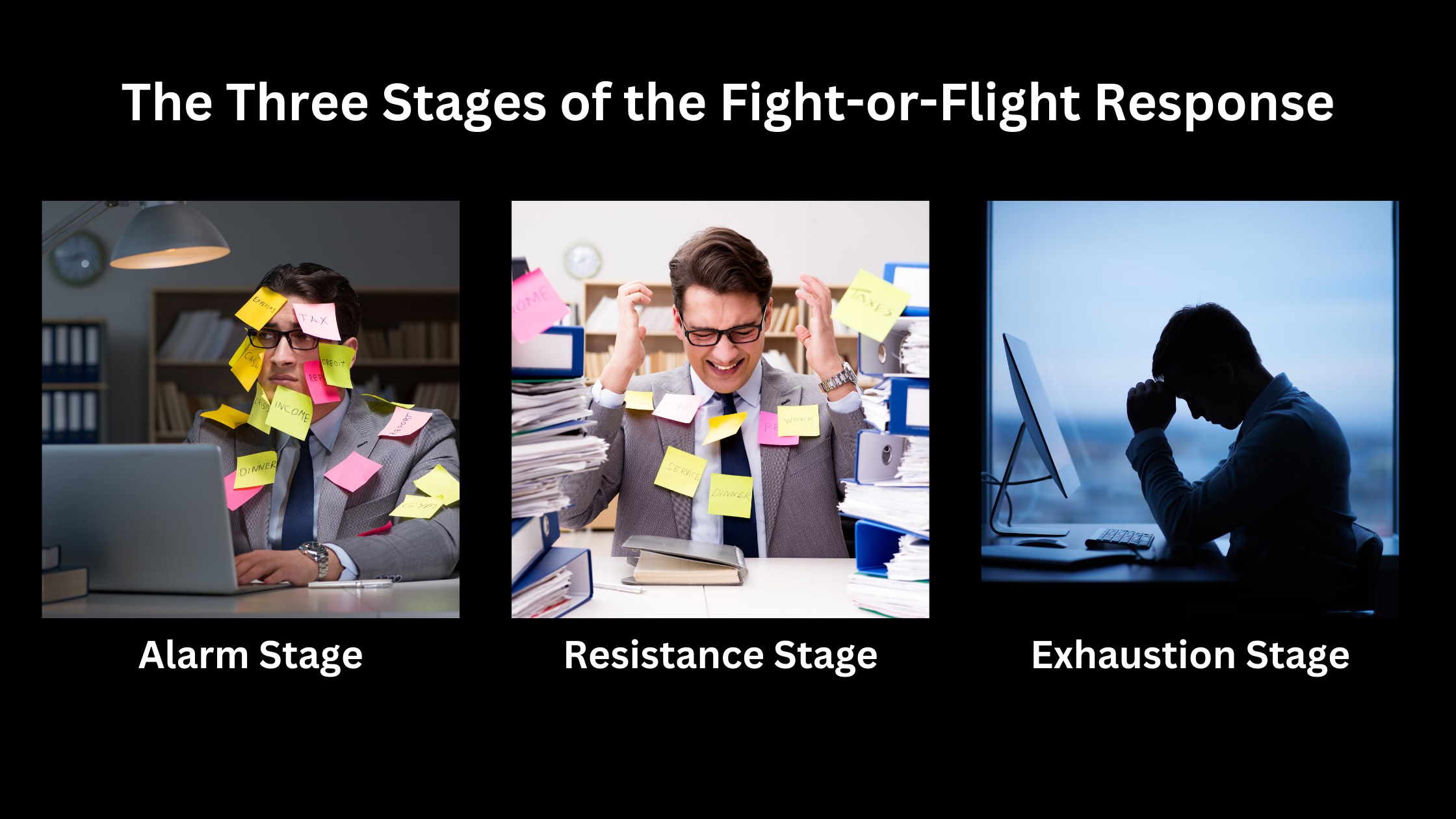
The Three Stages of the Fight-or-Flight Response
Your body’s reaction to stress happens in three phases:
1. Alarm Stage
This is your body’s immediate reaction to a stressor. The sympathetic nervous system is activated, adrenaline surges, and you feel the classic symptoms: rapid heartbeat, shortness of breath, tense muscles, and heightened alertness. This stage prepares you to act quickly.
2. Resistance Stage
If the threat persists, your body enters the resistance stage. Cortisol levels remain elevated to help maintain a heightened state of readiness. Your body tries to adapt to the ongoing stress, using energy reserves to cope with the situation. You may feel focused, but prolonged exposure at this stage can wear you down.
3. Exhaustion Stage
Eventually, if the stress continues without relief, your body’s resources become depleted. This leads to the exhaustion stage, where prolonged exposure to stress hormones can cause physical and mental fatigue, weakened immunity, and increased risk of illness.
How the Fight-or-Flight Response Evolved
This powerful response evolved as a survival mechanism. Early humans relied on it to avoid predators, hunt for food, and protect themselves from physical dangers. The ability to react instantly to threats was essential for survival.
However, in modern life, the same response is often triggered by psychological stressors—like deadlines, financial worries, traffic jams, or interpersonal conflicts. While these situations aren’t life-threatening, your body still reacts as if they are, which can lead to chronic stress and health issues over time.
What Happens to Your Body and Mind?
Physical Effects of Fight-or-Flight
Short-term:
- More energy, faster reflexes, sharper senses, and improved strength.
- Rapid breathing, dry mouth, and tense muscles.
Long-term (if stress becomes chronic):
- Weakened immune system → More prone to illness.
- High blood pressure → Increased risk of heart disease.
- Digestive issues → Acid reflux, IBS, or stomach problems.
- Sleep disturbances → Insomnia, restless nights, and fatigue.
Mental Effects of Fight-or-Flight
Short-term:
- Sharper focus and quick decision-making.
- Boosted memory recall.
Long-term:
- Persistent anxiety, mood swings, and irritability.
- Difficulty concentrating, mental exhaustion, and forgetfulness.
- Increased risk of mental health disorders like depression or PTSD.
The Ups and Downs of the Fight-or-Flight Response
The Benefits:
- Helps in life-threatening situations (quick reactions in emergencies).
- Boosts performance under pressure (sports, public speaking, tests).
- Heightens awareness and sharpens instincts.
The Drawbacks:
- Can cause anxiety, panic attacks, or chronic stress if triggered too often.
- Weakens your immune system, making you more susceptible to illness.
- Long-term activation increases the risk of heart disease, digestive disorders, and sleep problems.
Examples of the Fight-or-Flight Response:
- Physical Threats: Escaping from a dangerous animal, defending oneself during an attack, or reacting quickly in a car accident.
- Modern Stressors: Preparing for an important presentation, reacting to a car suddenly braking in front of you, facing an unexpected confrontation, or dealing with high-pressure situations at work.
When Fight-or-Flight Becomes a Problem
While this response is essential for survival, it becomes problematic when activated too frequently. Modern life’s constant pressures can keep your body in a chronic state of fight-or-flight, leading to stress-related conditions such as:
- Generalized Anxiety Disorder
- Depression
- Hypertension (High Blood Pressure)
- Digestive Disorders (IBS, Acid Reflux)
- Sleep Disorders (Insomnia, Fatigue)
- Cardiovascular Diseases
Recognizing when your stress response is overactive is the first step toward managing it effectively.
How to Calm Your Fight-or-Flight Response

1. Deep Breathing
Slow, controlled breathing activates the parasympathetic nervous system (the “rest and digest” system), helping to counteract the stress response. Try the 4-7-8 technique: Inhale for 4 seconds, hold for 7 seconds, exhale for 8 seconds.
2. Grounding Techniques
Stay present by focusing on your senses. The 5-4-3-2-1 technique is effective: Identify 5 things you see, 4 things you feel, 3 things you hear, 2 things you smell, and 1 thing you taste.
3. Progressive Muscle Relaxation
Tense and then relax each muscle group in your body, starting from your toes and working up to your head. This helps release physical tension caused by stress.
4. Mindfulness and Meditation
Practicing mindfulness helps you stay grounded in the present moment, reducing anxiety about past or future events.
5. Physical Activity
Exercise burns off excess adrenaline and cortisol, promoting the release of endorphins—natural mood boosters.
6. Visualization
Imagine a calming scene, such as a peaceful beach or a quiet forest. Visualization helps shift your brain’s focus from the perceived threat to a place of safety and relaxation.
Supplements That May Support Stress Management
Certain natural supplements can support your body’s ability to manage stress effectively:
- Magnesium: Helps relax muscles and the nervous system, improving sleep and reducing anxiety.
- L-theanine: Found in green tea, promotes relaxation without causing drowsiness.
- Ashwagandha: An adaptogen that helps regulate cortisol levels and supports the body’s resilience to stress.
Looking for natural ways to manage stress? Check out Cenario’s range of supplements designed to support your mental well-being. Explore Cenario Supplements
(Consult with a healthcare professional before starting any new supplements.)
Final Thoughts
Your fight-or-flight response is an incredible survival tool designed to protect you from danger. But when this powerful mechanism is constantly triggered by modern stressors, it can take a toll on your physical and mental health.
Understanding how the response works, recognizing the signs of chronic activation, and using effective stress management techniques can help you regain control. Remember, while you can’t always avoid stress, you can control how you respond to it.
Ready to take control of your stress?
Take our quick survey to find the best supplements for your mental health needs and start your journey to well-being today!
Because life isn’t about fighting or fleeing it’s about finding balance.
Frequently Asked Questions
Can the fight-or-flight response be triggered even when there’s no real danger?
Yes. The body cannot always distinguish between real physical threats and perceived psychological stressors. Situations like public speaking, work deadlines, or even worrying thoughts can activate the same physiological reaction as facing an immediate danger. This is why many people experience anxiety symptoms even when they are not in actual danger.
What’s the difference between the fight-or-flight response and the freeze response?
While fight-or-flight prepares you to take action, the freeze response is another survival mechanism where the body temporarily shuts down movement. In some situations, freezing may help you avoid detection or give your brain extra time to assess the danger. Chronic stress can sometimes lead to repeated freeze responses, contributing to feelings of helplessness or dissociation.
Can you train your body to have a healthier fight-or-flight response?
Yes. With practice, you can reduce the intensity and frequency of overactive stress responses. Techniques such as regular exercise, mindfulness meditation, controlled breathing, and cognitive-behavioral strategies can help retrain your nervous system. Over time, these practices strengthen your parasympathetic nervous system (rest-and-digest), allowing you to calm down faster after stressful events.