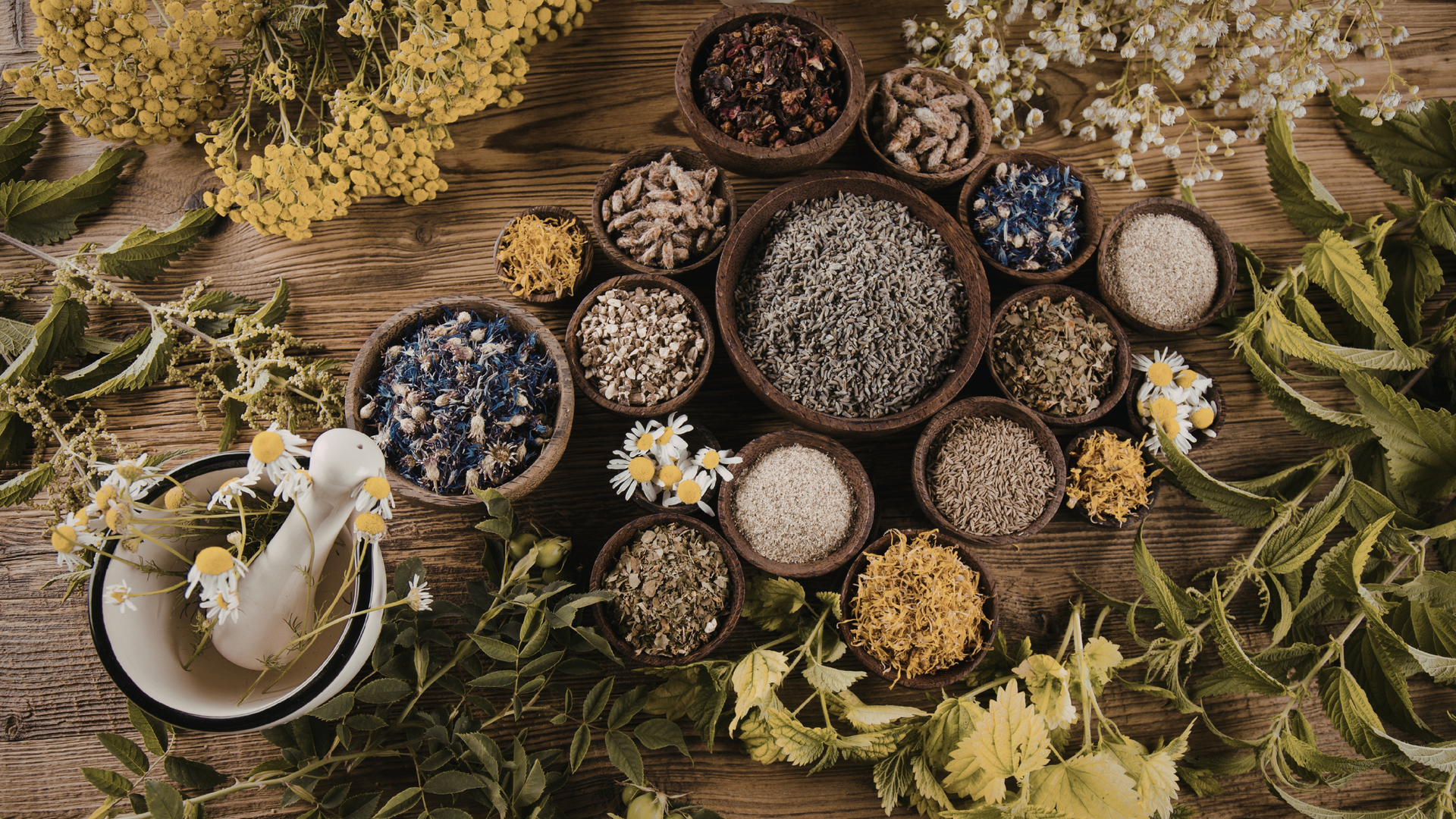

Herbal remedies refer to the use of plants or plant-based substances to support health and well-being. These remedies can come from different parts of a plant, including leaves, roots, flowers, seeds, or bark, and are often prepared as teas, extracts, capsules, powders, or oils.
Herbal remedies have been used for thousands of years across different cultures as part of traditional healing systems. Today, they are still widely used as complementary approaches to support physical and mental health.
If you want to explore more natural approaches to wellness, you can read more in our Knowledge Hub and take the quiz to get personalized supplement recommendations designed to support stress, sleep, mood, and overall balance.
How Herbal Remedies Work
Herbal remedies contain bioactive compounds, which are natural chemicals that can influence how the body functions.
These compounds can interact with biological systems such as the nervous system, immune system, and digestive system. For example, some herbs may support relaxation, while others may help with digestion or energy levels.
Unlike synthetic medications, which often target specific pathways, herbal remedies may have broader, more complex effects because they contain multiple active compounds.
However, this also means their effects can vary depending on the individual, the preparation, and the dosage.
Common Types of Herbal Remedies
Herbal remedies are used for a wide range of purposes.
Some herbs are commonly associated with relaxation and stress support, such as chamomile or valerian root. Others are used for energy and focus, like ginseng. Some herbs support digestion, while others are used for immune health.
They can be consumed in different forms. Herbal teas are one of the most traditional methods, offering a gentle way to experience the effects of herbs. Capsules and extracts provide more concentrated forms, while essential oils are often used in aromatherapy.
Each form can influence how quickly and strongly the herb affects the body.
Benefits of Herbal Remedies
Herbal remedies are often valued for their natural origin and wide range of potential benefits.
They can support stress management, improve sleep quality, enhance digestion, and promote overall well-being. Many people use them as part of a holistic approach to health, combining them with lifestyle practices such as proper nutrition, exercise, and mindfulness.
Another benefit is accessibility. Many herbal remedies are widely available and can be easily incorporated into daily routines.
However, it is important to understand that “natural” does not always mean risk-free.
Herbal Remedies and Modern Science
In recent years, scientific research has increasingly explored the effects of herbal remedies.
Some herbs have been studied for their potential benefits, while others are still being researched. Clinical studies aim to understand how these natural compounds interact with the body and whether they are effective and safe.
While some herbal remedies have strong scientific support, others rely more on traditional use and anecdotal evidence.
This highlights the importance of using herbal remedies with awareness and informed decision-making.
Safety and Considerations
Although herbal remedies are natural, they can still have side effects or interact with medications.
Different herbs can affect the body in different ways, and taking them in large amounts or combining them with other substances can lead to unwanted effects.
Quality and dosage also matter. The concentration of active compounds can vary between products, which can influence effectiveness and safety.
It is important to follow recommended guidelines and be cautious when combining herbal remedies with other supplements or medications.
Herbal Remedies and Mental Health
Herbal remedies are often used to support mental wellness.
Some herbs are associated with calming effects and may help reduce stress or support relaxation. Others may support focus or energy.
While they can be helpful as part of a broader wellness routine, they are not a replacement for professional care when dealing with serious mental health conditions.
Combining herbal support with healthy habits, such as sleep, nutrition, and stress management can provide more balanced results.
Limitations of Herbal Remedies
Herbal remedies are not a cure-all.
Their effects can vary from person to person, and results may take time to notice. Some conditions require medical treatment, and relying only on herbal remedies may not be sufficient.
In addition, the lack of standardization in some products can make it difficult to determine exact dosages and effects.
Understanding both the benefits and limitations is important for safe and effective use.
Final Thought
Herbal remedies offer a natural and holistic way to support health, but they should be used with knowledge and awareness.
By understanding how they work, how to use them safely, and how they fit into your overall lifestyle, you can make more informed choices about your well-being.
If you want a more personalized approach, consider taking the quiz to get supplement recommendations designed to support your stress levels, sleep quality, and overall mental and physical balance.
Frequently Asked Questions
Are herbal remedies safe for everyone?
Herbal remedies are generally safe when used properly, but they are not suitable for everyone. Factors such as health conditions, medications, and individual sensitivity can affect how the body responds. It is important to use them carefully and be aware of potential interactions.
How long do herbal remedies take to work?
The effects of herbal remedies can vary. Some may provide noticeable effects quickly, while others may take days or weeks of consistent use. The timeline depends on the herb, dosage, and individual response.
Can herbal remedies replace medications?
Herbal remedies are not a substitute for prescribed medications, especially for serious conditions. They are best used as complementary support alongside a healthy lifestyle and, when needed, professional guidance.