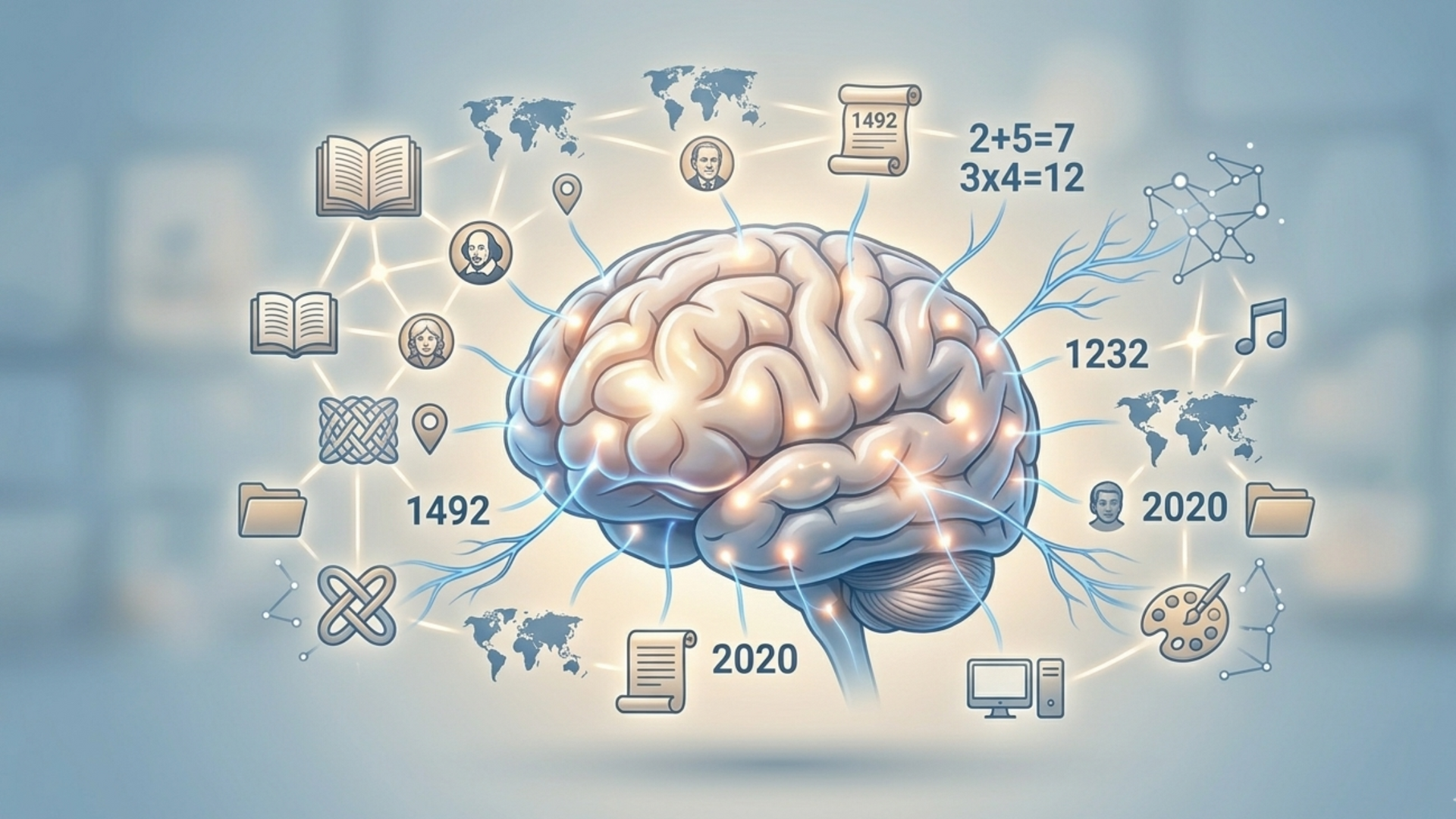

Long-term memory (LTM) refers to the brain’s ability to store, retain, and retrieve information over extended periods, ranging from hours and days to years or even a lifetime. Unlike short-term memory, which holds information briefly, long-term memory is responsible for preserving knowledge, skills, experiences, and personal identity.
It serves as the brain’s permanent storage system, allowing you to remember everything from childhood events and learned skills to language, facts, and emotional experiences.
If you want to better understand how memory, focus, and overall brain health work together, you can read or explore more here at our Knowledge Hub for more mental health–related articles, and take the quiz to get personalized supplement recommendations designed to support memory retention, cognitive clarity, and long-term brain performance.
How Long-Term Memory Works
Long-term memory involves a multi-step process that transforms short-term information into lasting memory traces:
- Encoding: Information is processed and converted into a form the brain can store (e.g., linking new information to existing knowledge)
- Storage: The brain maintains this information over time through stable neural connections
- Retrieval: Stored information is accessed when needed, such as recalling a fact or remembering an event
This process is strengthened through repetition, emotional significance, and meaningful understanding, which help solidify memories in the brain.
Types of Long-Term Memory
Long-term memory is not a single system, it is divided into different types based on the kind of information stored:
1. Explicit (Declarative) Memory
This involves information you can consciously recall and describe.
- Episodic Memory: Personal experiences (e.g., your birthday, a trip, a conversation)
- Semantic Memory: General knowledge and facts (e.g., knowing that the Earth revolves around the sun)
2. Implicit (Non-Declarative) Memory
This involves unconscious memory that influences behavior.
- Procedural Memory: Skills and habits (e.g., riding a bike, typing, driving)
- Conditioned Responses: Learned reactions (e.g., emotional responses to certain situations)
Duration and Capacity
Long-term memory is considered virtually unlimited in capacity. Unlike short-term memory, it can store vast amounts of information without a strict limit.
- Duration: Can last from hours to a lifetime
- Capacity: Extremely large, with no clearly defined limit
However, the ability to retrieve memories may vary depending on factors like attention, emotional state, and how well the memory was encoded.
Brain Areas Involved
Long-term memory involves multiple brain regions working together:
- Hippocampus: Plays a key role in forming and organizing new memories
- Cerebral Cortex: Stores long-term memories across different areas depending on the type (e.g., visual, auditory)
- Amygdala: Strengthens emotional memories, especially those linked to fear or pleasure
These areas work together to create strong, lasting neural connections.
Examples of Long-Term Memory in Daily Life
- Remembering your childhood home
- Knowing how to ride a bicycle
- Recalling facts learned in school
- Recognizing familiar faces
- Remembering important life events
These memories shape your identity, knowledge, and everyday functioning.
Factors That Affect Long-Term Memory
Several factors influence how well long-term memory works:
- Repetition and Practice: Strengthens memory consolidation
- Emotional Impact: Emotional events are often remembered more clearly
- Sleep: Essential for memory consolidation and storage
- Attention: Better focus leads to stronger encoding
- Stress: Chronic stress can impair memory formation
- Nutrition: Brain health depends on proper nutrients
Long-Term Memory vs Short-Term Memory
- Duration: Long-term memory lasts much longer (days to lifetime), while short-term memory lasts seconds
- Capacity: Long-term memory is vast; short-term memory is limited
- Function: Long-term memory stores knowledge and experiences, while short-term memory temporarily holds information
Long-term memory relies on short-term memory as a gateway, meaning information must first pass through short-term storage before becoming long-lasting.
How to Improve Long-Term Memory
Strengthening long-term memory involves improving how information is encoded and stored:
- Use repetition and spaced learning
- Connect new information to existing knowledge
- Engage multiple senses (visual, auditory, writing)
- Get enough sleep for memory consolidation
- Manage stress effectively
- Stay mentally active with learning and problem-solving
Consistent habits play a major role in building strong and reliable long-term memory.
Related Terms
- Short-Term Memory: Temporary storage of information
- Working Memory: Active processing of information
- Memory Consolidation: Process of stabilizing memories over time
- Encoding: Transforming information into memory form
- Retrieval: Accessing stored information
Final Insight
Long-term memory is the foundation of learning, identity, and personal growth. It allows you to retain meaningful experiences, develop skills, and build knowledge over time. While its capacity is vast, the strength of your memories depends on how well you encode, store, and reinforce them. By supporting your brain with healthy habits and consistent mental engagement, you can enhance your ability to retain and recall information effectively.
Frequently Asked Questions
1. How long can long-term memory last?
Long-term memory can last from hours to a lifetime, depending on how well the information is encoded and reinforced. Some memories, especially emotional or frequently recalled ones, can remain stable for many years.
2. Why do we forget long-term memories?
Forgetting can occur due to lack of use, interference from new information, or difficulty retrieving stored memories. In some cases, memories are not lost but simply harder to access.
3. What is the role of sleep in long-term memory?
Sleep plays a critical role in memory consolidation, the process of transferring information from short-term to long-term storage. Poor sleep can weaken memory formation and retention.
4. Can long-term memory be improved?
Yes, long-term memory can be improved through repetition, meaningful learning, proper sleep, stress management, and a healthy lifestyle, all of which support stronger memory consolidation and recall.